
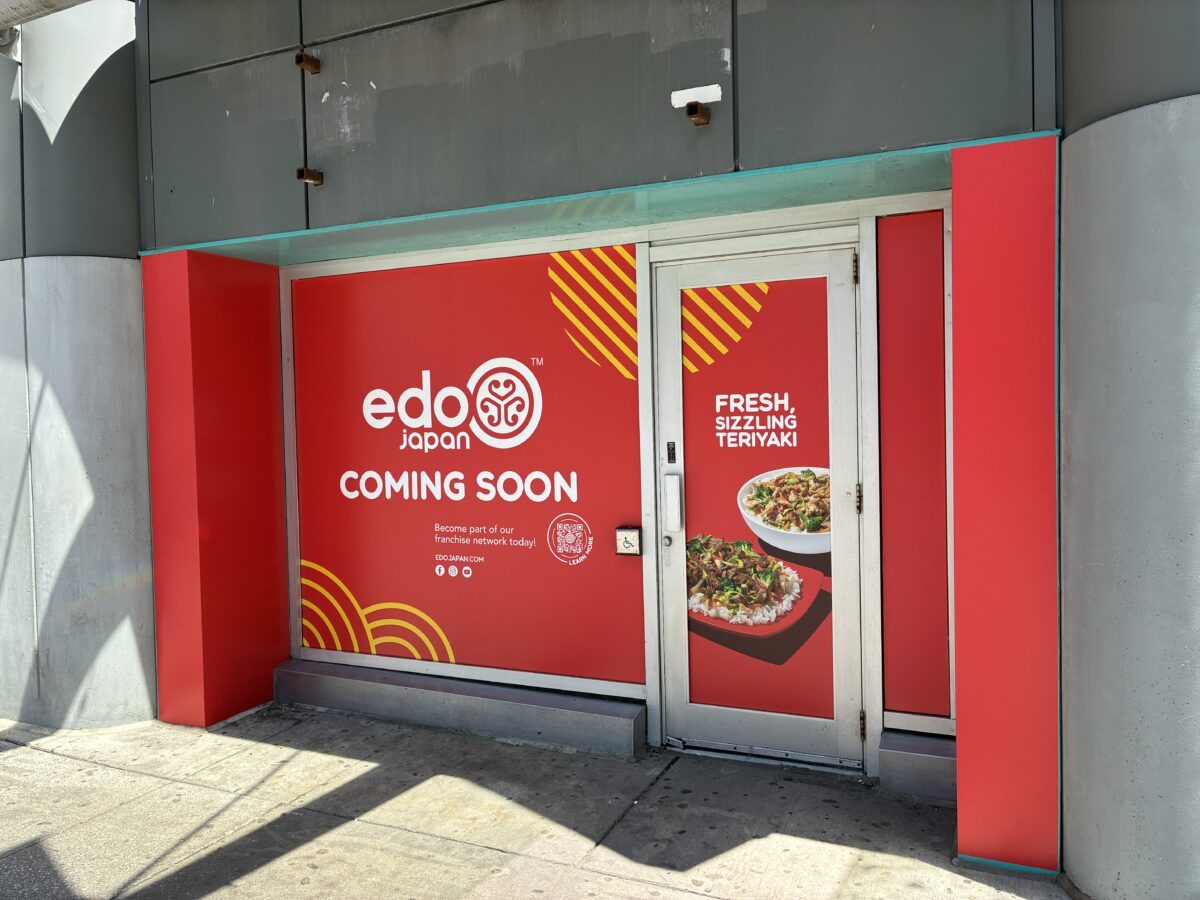

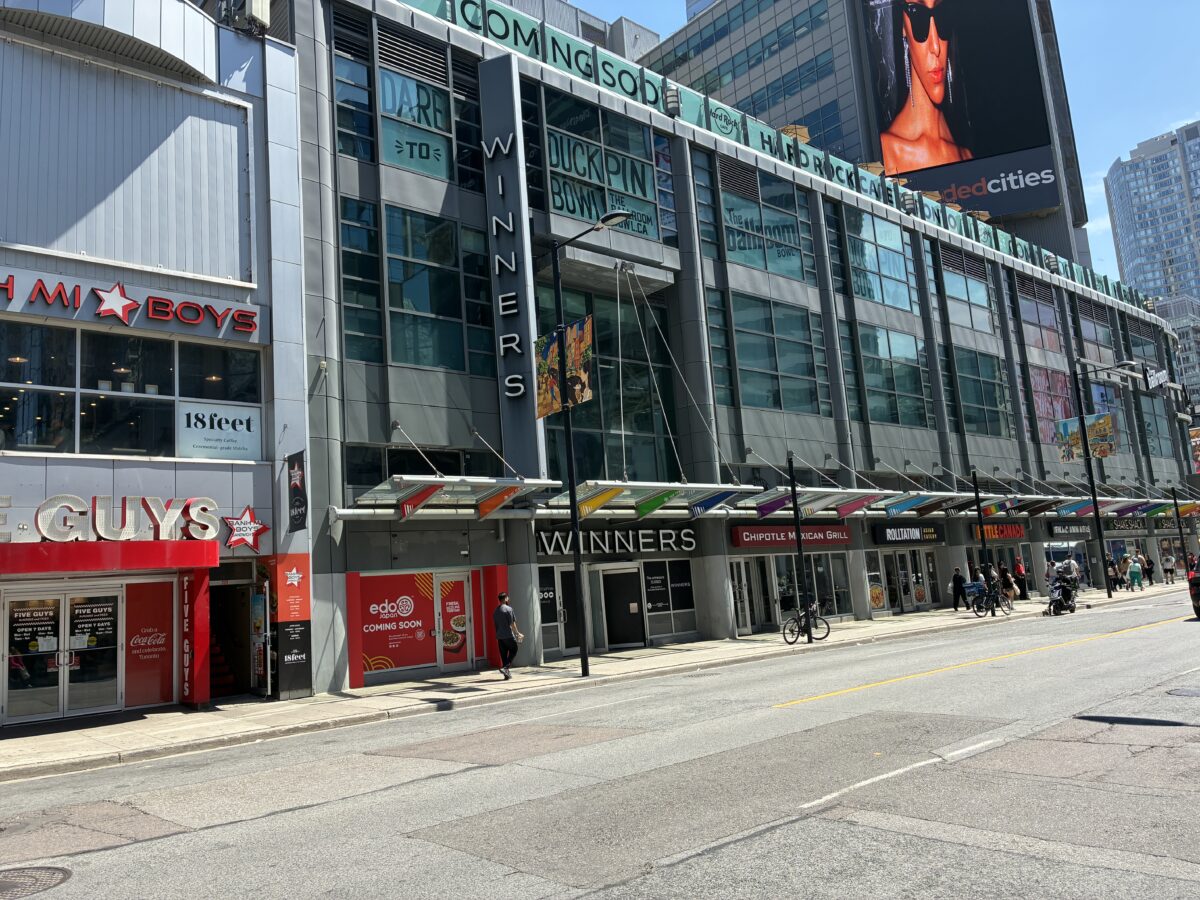
Edo Japan is opening its next Toronto location at Yonge and Dundas, taking space at The Tenor on what’s widely considered the busiest pedestrian corner in the country. The fall opening will be the Calgary-born teppanyaki brand’s second major downtown Toronto push, following its first urban location at Yonge and College.
“It is one of the most strategic, high-profile locations within all of Canada,” says Janine Maginniss, National Director of Real Estate at Edo Japan.

The deal came together through the brand’s existing relationship with BGO Properties, which manages The Tenor. It surfaced as an off-market opportunity, and she moved fast once she heard about it.
It’s the kind of deal her background was built for. The real estate director spent over a decade on the brokerage side of commercial real estate, most recently as Vice President at Oberfeld Snowcap, before joining Edo Japan in late 2024 to lead its Eastern Canada growth, a mandate that has since expanded nationally. Yonge and Dundas is one of the clearest signals yet of what that looks like in practice.
Edo Japan has spent the past two years figuring out what an urban Toronto location can be. Yonge and College, opened in 2024, was the test case: a brand built on Western Canadian mall food courts, proving it could hold its own on a downtown street.
It worked well enough that the company stopped treating downtown Toronto as an experiment. “It builds on what we’ve seen at Yonge and College, taking us deeper into the downtown core,” Maginniss said. “It’s a flagship move for us, planting our flag in one of the country’s most prominent corners.”
The two locations aren’t being treated as the same problem twice. Yonge and College draws a transit-driven crowd making deliberate stops on the way somewhere else. Yonge and Dundas, anchored by Sankofa Square, runs on tourists, students and entertainment traffic that doesn’t really thin out.
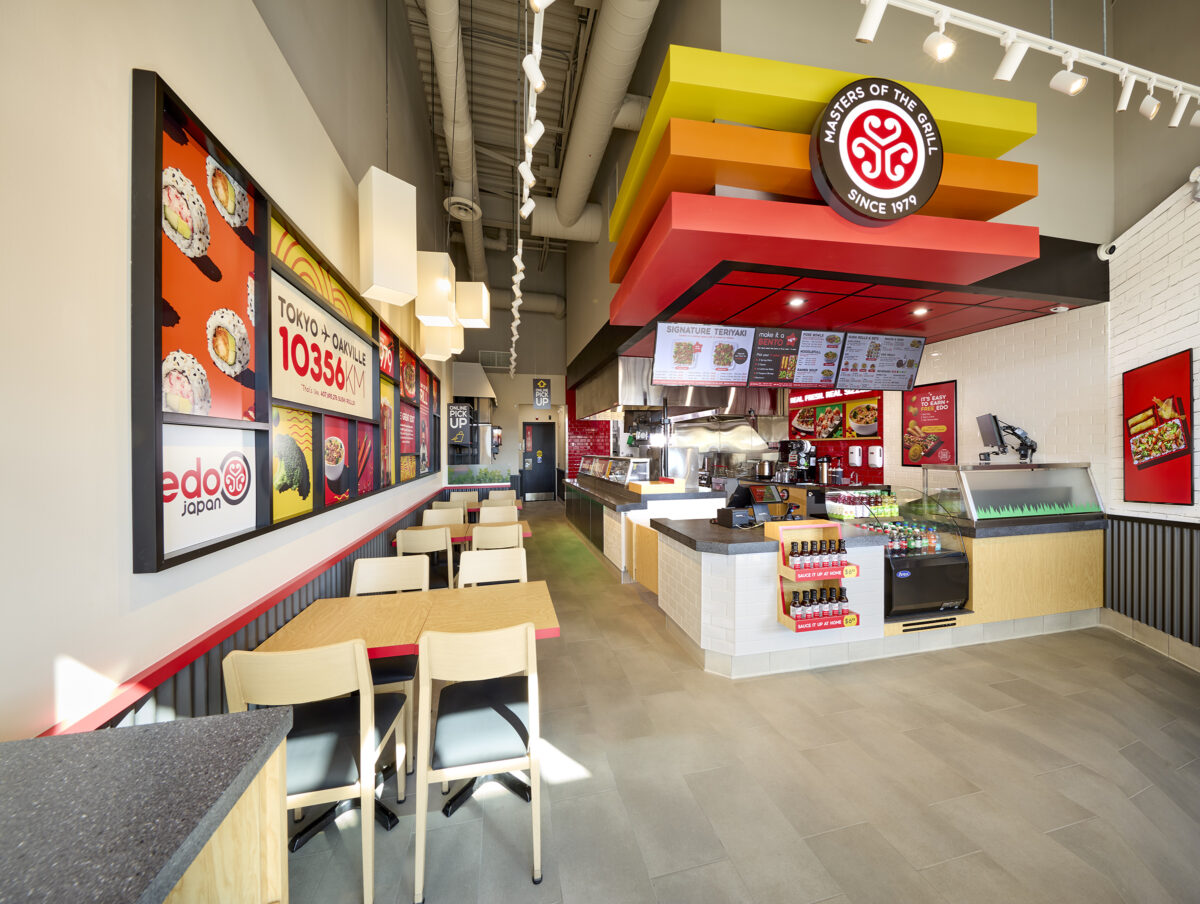
The build reflects that difference. It’s an upgraded version of the Yonge and College design, leaning harder on signage to catch someone mid-stride. “Signage and messaging are critical for this location because the customer is often making a spontaneous purchase,” she said. “That’s a different mindset than at Yonge and College, where guests are more likely to arrive with a destination already in mind.”
Where College Street settles into the lunch and dinner rushes of an office and residential corridor, The Tenor is expected to hold steady traffic through the day.
The address comes with company. The Tenor has spent the past two years rebuilding its food and beverage lineup around exactly this kind of high-traffic, brand-name tenant, starting with Shake Shack’s first Canadian location in 2024. Eggslut, after making its Canadian debut earlier this year, will open its second location in the former Wine Rack space. Mary Brown’s Chicken has also recently opened in the former Blaze Pizza space with a partnership concept alongside Jose Bautista.
Maginniss isn’t concerned about the competition. “Consumers aren’t looking for the same meal every day,” she said. “In a food hall environment with so many options, our opportunity is to differentiate ourselves as the fresh, healthier choice. By offering made-to-order teppanyaki bowls and sushi, we can appeal to guests who want quality, convenience and variety.”
Her read on real estate predates Edo Japan. When she joined the company, it wasn’t prioritizing enclosed malls. She made the case internally that it should. “We were relatively unknown in a lot of these markets,” she said. “We needed to anchor in the best malls to get in front of the most people.”
The logic was about lowering the barrier to a first try. A customer browsing a food court can study a menu board from thirty feet away with no commitment required, no door to open, no lease line to cross.
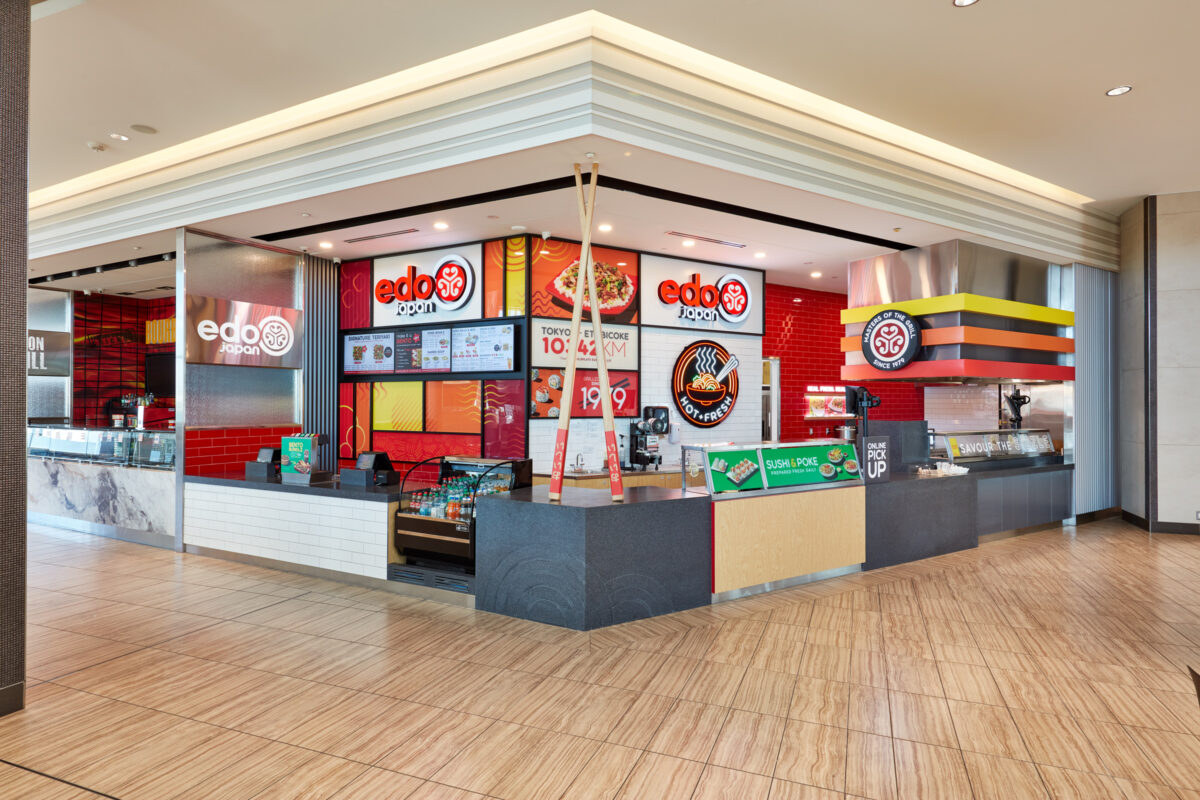
CF Sherway Gardens became the clearest proof that the strategy worked, and Maginniss points to it as the model Edo Japan is now replicating in Quebec, anchoring first in Montreal and Quebec City’s top malls before building out the surrounding street-front network. Eighteen of Edo Japan’s top twenty-five performing stores, by her count, are in malls. Downtown Toronto, including The Tenor, is the other half of the same strategy applied to street-front.
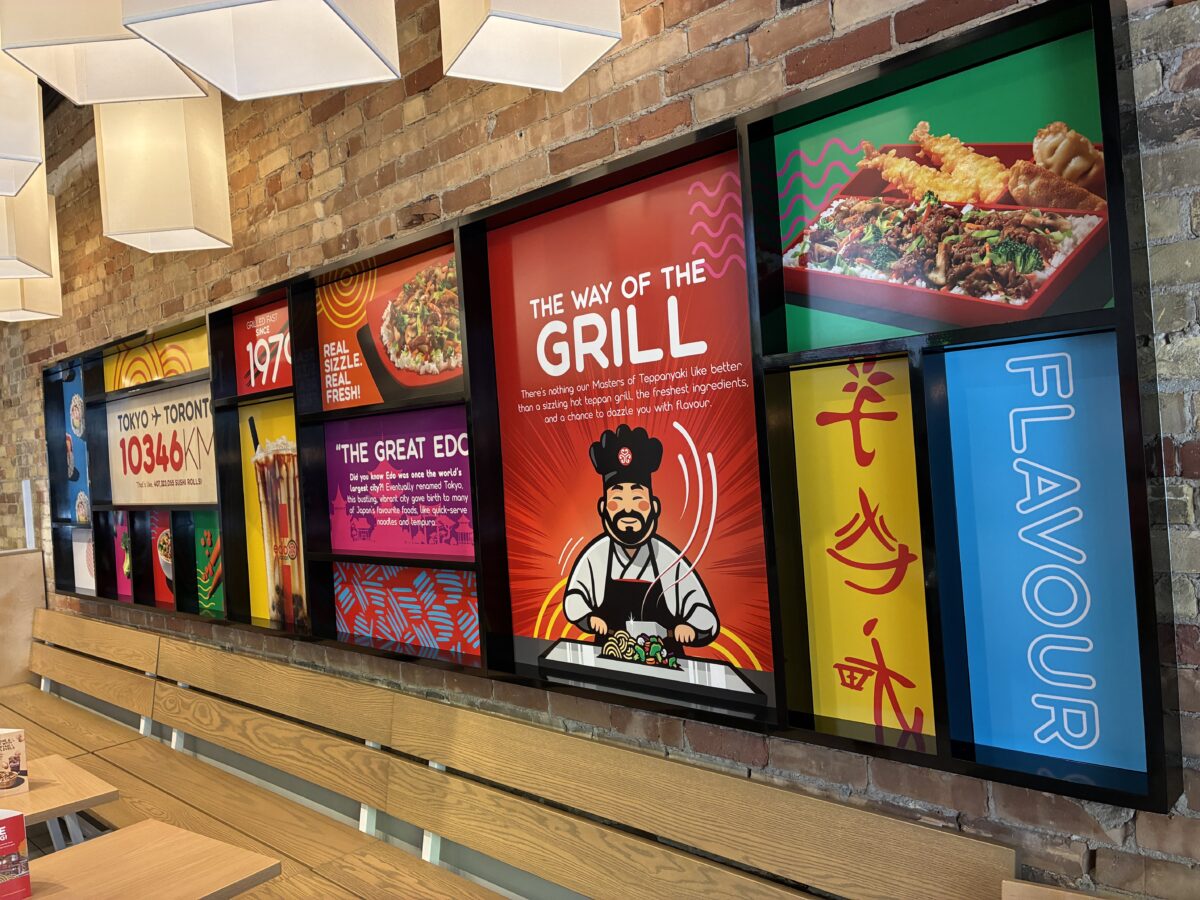
The format has evolved too. Edo Japan has spent the past year rolling out a new prototype, developed with design partner Rodmell & Company, that puts the grill at the front counter in every new build, mall or street-front. No more tucking it behind a wall with a pass-through window.
“We’re fresh, made to order, and we wanted a bit of grill theater,” she said. “You hear the cutlery, you see the steam. It sets us apart from a food court setting that’s predominantly steam tray.” Even the sushi is made fresh in-house rather than arriving pre-packed.
The same instinct shows up in Edo Japan’s summer bubble tea promotions, which run as a loss leader but aren’t treated like one. “We’re incredibly proud of that product,” Maginniss said. “It gets people through the door and gives them a reason to try us. When they come back, they’re discovering the traditional teriyaki bowls that made Edo Japan famous.”
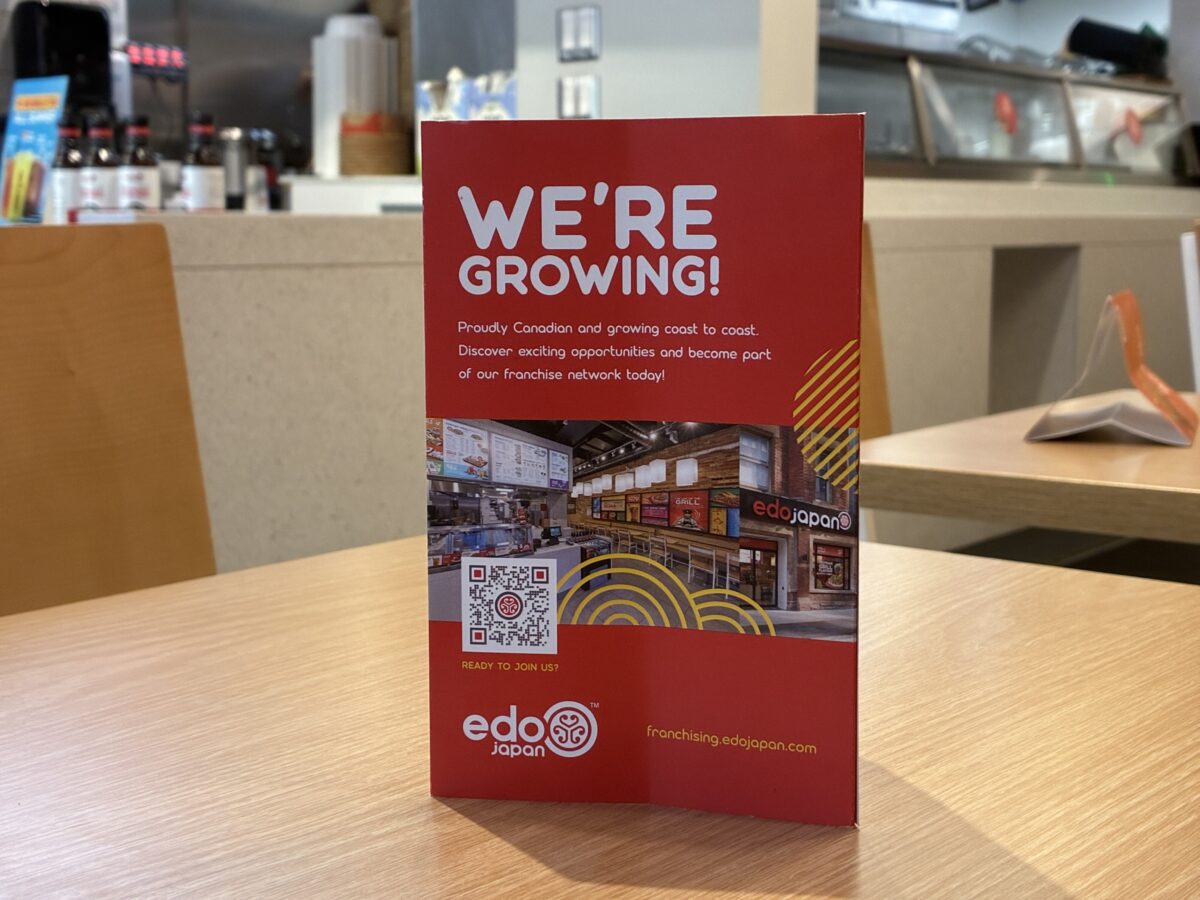
Yonge and Dundas is one stop on a longer route. Eastern Canada is Edo Japan’s top growth priority right now, with room Maginniss estimates at 200 to 250 locations across Ontario alone, on top of a national footprint already approaching 220 restaurants.
The Toronto rollout is phased, working outward from the busiest corridors first. “We’re starting in the key downtown corridors, up and down Yonge,” she said. “We have a couple of things in the works we’ll be able to announce shortly, places like Bloor, King West and Queen West.” From there, the plan moves into Roncesvalles, Bloor West Village and the Danforth.
Off-premise demand shaped the build more than a passerby might assume. In some of Edo Japan’s busiest urban locations, delivery and takeout already account for close to half of total sales. The layout has to absorb that without turning the dining room into an afterthought.
“It’s critical to have the right number of seats for the dine-in customer, but also the space to move grab-and-go and delivery orders through efficiently,” she said.
None of this happens in isolation. Coming from the brokerage side, the biggest adjustment moving in-house was learning how many parts of the business have to align before a location is worth pursuing. “There’s a real interplay between every part of the business internally,” Maginniss said. “We need buy-in from franchising, operations and marketing at the very first idea of a location.”
That groundwork includes studying the neighbours before committing to a site. How late they stay open. How many staff they run during peak hours. What that says about how a corner actually performs.
The economics underneath matter just as much as the address. “A great location only works if the underlying deal supports it over time,” she said. “We look closely at lease economics, footprint and day-to-day operating realities, not just visibility. It has to be paired with a structure that makes sense for the business. Our focus is on setting franchisees up for long-term success, financially sustainable and operationally sound from day one.”
It’s also a moment for proudly Canadian brands to take up more space on streets like this one. “We’ve always taken a long-term, disciplined approach to growth, and that hasn’t changed,” Maginniss said. “What we’re seeing is a continued appetite from Canadians for brands that feel reliable and rooted locally. We started on the prairies, and our growth has come from staying focused on those fundamentals.”
Construction at The Tenor begins in July, with landlord handover expected in September. Edo Japan is targeting a December opening. Maginniss is candid that downtown Toronto construction timelines are the one variable nobody fully controls.
Either way, Yonge and Dundas is set to join Yonge and College on the brand’s downtown map, with several more Toronto locations already taking shape behind it.

Dustin Fuhs is the founder and Editor-in-Chief of 6ix Retail, Toronto’s premier source for retail and hospitality industry news. As the former Editor-in-Chief of Retail Insider, Canada’s most-read retail trade publication, Dustin brings over two decades of expertise spanning retail, marketing, entertainment and hospitality sectors. His experience includes roles with industry giants such as The Walt Disney Company, The Hockey Hall of Fame, The Canadian Opera Company, Starbucks Canada and Blockbuster.
Recognized as a RETHINK Retail Top Retail Expert in 2024, 2025 and 2026, Dustin delivers insider perspectives on Toronto’s evolving retail landscape, from emerging brands to established players reshaping the city’s commercial districts.