
After 13 years building Toronto’s fitness community through Fit Factory Fitness, founder Ivan Ho is tackling what he sees as a missing piece in the city’s wellness landscape: a place where people can socialise without alcohol while experiencing the benefits of contrast therapy.

NRG Haus—short for Nourish, Recharge, Gather—will open in Liberty Village this February, occupying a 5,000-square-foot space that previously housed the short-lived Active Remedy Club. The concept blends a 60-person sauna, four temperature-controlled cold plunge tubs, and a non-alcoholic bar serving functional mocktails made with adaptogenic spirits.
Ho’s personal journey informed the concept. Following a separation two years ago, he got sober and discovered the mental health benefits of contrast therapy during what he describes as his “darkest days.” His sobriety journey was influenced by Luc Zoratto, a well-known sobriety coach whose Instagram handle is @marathon2sobriety. The two are fathers to daughters born just two weeks apart at the same hospital, creating an unlikely but powerful friendship.
“When I went through my separation and got sober, I realised there was nowhere for people like me to go,” Ho says. “If you want to socialise, you go to a bar. And when you’re at a bar, you’re pressured to drink. I wanted to create something different.”
Through his own transformation, Ho discovered that alcohol—which many people leaned on more heavily during the pandemic—offers no health benefits and often stands in the way of genuine connection. But when he looked at the statistics, he saw an opportunity.
“I personally drank a little bit more during the pandemic, but when you look at the stats, they’ve completely turned around,” Ho says. “The new generation isn’t drinking anymore. Non-alcoholic sales are up 70 per cent year over year. Alcohol sales are at their lowest point ever in North America. There’s a huge sober-curious demographic, and they have nowhere to gather.”
From Sauna Conversations to Business Vision
Ho’s path to NRG Haus started in the sauna. During his darkest days, he discovered that ice baths and cold plunges helped him find calm in chaos. More importantly, he met people—real connections forged through shared vulnerability in the heat and cold.
“I met some of my closest friends in saunas,” he says. “There’s something about that environment that strips away the nonsense. People actually talk to each other.”
When Ho heard that the Liberty Village space had become available in January, he moved fast. Lifetime Developments, his former landlord at Fit Factory Fitness’s King Street West location, told him multiple groups were bidding—nightclub owners, restaurateurs, the usual suspects. He had to act immediately. Eddie Chan, broker at Area Realty Inc, represented NRG Haus in securing the lease for the space.
“They basically said, ‘If you want this, you need to move now,'” Ho recalls. “We had a lot of people interested in the space.”

Building on Lessons Learned
The Liberty Village space Ho secured previously housed Active Remedy Club (ARC), which opened in June 2024 and closed five months later in December. The 4,000-square-foot facility featured a 55-person dry sauna, ice baths, a social lounge, and IV-drip therapy.
Ho sees the brief tenure as validation that building a successful wellness community requires more than amenities and capital—it demands deep community-building expertise and intentional programming.
“You can’t just build it and expect people to come,” Ho says. “There needs to be intention and purpose behind what you’re trying to build.”
NRG Haus took a year to develop. From the January calling to revive the facility through multiple design concepts and designer consultations, the collaboration with Navigate Design and INTOR Construction focused on creating a space that serves the specific needs of a social wellness club—a relatively new category blending traditional spas, fitness studios, and hospitality venues.

Ho travelled to wellness spaces across Asia, the United Arab Emirates, and North America, looking for what didn’t exist. Navigate Design, the hospitality firm behind Queen’s Harbour (which exceeded its 50-year revenue projections in year one), brought the vision to life. INTOR Construction, specialising in high-end hospitality buildouts, is executing the design.
Ho brings nearly two decades of fitness industry experience to NRG Haus, beginning with his transformation at military school and continuing through a kinesiology degree from Western University, where he competed as a varsity track and field athlete. He founded his first venture, Fit from Home, an in-home personal training company, in 2009 before launching Fit Factory Fitness in 2012. Fit Factory has been recognised as Toronto’s Best Boot Camp, Best Gym, and Best Fitness Club multiple times and expanded to midtown Toronto in 2022. In July 2025, Ho co-founded Refined Reformer, a modern semi-private Pilates concept. Across all his ventures, Ho’s teams have helped raise over $2 million for causes including Rethink Breast Cancer, CAMH, SickKids Foundation, and St. Michael’s Hospital.
That community-building expertise is central to NRG Haus’s approach. Rather than structured sessions, the space is designed for a self-directed wellness journey that allows members to move at their own pace and socialise naturally.
“We wanted to create something that feels less like a class and more like a gathering space,” Ho says. “You come in, you follow your own heat-cold-hydrate-gather journey, and you connect with people organically.”
The Immersive Cold Plunge Experience
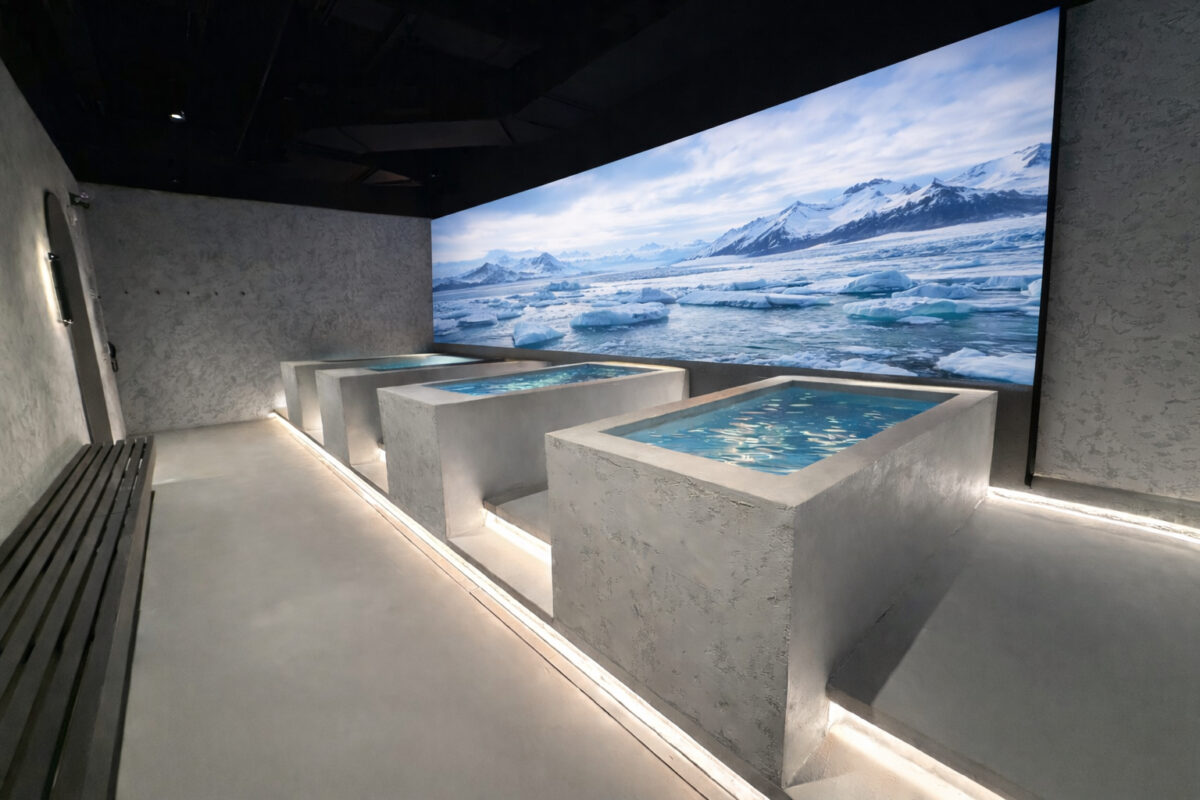
The result is something Ho believes doesn’t exist anywhere else: a 16-foot LED video wall behind the cold plunge tubs that creates immersive environments. Ocean waves. Rainforests. Volcanoes. Antarctic ice fields. All synchronised with nature sounds.
“When you’re sitting in three-degree water, your mind wants to escape,” Ho says. “This gives you something to focus on.”
The technology serves multiple purposes beyond distraction. When NRG Haus hosts events with DJs and social gatherings, the video wall can display a live feed from the lounge, allowing people in the cold plunge to stay connected to what’s happening without missing the energy. The system can also run guided meditations led by coaches, creating a more intentional recovery experience.
“We can have a coach guiding you through meditation on the screen while you’re in the cold,” Ho explains. “Or when we have our events and socials, you can see what’s happening with the DJ in the lounge without missing a beat.”
Science-Backed Temperature Therapy
Where NRG Haus differentiates itself from competitors is in its approach to education and accessibility. The four cold plunge tubs are curated to different temperatures ranging from 2-3 degrees Celsius up to 8-10 degrees Celsius, with the warmest tub specifically designed for women’s health considerations.
“Most facilities don’t talk about this, but cold plunging at three degrees isn’t good for women throughout the majority of their menstrual cycle,” Ho says. “We wanted to be science-backed and actually educate people on why these temperatures matter. It’s better for women’s fertility to use the warmer tubs during certain phases. A lot of facilities don’t educate people on this.”
The educational component extends throughout the entire experience. NRG Haus will explain the physiological benefits of heat and cold exposure, from cardiovascular health to inflammation reduction. The approach is evidence-based rather than trend-driven, helping members understand not just what to do, but why it works.
The Non-Alcoholic Bar
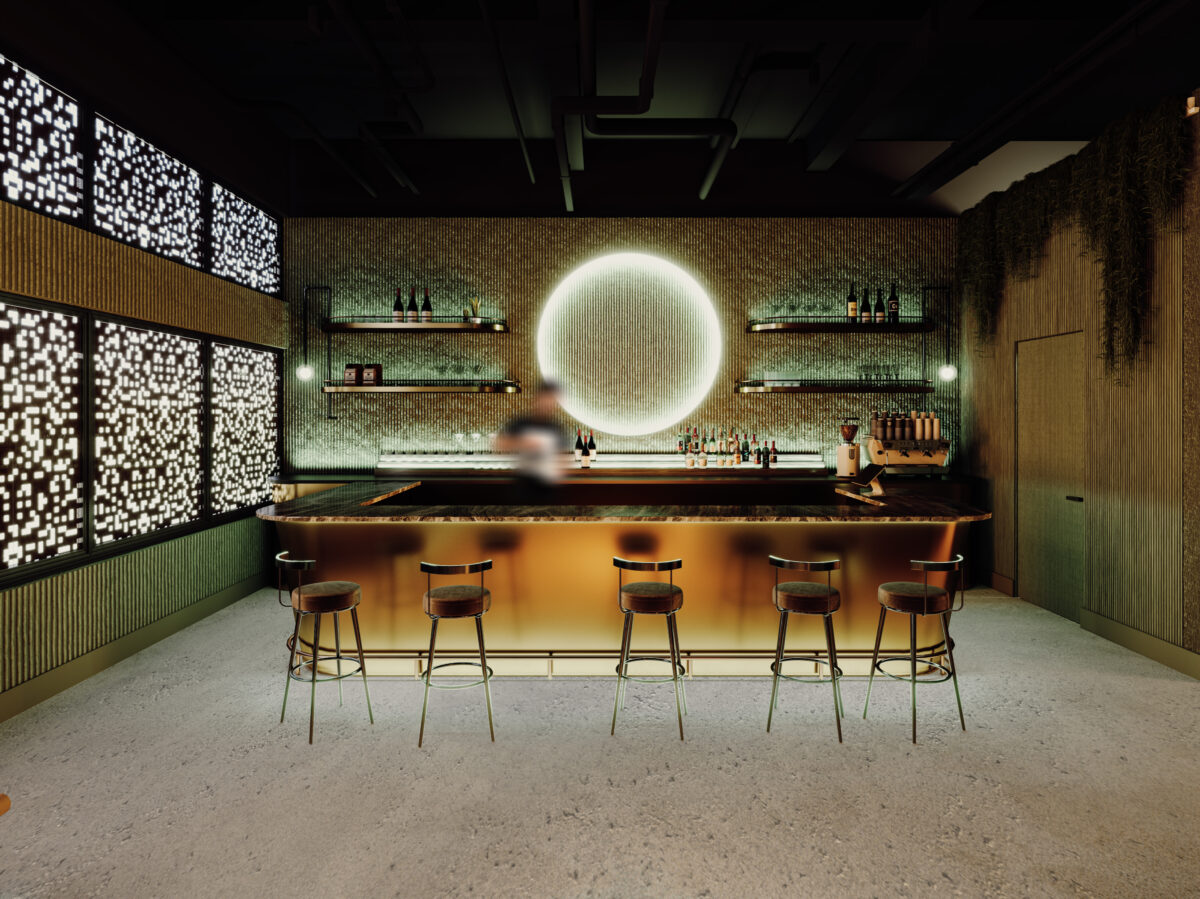
The wellness journey follows a deliberate sequence: heat, cold, hydrate, gather. The final step happens at the non-alcoholic bar, where Ho has partnered with The Søbr Market to curate over 20 spirits from around the world. The Winnipeg-founded retailer, which operates Canada’s largest non-alcoholic bottle shop at 511 Richmond Street West in the Waterworks Building, will help NRG Haus develop a menu that includes de-alcoholised versions of major brands like Tanqueray and Captain Morgan alongside boutique options infused with adaptogens like L-theanine and ashwagandha.
The bar will look and feel like The Søbr Market itself—resembling an LCBO but without the alcohol. Bottles line the shelves in what appears to be a standard spirits collection, but everything is de-alcoholised and designed to nourish rather than impair.
“When people see the bar, it looks like a normal bar,” Ho says. “But everything is functional. The mocktails actually nourish you. The mocktails will have the same taste profiles people are used to—your traditional tequila, gin, vodka—but with healthy ingredients. I want people to ask themselves: Why am I drinking something that gives me a hangover when I could have this instead?”
The partnership includes an upcoming menu tasting event where founders and the partner circle will sample the first draft of NRG Haus’s mocktail offerings. The goal is to create drinks sophisticated enough for discerning palates while genuinely nourishing the body—bridging the gap between social ritual and wellness.
In addition to contrast therapy and functional beverages, NRG Haus is also partnering with MedWell Canada, an innovative medical facility set to open at Sugar Wharf in 2026, to offer IV drip therapy as part of its recovery and longevity offerings.
Why Liberty Village
Liberty Village has 55,000 residents across 40 condo buildings, all contained within a neighbourhood bounded by GO train tracks—what Ho calls “its own little pocket.”
“Once you’re in there, you’re stuck there,” Ho explains. “Well, it’s designed and built so that a community can thrive there. When you look at the restaurants, the coffee shops, the gyms, the co-working spaces, the transportation off the GO train, and then all the parking spots in front of Liberty Market—200 spots where you can actually park—where else in downtown Toronto can you find that?”

The neighbourhood’s infrastructure creates natural gathering patterns. Residents live, work, and play within a concentrated area, making it ideal for a community-focused wellness club. The proximity to Exhibition Place, BMO Field, and Coca-Cola Coliseum means a constant flow of visitors attending concerts and sporting events, expanding the potential customer base beyond Liberty Village’s residential population. The demographic mix also works in NRG Haus’s favour—a younger core with older demographics and families as you move west beyond the neighbourhood.
“The more research I did, the more I realized it’s actually one of the best locations in Toronto,” Ho says. “You’ve got all these events bringing people through. It’s a great mix of Torontonians of all ages.”
The space itself sits near King and Atlantic, in the heart of Liberty Village’s commercial strip. Construction wraps up at the end of January, with February reserved for staff training and soft launches before the public opening.
Premium Experience, Accessible Pricing
Ho plans to host curated music events, wellness programming, and sober-curious gatherings. The space is designed to be what Ho describes as “purpose-built—high-energy but grounded, social but intentional, premium but inclusive.”
Pricing is structured to encourage regular participation rather than occasional indulgence, aligning with the goal of building consistency and community.
The design itself—from lighting to materials to spatial layout—has been carefully considered to “stimulate without overstimulating, to encourage interaction and not isolation,” according to Ho. Where some wellness facilities create meditative, quiet environments that can feel isolating, NRG Haus aims for energising communal spaces that naturally facilitate conversation and connection. The venue is positioned as a destination for post-workout socialising, first dates, founder meetups, and what Ho calls “Tuesday night decompression”—the mid-week reset that doesn’t involve alcohol but still provides an opportunity to gather and unwind with others.
Beyond Liberty Village

Right now, Ho is focused on getting Liberty Village right. But he’s not ruling out expansion. The timing certainly suggests he’s onto something. Toronto’s contrast therapy scene has exploded in the past two years, with Sweat and Tonic, Sweat Zero, and 10XTO’s Contrast Zone all competing for customers. But most focus purely on therapeutic benefits—recovery, performance, physical wellness.
“Demand will dictate how we grow,” he says. “This is a standalone brand from Fit Factory for a reason. We think there’s a real opportunity here.”
NRG Haus is betting that wellness can be social. That people want to gather without alcohol. That community can be built around something healthier than happy hour. The concept taps into what Ho sees as a fundamental human need that’s been neglected in the wellness industry’s rush towards optimization and performance. NRG Haus isn’t just about recovery metrics or ice bath protocols—it’s about creating the conditions for genuine human connection in an increasingly isolated world.
“As people spend more time on their phones, loneliness isn’t going away,” Ho says. “Mental health isn’t going away. The space we’re creating is truly a place where people can put their phones in the lockers and connect as a person, people to people. I believe it’s very necessary in our society—anywhere in North America, but definitely in Toronto. That’s what this city needs.”
Dustin Fuhs is the founder and Editor-in-Chief of 6ix Retail, Toronto’s premier source for retail and hospitality industry news. As the former Editor-in-Chief of Retail Insider, Canada’s most-read retail trade publication, Dustin brings over two decades of expertise spanning retail, marketing, entertainment and hospitality sectors. His experience includes roles with industry giants such as The Walt Disney Company, The Hockey Hall of Fame, The Canadian Opera Company, Starbucks Canada and Blockbuster.
Recognized as a RETHINK Retail Top Retail Expert in 2024, 2025 and 2026, Dustin delivers insider perspectives on Toronto’s evolving retail landscape, from emerging brands to established players reshaping the city’s commercial districts.