
Toys “R” Us Canada filed for protection under the Companies’ Creditors Arrangement Act (CCAA) on February 3, 2026 marking a critical moment for one of the country’s most recognizable retail brands. The move comes after years of store closures and mounting financial pressure on parent company Putman Investments.
Here’s what we know so far:
The Filing The Ontario Superior Court of Justice granted an initial stay of proceedings for 10 days, with potential extensions. This temporarily shields the company from creditor lawsuits while it develops a restructuring plan. Alvarez & Marsal Canada Inc. has been appointed as monitor to oversee the process, with Neil Taylor serving as Chief Restructuring Officer.
The Numbers Toys “R” Us Canada entered 2024 with over 100 locations nationwide. Today, approximately 22 stores remain operational across the country. The company has closed 53 stores in the past two years alone and owes at least $120 million to vendors, plus substantial amounts to landlords.
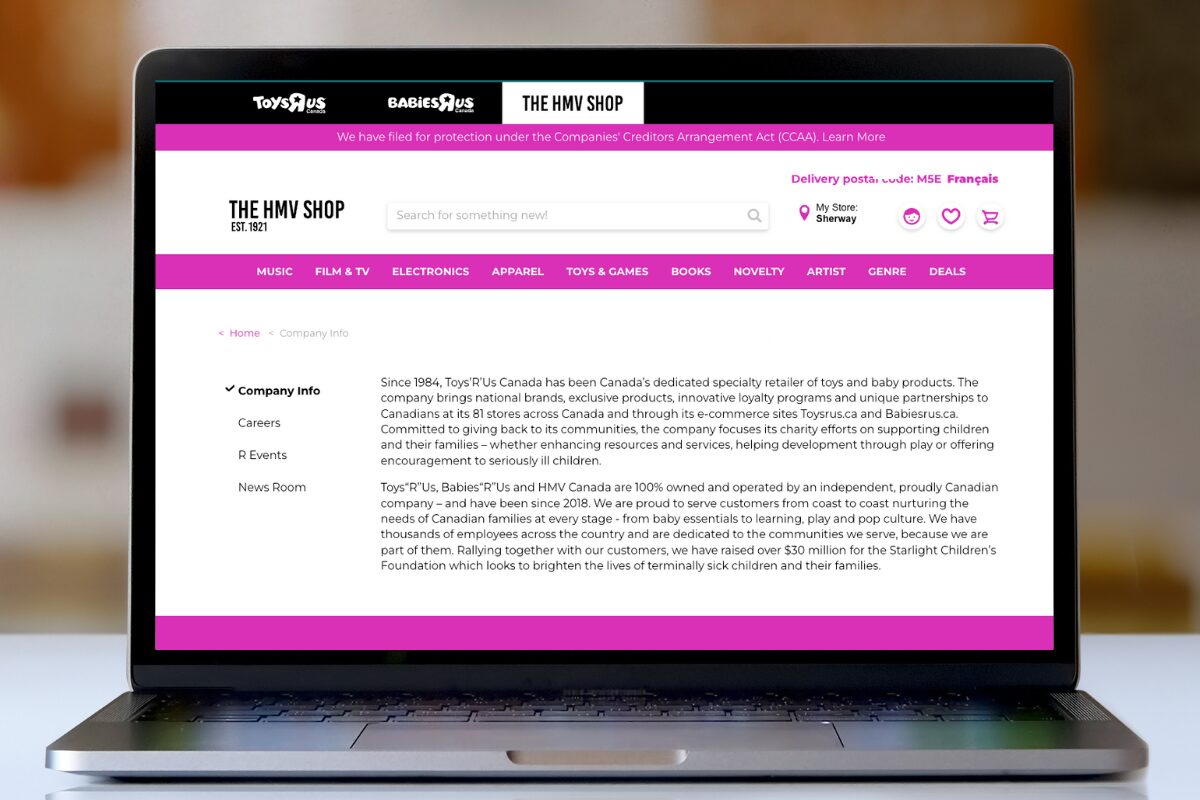
What’s Still Open All currently operating stores will remain open during the initial restructuring phase. However, the company has confirmed that reducing its retail footprint will be part of the process. The e-commerce sites (Toysrus.ca, Babiesrus.ca and HMV.ca) are currently unavailable, displaying a message directing customers to shop in-store.
The Toronto Impact
For Toronto families, the Toys “R” Us contraction has been particularly acute. The GTA has lost several locations over the past year, fundamentally changing the retail landscape for parents and children across the region.
The closure of the Dufferin Mall location in late December was especially felt by local families. Liquidation signs appeared in early November, and by year’s end, the 25,000-square-foot store—a fixture at 900 Dufferin Street—had closed its doors permanently. The timing, right in the middle of holiday shopping season, caught many parents off guard.
The Scarborough Town Centre location closed abruptly shortly after Christmas, while the Victoria Terrace Shopping Centre store at 1440 Lawrence Avenue East also shuttered—a particularly surprising closure given that the location had been recently renovated and featured a large indoor play centre.
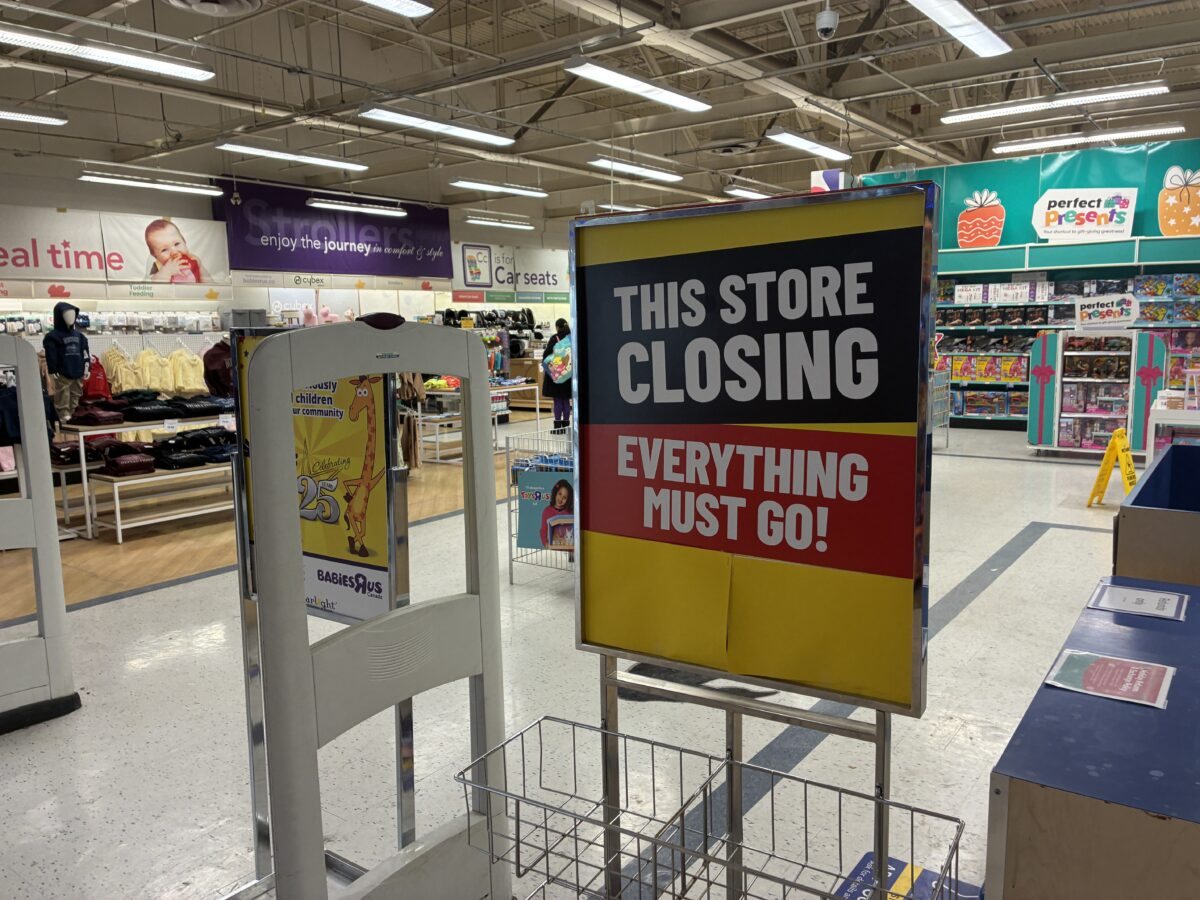
Other GTA closures include locations in Markham (CF Markville, closed August 2025), multiple Mississauga stores, and the Newmarket location at Upper Canada Mall, which is currently in liquidation mode with everything-must-go signs posted.
Remaining GTA locations include stores in Vaughan, Etobicoke, Brampton, Don Mills, North York, Whitby, and Scarborough, though the long-term viability of these stores remains uncertain given the CCAA filing.
The closures leave fewer options for Toronto families seeking the in-store toy shopping experience. While alternatives exist—including Mastermind Toys, Indigo, and smaller independent shops like Playtime Toys and Toy Terminal—the loss of multiple large-format Toys “R” Us stores represents a significant shift in how families shop for toys in the region.
For landlords and shopping centres, the empty big-box spaces present a challenge.
What This Means for the Industry The Toys “R” Us filing underscores the harsh reality facing specialty retailers in Canada. The shift to e-commerce, price-driven shopping through Amazon and mass merchants like Walmart, and the seasonal nature of toy retail have fundamentally changed the economics of operating large-format specialty stores.
Court documents cite inflation, rising labour costs, supply chain disruptions, and the shift toward e-commerce as key factors behind the filing. The company attempted layoffs, store closures, supplier negotiations, and exploring alternative revenue streams throughout 2023 and 2024, but these efforts weren’t enough to stabilize the business.
The toy category remains highly seasonal, with Christmas driving the bulk of annual sales and Q1 typically representing the weakest period. This creates cash flow challenges that are compounded when stores carry high overhead costs and struggle with inventory management around fast-changing entertainment licensing trends.
The Putman Investments Portfolio The filing raises questions about the broader stability of Putman Investments’ retail portfolio. Ancaster-based Putman acquired Toys “R” Us Canada from Fairfax Financial Holdings in 2021 and also owns HMV, Sunrise Records, FYE, Ricki’s, Cleo, and Northern Reflections.
Signs of strain are visible across the portfolio. During the 2025 holiday period, Putman closed all T. Kettle locations and previously shuttered Rooms + Spaces. Sister company Everest Toys entered receivership last year. Ricki’s, Cleo, and Northern Reflections have all suspended e-commerce operations.
The interconnected nature of these operations means challenges at one brand can ripple across others, particularly when they share logistics, warehousing, and back-end systems.
What This Means for Communities For Toronto and GTA families, the potential loss of Toys “R” Us locations represents more than just one less place to shop. The chain has been a destination for birthday shopping, holiday browsing, and baby registry needs since 1984. While alternatives exist—Walmart, Indigo, Amazon—the loss of a dedicated toy specialty retailer changes the retail landscape, particularly in suburban areas where big-box stores anchor shopping districts.
The filing also puts jobs at risk. With stores still operating during the restructuring, thousands of Canadian employees remain employed for now, but further store closures would inevitably lead to layoffs in communities already dealing with retail sector uncertainty.
For landlords and shopping centres, the Toys “R” Us spaces represent significant square footage that will need to be backfilled. These large-format locations are challenging to re-lease in an environment where fewer retailers are expanding physical footprints.

Where Toys “R” Us Still Operates
As of the CCAA filing, Toys “R” Us Canada lists 22 locations on its website, a dramatic contraction from the 81 stores that existed when Putman Investments acquired the business in 2021.
The remaining stores are heavily concentrated in Ontario, which accounts for 12 of the 22 locations. These include stores in Barrie, Brampton, Hamilton, Kingston, Kitchener, Newmarket, St. Catharines, Sarnia, Vaughan Mills, Whitby, and two Ottawa-area locations (Nepean and St. Laurent).
Outside Ontario, the footprint is minimal. Quebec has been reduced to a single location in Saint-Bruno. Manitoba maintains two Winnipeg stores (Kildonan and Polo Park). Alberta has three locations remaining: one in Lethbridge and two in Edmonton (North and South). Saskatchewan lists stores in Regina and Saskatoon, though both are currently operating in liquidation mode. Newfoundland’s lone St. John’s location rounds out the national presence.
Current Store Locations:
Ontario (12 stores):
- Barrie – 555 Bayfield St
- Brampton – 150 West Drive
- Hamilton – 970 Upper Wentworth St
- Kingston – 1020 Midland Avenue
- Kitchener – 419 Fairway Road South
- Newmarket – Upper Canada Mall, 17600 Yonge Street
- Nepean – 1683 Merivale Road
- Sarnia – Lambton Mall, 1380 London Road
- St. Catharines – Niagara Pen Centre, 221 Glendale Ave
- St. Laurent – Saint Laurent Shopping Centre, 1200 Saint Laurent
- Vaughan Mills – 1 Bass Pro Mills Drive, Unit C2
- Whitby – 50 Thickson Rd South
Quebec (1 store):
- Saint-Bruno – 655, Boulevard Des Promenades
Manitoba (2 stores):
- Winnipeg (Kildonan) – 1560 Regent Ave W
- Winnipeg (Polo Park) – 1445 Saint Matthews Ave
Alberta (3 stores):
- Lethbridge – 225 1st Avenue South
- Edmonton (North) – 13029 97th Street NW
- Edmonton (South) – Southpark Village Mall, 3940 Gateway Blvd NW
Saskatchewan (2 stores – both in liquidation):
- Regina – 730 Albert Street
- Saskatoon – 300 Idylwyld Drive South
Newfoundland (1 store):
- St. John’s – Woodgate Plaza, 58 Kenmount Road
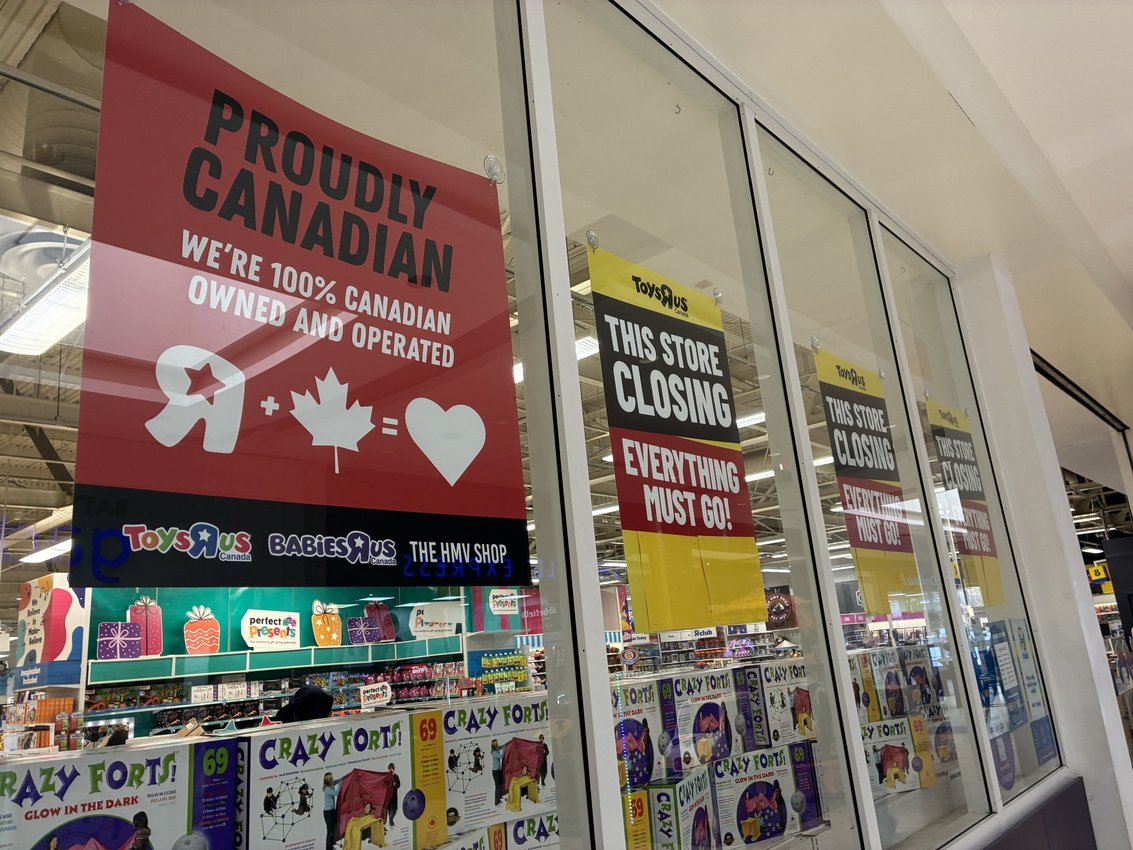
The geographic distribution tells the story of a retailer that has completely exited British Columbia, Atlantic Canada (except Newfoundland), and effectively abandoned any semblance of a coast-to-coast presence. Several listed locations, including the Newmarket Upper Canada Mall store, are already displaying liquidation signage despite still appearing on the company’s website.
With the CCAA filing explicitly stating that further reductions to the retail footprint are planned, even these 22 locations represent a snapshot that will likely shrink further in the weeks ahead.
The Real Estate Factor Real estate is expected to play a central role in whatever comes next. Multiple Toys “R” Us properties have been listed for sale in recent months, including freestanding locations in Ontario, Alberta, and Quebec. Some assets have already sold, while others remain on the market.
For retailers operating in highly leveraged situations, selling real estate often becomes one of the few available options to generate cash and address obligations. The proceeds can help satisfy creditors, but it also shrinks the asset base and limits future operating flexibility.
What Happens Next The CCAA process provides breathing room but not certainty. Over the coming weeks, Toys “R” Us Canada must outline a viable restructuring plan. Options include:
- Further downsizing: Additional store closures to focus on the strongest performing locations
- Lease renegotiations: Working with landlords to reduce rent obligations
- Asset sales: Continued sale of owned real estate to generate cash
- Business sale: Finding a buyer for all or part of the operations
- Liquidation: If no viable path forward exists, closing remaining stores and winding down operations
The company could emerge as a smaller, more focused retailer. Alternatively, a buyer could acquire the business out of CCAA proceedings. The monitor’s court filings indicate that liquidating stores, furniture, equipment, and developing a sales process for remaining locations are all on the table.
The next court appearance and monitor reports will provide more clarity on which direction the company is heading.
What We’re Watching
- Which specific Toronto and GTA locations may be on the closure list
- Whether a buyer emerges for the business
- How creditors, particularly landlords and suppliers, respond to the restructuring proposals
- The ripple effects on other Putman Investments brands
- What retailers might backfill large-format Toys “R” Us spaces in key shopping districts
The coming weeks will determine whether Toys “R” Us Canada can chart a path to survival or whether the brand that defined toy retail for generations of Canadian families will disappear from the landscape entirely.
Media Coverage
CNW (Press Release): Toys “R” Us Canada Announces Commencement of Proceedings Under Companies’ Creditors Arrangement Act – February 3, 2026
CBC News: Toys ‘R’ Us Canada files for creditor protection – February 3, 2026
Retail Insider: Toys “R” Us Canada Seeks CCAA Protection – February 3, 2026
CP24: Toys “R” Us Canada files for creditor protection – February 3, 2026
The Globe and Mail: Toys “R” Us Canada files for creditor protection – February 3, 2026
Global News: Toys ‘R’ Us Canada seeks creditor protection, owns vendors at least $120M – February 3, 2026
The Toy Book: Toys “R” Us Canada Enters Restructuring Process Under CCAA – February 3, 2026
Yahoo Finance Canada: Toys ‘R’ Us Canada files for creditor protection, owes vendors $120M – February 3, 2026
BNN Bloomberg: Toys ‘R’ Us Canada facing another lawsuit from landlord claiming it’s owed rent – February 2, 2026
BNN Bloomberg: Trouble in Toyland: Toys ‘R’ Us Canada facing suits seeking millions in unpaid rent – January 22, 2026

Dustin Fuhs is the founder and Editor-in-Chief of 6ix Retail, Toronto’s premier source for retail and hospitality industry news. As the former Editor-in-Chief of Retail Insider, Canada’s most-read retail trade publication, Dustin brings over two decades of expertise spanning retail, marketing, entertainment and hospitality sectors. His experience includes roles with industry giants such as The Walt Disney Company, The Hockey Hall of Fame, The Canadian Opera Company, Starbucks Canada and Blockbuster.
Recognized as a RETHINK Retail Top Retail Expert in 2024, 2025 and 2026, Dustin delivers insider perspectives on Toronto’s evolving retail landscape, from emerging brands to established players reshaping the city’s commercial districts.