
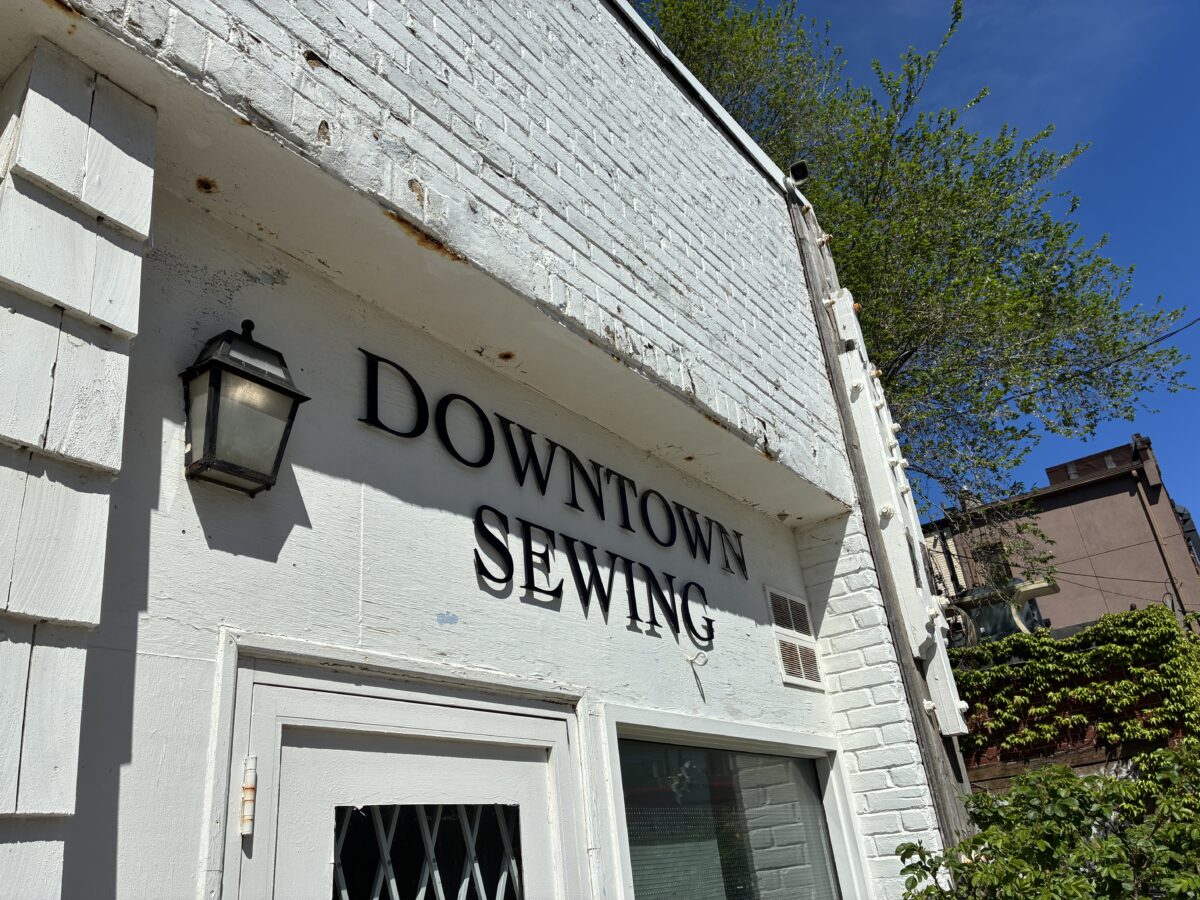

Walk two blocks east of Downtown Sewing and you find Type Books and The Paper Place on the same short stretch of Queen West. Three independent businesses that arrived separately and share nothing on paper except a customer. The same person buying a novel, picking up a notebook, and booking a sewing class is not being cross-promoted into any of it. They are just showing up because the street keeps giving them a reason to.

In late April, the Toronto Stationery Show drew lineups three and four hours long. Not a concert. Not a product drop. People waiting to be around other people who make things. The event ran out of capacity. Downtown Sewing’s beginner classes sell out within hours of posting. The pattern is the same. The street is not.
“Pre-pandemic and through it, people got very comfortable with the Netflix hobby lifestyle, just not really doing anything,” says Tobias Binder, who opened Downtown Sewing on Walnut Avenue in April 2025. “In the past few years that has really started to break. People want to make things again. They want to be somewhere. And that has created more demand for a business like this than I think even I anticipated.”
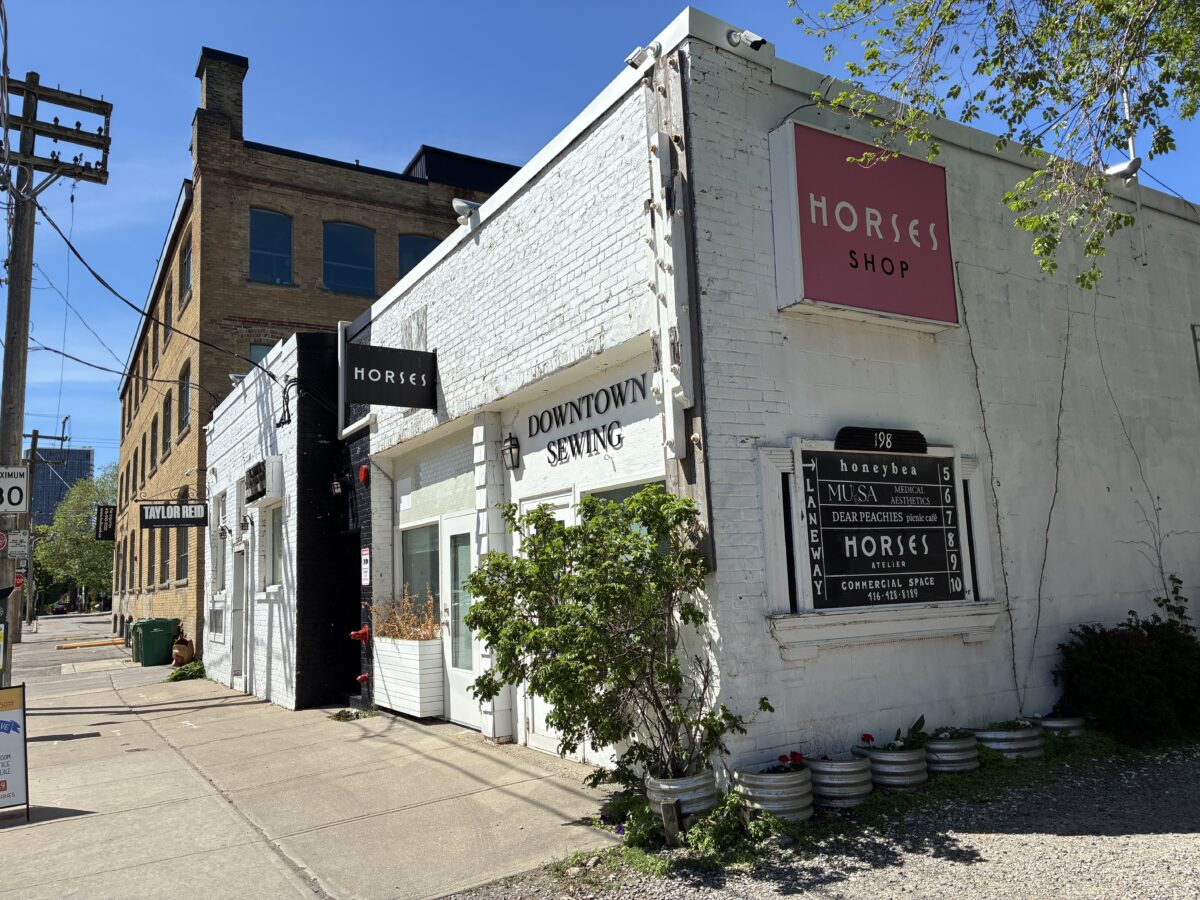
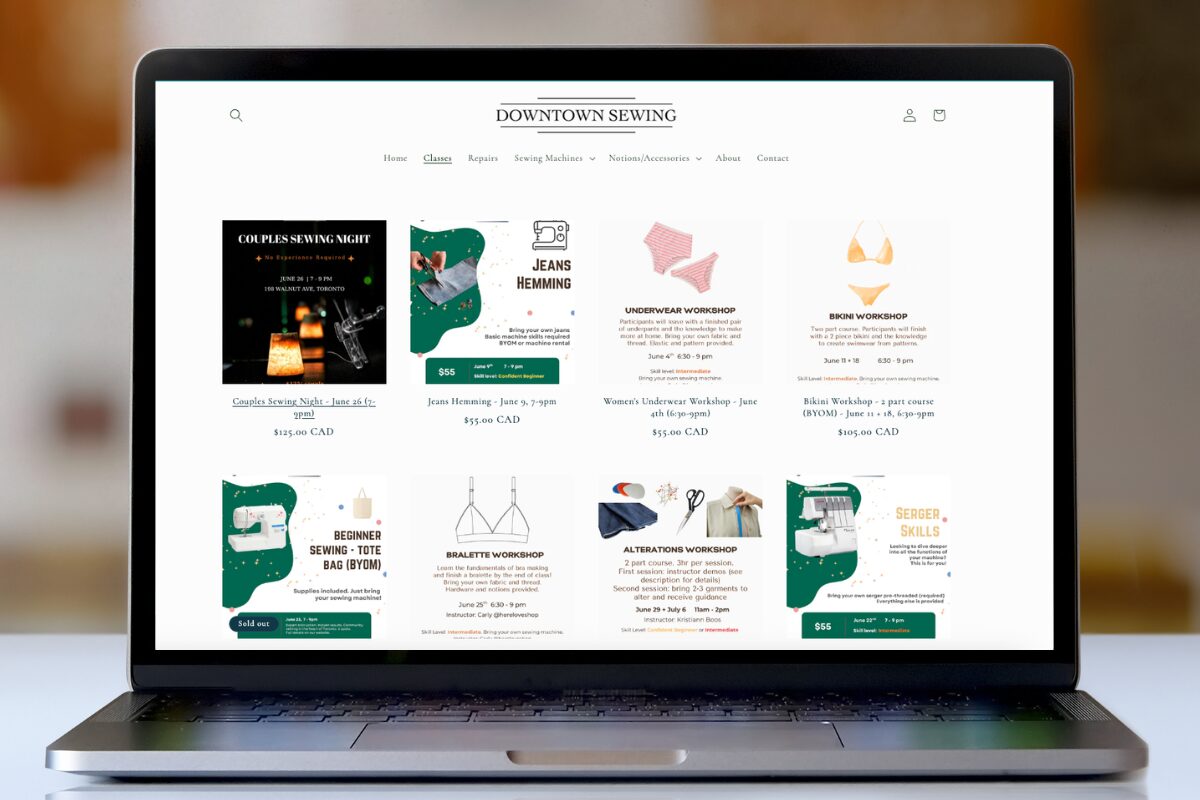
Binder was 25 when he opened. He describes Downtown Sewing as Toronto’s next generation sewing centre, built on modern sensibility and old fashioned customer service. The business runs on three pillars: sewing classes, machine repairs, and machine sales, both new and used. As an authorized Janome dealership and service centre, customers who buy a machine get full warranty support directly through the store. No customer service emails. No shipping the machine somewhere. Call and bring it in.
“A lot of businesses come and go, and I think I know why,” he says. “They want to impart their vision onto the customer, what the customer should want, what the experience should be. But if you want a sustainable business, you have to flip that entirely. You have to imagine you are the customer experiencing your website for the first time, walking past your window for the first time. What is going to make them say yes, I’m in? Keep it simple. Give people what they want. That is the whole thing.”
Before the store existed, Binder had a TikTok. Comedy skits, tips and tricks, sewing machine videos, purely for fun. When it came time to launch, he had no Instagram account at all.
“The TikTok gave me some credibility going in,” he says. “But Instagram was a brand new account. Zero followers. The first thing I ever posted was the store announcement, and it exploded. What that told me is that the demand was already there. I did not build an audience and then open a store. The community existed before I did. I just gave it somewhere to go.”
The comments that flood in across both platforms are another story. Requests, opinions, suggestions, noise from people who will never set foot on Walnut Avenue. Binder reads them.
“There are probably 101 things you could be doing at any given time, and a comment section full of people happy to tell you what all of them are,” he says. “But there are really only a few things you should actually be doing. I would rather do three things so well that people have no reason to go anywhere else than do ten things that give them every reason to.”
Those few things are classes, repairs, and machine sales. The way they work together is not obvious from the outside.
“Someone takes a few classes, gets comfortable with sewing, and when they are ready to buy their first machine, they are buying it here,” he says. “Someone brings in a machine for a repair, I do good work on it, they trust me, and when the time comes to upgrade, they are coming back. The classes and the community are what get you the media coverage, the word of mouth, the reputation. And all of that eventually becomes a machine sale.”
Machine repairs are also a market position most people do not think about. The expertise behind them is not incidental. In 2021, Binder flew to the Fix Sewing Machine Institute in Temple, Texas specifically to formalize his repair training. He built a repair business out of his home in Guelph before moving to Toronto in 2023. Finding someone to repair a sewing machine in central Toronto is harder than it sounds, and Binder knows it.
“I am really the only one who is central downtown proper,” he says. “People come to me because there is no one else. And once they trust you with their machine, you have won their business.”
Entry-level Janome machines start at $229 at Downtown Sewing.
Earlier this spring, Binder posted a video announcing a fabric sale. Good quality fabric, priced well below market. He posted it and watched it go further than he expected. People lined up on Walnut Avenue. Customers walked in who had never heard of Downtown Sewing before.
He knew going in that he probably did not have enough fabric for everyone who would show up. He ran the sale anyway.
“It may not have been a huge cash flow event,” he says. “I honestly do not know how much I profited. But people were walking in saying they had never heard of us, asking what we do, looking around the space for the first time. That kind of exposure is hard to manufacture and even harder to buy. It was not a publicity stunt exactly, but it was not far off. The lineup itself was the point.”
A single video, a genuine offer, a physical lineup on a side street. No ad spend. No outside help. The anniversary sale marking one year on Walnut Avenue ran on exactly the same logic. Independent retail operators watching well-funded brands struggle to manufacture moments like that should be paying attention.
The TorontoToday piece that ran at launch focused heavily on Binder’s age. He is deliberate about not making it the centre of the brand.
“Too many entrepreneurs lead with their story,” he says. “Who am I, where did I come from, look at this journey. But people have to care before they want to know any of that. When someone finds us online or walks past the window, the first thing they should understand is what we do and where we are. That is it. My story is on the website if you go looking for it. But I am just a vessel for the business. The personality is a tool. The business is the point.”
The name was his brother’s idea. Binder heard it and knew immediately it was right.
“It instantly tells you what to expect without locking you into anything,” Binder says. “Downtown. Sewing. That is the whole pitch. And because it is not tied to Toronto specifically, it could work anywhere. That matters to me, even if I am not ready to act on it for a few more years.”
He is not ready to act on any of it yet. A couple more years belong to this location. But he is already thinking past it.
“There is real demand for this kind of business and nowhere near enough people meeting it,” he says. “I could teach someone how to repair machines, how to run classes, how to set up their social media, how to build the whole model. That training course could be genuinely valuable, and it does not require me to open a second location to do it.”
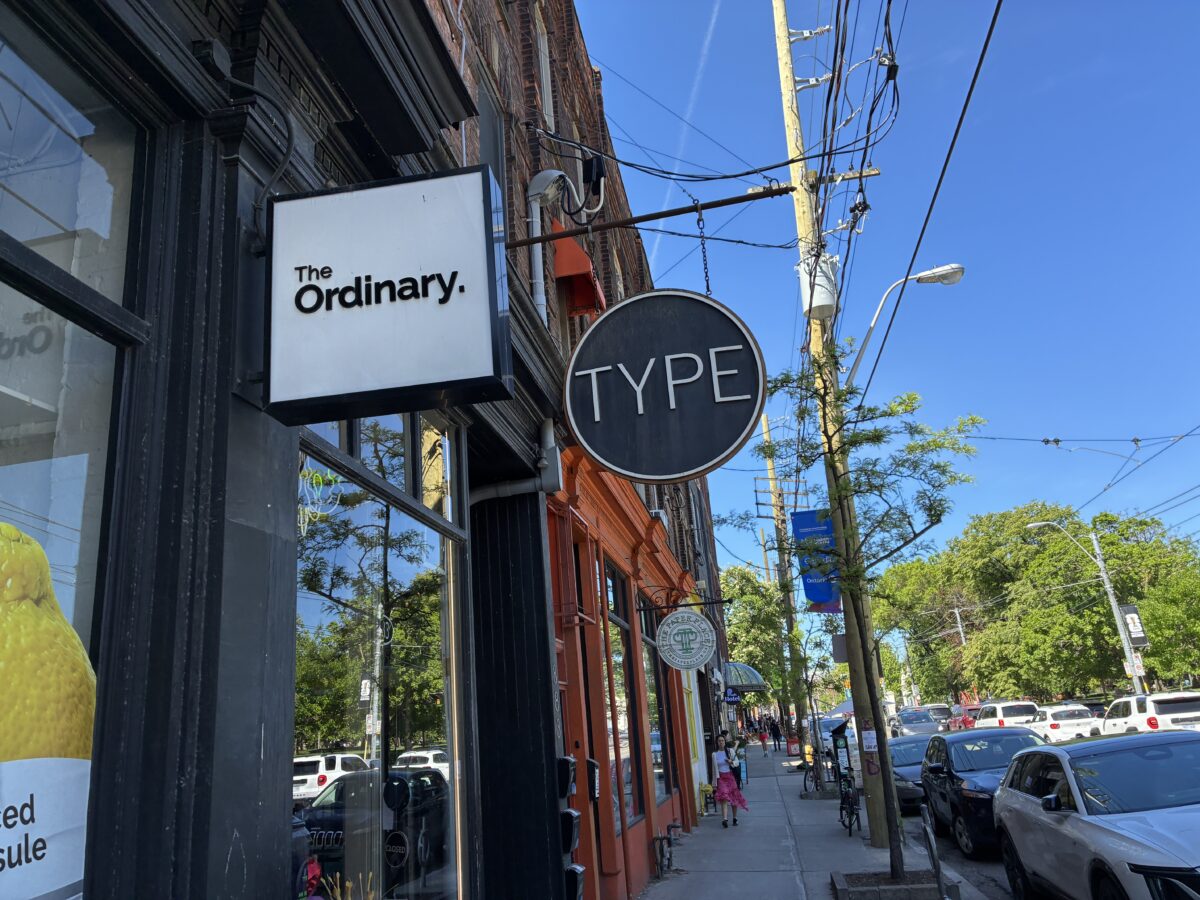
The neighbourhood raises a natural question about collaboration. Type Books and The Paper Place are all operating in the same creative ecosystem. Theme nights, pop culture crossovers, the kind of programming that draws a different crowd than the regular class roster. Binder has experimented at the edges of it.
“Those kinds of events are fun and I have done them,” he says. “A Valentine’s Day singles matchmaking night, a couples date night format. Great evenings. But they do not breed repeat customers. Someone comes in, has a good time, tries something new, and moves on. The regular classes are for people who actually want to learn to sew, who come back for the next level, who eventually buy a machine. I have to be honest with myself about what is driving the business and what is just a good night.”
That clarity is worth more than it sounds. The current moment in Toronto independent retail is full of concepts that are built around the event, the pop-up, the experience night, without a durable business underneath it. The Distillery District’s new Cooperage Marketplace is a useful example. Opened last month inside a heritage building dating to the 1860s, it brings together seven independent Canadian brands under one roof. Some are genuinely compelling. Others are exactly what you would find at One of a Kind. The building is historic. The experience is the wrapper. Whether the businesses inside can sustain themselves beyond the foot traffic is a different question.
Downtown Sewing is the inverse. The experience is real because the skill underneath it is real. The classes sell because people leave knowing something they did not know before. The repairs bring people back because the machines actually work afterwards. The sales happen because the trust was built first. None of it can be faked, franchised carelessly, or replaced by a better content strategy.
The customer who found Downtown Sewing through the fabric sale, or a class, or by walking past the window, is the same one Type Books and The Paper Place already know. Horses Atelier, the beloved made-in-Toronto clothing brand that operated on Walnut Avenue for over a decade, closed its doors last month citing the near impossibility of sustaining independent production in the city. The street knows what it stands to lose. Downtown Sewing is part of what it stands to gain.
That is not a coincidence. That is a corridor. And right now, it is one of the more interesting things happening in Toronto retail.
Downtown Sewing is located at 198 Walnut Avenue, Toronto. Classes, repairs and machine sales are available at dtsewing.com

Dustin Fuhs is the founder and Editor-in-Chief of 6ix Retail, Toronto’s premier source for retail and hospitality industry news. As the former Editor-in-Chief of Retail Insider, Canada’s most-read retail trade publication, Dustin brings over two decades of expertise spanning retail, marketing, entertainment and hospitality sectors. His experience includes roles with industry giants such as The Walt Disney Company, The Hockey Hall of Fame, The Canadian Opera Company, Starbucks Canada and Blockbuster.
Recognized as a RETHINK Retail Top Retail Expert in 2024, 2025 and 2026, Dustin delivers insider perspectives on Toronto’s evolving retail landscape, from emerging brands to established players reshaping the city’s commercial districts.