


8.5 million Canadians engaged in golf in some form in 2025. Of those, 1.1 million tried the sport for the first time. Rounds played increased 7.9 percent, the fifth consecutive year of growth, pushing national participation 36.4 percent above where it was in 2019. The industry generates more than $23 billion in annual economic impact and supports 239,000 jobs across the country.
The game has never been bigger. And inside that growth, there is an opportunity the industry has not yet fully captured.
New research from Lightspeed Commerce, which powers operations at more than 2,500 golf courses globally and serves as the Official Golf Management Software of the PGA of Canada, finds that women now make up 28 percent of on-course golfers in North America, the highest share the sport has ever recorded. Seventy percent say they would prefer to play nine holes or less. And when asked what draws them to the game, women score significantly higher than men on every measure tied to community and social belonging. Not competition. Not fitness. Belonging.

The same research found that 46 percent of those women play fewer than 10 rounds a year.
Fraser Marriott, Head of Golf at Lightspeed Commerce, has spent years watching this from inside the data at thousands of golf operations. He sees in that number not a problem but a door that is wide open.
“Everything the data suggests, this is structural, not seasonal. There is a huge subset here that needs to be addressed and it is not being addressed. We need to get there.”
COVID changed the game in ways that went beyond participation numbers. Golf became one of the only safe outdoor activities available and the sport gained enormous numbers of new players almost overnight. What it lost in the process took longer to notice.
“Since COVID, golf has really become more transactional. People are showing up, hitting balls, playing, going home. It’s really lost that club atmosphere. The opportunity is how you bring that club atmosphere back.”
Inside Lightspeed’s network the response is already taking shape. Four courses came onto the platform this year offering 12-hole formats for the first time. Nine-and-dine evenings, three-hole clinics built around social programming, beginner experiences designed around community rather than competition. The operators who are finding the biggest gains have arrived at the same conclusion.
“You almost make golf secondary. What is the most important part is the experience. You’re immersed in nature, there’s the game, which is incredible, but if you have someone where they’re driving up, dropping their clubs off, never having to touch a thing, just showing up and enjoying their day, more of a member for a day experience, that’s where a lot of these golf courses are heading.”
The revenue that follows that shift is measurable. Courses using Lightspeed’s platform to reduce dead inventory by 15 to 20 percent are seeing between $50,000 and $200,000 return directly to their bottom line, enough to hire staff, enough to fund programming, enough to go after an audience that the data says is ready and waiting. One course identified a consistently slow Tuesday, built a women’s league around it, and saw a five percent revenue increase.
The booking window is where Marriott sees the largest single opportunity sitting completely unused.
“If you’re planning a round on Sunday but booking it on Monday or Tuesday, you’re giving that pro shop six days to put together an experience. And no one is doing it. You already have commitment. They want to be there.”
Lightspeed’s research shows women golfers index significantly higher than men on loyalty programs and respond strongly to offers connected to food, beverage, and clothing. Once that loyalty is earned the math changes entirely.
“There is a huge correlation. If you have access to brands, promotional deals, loyalty programs, and you can book in advance, I can book you a time in two weeks and give you 20 percent off because you’re a recurring client. Who doesn’t come back and love that course?”
The pro shop is where the gap between potential and reality shows up most clearly in the numbers. Lightspeed’s research found that only 21 percent of women golfers purchase from golf course pro shops, compared to 33 percent who buy from major golf retailers. Marriott sees the solution in a shift that is already underway inside Lightspeed’s supplier network.
“Where this is heading is less inventory on hand and more special orders. That’s something Lightspeed is really focusing on with our supplier network. It’s not about bringing in an entire line with a full size run. It’s really about having access to the brand. That’s what people want. They want access.”
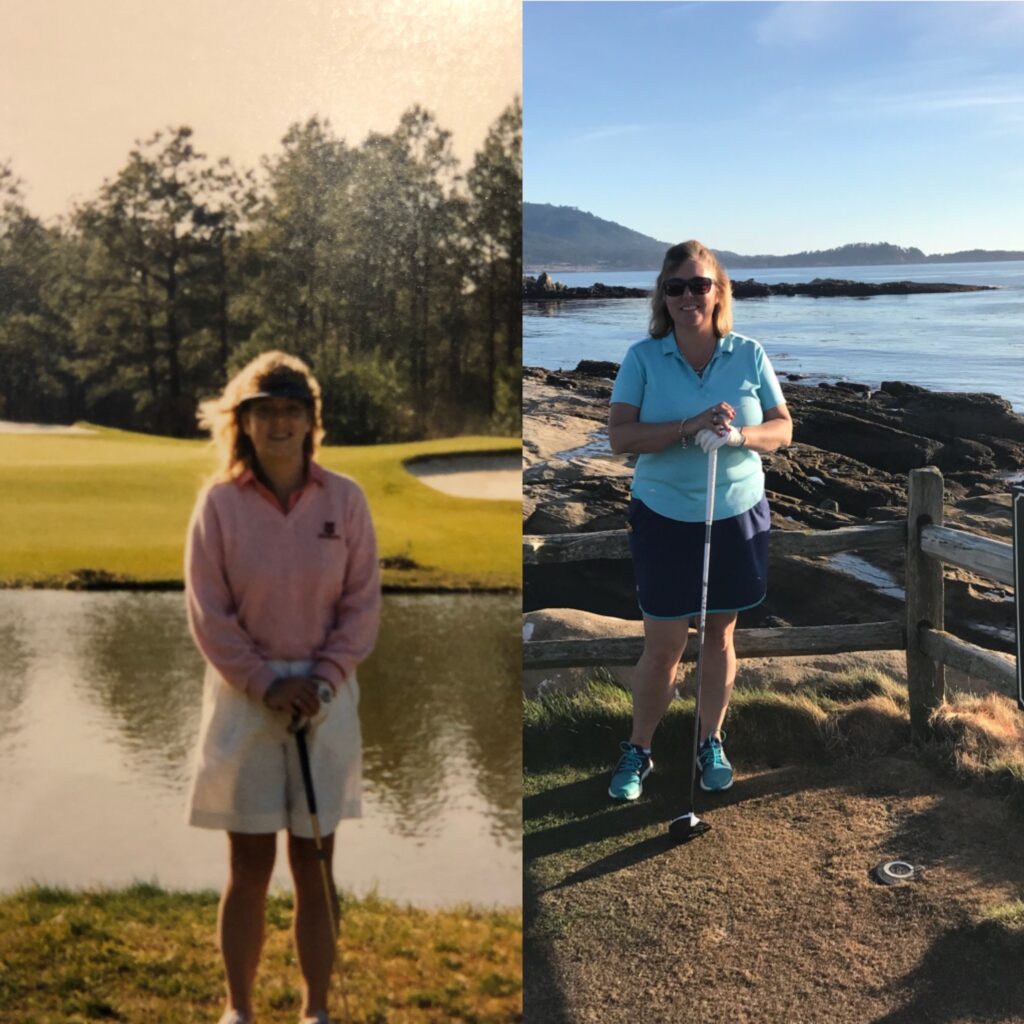
Lesley Hawkins spent 30 years building golf brands from the inside, at Cobra Golf, at FootJoy, and at adidas, where she ran adidas Golf Canada before becoming VP of Retail for the entire Canadian business. She now sits on the Golf Industry Advisory Council for Golf Canada, reporting to the CEO. She has been playing the game for 41 years, shoots in the 80s, and has played the Old Course at St. Andrews and Pebble Beach. She brings to this conversation something no platform data can replicate: four decades of watching women engage with the game from inside the industry that serves them.

She does not dispute what the Lightspeed data shows. She wants the industry to understand what it means.
“I would be cautious about calling this a structural shift until the experience at a golf course actually changes. The conversation around women’s golf has changed and there is an increase in programming. But raising awareness and actually designing around it consistently, those are two different things.”
The Lightspeed research points to community and camaraderie as the primary reasons women play. Hawkins has spent four decades watching this play out on courses across the country and she is precise about what it means for the industry.
“In my experience it is about social belonging, but I would call it community or camaraderie. Most of the women I’ve seen on the golf course aren’t keeping score against each other. If they track their game at all it’s for their own improvement. They’re there to have fun and spend time outdoors with people they care about, family, friends, and generally not take things too seriously.”
Despite a common perception that golf is gated or exclusive, 90 percent of Canada’s 2,100 golf courses are publicly accessible. The opportunity is not locked behind a membership. Understanding where the real barriers live, and how quickly they can be removed, is where the biggest gains are waiting.
“There are rules of what happens when you hit the ball out of bounds, who goes first, where you can tee up, but then there are all the other things beyond etiquette. Where should you stand when your partner is hitting? Where should you park your cart? None of it is in the rulebook. And if you’re new to the game, how are you supposed to know that?”
Hawkins points to a Canadian course in Alberta that has built its entire beginner women’s program around eliminating that anxiety before it starts. The first session involves no clubs. Participants are driven around the property and walked through every unwritten rule of the game before anyone picks up a club.
“There’s immediate anxiety when you get on property. So how do you create that sense of belonging? The first thing you need to do is get rid of that anxiety. A place like that is addressing it right out of the gate. Those are the places that get it.”
Belonging, Hawkins says, is not something a course can add through a new program or a policy change. It runs through the entire experience or it does not exist at all. And for operators willing to look at the full picture, the path forward is clearer than it might seem.
“Belonging is not a program. It’s not a policy. Every part of the consumer journey needs to actually be seen and felt by her. From the moment she pulls into the parking lot to when she’s sitting on the patio having a drink. Every single touch point, whether it’s the signage, the pro shop, the starter, the marshal, the locker room, all of that carries with it a culture and an assumption of who the golfer is. And right now, most of those assumptions are not built around her.”
She is specific about where change would register most immediately, and most visibly.
“I have never met a female marshal and I have never met a female starter. I’ve played thousands of rounds of golf. Women are generally found in two places, in the pro shop selling clothing, or serving food and drinks on the golf course or in the clubhouse. That is not representation. And it does not signal to the woman arriving that this place was built with her in mind.”
Her prescription for any operator who wants to start does not require a consultant or a rebrand.
“Find a female who plays the game and who will tell you the truth, and walk from literally the parking lot throughout the whole consumer journey. I think it would be eye opening for what you will learn.”

Golf has been here before. The surge that followed Tiger Woods brought a generation of new players to the sport and then, over the years that followed, the industry did not hold them. What is different now is the scale of the audience, the depth of the data behind it, and the clarity of what needs to happen next. Hawkins has watched enough cycles move through this industry to know how quickly a moment like this can pass.
“I would love to look back and say after 30 years I can see there’s been a major change. And unfortunately there hasn’t. We’re having the same conversations we’ve been having for 30 years and a few things have changed, but not nearly enough.”
Marriott’s data arrives at the same place from a different direction.
“No golf course, unless it’s a full ladies’ club, is focusing on the female golfer. We need to get there.”
The audience is already here. It showed up in record numbers. It is loyal, community-driven, and ready to spend. The question the industry needs to answer is whether it is going to build around that audience or watch the opportunity move on without it. Hawkins puts it simply.
“I worry that the industry is going to look at this boom and think they’re good, they can just ride it. And if they don’t tap into the loyalty of those female golfers, because with them they bring their friends, they bring revenue, they bring family, this is a golden opportunity and I don’t want it to pass them by.”

Fraser Marriott is Head of Golf at Lightspeed Commerce, which powers golf and hospitality operations in more than 100 countries and is the Official Golf Management Software of the PGA of Canada. Lesley Hawkins is a Partner at Marsley Canada, a former General Manager of adidas Golf Canada and VP Retail at adidas Canada, and currently serves on the Golf Industry Advisory Council for Golf Canada. Lightspeed’s research was conducted by Medallia in Spring 2026, surveying 1,000 golfers across North America.

Dustin Fuhs is the founder and Editor-in-Chief of 6ix Retail, Toronto’s premier source for retail and hospitality industry news. As the former Editor-in-Chief of Retail Insider, Canada’s most-read retail trade publication, Dustin brings over two decades of expertise spanning retail, marketing, entertainment and hospitality sectors. His experience includes roles with industry giants such as The Walt Disney Company, The Hockey Hall of Fame, The Canadian Opera Company, Starbucks Canada and Blockbuster.
Recognized as a RETHINK Retail Top Retail Expert in 2024, 2025 and 2026, Dustin delivers insider perspectives on Toronto’s evolving retail landscape, from emerging brands to established players reshaping the city’s commercial districts.