
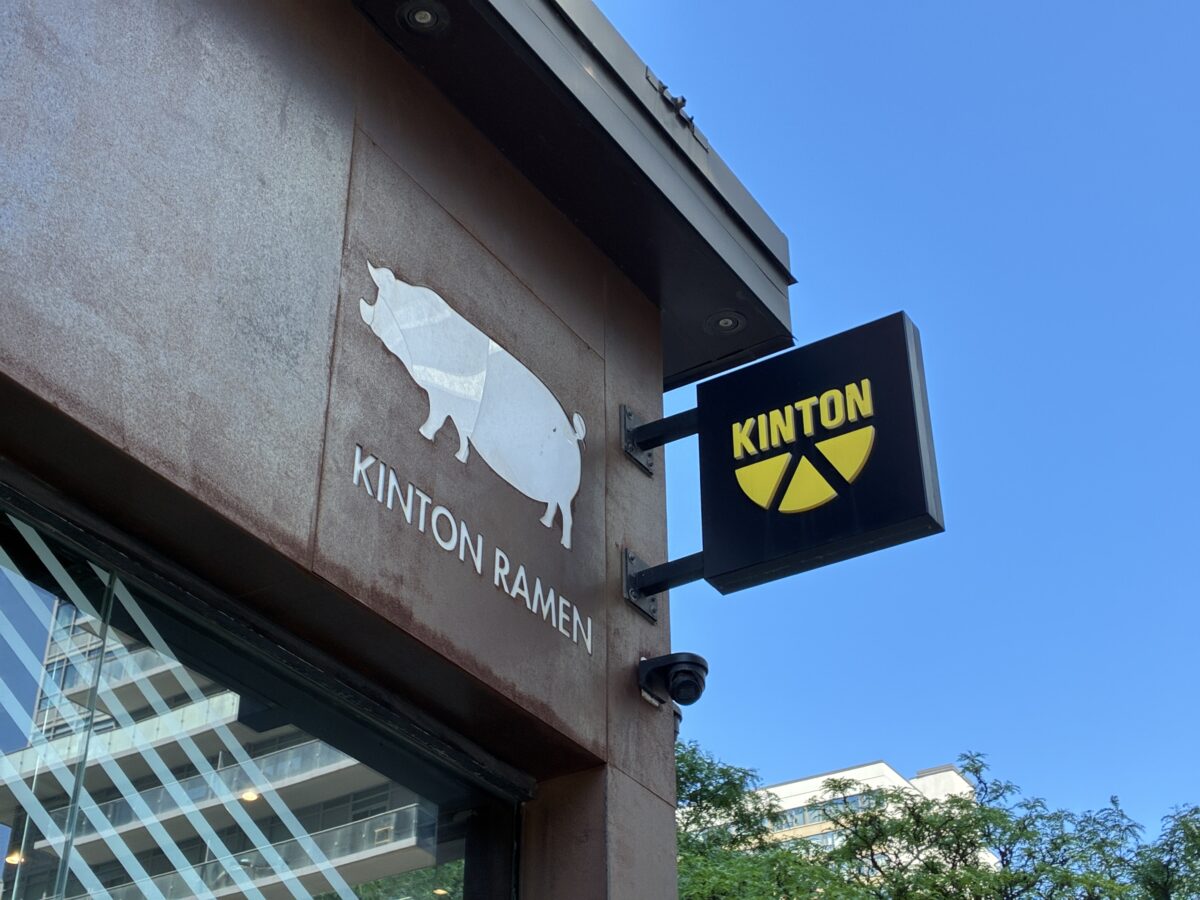

It started with a bowl of ramen.
Peter Mammas, the founder and CEO of Foodtastic, had been eating at Kinton Ramen long enough to understand what made it work. Not from a pitch deck, not from a broker introduction, not from a financial summary. From the food itself, and from the experience of walking into a restaurant that communicated its identity the moment you sat down.

“Kinton is one of those staples where as soon as you go in, you understand what the concept is,” Mammas told 6ixRetail.
The conviction came quickly. The deal took considerably longer. “I started working on this three years ago,” he said. “It took us three years to convince all the parties to sell to us. It’s been a long time coming, and I’m really happy we finally got it done.”
Three years is a long time to stay at a table. For Mammas, it is simply how the best deals get done. Foodtastic has grown from roughly $50 million in system sales in 2016 to over $1 billion today, and very little of that growth came from moving quickly. The brands that have defined the portfolio were not rushed in. They were earned over time, through patience and persistence, which is a less exciting story than it sounds until you see the result.
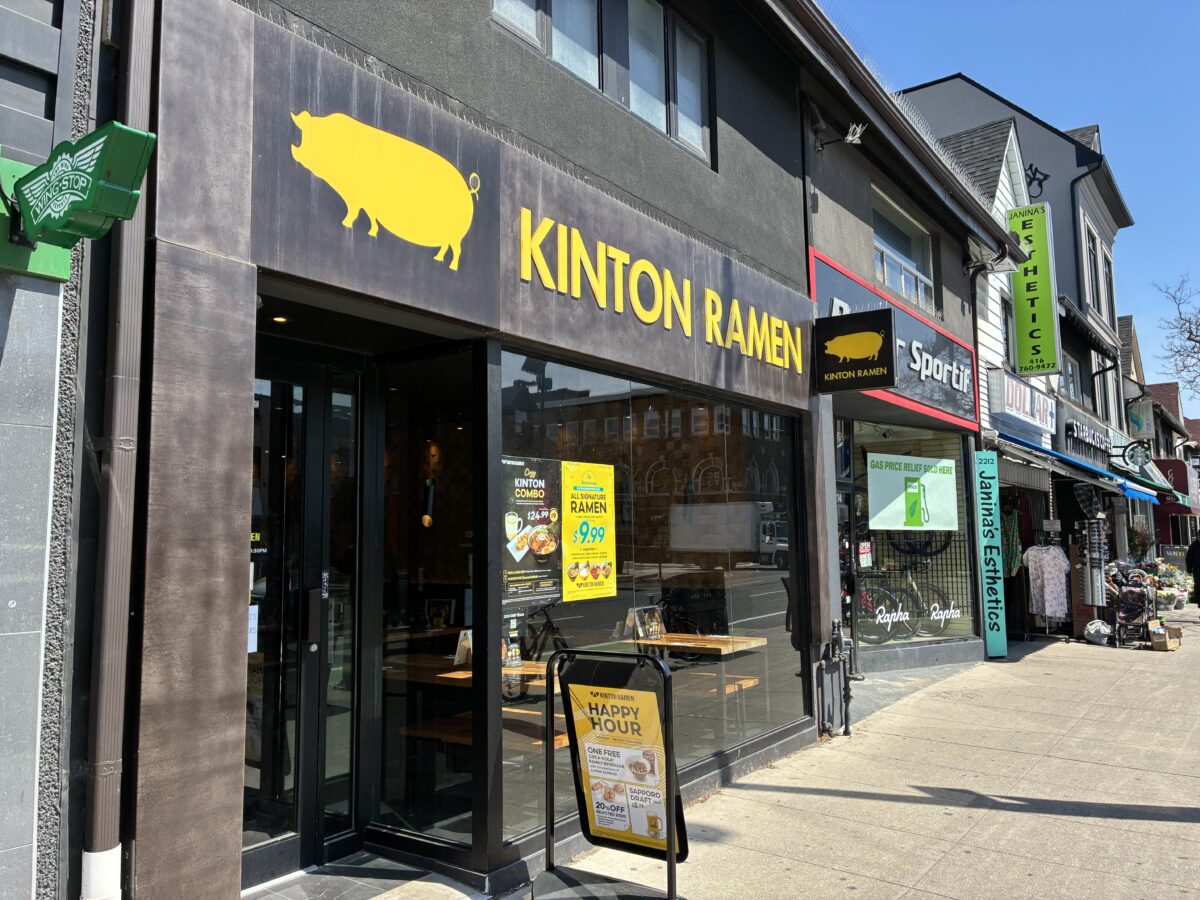
Today, Foodtastic announced the acquisition of Kinton Ramen, the Toronto-born Japanese ramen chain, making it the 30th brand in a portfolio that now spans more than 1,200 locations across Canada. The deal covers Kinton specifically, not the broader Kinka Family restaurant group, which also operates Kinka Izakaya, JaBistro, and Kintori Yakitori. Mammas was straightforward about why. “The other concepts, even though they’re amazing, are just too small for us,” he said. “We needed something with an established base that we could grow from. At our scale, we are looking for brands doing $100 million and more.”
Founded in Toronto in May 2012, Kinton was among the first Japanese ramen restaurants in the city. The brand was built around the culinary vision of Executive Chef Aki Urata, whose path to ramen is rooted in something far more personal than a business plan. After the 1995 Kobe earthquake destroyed his home, his school, and the restaurant he worked at, Urata began serving ramen from a food truck during the cold winter that followed. Watching how much a bowl of ramen meant to people in that moment shaped everything that came after. His approach to the craft, slow-cooked broths built from pork bone, chicken, fish, and fresh vegetables simmered for hours, became the culinary foundation the brand was built on.
After nearly a decade as a corporate chain, Kinton launched its franchise program in 2021 and has since grown to 58 locations across five Canadian provinces and into New York, establishing itself as one of the largest ramen chains in North America.
Kinton Ramen founder James Kim, who built the brand from a single Baldwin Street location into one of Canada’s largest Japanese restaurant groups, welcomed the transition on those terms. “Foodtastic understands the strength of the brand and the significance of preserving what guests and franchisees already know and value,” Kim said in a release. “We are looking forward to working with the Foodtastic team as Kinton enters its next phase of growth.”
Foodtastic has committed to keeping the menu, loyalty program, brand identity, and franchisee relationships unchanged.
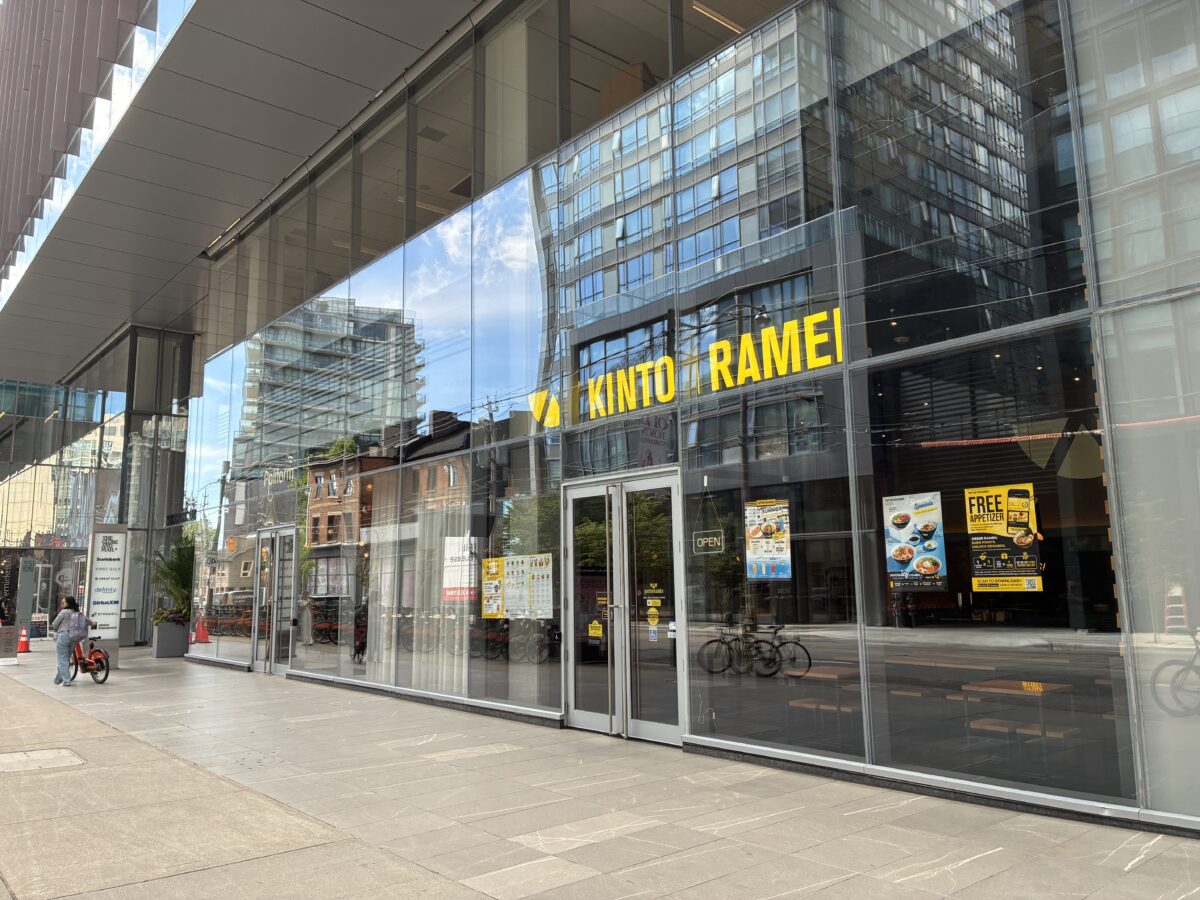
Beyond the numbers, what drew Mammas in was something harder to quantify. Kinton operates across a full spectrum of formats, from full-service dine-in restaurants to compact neighbourhood locations to a food court concept that launched at Vancouver’s Waterfront Centre earlier this year, running in as little as 350 square feet with self-order kiosks and a streamlined menu built for speed. In the restaurant franchise business, that kind of adaptability is genuinely rare.
“It works in different demographics, different spaces, different types of locations, whether there is parking or it is a downtown urban setting,” Mammas said. “We saw that it could fit into every different segment or neighborhood, and that is a rare thing.”
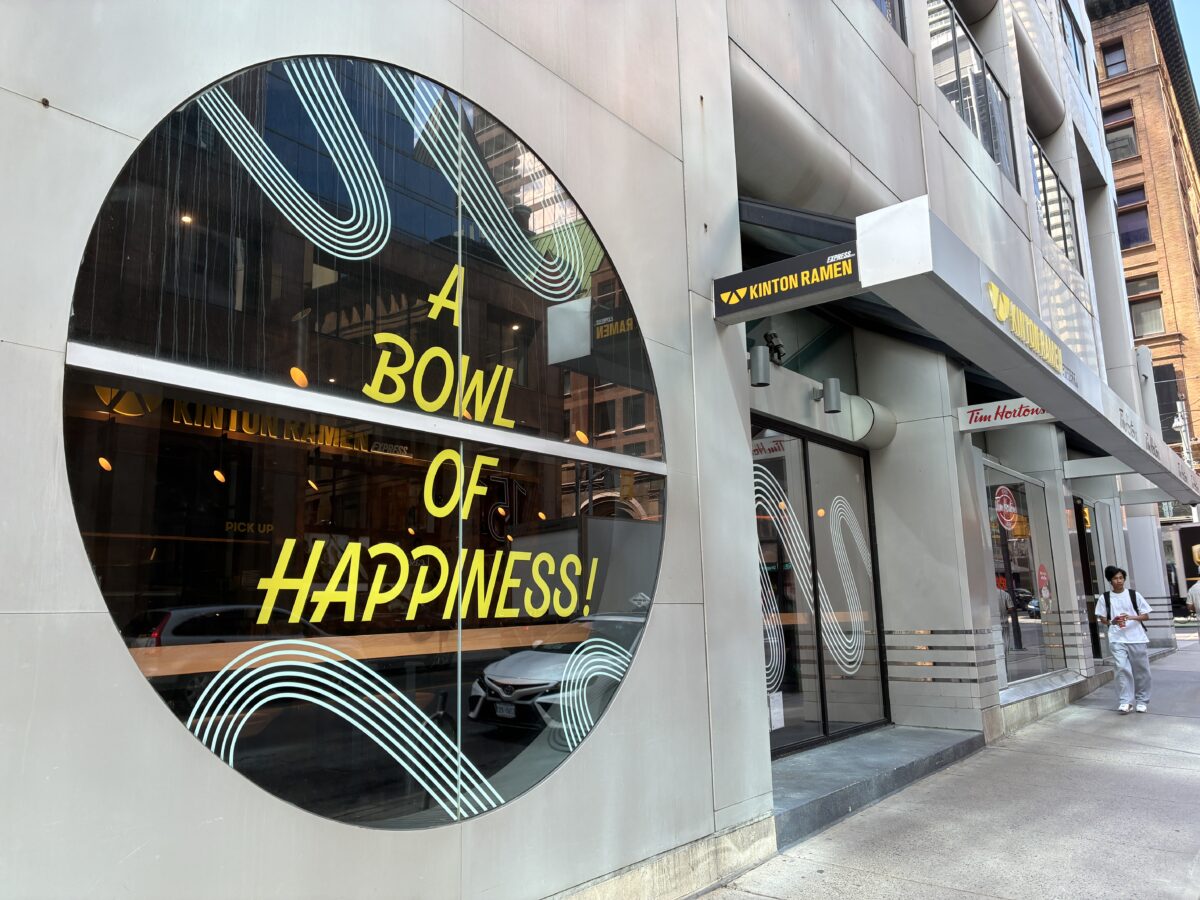
The acquisition reshapes the conversation Foodtastic can have with landlords and developers. As new commercial projects come to market across Canada, Foodtastic has increasingly become one of the first calls. “If someone has a new development, we can put a full-service restaurant in there, a Kinton, a Dunkin’, a Quesada,” Mammas said. “We can run three, four, five locations in a single project. That is a conversation most franchisors cannot have.” For existing franchisees on both sides of the deal, the doors that open are equally significant. Kinton operators now have access to a broader network of concepts, and Foodtastic’s existing franchisees have another proven brand to consider.
Running beneath all of this is something Mammas returns to without prompting. With the exception of Jimmy John’s and Dunkin’, for which Foodtastic holds the Canadian master franchise rights, every brand in the portfolio was born in Canada. He does not frame that as strategy. He frames it as an honest reflection of what this country produces.
“There is a lot of talent in Canada, a lot of entrepreneurship, and a remarkable diversity of cultures and cuisines,” he said. “When people come here, they bring their food, their traditions, the way they live. You go to Montreal or Toronto and you can eat almost anything in the world. That is saying a lot.”
The deal arrives at a complicated moment for the broader industry. The Canadian QSR sector entered 2026 under pressure, with geopolitical uncertainty and tariff concerns weighing on consumer confidence and new commercial development slowing across major markets. Mammas was candid about the conditions his franchisees have been navigating. “The beginning of this year was more challenging, particularly in QSR, with the geopolitical uncertainty and the tariff situation here in Canada,” he said. The operators feeling that pressure most acutely, he argues, are the ones without scale. “The larger you are, the better your position on real estate, on purchasing, on marketing. We leverage that size to give our franchisees a real advantage. That is something a smaller operator simply cannot replicate.”
On the consumer side, Foodtastic has leaned into value as the primary response to tightening discretionary spending. “Quality service is always the foundation,” Mammas said. “But over the last six months, the value proposition has become just as critical. We have been more promotional across the portfolio, making sure we are giving customers a reason to keep coming back.” He pointed to easing geopolitical tensions and a recent decline in gas prices as early indicators that conditions may be shifting, a development that would benefit the entire sector heading into the back half of the year.

Mammas also offered his first public update on Dunkin’, which Foodtastic announced in a conversation with 6ixRetail in May. The response from landlords and prospective franchisees has already surpassed the company’s original projections. “The outpouring has been incredible,” he said. “We are going to surpass what we projected when we first built the case for bringing Dunkin’ to Canada.” A first Canadian location is expected before the end of 2026, with development moving simultaneously in the GTA and Montreal.
Foodtastic added Central Social Hall in February, announced Dunkin’ in May, and has now closed Kinton in June. The pace has not let up, and Mammas makes no suggestion that it will. “We are always in conversations,” he said. “I cannot remember a time when we were not negotiating with someone. Deals like Kinton take years to come together, but we are definitely talking to other people right now.”
As for where Foodtastic stands in its own story, Mammas is resistant to the idea that the company has arrived at anything. He is more interested in the distance still ahead. Recipe Unlimited has been building for roughly 70 years. MTY Food Group has been at it for 40. Foodtastic is 10 years old. “We are in the early innings,” he said, “and we are going to continue to grow the right way.” He let the next line land on its own. “Hopefully one day we make it to the Hall of Fame.”
Ten years in, with 30 brands, a billion dollars in system sales, and a pipeline that by his own admission never stops, the invitation may come sooner than he lets on.

Dustin Fuhs is the founder and Editor-in-Chief of 6ix Retail, Toronto’s premier source for retail and hospitality industry news. As the former Editor-in-Chief of Retail Insider, Canada’s most-read retail trade publication, Dustin brings over two decades of expertise spanning retail, marketing, entertainment and hospitality sectors. His experience includes roles with industry giants such as The Walt Disney Company, The Hockey Hall of Fame, The Canadian Opera Company, Starbucks Canada and Blockbuster.
Recognized as a RETHINK Retail Top Retail Expert in 2024, 2025 and 2026, Dustin delivers insider perspectives on Toronto’s evolving retail landscape, from emerging brands to established players reshaping the city’s commercial districts.