
Starbucks announced this week it will close approximately 400-500 stores across North America by the end of September as part of a massive $1 billion restructuring plan. In Toronto, 13 locations are confirmed closing, leaving hundreds of workers without jobs and eliminating familiar neighbourhood gathering spots across the city.
The closures represent more than typical annual turnover, with CEO Brian Niccol acknowledging this is “a more significant action that we understand will impact partners and customers” as part of the company’s struggling “Back to Starbucks” transformation strategy.
We will be updating this article as new information becomes available, so please keep an eye out on our instagram stories (@6ixRetail) for updated location confirmations.
Workers and advocates are tracking closures in real-time on Reddit, documenting the human impact across North America.
Why This Feels Different: Toronto Already Lost 29 Locations in 2021
Today’s 13 closures might seem modest, but they follow a devastating wave that already reshaped Toronto’s coffee landscape. In early 2021, Starbucks permanently closed 29 Toronto locations in a matter of days, eliminating the brand from prime intersections across downtown.
Those 2021 closures wiped out major locations including Scotia Plaza, First Canadian Place, multiple PATH locations, and key Yonge Street spots like College and Wellesley. Combined with this week’s announcements, Starbucks has now closed over 40 Toronto locations in just four years, a massive retreat from Canada’s largest city.
Some former locations have found new life: Good Earth Coffeehouse took over Yonge & Wellesley, Tokyo Smoke moved into Yonge & College, and the upcoming Shake Shack will occupy a former Bloor Street location. But many prime retail spaces remain vacant, highlighting the ongoing challenges facing downtown Toronto retail.

Toronto Locations Closing by End of Day September 27th, 2025
Confirmed Toronto closures:
- 1 Yorkville, 1 Yorkville Ave, Toronto, ON M4W0B1
- Pickup – 1030 Queen West, 1030 Queen St W, Toronto, ON M6J1H7
- West Block, 105 Housey St, Toronto, ON M5V0S4
- Danforth & Monarch Park, 1417 Danforth Ave, Toronto, ON M5E1T3
- Pickup – Commerce Court, 25 King St W, Toronto, ON M5L2A1
- Yonge & Craighurst, 2630 Yonge St, Toronto, ON M4P2J5
- Sugar Wharf, 31 Cooper st, Toronto, ON M5E1L1
- Adelaide & Peter, 338 Adelaide Street West, Toronto, ON M5V1P8
- Long Branch & Lake Shore, 3559 Lakeshore Blvd W, Toronto, ON M8W1P4
- Kipling/Evans, 374 Evans Ave, Toronto, ON M8Z1K5
- East Liberty & Strachan, 39 East Liberty, Toronto, ON M6K0A7
- Richmond & Spadina, 438 Richmond St W, Toronto, ON M5V3S6
- College & Bathurst, 1440 College Street, Toronto, ON M5T1T3

Complete List of Canadian Closures
Ontario (34 locations):
- Toronto: 13 locations (listed above)
- Waterloo: King & University, 247 King St N, Waterloo, ON N2J2Y8
- Waterloo: Fisher-Hallman & Columbia, 450 Columbia St W, Waterloo, ON N2T2W1
- Kingsville: 303 Main St E, Kingsville, ON N9Y 1A7
- Gananoque: 787 King Street East, Gananoque, ON K7G 1H4
- Kingston: 95 Princess Street, Kingston, ON K7L 1A6
- Mississauga: 1560 Dundas St E, Mississauga, ON L4X 1L4
- Orillia: 140 Atherley Road, Orillia, ON L3V 1N3
- Ottawa: Bank and Alymer, 1050 Bank St, Ottawa, ON K1S 3X2
- Ottawa: 1200 St. Laurent Blvd, Ottawa, ON K1K 3B8
- Ottawa: 1620 Scott Street, Ottawa, ON K1Y 4S7
- Ottawa: Elmvale Acres, 1910 St Laurent Blvd, Ottawa, ON K1G 1A4
- Ottawa: 330 West Hunt Club, Ottawa, ON K2E 0B7
- Ottawa: Bank & McLeod, 455 Bank St, Ottawa, ON K2P 1Z1
- Ottawa: Hunt Club, 690 Hunt Club, Ottawa, ON K1V 1C3
- Ottawa (Orleans): 4240 Innes Road, Ottawa, ON K4A 5E6
- Pickering: Shops at Pickering City Centre, 1355 Kingston Road, Pickering, ON L1V 1B8
- Picton: 23 George Wright Blvd, Picton, ON K0K 2T0
- St. Catharines: 350 Ontario Street South, St. Catharines, ON L2R 5L8
- St. Catharines: Ontario St, 350 Ontario St, St. Catharines, ON I2r5l8
- Sudbury: 894 Kingsway, Sudbury, ON P3B 2E5
- Thornhill: Yonge and John, 7787 Yonge St, Thornhill, ON L3T 7L2

British Columbia (11 locations):
- Kamloops: 1208 Tranquille Road, Kamloops, BC (Canada) V2B3K2
- Penticton: Skaha Lake Rd & Waterford Ave, 3094 Skaha Lake Road, Penticton, BC (Canada) V2B3K2
- Port Moody: Suter Brook Village, 176 Brew St, Port Moody, BC (Canada) V3H0E7
- Revelstoke: Revelstoke Trans Canada, Revelstoke, BC (Canada) V0E2S0
- Surrey: Richlea Square, 10151 No. 3 Road, Surrey, BC (Canada) V7A4R6
- Surrey: Alder Crossing – 148th & KGH, Surrey, BC (Canada) V4P1A5
- Vancouver: Montreux-2nd & Yukon, 2035 Yukon Street, Vancouver, BC (Canada) V5Y3W3
- Vancouver: Grandview Hwy & Natal Street, 2840 Bentall Street, Vancouver, BC (Canada) V5M4H4
- Victoria: Cook Street Village, 320 Cook St, Victoria, BC (Canada) V8V3X6
- Victoria: Fort Street, 801 Fort Street, Victoria, BC (Canada) V8W1H6
- Coquitlam: Austin Station, 2662 Austin Avenue, Coquitlam, BC (Canada) V3K6C4

Alberta (5 locations):
- Calgary: Britannia Plaza, 814 49 Ave SW, Calgary, AB (Canada) T2S1C9
- Edmonton: Sunwapta, 10124 186st, Edmonton, AB (Canada) T5S2K1
- Edmonton: 34th Ave & 99th Street, 3466 99 St NW, Edmonton, AB (Canada) T6E5X5
- Edmonton: The Orchards, 6735-25 Avenue SW, Edmonton, AB (Canada) T6X1Z1
- Edmonton: 111 St & Ellerslie Rd (Southbrook), 961 James Mowbray Trail, Edmonton, AB (Canada) T6W1S4
Quebec (7 locations):
- Montreal: Saint Laurent & Prince Arthur, 3601 Blvd St-Laurent, Montreal, QC (Canada) H2X2V5
- Pierrefonds: Blvd Saint-Jean, 14140 Blvd de Pierrefonds, Pierrefonds, QC (Canada) H9A1A8
- Sherbrooke: Bourque & Mi-Vallon, 4400 Blvd Bourque, Sherbrooke, QC (Canada) J1N1S3
- Sherbrooke: 4800 Blvd Industriel, Sherbrooke, QC (Canada) J1L3A3
- Ste-Agathe-des-Monts: 670 Rue Principale E, Ste-Agathe-des-Monts, QC (Canada) J8C1L2
- Thetford Mines: 112 Blvd Frontenac O, Thetford Mines, QC (Canada) G6G6N7
- Laval: Thayer Street, 218 Thayer Street, Laval, QC (Canada) 02906
What Three Key Closures Tell Us About Toronto’s Downtown
Commerce Court: When the PATH Loses a Pioneer

The Commerce Court pickup location, Canada’s first when it opened February 4, 2020, operated in the PATH system for barely five years. Starbucks had bigger expansion plans here – construction hoarding went up pre-pandemic for a new PATH location outside King Subway station, but those plans were scrapped.
The closure reflects the PATH’s ongoing redevelopment, where foot traffic remains 43% below pre-pandemic levels. When commuters disappeared, the pickup-only format designed for rushing workers became unsustainable.

Adelaide & Peter: Development Boom Doesn’t Equal Coffee Success

This neighbourhood gathering place closed despite massive development literally next door—the 47-storey Peter & Adelaide Condos adding 696 units and thousands of new residents, including a brand new BestCo grocery store. The Entertainment District’s population exploded from 750 residents in 1996 to over 25,000 by 2021.
The closure eliminates a convenience anchor for both residents and construction workers despite excellent walkability scores.

Richmond & Spadina: Entertainment District’s Continued Evolution

Located within The Morgan condominium, this store served an area transforming from nightlife destination to dense residential neighbourhood, including the new Spadina Ontario Line subway station.

The Bigger Picture: 500 North American Closures
Toronto’s pain is part of a continental restructuring affecting communities everywhere:
- California leads with 152 closures
- Texas sees 20 locations close
- Ontario loses 34 stores
- British Columbia loses 11 locations
The data reveals 66% of closing locations are non-unionized, suggesting the restructuring disproportionately affects workers without collective bargaining protections. Major cities from Los Angeles to Vancouver are seeing multiple downtown closures.
What This Means for Workers and Communities
Starbucks expects to spend $150 million on employee separation costs while eliminating hundreds of Canadian positions. The company promises to offer “transfers to nearby locations where possible” and provide severance packages, but many workers will need new employment during a challenging job market.
For displaced workers, resources include:
- Employment Ontario (job search assistance and retraining)
- Toronto Employment and Social Services (financial support and counseling)
- Local hospitality associations (job boards and networking)
Why Starbucks Can’t Make It Work
These closures reveal structural challenges facing all Toronto retailers: commercial rents that challenge even well-capitalized chains, permanent behavioural shifts including increased home brewing and hybrid work patterns, and demographic transitions that don’t match existing retail concepts.
Despite massive residential development in affected areas, national chains are retreating while independent operators may find opportunities. The excellent transit access and growing populations suggest these locations retain potential—but for different business models with lower overhead and more flexible operations.
Looking Ahead: A Transformed Retail Landscape
After these closures, Starbucks plans to renovate over 1,000 remaining locations and eventually return to growth mode. But the combined impact of 40+ Toronto closures since 2021 shows this is strategic retreat, not temporary adjustment.
The focus must remain on supporting displaced workers while recognizing what these closures reveal about downtown Toronto’s transformation. Local operators with community-focused approaches may succeed where corporate chains struggled, but the priority is ensuring experienced workers find opportunities during this fundamental shift in how Toronto’s retail landscape operates.
The retail community’s response will show whether Toronto can successfully support both business innovation and worker welfare during this transition—a test that extends far beyond coffee shops to the future of downtown retail itself.
Updated September 28, 2025
Final Day: Documenting the End of an Era

I spent the final day of operations visiting seven of the closing Toronto locations, capturing what may be the last moments of these neighbourhood fixtures. What I observed revealed how different communities were processing these closures and the varied contexts these stores operated within.
Queen West Pickup: Observing the Format in Its Final Hours

The pickup-only location at 1030 Queen West, just a block away from Ossington, maintained steady traffic throughout its final day. Customers seemed largely unaware this was the last day of operations, with many appearing surprised when informed by staff. The streamlined format meant quick interactions—customers in and out within minutes, reflecting the efficiency this concept was designed around.
The location served a mix of local residents and commuters, with orders primarily coming through the mobile app as intended.

West Block: A Disconnect in the Heart of Downtown
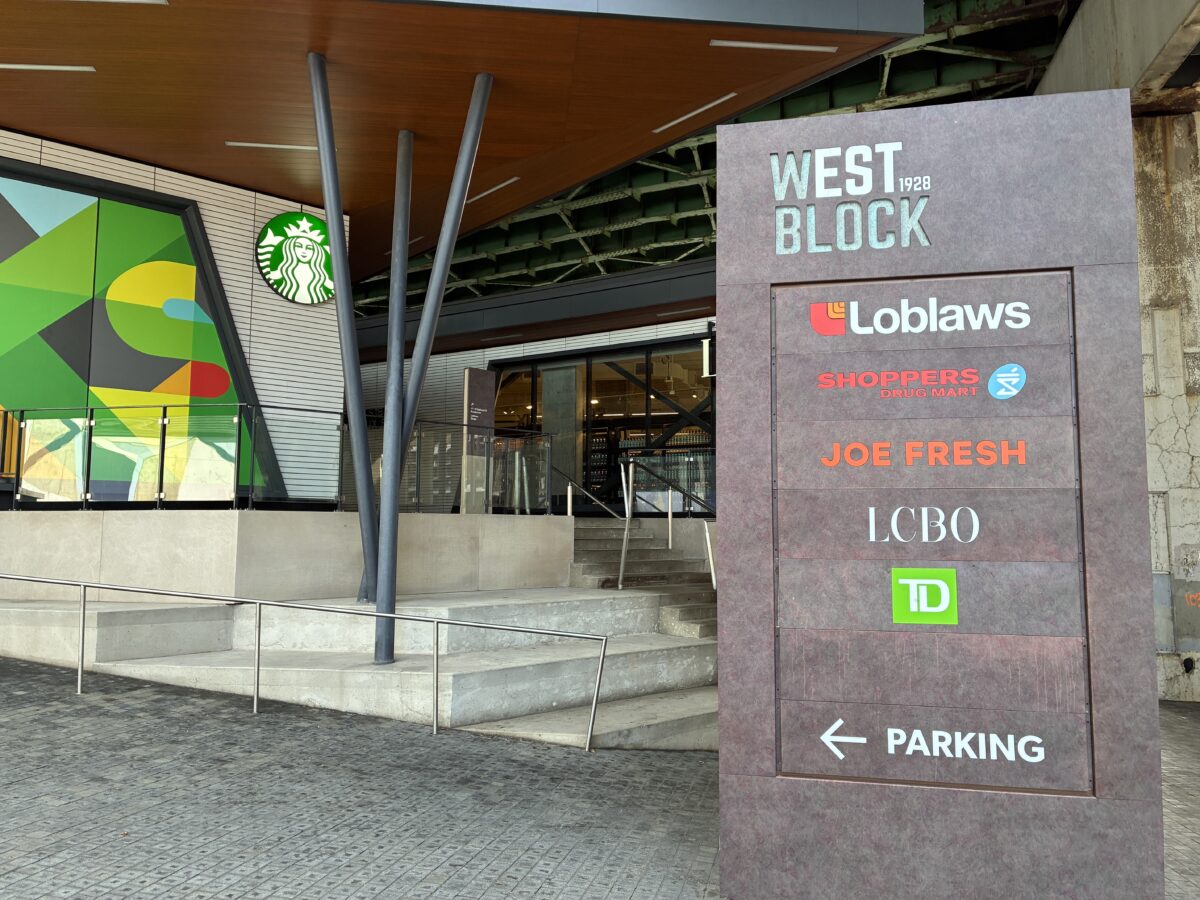
The West Block location at 105 Housey Street operated within a modern complex, serving both building tenants and street traffic. On the final day, the customer mix reflected the hybrid work patterns now common in downtown Toronto—steady but lighter than traditional peak periods would have suggested.
Staff mentioned regular customers from surrounding offices who had become fixtures since opening, highlighting the role these locations play beyond simple transactions.

Commerce Court: The PATH Network’s Coffee Hub

Reaching the Commerce Court location through the PATH system provided perspective on how these underground retail networks function. This pickup location, which opened as Canada’s first in February 2020, had adapted to serve the financial district’s evolving traffic patterns.
The PATH location meant consistent foot traffic from connected buildings, though the volume has shifted significantly since the location’s pre-pandemic opening.
Sugar Wharf: New Development Integration
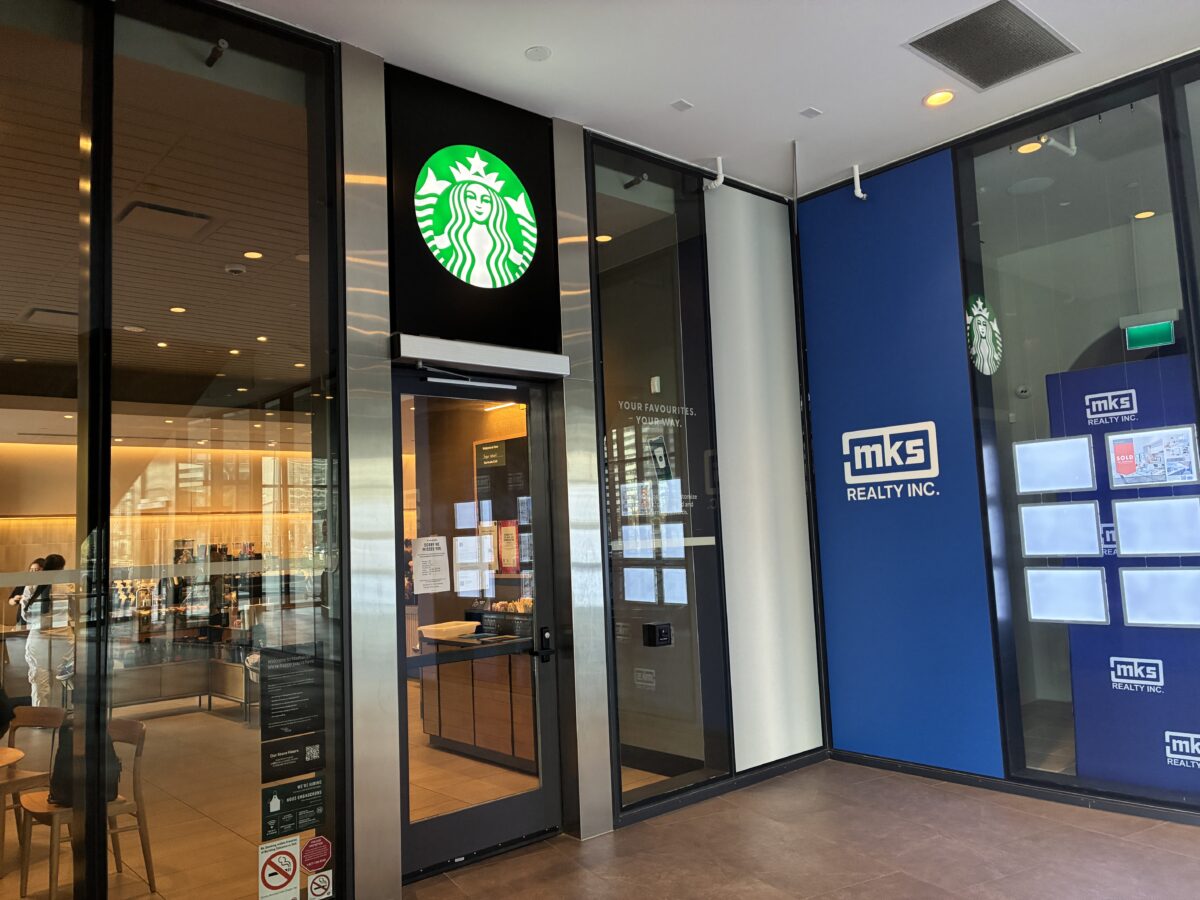
The Sugar Wharf location operated within one of Toronto’s newest mixed-use developments, serving both building residents and the broader waterfront community. The contrast between the gleaming new development and the closing retail was notable—not necessarily indicative of failure, but highlighting how quickly retail landscapes can shift.
The location had integrated into the building’s ground-floor retail mix, serving residents from the towers above and visitors to the waterfront area.


Adelaide & Peter: Community Connections in the Entertainment District

The Adelaide & Peter location demonstrated the neighborhood role these stores often play. Throughout the final day, staff engaged in extended conversations with regular customers—relationships built over years of daily interactions. The massive construction for the Peter & Adelaide intersection created an interesting backdrop, showing how rapidly this area continues to evolve.
Several customers mentioned this was their regular morning stop, indicating the routine role the location played in daily commutes and neighbourhood life.

East Liberty & Strachan: Liberty Village’s Retail Landscape

The East Liberty location served the dense residential community of Liberty Village, with a steady flow of condo residents throughout the day. The location was clearly positions into the neighborhood’s daily rhythms, with customers mentioning it as their go-to spot for coffee runs.
The surrounding area’s transformation from industrial to residential over the past two decades provides context for how these retail spaces serve evolving communities.


Richmond & Spadina: Entertainment District Operations
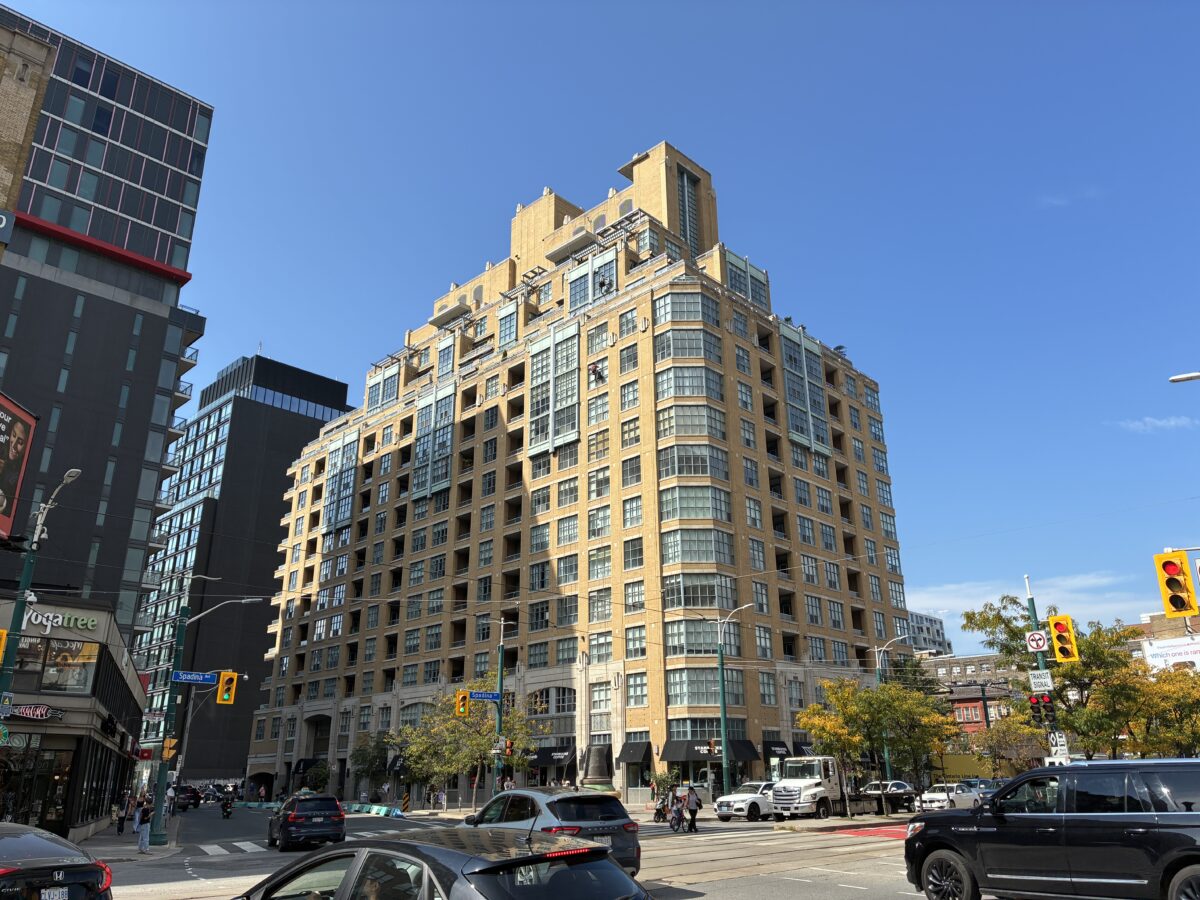
The Richmond & Spadina location within The Morgan condominium served both building residents, construction workers for the new Spadina Ontario Line subway station, and the broader Entertainment District community. On the final day, the customer mix included building residents and visitors.
The location’s position in the heart of the one of the busiest intersections in the core meant serving both the residential population and the area’s continued development.

What These Final Moments Revealed

Visiting these seven locations on their last day provided insights that corporate press releases can’t capture. The closures weren’t dramatic—no crowds of mourning customers or protest signs. Instead, they felt like quiet surrenders to economic forces that have fundamentally altered Toronto’s retail landscape.
Each location told a slightly different story, but common themes emerged: changed foot traffic patterns, residential growth that doesn’t translate to retail success, and corporate formats mismatched to post-pandemic reality. Most telling was how resignation seemed to define customer reactions—these closures felt less like shocks and more like inevitable outcomes in a city where retail turnover has become the norm.
The human cost was most visible in staff conversations. Employees facing uncertain transfers or job searches in a challenging market, saying goodbye to regular customers they’d served for years. These are the stories behind the corporate restructuring statistics—real people navigating economic disruption beyond their control.
The 2021 Toronto Closure List
- Bathurst and Fleet (600 Fleet St.)
- Bay and Elm (686 Bay St.)
- Bay and Grosvenor (37 Grosvenor St.)
- Bloor and Bathurst (494 Bloor St. West)
- Bloor and Gladstone (1090 Bloor St. West)
- Church and Gerrard (66 Gerrard St. East)
- Davisville and Yonge (1909 Yonge St.)
- Dufferin Mall (900 Dufferin St.)
- First Canadian Place
- Front and Jarvis (81 Front St. East)
- Hillcrest Mall (9350 Yonge St.)
- Jarvis and Dundas (253 Jarvis St.)
- King and Peter (370 King St. West)
- King and Sherbourne (251 King Street E.)
- PATH Concourse, Royal Bank Plaza PATH Concourse, Richmond Adelaide Centre
- Promenade Mall (1 Promenade Cir.)
- Queen and Ossington (2 Ossington Ave.)
- Queens Quay and Lower Jarvis (132 Queens Quay E.)
- Scotia Plaza (40 King Street West)
- St Clair and Bathurst (504 St. Clair Ave. West)
- Wellington and John (224 Wellington St. West)
- Wellington and Simcoe, RBC (155 Wellington St. W)
- Wellington and University (55 University Ave.)
- Yonge and Wellesley (8 Wellesley St. East)
- Yonge and College (450 Yonge St.)
- Yonge and Queens Quay (1 Yonge St.)
- York and Bremner (25 York St.)
- York Mills Centre (16 York Mills Rd.)

Dustin Fuhs is the founder and Editor-in-Chief of 6ix Retail, Toronto’s premier source for retail and hospitality industry news. As the former Editor-in-Chief of Retail Insider, Canada’s most-read retail trade publication, Dustin brings over two decades of expertise spanning retail, marketing, entertainment and hospitality sectors. His experience includes roles with industry giants such as The Walt Disney Company, The Hockey Hall of Fame, The Canadian Opera Company, Starbucks Canada and Blockbuster.
Recognized as a RETHINK Retail Top Retail Expert in 2024, 2025 and 2026, Dustin delivers insider perspectives on Toronto’s evolving retail landscape, from emerging brands to established players reshaping the city’s commercial districts.