
Ryan Thompson and Rowan Carter did not set out to build a retail brand.
They set out to make something honest. The retail part came later, sideways, and against at least one of their better judgements. What they built in the process is the kind of story the Canadian business landscape does not produce very often: a brand that connects with people not because of how it was marketed, but because of what it actually is.
On May 1st, Sad Nuggie opens a pop-up Adoption Centre at CF Toronto Eaton Centre. For context on why that matters, you need to go back to a living room floor in Ontario, a pile of identical plushies, and the moment one co-founder said to the other: just watch.
The Brief Was Four Words
In 2021, Thompson and Carter were doing what anyone trying to break through on social media does. They were watching, researching, and studying what was connecting and what was sliding past unnoticed. The content landscape was loud. Every character, every meme format, every emotional hook had already been done by someone.

They landed on an idea that they immediately dismissed.
“We thought: that’s silly, that’s stupid, nobody is going to care about this,” Thompson recalled. “But then we asked ourselves: what if we made it depressed? What if the character was relatable in a way that allowed anyone to find genuine comfort in it, regardless of who they were or what they were going through?”
They hired an artist on Fiverr. Anastasia Sevastyanova, a digital illustrator with a background in children’s books and character design, received the brief in its entirety.
“Can you make a ‘chicken nugget that’s crying’? That’s it. That was the only direction I gave her. Nothing else.”
She came back with the original Nuggie. Thompson and Carter looked at it, agreed it was great, and did absolutely nothing with it for a year.

Most brands would have launched the product the moment the character had traction. Thompson did the opposite. From summer 2022, he spent roughly a year building the animation account with no product attached, no pitch, no ask. Just the Nuggie and the audience, finding each other.
The Makeship campaigns came in spring and fall of 2023, two limited releases that tested whether the community would follow the character off the screen. A few thousand units sold across both runs. The answer was yes.
It was not until winter 2024 that the first owned batch of Nuggies arrived, and Carter launched his shop account. That is when the two sides of the brand, Thompson’s animation world and Carter’s adoption universe, began operating in parallel for the first time.
“I think we had $6,000. And we said: if this does not work, we go get nine-to-fives.”
They went through manufacturers, made mistakes, learned fast, and eventually found one capable of growing with them. Every single plushie from that first batch was the same Nuggie. Identical. Waiting. Carter looked at the pile and saw something Thompson had not yet seen.
The Part Ryan Didn’t Believe
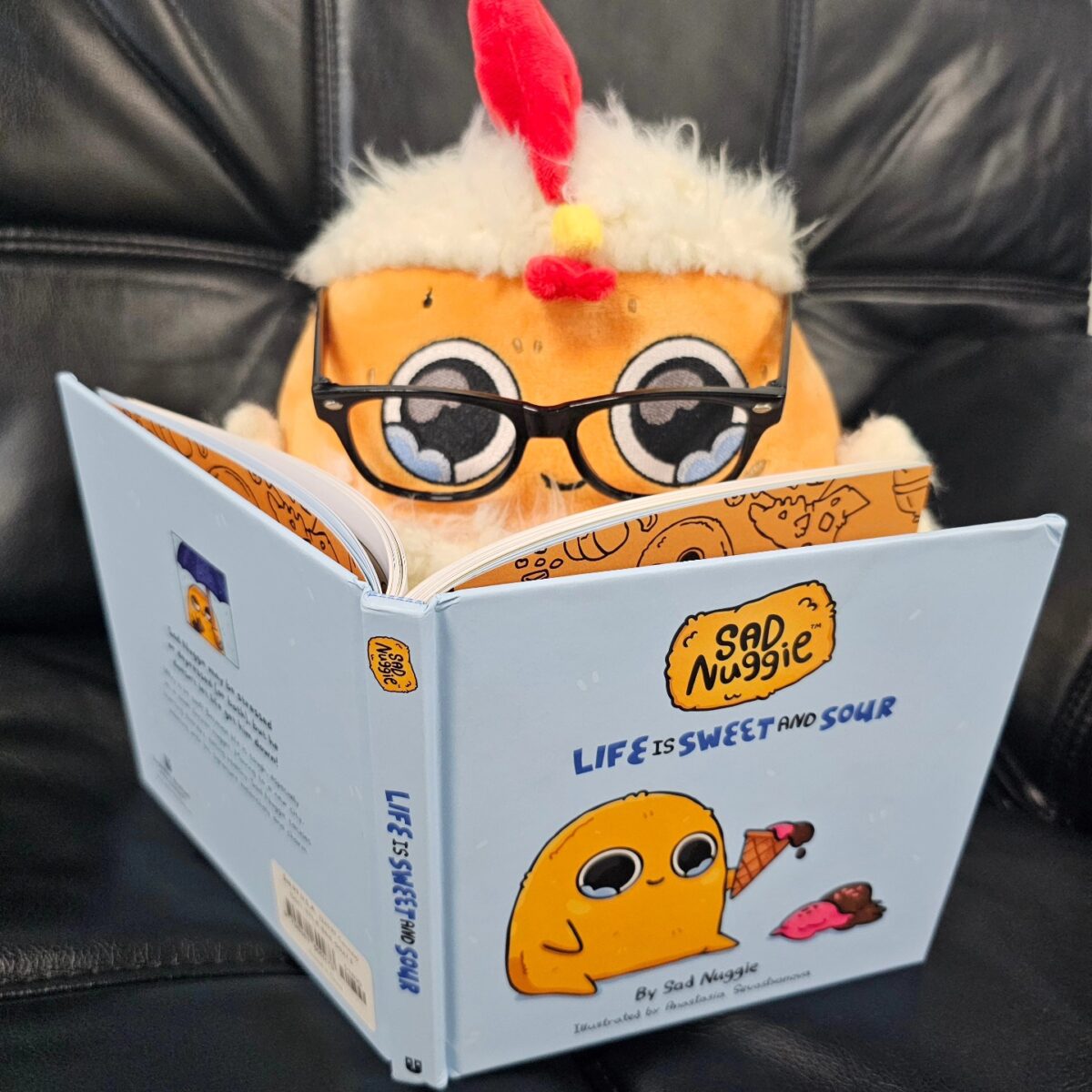
Rowan Carter is, by temperament and by role, the brand’s instinctive storyteller. Where Thompson built Sad Nuggie’s voice through years of daily animation work, Carter picked up a camera, started talking to plushies, and somehow made millions of people feel like they were watching something unscripted and real.
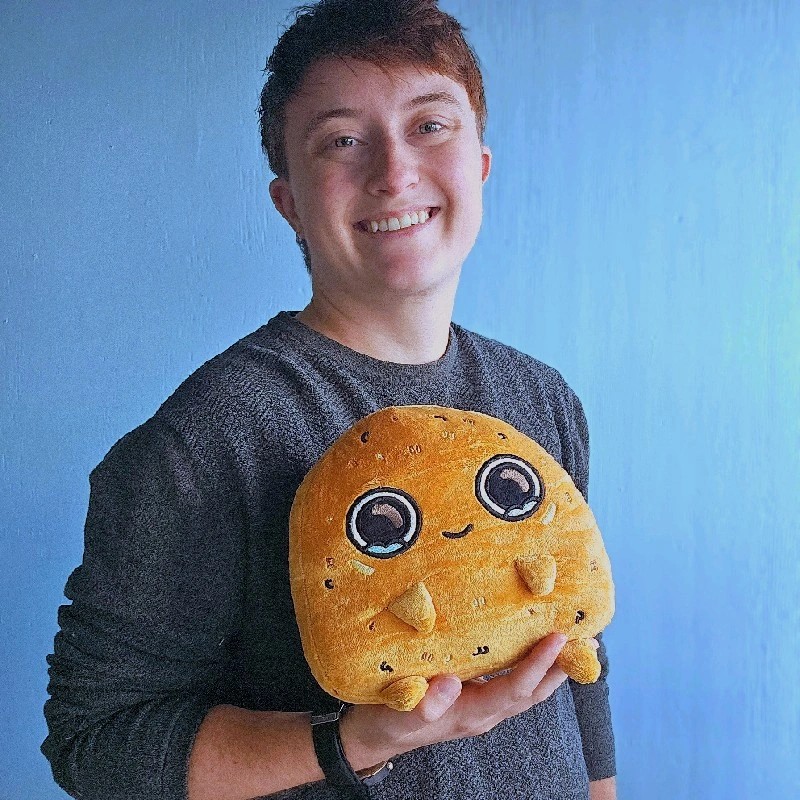
The adoption concept started with a single comment from the community. A fan asked if they could get a Nuggie who loved gaming. Carter heard a business model in that question.
What if nobody bought a Nuggie? What if they adopted one, matched to their personality, their interests, the particular version of sad that was theirs on any given day?
Thompson was not sold. It was the same plushie. What was actually different?
“I thought there was no way this would work. Even I was not on board yet,” he admitted. “And Rowan said: just watch.”
What Carter had understood was that the Sad Nuggie’s value was never in the object. It was in the relationship. Every Nuggie that goes home under the adoption model belongs entirely to the person who takes it. It has their name on it. It reflects something specific about them. It is not Panda Nuggie the character. It is your Panda Nuggie, the one that found you on that particular Tuesday.
“Instead of making every plushie the same fixed character, the way Mickey Mouse is always Mickey Mouse, we said these are all their own entity,” Thompson explained. “They become whatever the person who adopts them needs them to be.”
@shopsadnuggie The last note though 😭 #sadnuggie #depressy #anxiety #mentalhealth #chickennugget #adoption #packingorders #orderpacking #smallbusiness #cute #relatable #millenial ♬ original sound – Sad Nuggie Ltd
The model also represented a conscious decision to carve out territory that nobody else occupied. Thompson had discovered Jellycat while figuring out the plush category and immediately knew what he did not want to be.
“I liked what Jellycat was doing. But I thought: I do not want people to look at us and say you are a ripoff,” he said. “We could have just made a fast-food chain Nuggie and we would have been Jellycat. So we went our own way.”
The goal was never a good quarter. It was a decade.
“I want this to be a ten-to-twenty year company,” Thompson said. “So we asked: how do you build something with that kind of staying power? The answer was storytelling, community, and emotional authenticity. We do not want people thinking they are buying a thirty-dollar plushie. We want them to feel like they are bringing home a family member.”
A Content Engine Built for Culture
@shopsadnuggie We went a little off track but what did we expect… #sadnuggie #sadnuggiesadoptioncentre #dinonugget #tour #ontario ♬ original sound – Sad Nuggie Ltd
Thompson’s animation account and Carter’s shop account were always distinct, and the gap between their audiences grew into one of the brand’s more interesting structural quirks.
The animation account now carries millions of followers. Most of them have no idea a product exists. Thompson finds this useful rather than concerning.
“Millions of people on my channel do not know we have a store. And that is actually fine, because every time someone discovers the shop, it feels like finding something new.”
The format Thompson settled on was simple by design: find audio that worked, animate the character against it, and post. No production overhead. No approvals. The relationships that emerged from that process were not ones he had anticipated. Sia’s team reached out to commission a full animation for “Gimme Love.” Baldur’s Gate 3 came looking for branded content. These partnerships signalled something that a media buy cannot: that Sad Nuggie was a cultural presence that other cultural presences wanted to stand near.
The individual Nuggie personalities that drive the shop account are entirely improvised, filmed in sequence as Carter goes and edited within the app itself, with the story building in real time rather than assembled in post.
“I would just pick up a camera. Business Nuggie came into existence because Sad Nuggie wanted to travel and needed someone to handle things while he was away. That was the entire origin. I hear them in my head and I repeat what they are saying,” Carter said. “By the three-minute mark, somehow the whole arc has come together. And I do not entirely know how.”
The Llama Nuggie was expected to move slowly. Carter gave it a storyline involving a heated rivalry. It sold out in days. The dynamic between Carter’s content instincts and the community’s response has given the brand something rare: the ability to generate genuine enthusiasm for specific products without ever making the sales intent visible.
“If we need to find a particular Nuggie a home, Rowan will say, ‘Give me one second,'” Thompson said. “And then that Nuggie’s story gets told. The ability to connect the right Nuggie with the right person through storytelling is something very few brands in this category actually have.”
Nobody Was Supposed to Come to Strathroy
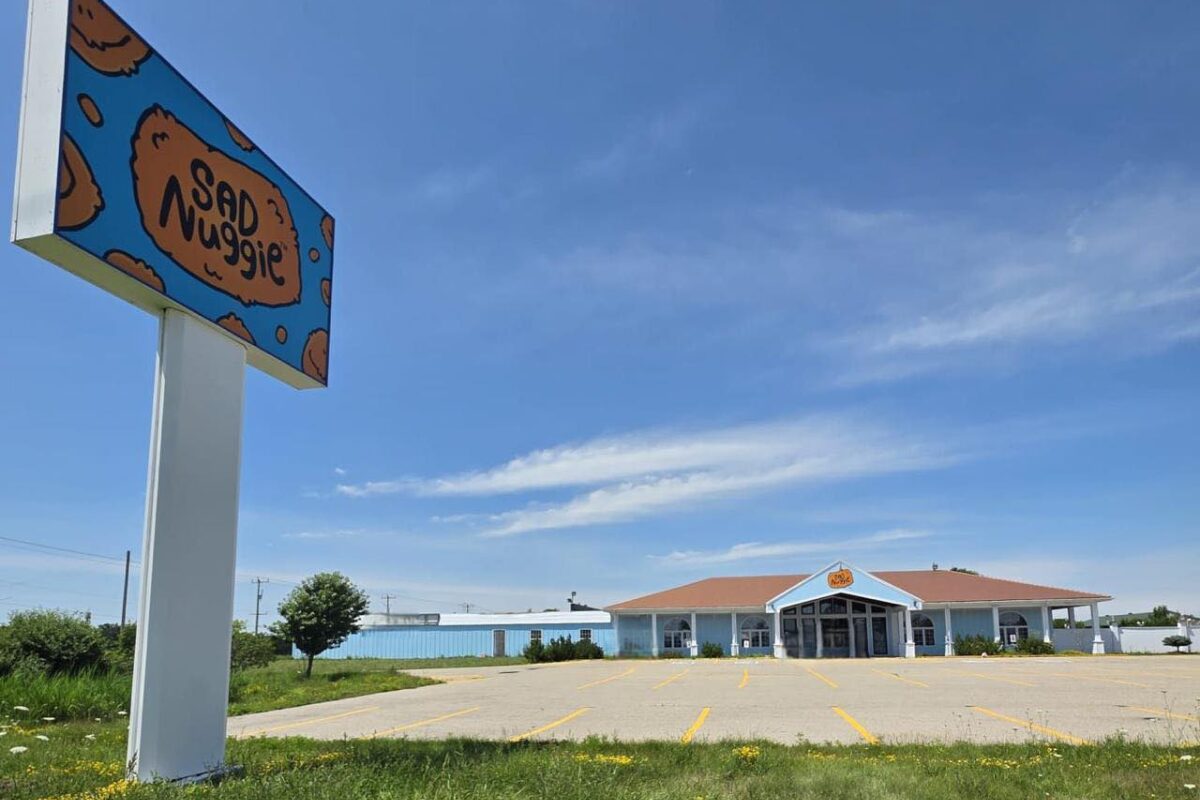
Thompson’s position on physical retail was clear and consistent for a long time. They were online. They were good at online. The warehouse in Strathroy was where they shipped product from, not somewhere people came to.
Carter had been paying attention to something Thompson had not fully registered. At London Comic-Con, a fan had flown in from Alberta, not for the convention, but to fill a bag with Nuggies and save on shipping costs. When the event ended, the question from every fan at the table was the same. When is the next one? When can we do this again?
Carter went home with an idea. Thompson went home with a firm position.
“I said: what if we just made back the rent?” Carter recalled. “Ryan was completely against it. He said, ‘We are in the boonies right now, nobody is coming out for a chicken nugget.’ And I said: what if we just made back the $2,000 a month? That is all I am asking.”
Thompson agreed, reluctantly. Carter posted some videos. On the March break that followed, 10,000 people came through in two and a half weeks.
“I just went: uh-oh. Okay. This is a thing,” Thompson said.
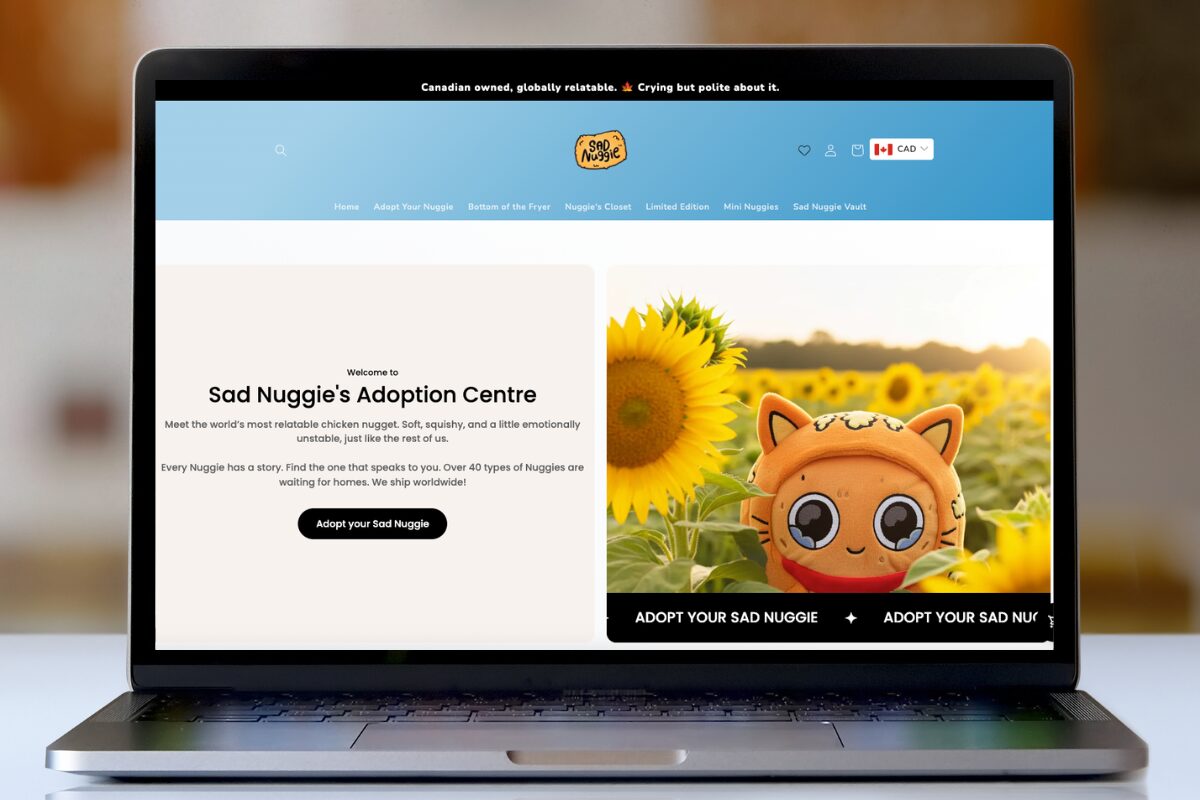
The space was minimal. A spinning wheel handed out a free item to everyone who came through, not as a spend incentive but because Thompson and Carter believed people who made the trip deserved to leave with something unexpected. The line stretched outside. People waited an hour and a half for two minutes at the front. They held their Nuggie the entire time they queued. A man got down on both knees at the counter and pleaded for a prototype that was not yet available. The answer was still no, but the intensity of the ask told both founders something important about what they had built.
“We built something that gave adults permission to feel like children again,” Thompson said. “Think about walking into Blockbuster or Toys R Us when you were seven years old. That sense of magic, of possibility, of a place that existed entirely for you. That is what we wanted to recreate. For the adults who needed it. And for the kids who had never had it.”
There was also something else happening that the founders had not designed for. Adults who wanted plushies had nowhere to go that felt like it was built for them. Online shopping worked but lacked the physical dimension that made the relationship feel real. Walking into a conventional toy store without a child felt like a justification exercise.
“A lot of the time, if you want a plushie as an adult, you order online or you feel like you are walking into a kids’ store,” Carter said. “We wanted to give everyone permission to just enjoy this. No judgment. Just come in.”
The emails started arriving. Teachers whose students were calmer with a Nuggie nearby. Hospitals asking about supply partnerships. Parents describing children who had found something to look forward to again. The community that had existed in comment sections and Discord threads was showing up in person, and it was bigger and more emotionally invested than either founder had realised.
The Thing Nobody Tells You About Scaling a Viral Brand
@shopsadnuggie I FOUND OUT WHY THEY'RE LINING UP AAAAAAH #Sadnuggie #sadnuggiesadoptioncentre #chickennugget #popup #adventure ♬ original sound – Sad Nuggie Ltd
Opening a store is not what people think it is. Thompson has said this to journalists, to potential staff, and to anyone who treats it as a simple next step. You get a key. You open the door. And then everything else arrives at once.
Insurance. Health and safety. Hiring. Training. Uniforms. The particular complexity of building a team whose entire job is to be a living expression of a brand that millions of people have an emotional investment in.
“Forget everything you know about selling,” Thompson tells new team members. “Forget targets. Forget upselling. Forget the language of transactions. You are hosting a party. The moment someone walks through that door, your job is to make them feel welcome. The sales will follow from that, because that is the experience we have built.”
The store manager came from Roots, trained in KPIs and conversion targets. Learning a different language took time on both sides.
The stakes of a misfire are, Thompson believes, considerably higher for Sad Nuggie than for a conventional retailer. The customers are not shoppers in any traditional sense. They are invested. They know the character histories, the lore, the inside references. They have watched hours of content. They arrive expecting the world from the videos to be present in the room.
“It only takes one wrong interaction,” Thompson said. “One video from a disappointed fan. And suddenly everything we have built is being questioned. These are not people who just like the product. They love the brand. And that love comes with expectation.”
One early moment at the Strathroy location illustrated the dynamic clearly. A devoted fan named Johnny drove in from east of Toronto for a private tour before the store had even opened to the public. On one of store manager Joe’s first shifts, Johnny walked up to him and said, without hostility, that he knew more about the brand than Joe did. He was almost certainly right. What that exchange taught Joe, and what now shapes how every staff member is oriented, is that working at Sad Nuggie requires a fundamentally different set of instincts. The people at the door are not customers to be converted. They are community members who have been here longer than most of the staff. Earning their trust means meeting them where they already are.
Joe is now the brand’s Director of Operations.
@shopsadnuggie The final boss of all last minute nuggie surprises… #sadnuggie #eatoncentre #toronto #sadnuggiesadoptioncentre #popup ♬ original sound – Sad Nuggie Ltd
The Text That Changed Everything
The path to CF Toronto Eaton Centre did not begin with a real estate strategy or a broker relationship. It began with a direct message from a CF contact named Sandra.
“Sandra reached out and said there was a space available at the Eaton Centre,” Carter recalled. “I said: I do not need any other information. I do not care what it costs. We are doing this.”
The unit sits on the lower level beside MINISO, in a space most recently occupied by Urban Customz, and previously Toys Toys Toys. It is a smaller footprint than what the brand has worked with in Strathroy, but Carter is unbothered. The Eaton Centre offers something that raw square footage cannot: tens of millions of annual visitors, a downtown Toronto address, and a mall that has been waiting for this kind of brand for years.
“You are going to enter Nuggie World,” Carter said of the planned layout. “There will be a moment of: what is this, what is in there. And then it opens up.”
The timing carries its own significance for anyone who follows the Eaton Centre closely. The mall has not had a dedicated toy or collectible anchor since the Disney Store closed during the pandemic. That absence has been quietly felt by families, younger shoppers, and anyone looking for a retail experience that offered something beyond fashion and food. Last holiday season, EB Trends, a new concept from EB Games developed with Vibrant Marketing, gave a clear indication of how much appetite remains. Their Pokémon-focused Collectors Vault ran ten weeks on Level 2, drew more than 40,000 visitors, and surpassed every internal benchmark. More than 500 people lined up before opening on day one. Some were there at 1 a.m.
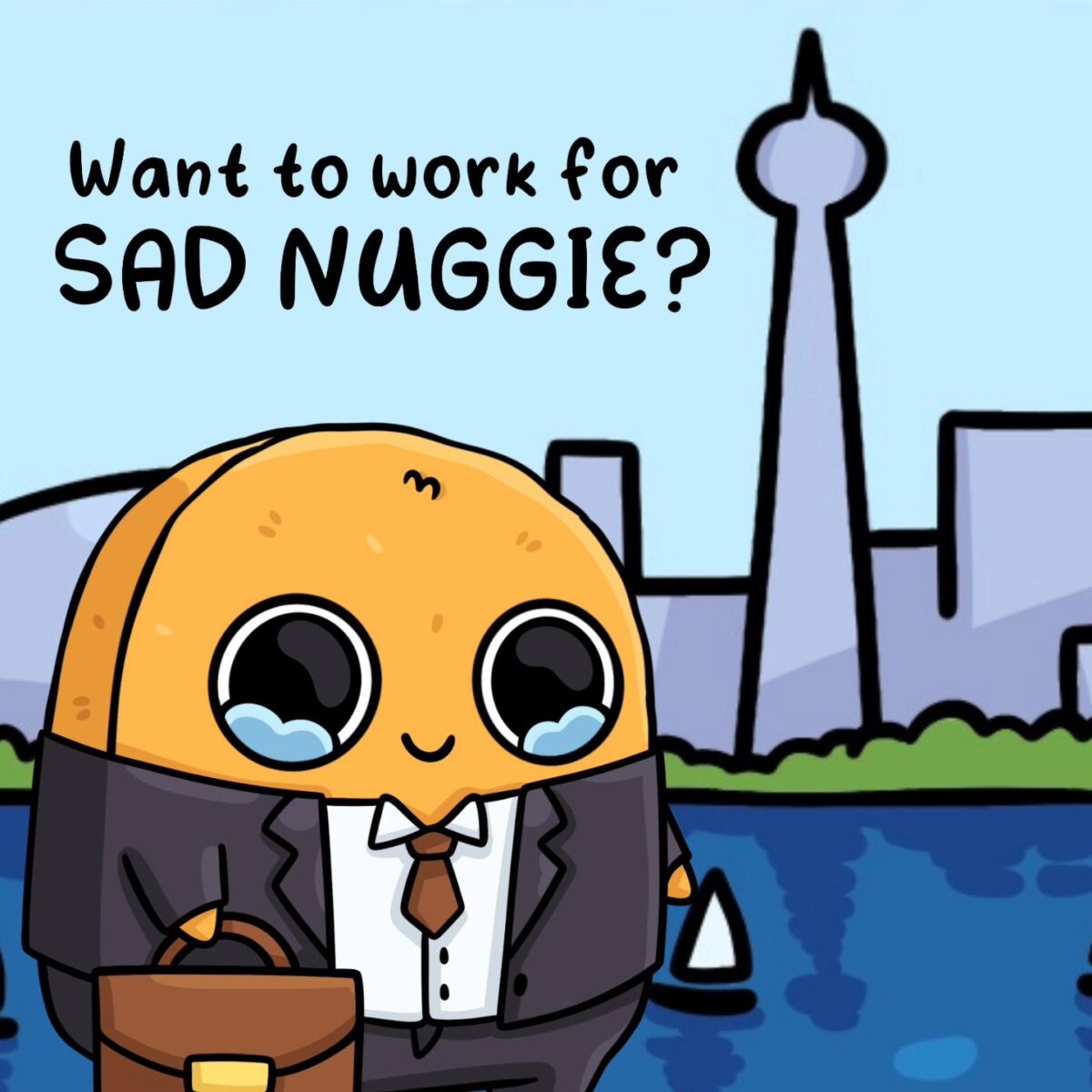
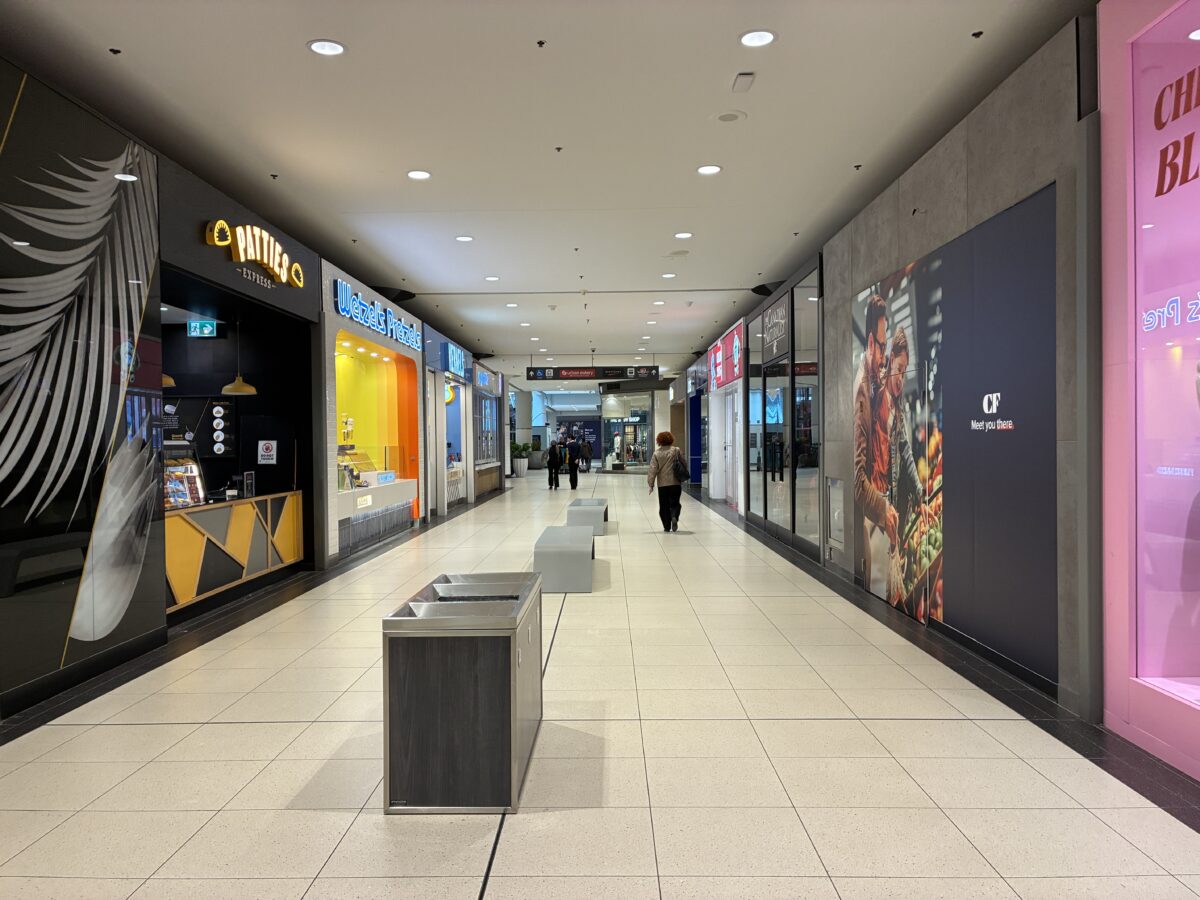
Sad Nuggie is the next chapter of that story — with one distinction that matters. This is not a licensed IP activation or a franchise expansion. This is a brand that started in someone’s living room in Ontario, that two people built from the ground up with $6,000 and a one-sentence creative brief, and that has never once been owned by anyone other than the people who created it.
When fans at CF Masonville Place learned the brand was local, that it had not been imported from the United States or assembled by a parent company, Thompson says the energy in the room shifted immediately. The banner that now hangs in every Sad Nuggie space reflects that moment directly. “That is why it says Canadian owned and operated.”
Calendar Club stocks the product nationally. Indigo carries the comic book line. The licensing portfolio, managed by Dimensional Branding Group, is growing steadily in the United States and internationally. Thompson notes that Canadian licensing partners have been slower to engage than their American counterparts, though the international trajectory is clear.
The independence question comes up regularly and always gets the same answer.
“Our agency warned us early: when you grow this fast, people are going to start offering you cheques,” Thompson said. “They are going to want to own a piece of this. And my answer is: for the foreseeable future, this company stays ours. We will partner with anyone. But we keep control.”
Club Penguin. HQ Trivia. He knows the list without having to look it up.
What Comes Next
@shopsadnuggie A new meaning to "Hop in, were going to get chicken nuggies" It won't be this much chaos…I hope. #Sadnuggie #sadnuggiesadoptioncentre #tour #roadtrip #ontario #tourism #marchbreak #spring #nuggets #chickennugget #warehouse #shop #bee #capybara #attraction #strathroy ♬ original sound – Sad Nuggie Ltd
Many of Canada’s major malls have reached out since the Eaton Centre announcement. Carter does not say this lightly.
A United Kingdom pop-up is in active development with Bits and Pixels, the experiential agency behind large-scale fandom activations including Halo. Australia is in the conversation. So is Germany. The brand is trademarked in every relevant territory.
“We went from a market with six sticker designs to a flagship location to CF Masonville Place to now CF Toronto Eaton Centre,” Thompson said. “All of that happened in a year. Every mall in Canada reached out after the announcement. That tells you something about the gap that exists in this market for what we are doing.”
What they are doing, when you strip away the content metrics and the square footage and the expansion announcements, is something the retail industry has tried to engineer for years without fully cracking. They have built a place that people drive hours to reach, wait an hour and a half to enter, and leave genuinely changed by. Not because the product is exceptional, though the founders take quality seriously. Not because the marketing is sophisticated, though Carter’s content instincts are among the sharpest in the category. Because the thing they made is real. And people can tell.
“Last year we generated over 1.2 billion views across our social platforms,” Thompson said. “And I still answer messages personally. We are still in the Discord. We are still one-to-one with the community wherever we can be. Because the moment that stops, something essential about this brand stops with it.”
The mission, as Thompson describes it, has not changed since the idea first came together in 2021.
“We are not here to make money,” he said. “The money makes the mission possible. But the mission is this: how many people can we send home feeling genuinely better than when they arrived?”
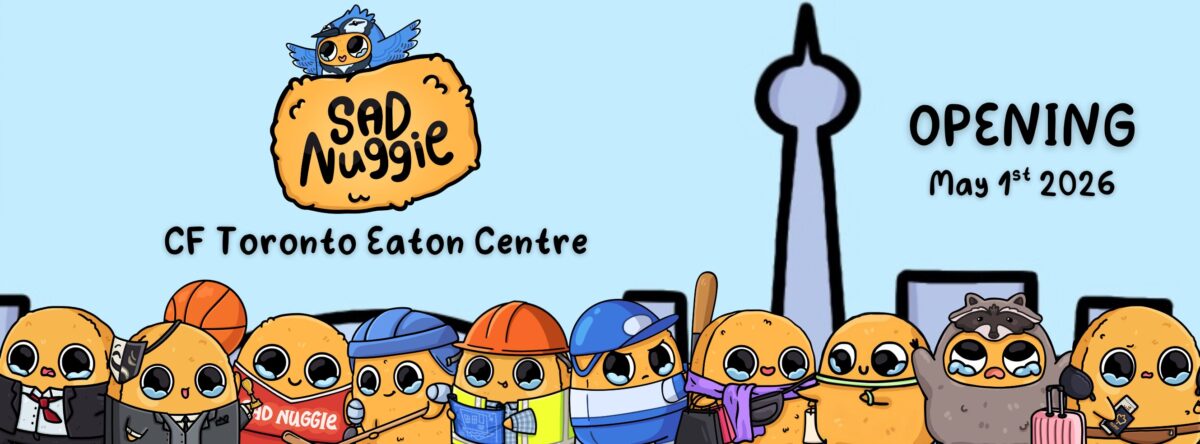
The Sad Nuggie Adoption Centre opens at CF Toronto Eaton Centre on May 1st.
By any standard retail metric, it is a pop-up. By every measure Thompson and Carter actually care about, it is proof of something the Canadian retail market has needed someone to demonstrate for a long time: that experience, community, and emotional honesty are not soft brand values. They are a business model. And when you build them right, the lineup forms on its own.
We will update this story with details on opening day events as they are confirmed. For our original breaking news on the Eaton Centre announcement, click here. To apply for the opening team, click here.

Dustin Fuhs is the founder and Editor-in-Chief of 6ix Retail, Toronto’s premier source for retail and hospitality industry news. As the former Editor-in-Chief of Retail Insider, Canada’s most-read retail trade publication, Dustin brings over two decades of expertise spanning retail, marketing, entertainment and hospitality sectors. His experience includes roles with industry giants such as The Walt Disney Company, The Hockey Hall of Fame, The Canadian Opera Company, Starbucks Canada and Blockbuster.
Recognized as a RETHINK Retail Top Retail Expert in 2024, 2025 and 2026, Dustin delivers insider perspectives on Toronto’s evolving retail landscape, from emerging brands to established players reshaping the city’s commercial districts.