
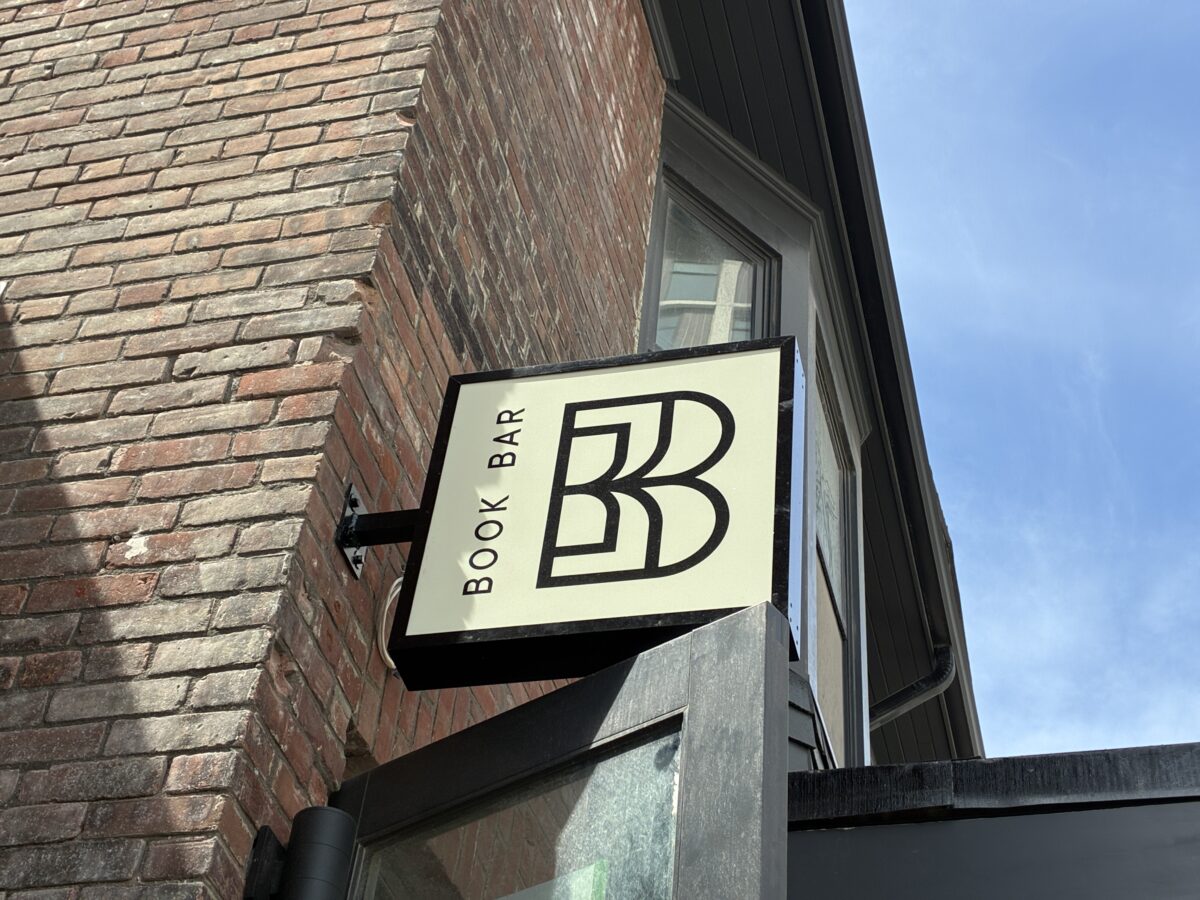

Robin Storfer and Tom Freeman nearly opened a bar together. They had been in conversations about going into business for years, sat down with Matt Davis at DesignAgency to begin mapping out the concept, and got close enough to start asking hard questions about what kind of place they actually wanted to build. The answer kept coming back incomplete. “We knew we had a good idea and we knew we worked well together,” Storfer says. “But we weren’t sold on what it was yet.” Then COVID hit, the industry froze, and the original concept dissolved before it started. “We looked at each other and said, ‘We dodged a bullet.'”
What came next was the idea that actually made sense. A bar, yes, but with books. Two things with a natural relationship that felt obvious once you put them together. That clarity, Storfer says, is what has shaped every decision since.
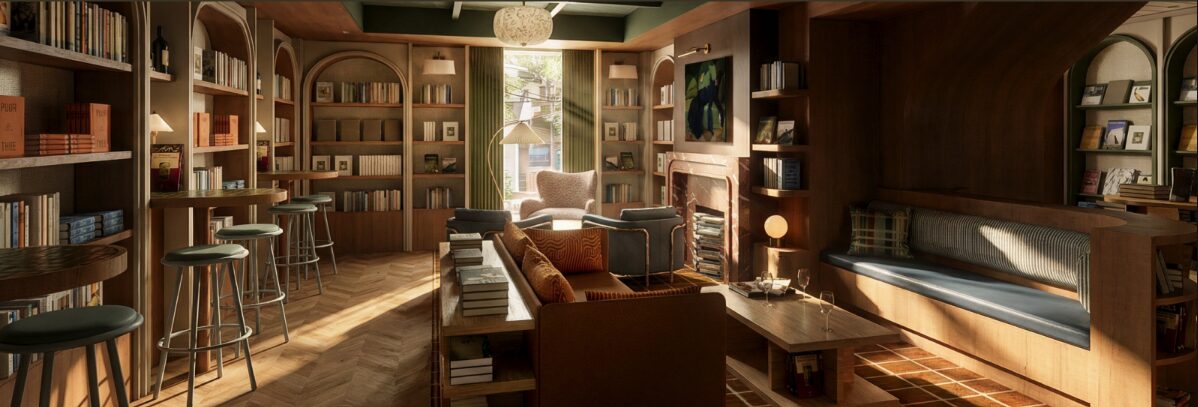
Unlike many bookstore concepts that add hospitality as a secondary offering, Book Bar was designed from the beginning as a fully integrated literary-hospitality experience. “You’re going to walk into this place and have some of the best drinks in the city alongside some of the best books,” Freeman says. Hospitality, programming, and events are deeply integrated into the model, while the books remain the emotional and cultural centre of the experience.
There are no replicable models for what they are building. “There are people with one-off concepts similar to ours,” Freeman says, “but nobody is doing what we are doing here. We drew inspiration from great literary-hospitality spaces and conversations with people in the industry, and adapted that thoughtfully for Toronto and the broader Canadian market.” Part of why the integrated model has not emerged in Canada before comes down to regulation. Liquor licensing within experiential retail spaces has proven considerably more difficult in certain provinces, a structural barrier that Ontario does not present in the same way. The publishers they have spent three years cultivating have taken notice. “Publishers have told us directly: if you’re serious about this concept, start expanding now, because there are a lot of independent operators who are going to follow what you’re building.” Growth beyond a single location is not off the table. But the first one has to open and the concept has to resonate with the community it is built for.
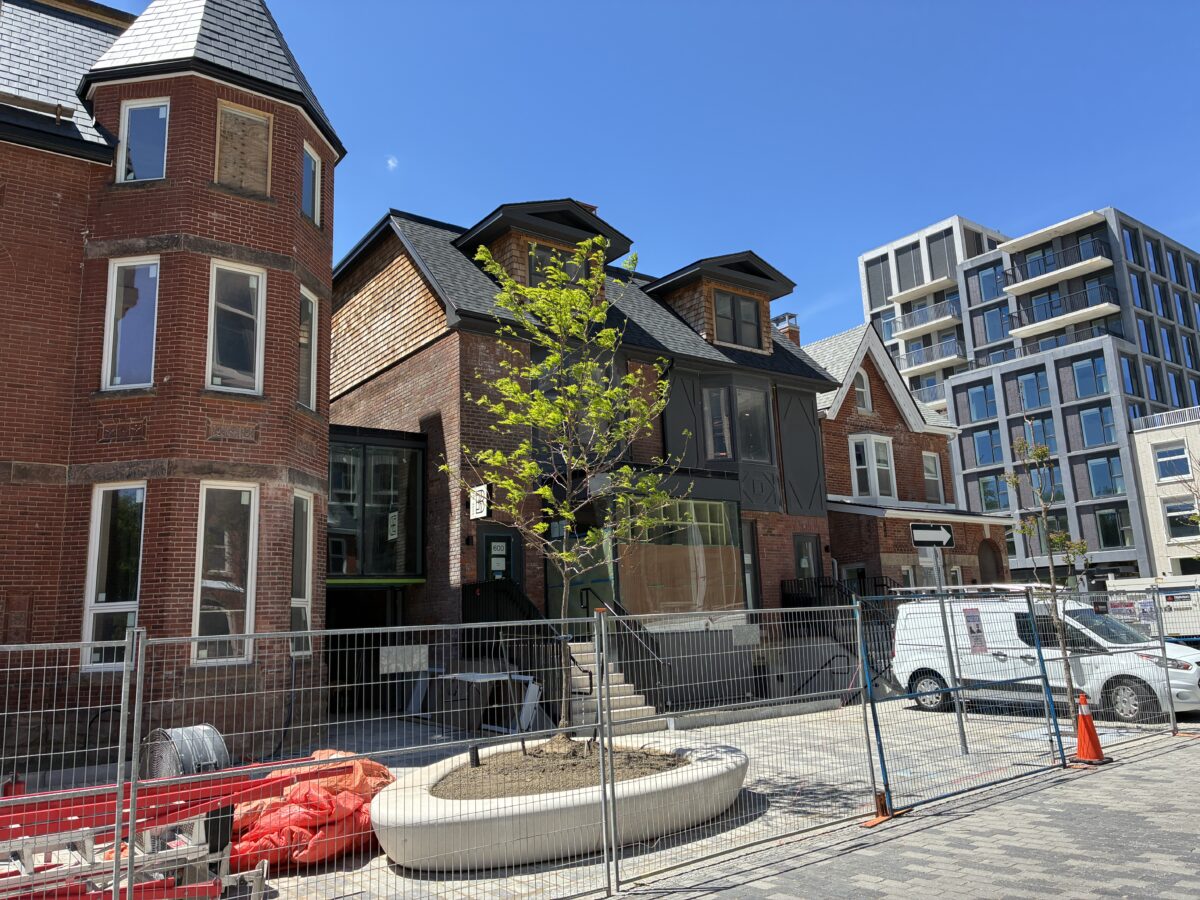
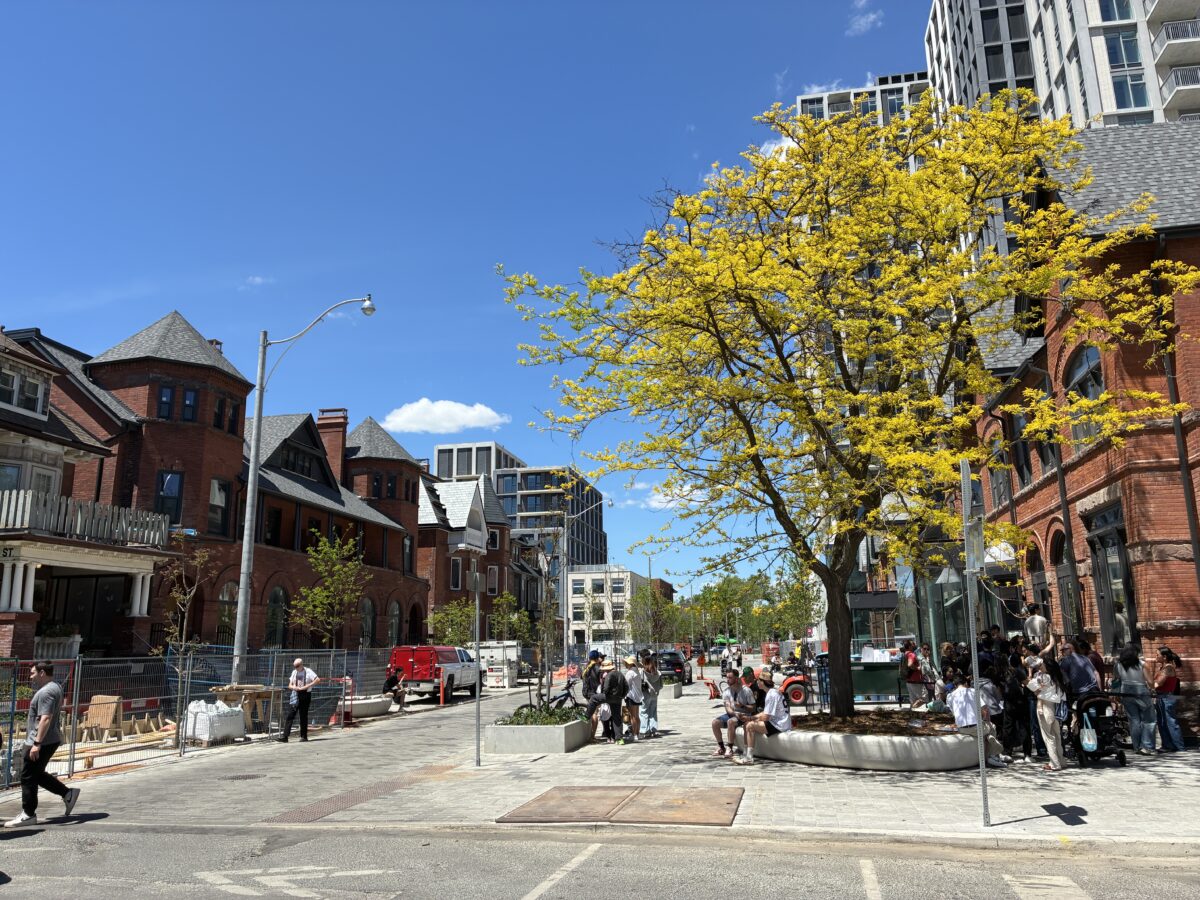
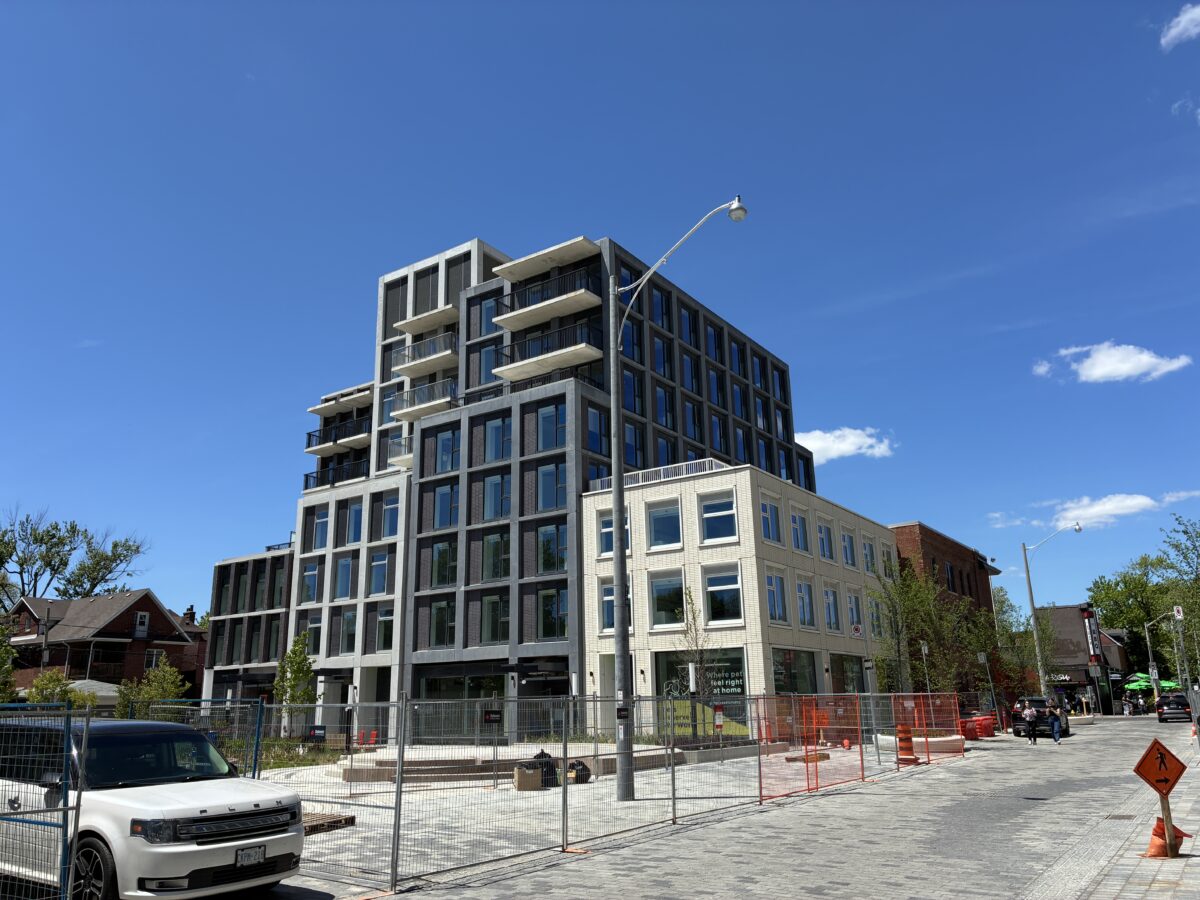
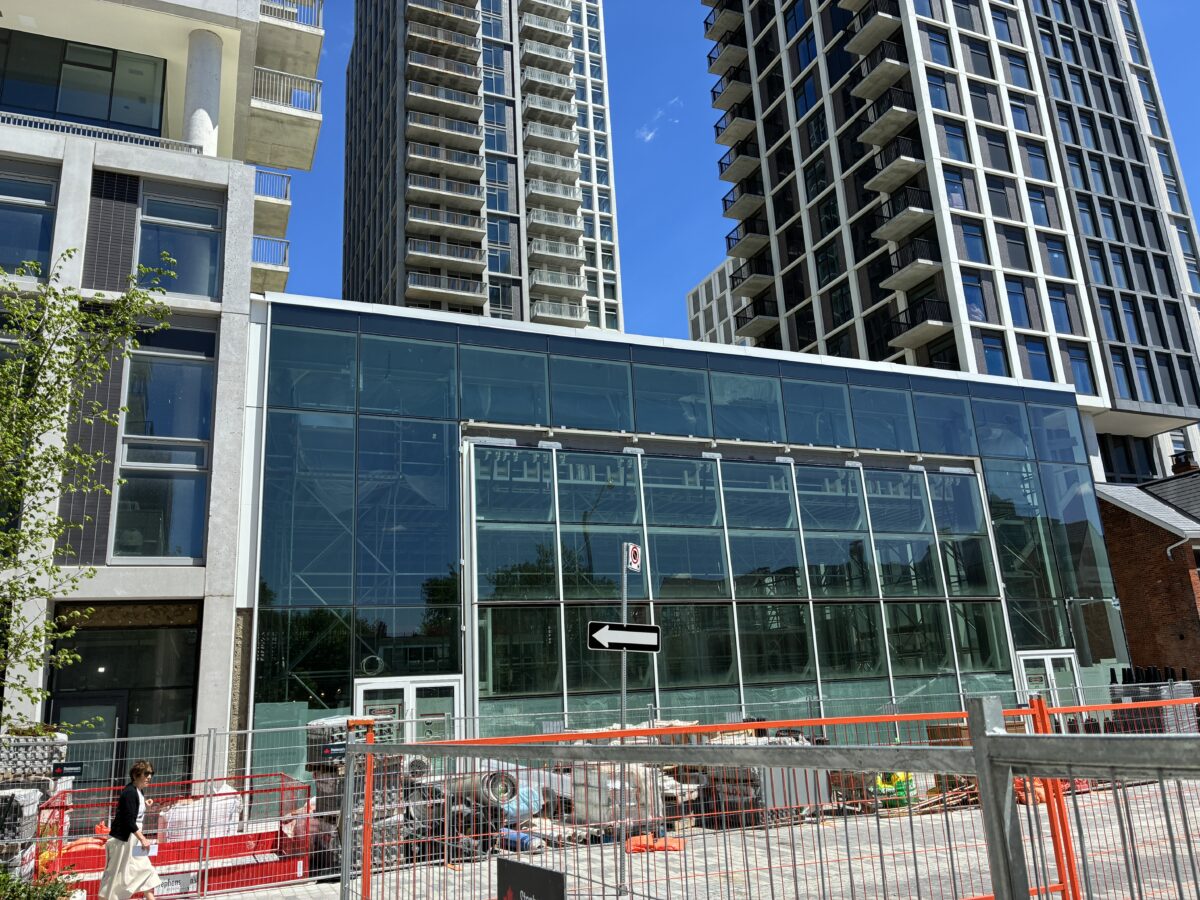
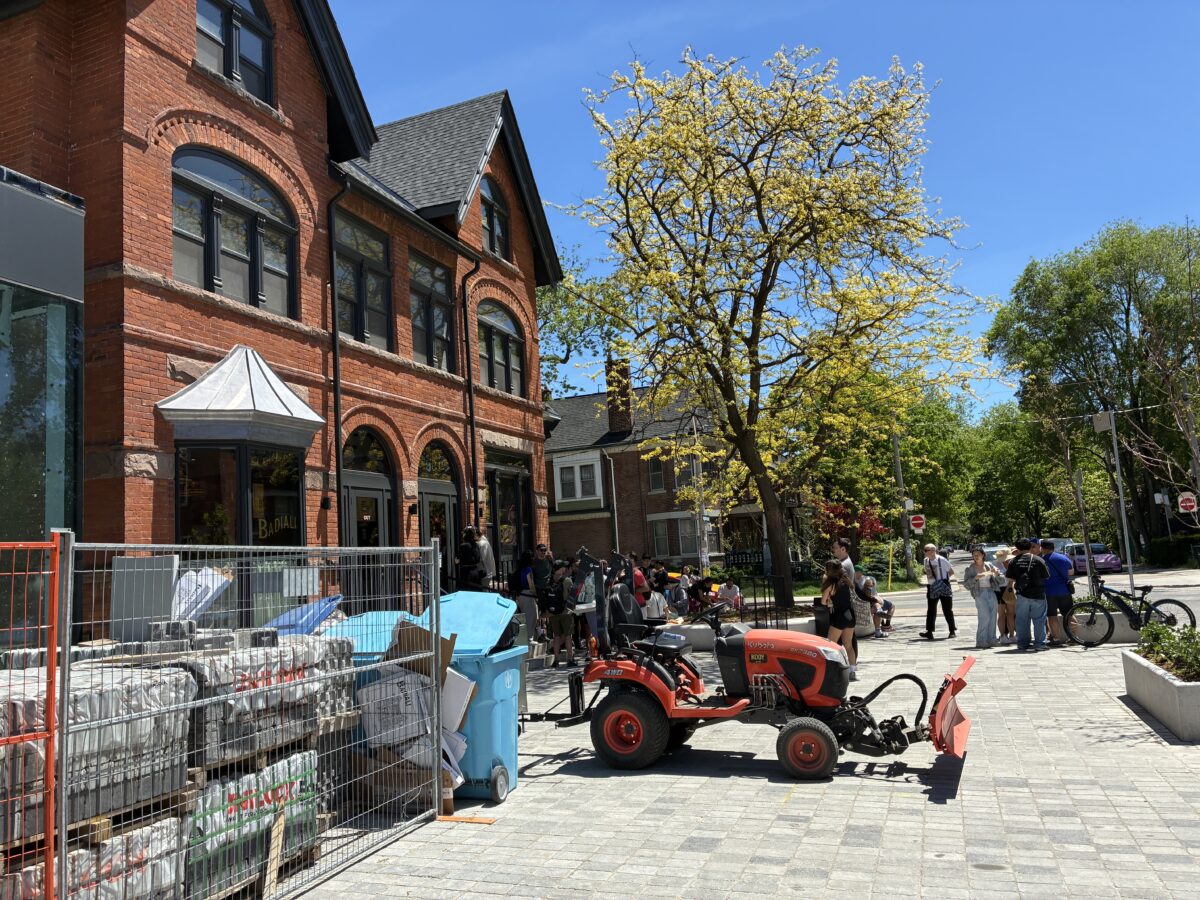
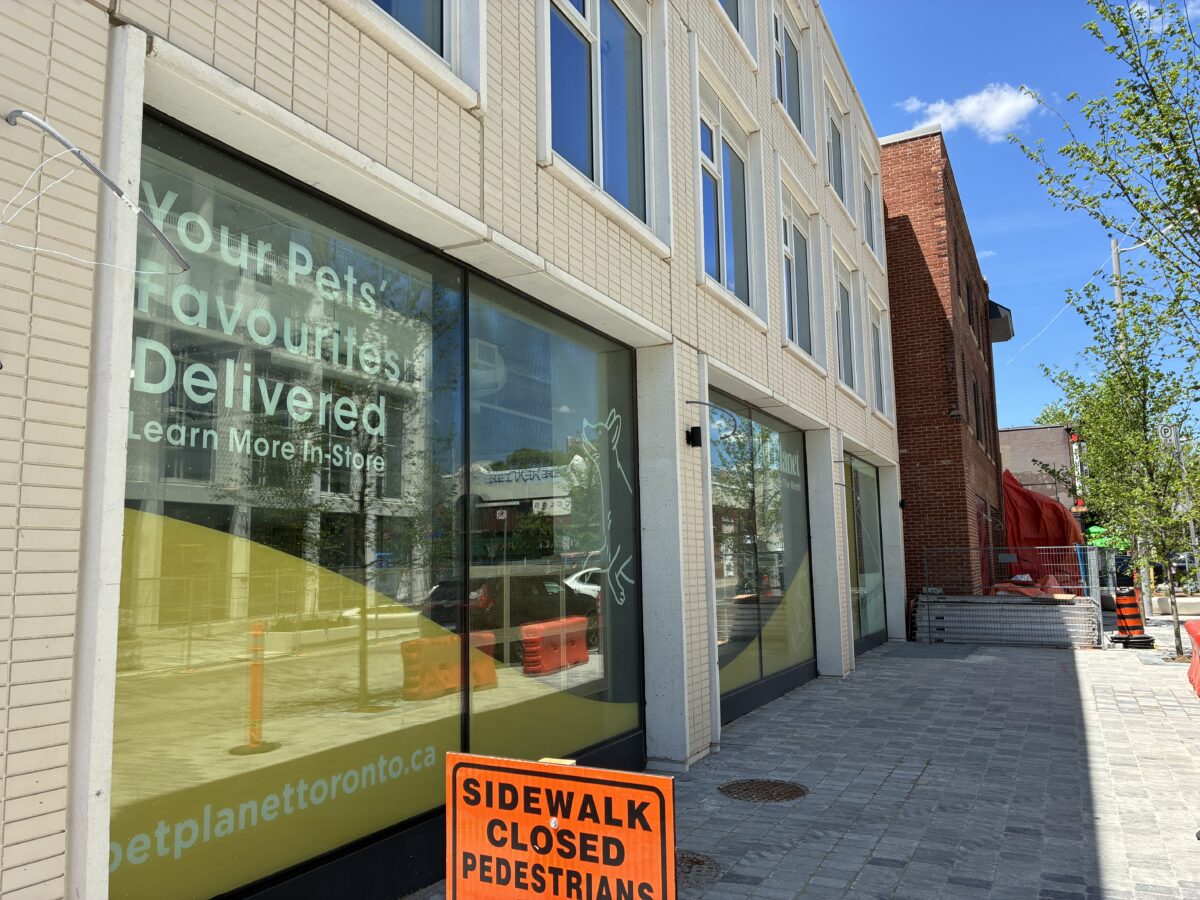
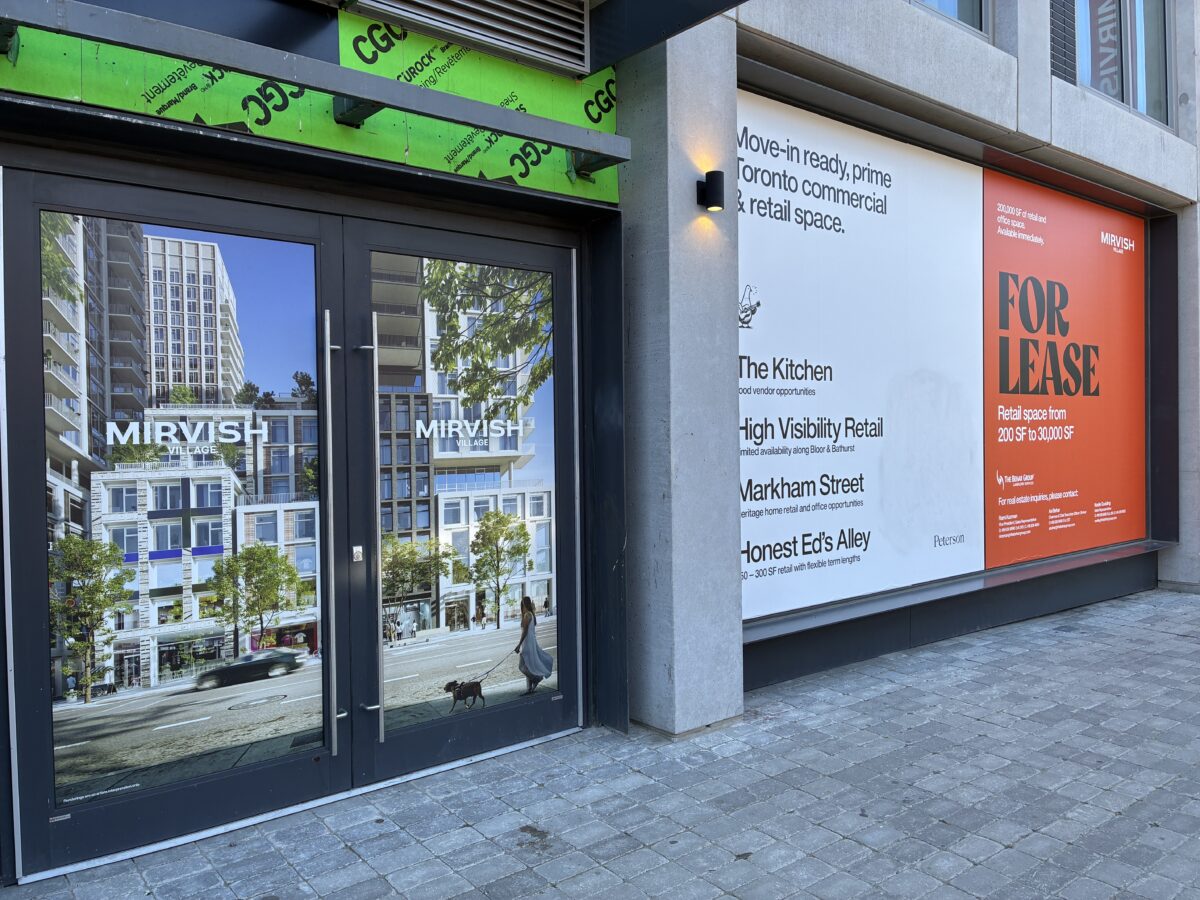
Honest Ed’s closed on December 31, 2016, and Markham Street has been a construction site for most of the time since. The site is now owned by Peterson Group, following its buyout of co-developer Westbank Corp. earlier this year, with commercial leasing and merchandising handled by The Behar Group Realty. The 200,000 square feet of commercial space anchors a one-kilometre trade area with approximately 33,500 residents, and the University of Toronto is less than a ten-minute walk away. Pizzeria Badiali and Blackbird Baking Company were the first operators to commit, signing roughly two years before Book Bar came on board. Like many businesses opening within the broader Mirvish Village development, timelines shifted. The extended runway ultimately allowed the team to continue refining the concept, partnerships, programming, and operational model ahead of opening.
Markham Street is still finding its identity as a destination. There is no established foot traffic yet and no certainty about how long that takes to change. Storfer is clear-eyed about it. “It is a calculated bet. But we believe we are going to be the reason people come to this neighbourhood, and we intend to be that reason for a long time. The level of investment we are making, and the quality of what we are building, people will recognize that. They will want to come back.” Freeman is more direct. “There is going to be nothing else like this in the city.”
Avi Behar, Chairman and CEO of The Behar Group Realty, sees Book Bar as precisely the kind of concept Markham Street was designed to attract. “The curation of Mirvish Village, and specifically the Markham Street node and the heritage houses, was built around a very deliberate focus on local, independent, first-to-market operators,” he says. “Book Bar is inspired by a concept that has found traction in key gateway cities internationally, but not in Canada. That matters. This is genuinely first to market.”
For Behar, what separates operators who define a neighbourhood from those who simply occupy it is the willingness to move before the neighbourhood has proven itself. “The principals behind Book Bar are clearly innovators and pioneers,” he says. Sitting at the convergence of four distinct downtown neighbourhoods, Mirvish Village draws from a trade area with both the demographic diversity and the cultural appetite for exactly this kind of concept. “There is enormous diversity here, and an appetite for local, but also an appetite for new and unique,” he says. “Book Bar delivers on all three.”
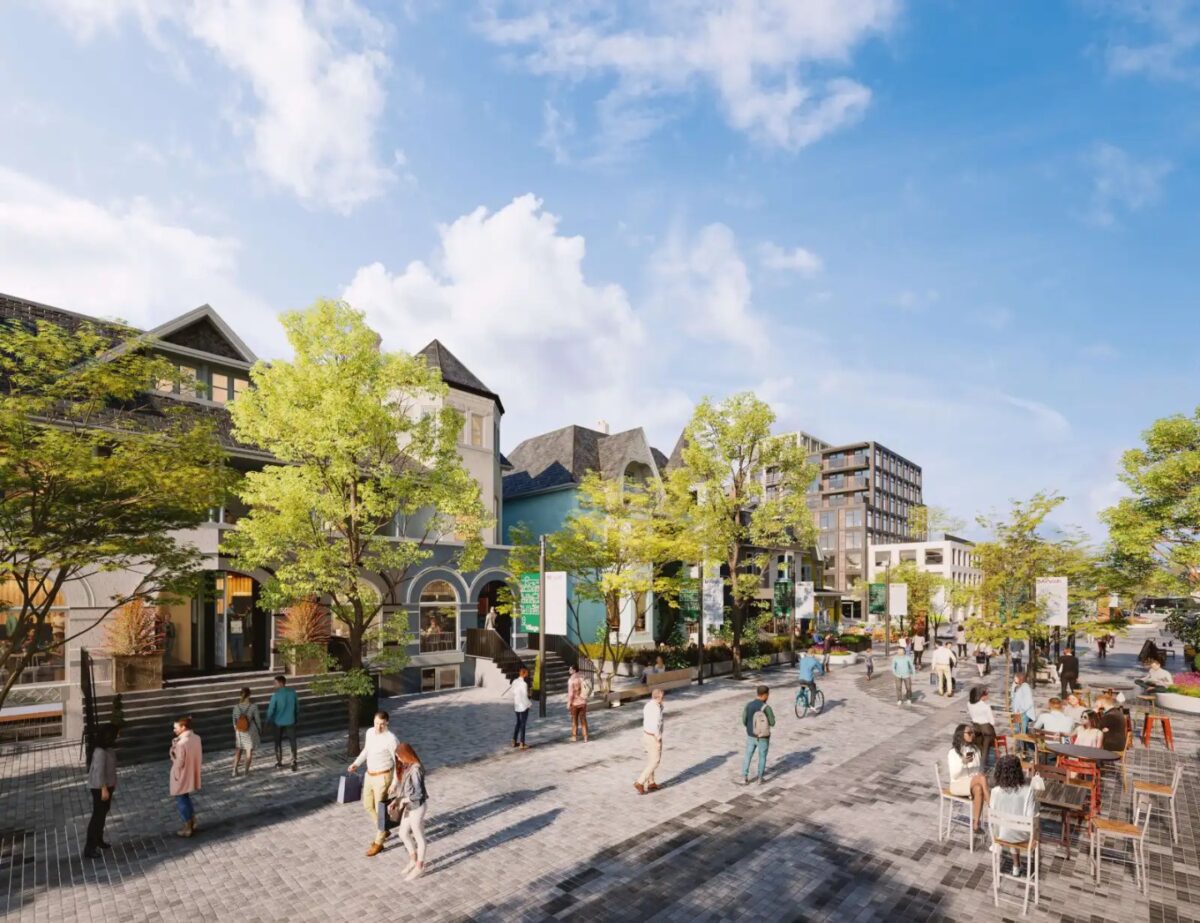
The building itself was not the first one they looked at. Storfer and Freeman brought DesignAgency into a unit directly across Markham Street, evaluated it seriously, and walked away. The Annex House at 600 Markham offered what the other location could not: natural light on both the east and west sides, a layout that could hold multiple distinct zones without losing intimacy, and a heritage architecture that made the concept feel like it had always belonged there. “We held out for this space because of the way Tom and I started,” Storfer says. “The idea of a home, a gathering place. This building understood that in a way the other one didn’t.”
The project evolved floor by floor. What initially began as a smaller footprint eventually expanded into all three levels of the heritage building as the vision for Book Bar grew. Design work with DesignAgency evolved alongside the space itself, with the team carefully shaping how each floor would function independently while still feeling cohesive as part of a single experience.
The interior is designed around a dual identity. By day, Book Bar is intended as a calm, contemplative space for readers, writers, and the book-curious, with natural materials, rich textures, and a mix of private nooks and communal areas. By night, the same space shifts into a social destination, with programming, drinks, and the kind of energy that comes from a room full of people who chose to be somewhere intentional. The design brief called for zones that move seamlessly between those two modes without either feeling like an afterthought.
The concept was rooted in both personal experience and extensive research. Storfer and Freeman spent time exploring bookstores, bars, and gathering spaces they loved, paying attention to what made people linger, connect, and return. But the real inspiration came from their own lives: years of friendship and evenings spent around a kitchen island where two families regularly gathered. “This was always an extension of my home and our friendship,” Storfer says. “We wanted to recreate the feeling of sitting around a kitchen island with people you care about. Good drinks, good conversation, books within reach. It was never somebody else’s model that we decided to bring here. It grew from something real.”
That instinct informs decisions that are genuinely unusual in the current hospitality landscape. Phones and screens are not permitted after 6 p.m. on weeknights, and not at all on weekends. While Book Bar has built a following of more than 16,500 on Instagram before serving its first drink, the founders are equally focused on creating moments of genuine connection once guests walk through the door. “We want this to feel like an extension of that kitchen island,” Storfer says. “We want people to sit down, have a real conversation, and be genuinely curious about the person across from them. The model we keep coming back to is Cheers. A place where there is warmth, laughter, and a sense that you belong there.”
Much of the early hiring momentum came organically through the Book Bar community online, generating more than a thousand applications before the business had even opened its doors. “We wanted to hire from our community,” Freeman says. “The people who found us that way are the people who understand what we are building.” Sarah Labrie, who comes from a publishing background, is leading the book program alongside Danny Roberts, whose experience spans bookselling and more than two decades in hospitality. Danny will also oversee the drinks program, helping shape an offering designed to sit naturally alongside the literary experience. Jessica is supporting events, a role the founders expect to become increasingly important as programming expands. Kiana Pedersen has led social media and PR throughout the development period. “What Kiana has built for us before we have even opened is remarkable,” Storfer says. “The growth has been extraordinary.”
The programming calendar reflects Storfer’s background as much as the market opportunity. Her experience in mental health will help shape a range of conversations and community-focused events, including programming tied to ADHD Awareness Month in October. More broadly, the team is developing a calendar that brings together authors, thinkers, creatives, and community leaders through literary events, cultural conversations, social gatherings, and experiences designed to foster meaningful connection. “Our intentionality is rooted in our values as a team,” Storfer says. “Connectivity, bringing joy, delivering excellent service, and being genuinely curious about the people who walk through our door. When we open, the most important question we can ask is: who are you, what brought you here, and what do you want more of. We cannot be everything to everyone, but we can listen well and deliver our best.”
Kiana Pedersen has been managing the brand’s earned media strategy throughout the entire build. The approach has been deliberate from the start. “We’ve been very thoughtful about what we want to release and when,” she says. “There’s so much that’s always changing within the city. We want to stay relevant but not oversaturate the market. We’re giving people information bit by bit so it’s not all at once. This is such a special place. We really wanted to build up the strategy behind that and make sure it gets the attention it deserves.”
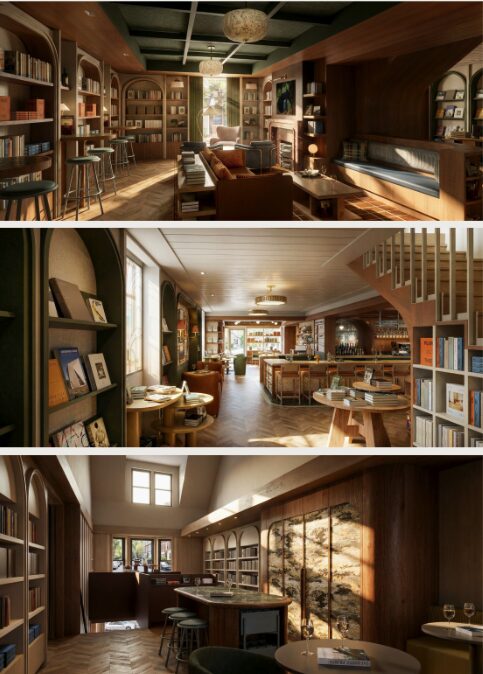
The private event room on the second floor is already a commercial asset before the building has opened. A form posted online after the space was announced produced more than 60 rental inquiries. The room is enclosed, bookable, and equipped with a display screen for speakers and presentations. Three local catering partners are on retainer to handle food for events that exceed what the bar’s kitchen can produce, keeping Book Bar out of the full catering business while capturing the referral revenue. “We are building the business behind the business,” Freeman says. “The event operation runs alongside the bar and the bookstore, and in some ways it has the clearest commercial upside of the three.”
The team anticipates a robust monthly programming calendar, structured so the second floor never feels inaccessible to someone who walked in without a reservation. “The last thing we want is for someone to come in and feel like the space has been shut off to them,” Storfer says. “We are being very intentional about how we sequence events and preserve open access alongside programmed nights.” The most prominent partnership on the calendar is with BODA, the UK-based social events brand with a following in London and New York. BODA has positioned itself as a deliberate alternative to dating apps, and its first Canadian activation will happen exclusively at Book Bar. “We approached them and laid out what we were building,” Storfer says. “Their response was immediate. They had been looking for the right Canadian home for some time.” BODA is not a literary brand. It is a social one. What it shares with Book Bar is a belief that the right space, with the right programming, gives people a reason to show up in person.
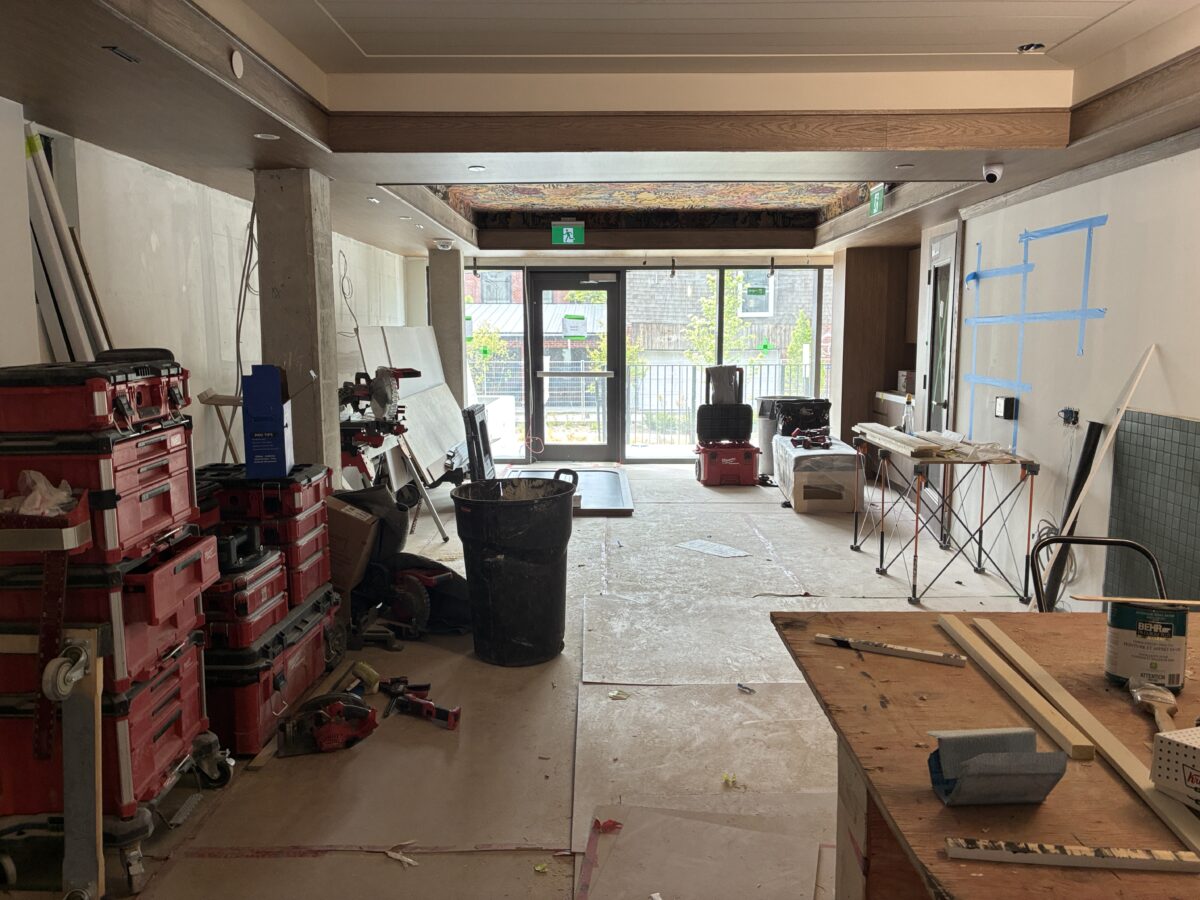
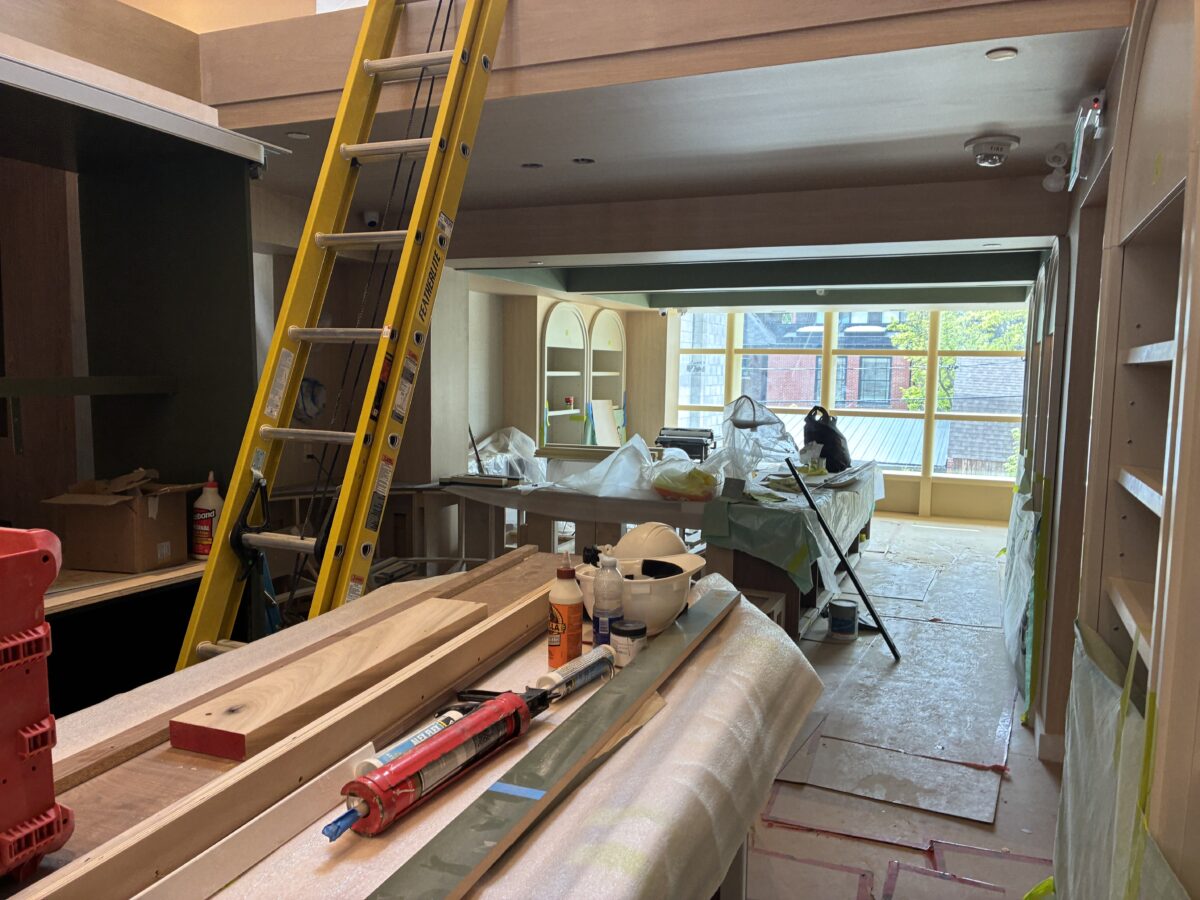
The market context is working in their favour. According to the American Booksellers Association, 422 new independent bookstores opened across North America in 2025, a 31 percent jump over the prior year. That number reflects something broader than a publishing story. It reflects a consumer shift toward spaces that offer a reason to be present, physically and without a screen. Storfer started meeting with publishers three years ago, before a space existed, because she knew how long the relationships would take to build. “I needed to understand the industry from the ground up: how front lists and back lists work, how publisher relationships are built, what the right curation model looks like for a concept like ours.” Some of the front list titles she began discussing in those early meetings have already cycled to the back list by the time the shelves go up. “We have been meeting with publishers about front and back lists for so long that front lists have become back lists,” she says. “Now we are finally able to tell them: when we sit down to discuss the fall list, we will do it here, in the space, not over a restaurant table or a video call.”
Employee handbooks are written. Vendor agreements are in place. The team has been together long enough to develop a shared culture before the first customer arrives. “We have always believed in doing things properly the first time,” Storfer says. “That standard has applied to every part of how we have built this: the space, the team, the partnerships, the programming. There are no shortcuts in what we have put together here.”
Pizzeria Badiali opened its second Toronto location in May. Blackbird Baking Company is a close neighbour. Pasta Basta and Cremma Gelato are coming. Kitchen Hub is also confirmed in the development. No chain concepts have anchored the strip. Mirvish Village is shaping up as an independent operator corridor on one of the most watched blocks in Toronto. Book Bar intends to be its anchor, and it has spent three years making sure it is ready to be.
Book Bar’s full opening coverage will follow in late June.
Additional Photos from Mirvish Village


Dustin Fuhs is the founder and Editor-in-Chief of 6ix Retail, Toronto’s premier source for retail and hospitality industry news. As the former Editor-in-Chief of Retail Insider, Canada’s most-read retail trade publication, Dustin brings over two decades of expertise spanning retail, marketing, entertainment and hospitality sectors. His experience includes roles with industry giants such as The Walt Disney Company, The Hockey Hall of Fame, The Canadian Opera Company, Starbucks Canada and Blockbuster.
Recognized as a RETHINK Retail Top Retail Expert in 2024, 2025 and 2026, Dustin delivers insider perspectives on Toronto’s evolving retail landscape, from emerging brands to established players reshaping the city’s commercial districts.