
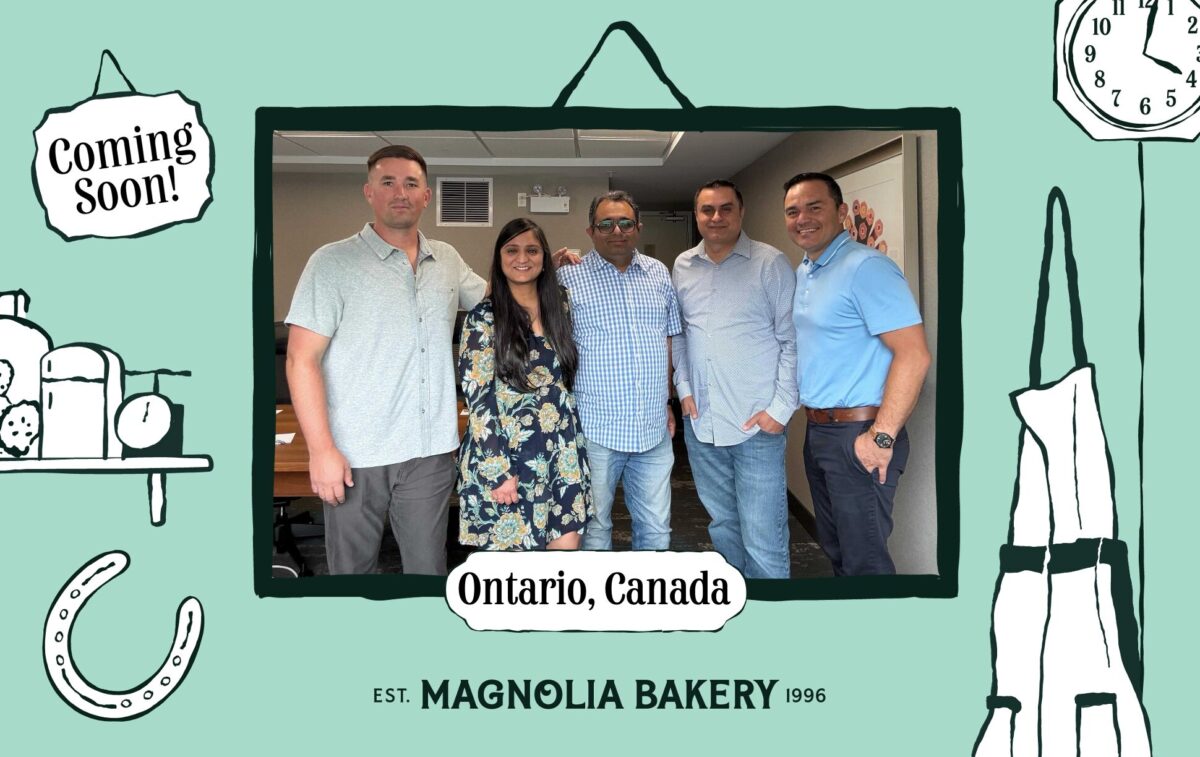
Magnolia Bakery, the New York-based dessert brand known for its banana pudding and cupcakes, has signed a franchise agreement to bring 10 locations to Ontario, tapping Chetanshi and Shaishav “Shay” Thakkar as the operators. The Thakkars bring more than a decade of multi-unit franchise experience to the deal. No locations or opening timelines have been confirmed yet.
The announcement came through a LinkedIn post from the brand earlier this week. “Canadians, we heard you and we’re heading north,” the company wrote.
For brokers and landlords paying attention, this is a significant signal.
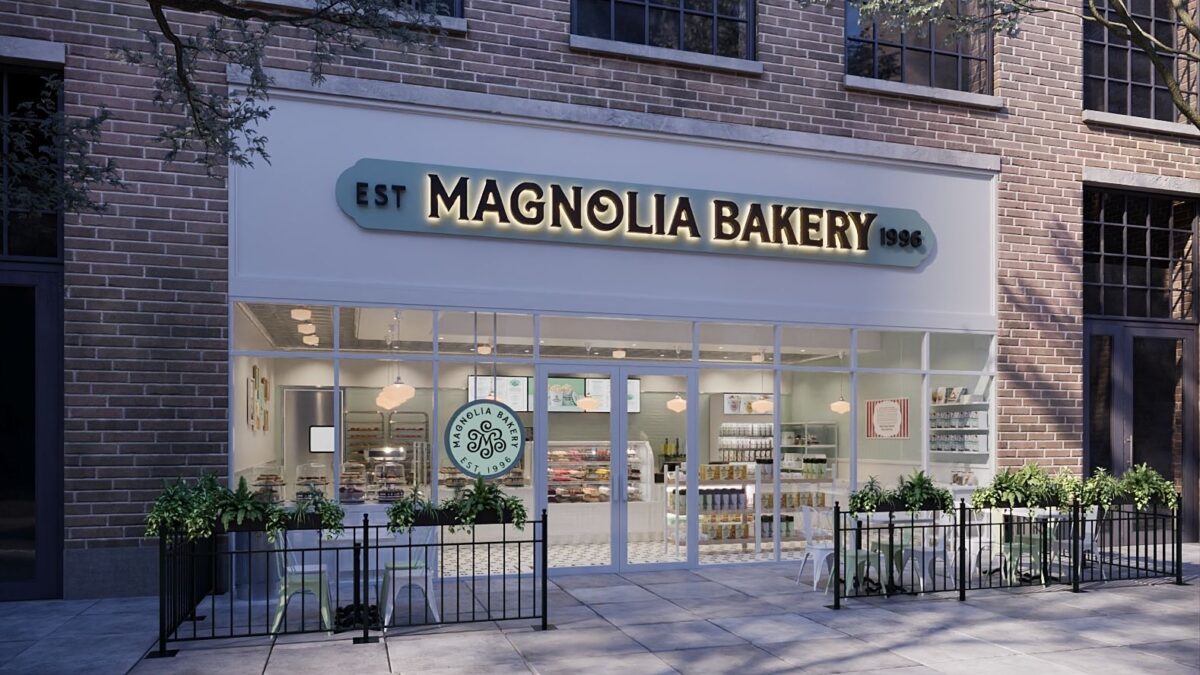
Magnolia Bakery was founded in 1996 on Bleecker Street in New York City’s West Village. It built its early reputation on layer cakes and cupcakes, and a 2000 appearance on Sex and the City turned it into one of the most photographed storefronts in Manhattan almost overnight. It helped start the cupcake wave of the late 1990s. Unlike most of its competitors from that era, it is still here.
What is important to understand is that this is not purely a New York story anymore. The brand has been operating internationally since 2010, when it opened its first location in Dubai through a master franchise agreement with UAE-based luxury retail firm Al Tayer Group. Today, seven international franchise partners operate locations across India, Jordan, Kuwait, the Philippines, Qatar, the United Arab Emirates and Turkey, with nine locations in India alone, seven in the UAE and six each in Turkey and the Philippines. The brand grew 33 percent between 2024 and 2025, expanding from 31 international locations to 40, and has since signed new expansion agreements in India, Turkey, the Philippines, Qatar and the new market of Bahrain. Ontario would be its eighth international market and the first English-speaking country outside the United States in the entire system, which matters more than it might initially seem.
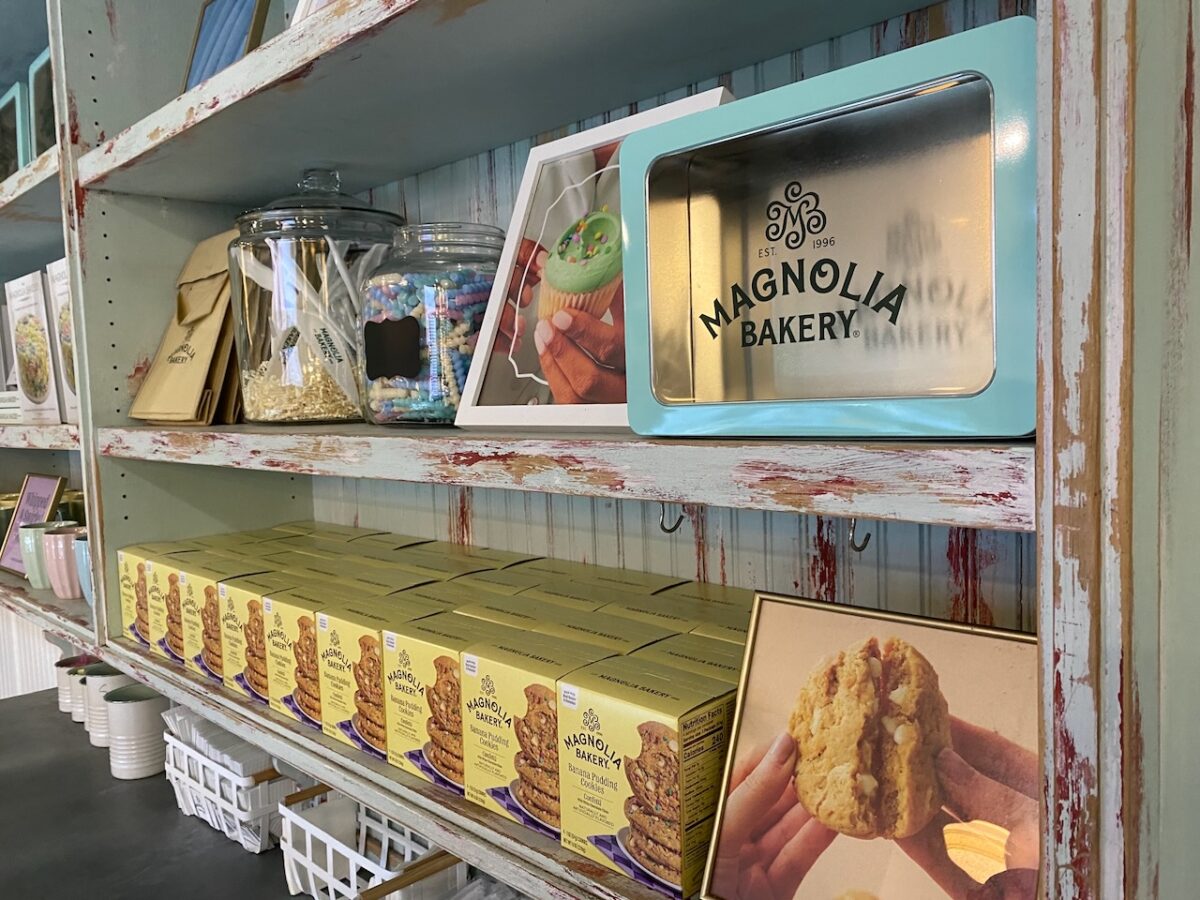
The banana pudding is what drives the global business. Layered vanilla custard, fresh bananas and vanilla wafers, served cold in a clear cup so you can see every layer before you order. It is what people travel specifically to buy. The brand sells five cups of banana pudding every minute globally. That is not a novelty stat. That is a throughput reality that shapes how the brand thinks about formats, staffing and real estate.
In 2021, the brand was acquired by RSE Ventures, the private equity firm co-founded by Hudson Yards developer Stephen Ross, whose portfolio also includes Brooklyn Dumpling Shop, &pizza, momofuku, and Bluestone Lane. At the time, Magnolia built a five-year plan covering a C-suite build-out, infrastructure upgrades, a website relaunch, a full rebrand, a CPG program and a wholesale strategy. That plan is paying out now. The brand has grown its CPG retail footprint to over 2,000 doors and revenue has doubled over the same period.
Magnolia is in the middle of its biggest expansion year on record, with nine new U.S. shops scheduled to open in 2026 alongside its existing 10 corporate locations across New York, Chicago and Los Angeles, all driven by franchising, a model the brand only launched in 2025. Internationally, it operates 40 bakeries and is targeting 50 by year end.
The franchise economics are substantial. Corporate U.S. locations averaged $4.5 million USD in annual revenue in 2024, and an area development agreement for three to five units runs from $633,000 to $1.3 million USD. The initial investment range for a single bakery sits between roughly $696,000 and just over $1.1 million USD. A 10-unit Ontario commitment represents a total capital deployment well above $10 million CAD before Canadian construction costs enter the equation.
Getting the Launch Right
The first Canadian location will matter more than any that follow it. This is not a brand that needs to introduce itself to Ontario consumers. Torontonians travel to New York regularly. Magnolia has been a cultural reference point for nearly three decades, and its international track record across the Middle East and Southeast Asia proves the model translates well beyond its home market. The awareness is already here. What is not here yet is the physical experience, and that gap creates both an opportunity and a responsibility.
Brands that get the Canadian market entry wrong rarely get a clean second chance. The first location sets the staffing culture, the in-store presentation, the product quality benchmark and the social media narrative that every location opening after it will be measured against.
We have covered this dynamic closely. When Bobby’s Burgers by Bobby Flay signed at The Well earlier this year, franchise partner Jim Gormley said it directly: getting the first location right was the entire point of starting there. The Well gave the brand a stage, and the stage set the standard for a 65-location national rollout. Playa Bowls made the same calculation for its first international location anywhere in the world, also at The Well. Operated by Eat Up Canada under a master franchise agreement targeting more than 160 Canadian locations, that opening was the result of years of work before a single cup of acai touched a counter. George Heos, the principal behind Eat Up Canada, has spent 30 years learning how restaurants succeed and fail in Canada. His read is consistent: the first location is not just a restaurant. It is a proof of concept, a training ground, a media moment and a brand statement all at once. Get it right and the rollout has momentum. Get it wrong and you spend the next 18 months correcting a narrative instead of building one.
The same applies here. The question is not whether 10 units can be built in Ontario. The question is whether the first one earns the right for the rest to follow.
The organizational readiness piece sits at the centre of that. Magnolia requires that franchisees and their staff complete hands-on training at its New York facilities before opening, covering small-batch recipes, quality protocols and service standards. Every proposed location, interior layout and design element goes through formal review and approval. That discipline needs to be fully in place before the first door opens, not during it.
Supply chain is the variable that rarely gets discussed at the announcement stage but defines the day-to-day reality. Fresh banana pudding requires a consistent cold chain and specific sourcing standards. The ingredients are not exotic, but the quality requirements are precise. The brand has described its approach to CPG grocery distribution as slow and steady, specifically to make sure the product on store shelves lives up to what comes out of the bakery. That same discipline applies to Ontario. A banana pudding that tastes different from what people had in New York or Dubai will be noticed, and it will be posted about.
Loyalty infrastructure is the third piece. Magnolia’s current loyalty structure runs through Toast, earning customers one point per dollar spent with a $5 reward at the $100 threshold, available in-store at U.S. locations only. Whether that extends to Canadian locations with Canadian dollar pricing, CASL-compliant digital marketing and a local customer database strategy has not been confirmed. The brands that build lasting markets in new geographies are the ones that build loyalty infrastructure from day one, not after the opening buzz fades.
The Experience
Walking into a Magnolia Bakery is a specific thing. The interiors are intimate and intentional, built around a buttery palette, black and white tiles and vintage furniture. The brand describes its design identity as whimsical and eclectic, and its cupcake swirl, which anchors the updated logo, takes up to 40 hours to perfect. Every surface is doing work. The display cases are the focal point. The banana pudding is served in clear cups so the layers are visible before you order. The cupcakes are hand-swirled. The staff interaction is built in, not optimized out. You are meant to look, consider and take a moment.
That experience is what drives the social content, the repeat visits and the lineups. It is also what makes the brand worth protecting. Magnolia-lite would be a disservice to the Ontario market that has been waiting for it. The moment the experience underdelivers relative to what people saw in New York, Dubai or on their For You page, the narrative shifts and it is hard to shift it back.
Where It Works in Toronto
The brand’s U.S. franchise strategy has deliberately targeted suburban markets with walkable, urban-feeling cores rather than defaulting to flagship downtown addresses. Applied to Ontario, that thinking opens up a broader set of conversations than a purely downtown-first strategy would suggest.
Within Toronto, four areas stand out as natural fits.
Ossington is the starting point. It is one of the city’s most walkable, high-frequency corridors, with a consumer that is design-aware, experience-driven and comfortable spending on something that feels considered. The strip draws visits, not passing trade. A Magnolia on Ossington would generate lineups.
Yorkville is the prestige address. The consumer density, the tourist volume, the hotel proximity and the concentration of premium food and beverage operators all support it. Mandy’s opened its Toronto flagship on Bloor Street in Yorkville for those same reasons, and it became one of its strongest performing Toronto addresses. The precedent is there.
The Canary District is worth watching closely. It has absorbed several well-positioned food and beverage concepts as its residential density has built out, and Mandy’s identified it as a priority market, with a location that opened there earlier this year. Where Mandy’s works, Magnolia would likely work. The consumer overlap is significant.
The PATH is the most operationally distinct conversation of the four. The underground network serves roughly 200,000 people on a weekday. A PATH location for Magnolia would need to be primarily a throughput play, built around the banana pudding cup and the grab-and-go cupcake rather than the full in-store experience. The brand has already demonstrated it can operate out of a LaGuardia Airport kiosk in New York. A format built for that kind of volume fits the PATH conversation well.
How It Compares to What Is Already Here
Ontario’s premium dessert franchise market is active but not saturated at the brand-name level.
Crumbl has 25 Canadian locations and is actively growing, with stores in Toronto at The Well, in Mississauga and across the GTA. Its model runs on a weekly rotating menu and social content that creates novelty-driven repeat visits. Magnolia’s model is the inverse: a narrow, consistent menu anchored by a single hero product. Both are social media brands, but Magnolia’s draw is destination-based in a way Crumbl’s is not. People do not travel across the city for a Crumbl cookie the way they seek out banana pudding.
Nothing Bundt Cakes has quietly built a small Ontario footprint with locations in Burlington and Mississauga. It is primarily an occasion-driven purchase, bought for birthdays and events rather than impulse or experience, which positions it differently enough from Magnolia that the two are unlikely to compete directly for the same trade area.
The Mandy’s parallel remains the most instructive local benchmark, even though the categories are completely different. Mandy’s is a salad brand. But the discipline behind its Toronto rollout is the closest recent playbook for how a quality-led concept earns its place here. It started with Ossington, moved to Yorkville, then Yonge and Eglinton, and now Canary/Distillery District. The sequencing was deliberate. The real estate was selective. Locations that did not fully align with the brand were declined, even when they looked strong on paper. That is what built genuine market presence rather than just unit count. Magnolia needs to apply the same filter at every site. Not just whether it performs, but whether it represents the brand.
Milk Bar is the cautionary tale that still applies. The Christina Tosi-founded concept had real Canadian consumer love, opened in Toronto with significant fanfare, and closed. Its Canadian return in 2026 has been through a Krispy Kreme collaboration, not a physical location. The lesson is not that New York dessert brands cannot survive here. It is that brand equity does not compensate for wrong real estate and an operating model that does not translate. Magnolia is better resourced and more operationally mature than Milk Bar was at the time of its Canadian entry. But so is the market’s expectation of what a brand like this needs to deliver.
What Bobby’s Burgers, Pret a Manger, and Playa Bowls have in common is that they treated their first location as a standard-setter, not a trial run. That is the mindset Magnolia needs to bring to Ontario. The brand is strong enough to succeed here. The question is whether the rollout is disciplined enough to let it.
What We Don’t Know Yet
No broker representation has been confirmed. The first location has not been identified, and there is no indication yet whether the rollout will prioritize the City of Toronto, the 905 suburbs or both. Opening timelines have not been shared. It is also not clear whether a Canadian CPG or grocery distribution component will accompany the brick-and-mortar program, though given how central grocery has become to the U.S. business, that conversation is likely already happening.
Ten-unit commitments can take years to fully execute. The pace of the rollout and which markets the Thakkars prioritize first will shape how landlords, leasing teams and competing operators respond.
6ixRetail will update this story as broker representation, site selections and opening dates are confirmed.

Dustin Fuhs is the founder and Editor-in-Chief of 6ix Retail, Toronto’s premier source for retail and hospitality industry news. As the former Editor-in-Chief of Retail Insider, Canada’s most-read retail trade publication, Dustin brings over two decades of expertise spanning retail, marketing, entertainment and hospitality sectors. His experience includes roles with industry giants such as The Walt Disney Company, The Hockey Hall of Fame, The Canadian Opera Company, Starbucks Canada and Blockbuster.
Recognized as a RETHINK Retail Top Retail Expert in 2024, 2025 and 2026, Dustin delivers insider perspectives on Toronto’s evolving retail landscape, from emerging brands to established players reshaping the city’s commercial districts.