

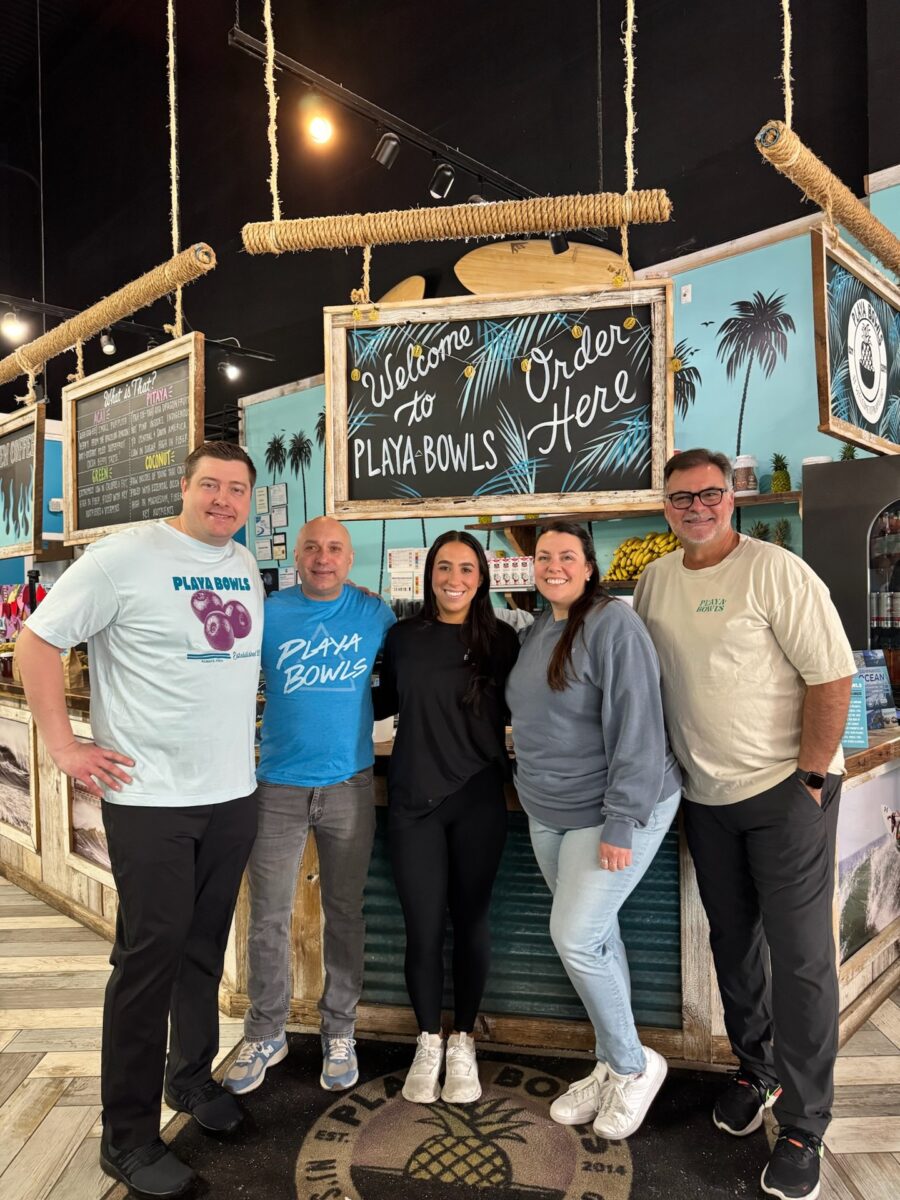
George Heos has spent thirty years learning how restaurants succeed and fail in Canada. He led franchise development at Boston Pizza when it was building toward becoming the country’s largest casual dining chain. He ran development at Cara Operations across Swiss Chalet, Harvey’s and Milestones. At Priszm, he oversaw real estate and construction across 770 KFC, Pizza Hut and Taco Bell restaurants from coast to coast. With business partner Alex Gerzon, he brought Firehouse Subs to Canada opening 50 restaurants in 6 years. He holds an MBA from the Ivey School of Business and has negotiated real estate deals in virtually every major Canadian market.

None of that experience made the first Pokeworks lease at The Well feel anything less than a leap of faith.
“It was a complicated development to really understand just from the plans,” he says, with the measured cadence of someone who has told a lot of stories and knows which ones are worth telling slowly. “There are so many different levels and sections. We moved forward based on our relationship with RioCan and a genuine belief in what this place was going to be. There was a little bit of trust us involved. And I bought into that vision.”
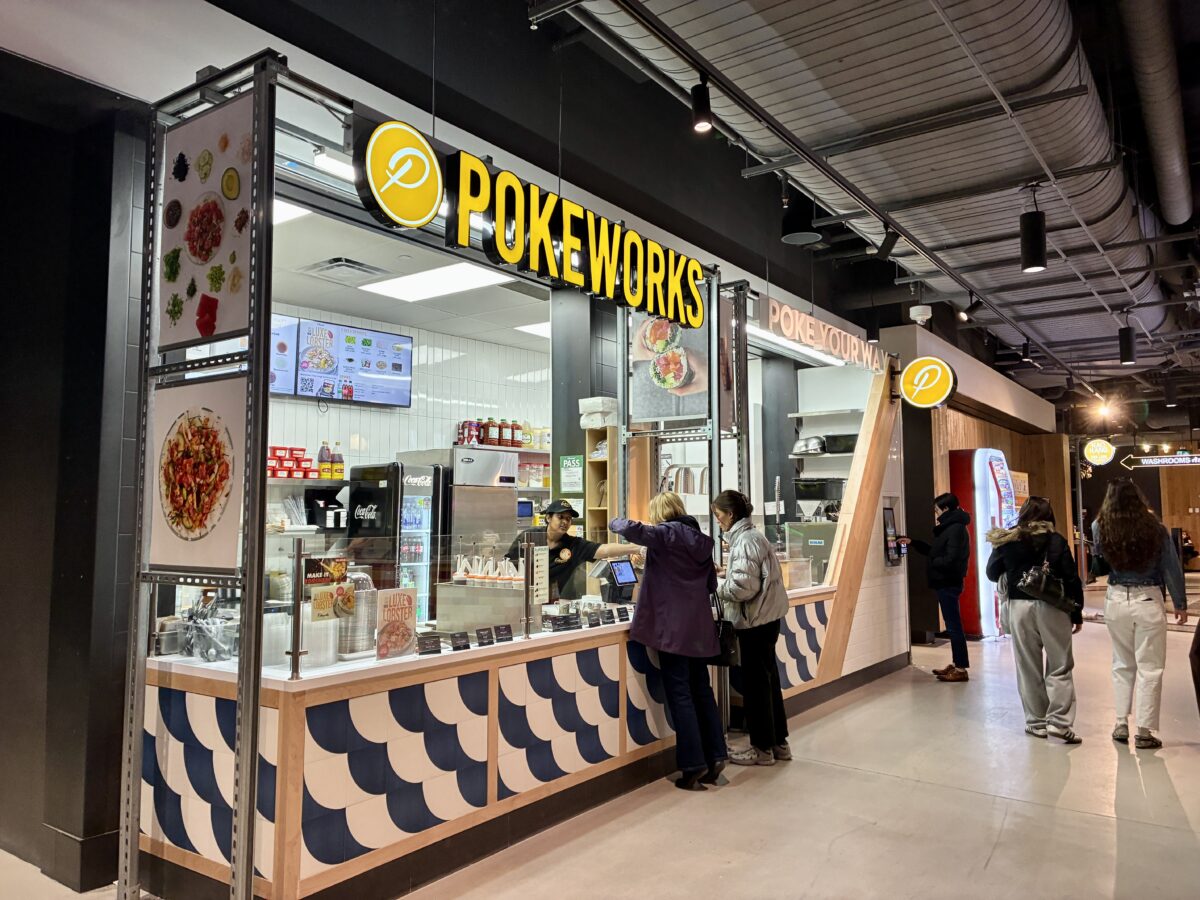
That was several years ago. The Well is now one of the most trafficked mixed-use destinations in the country, drawing 22,000 visitors daily to its intersection of residential towers, office space, and a retail and food mix that has become a genuine destination rather than an amenity. The Pokeworks that Heos and his business partner Alex Gerzon built inside Wellington Market runs just 300 square feet. The American franchisor had initially refused to approve a footprint that small. Their smallest existing restaurant had a kitchen larger than the entire proposed space. Heos pushed back, engineered a solution, and made it work.
Which is, it turns out, something he does fairly often.
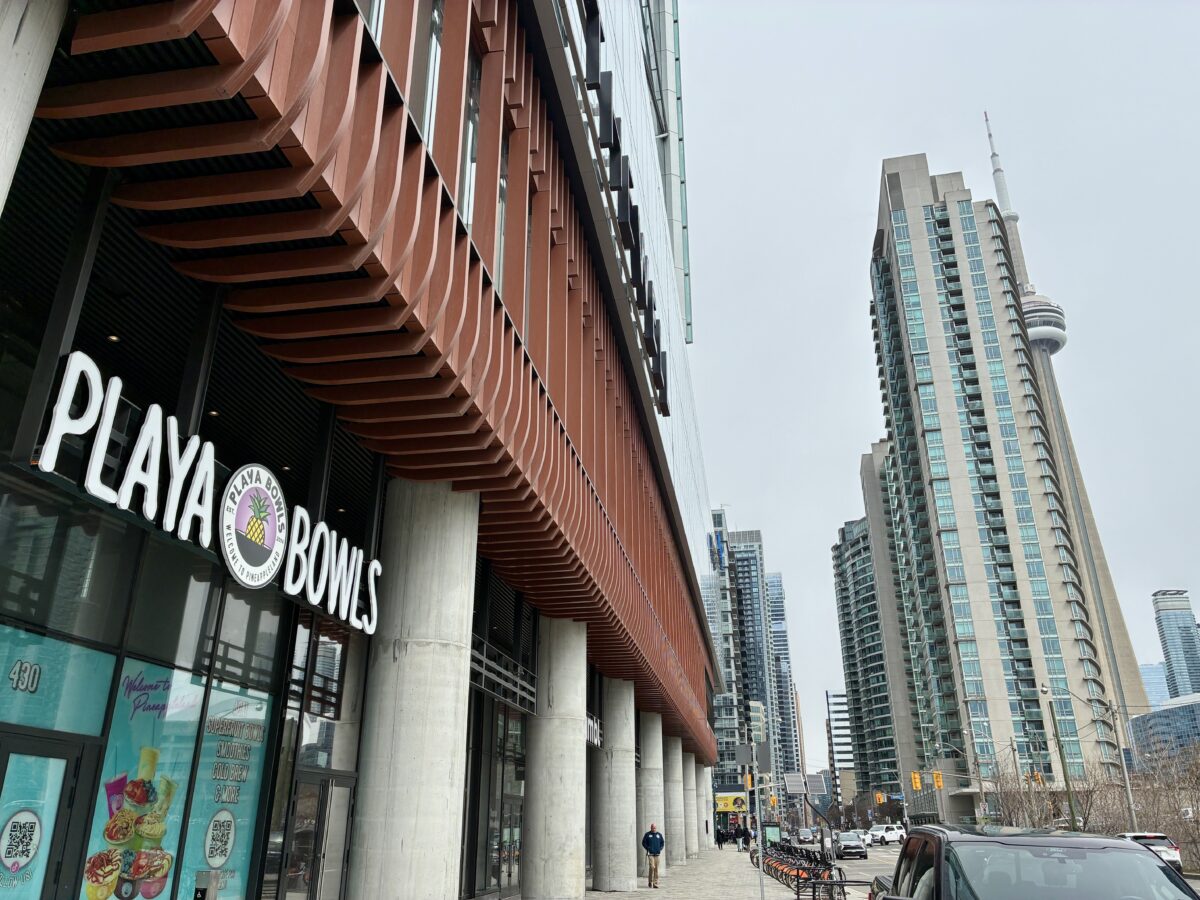
The call that changed things came on an ordinary morning. A conversation with RioCan’s Josh Katz, the kind of portfolio review that operators who work closely with major landlords have regularly. A vacancy came up. Unit UG39, the former Aisle 24 space, 1,761 square feet, exterior facing on the ground floor, beside Crumbl Cookies and steps from Prince Street Pizza, fronting directly onto Front Street.
Heos was on site that afternoon.
“I knew it immediately,” he says. “I knew the location. I knew what had been there. We were able to get the deal done very quickly, and that speed is one of our real advantages. We can work directly with landlords without the layers that slow larger organizations down.”
He pauses, then says something that is rarely said out loud in an industry that prefers its decisions to look inevitable in hindsight.
“I would love to tell you that I had this grand strategic vision for a second location at The Well. But that is not the reality. It came out of a meeting, and we moved on it. Sometimes the best decisions happen that way.”
The tenant going into that space is Playa Bowls, the New Jersey-born superfruit bowl concept that has grown from a blender and a folding table across from the boardwalk in Belmar to nearly 400 locations across 30 American states. Founded in 2014 by two surfers chasing the acai and pitaya bowls they had discovered on trips through Costa Rica and Hawaii, the brand has built a following that sits closer to a community than a customer base. It ranked seventh on the Franchise Times Fast and Serious list in 2026 and landed on Entrepreneur magazine’s Franchise 500 the same year.
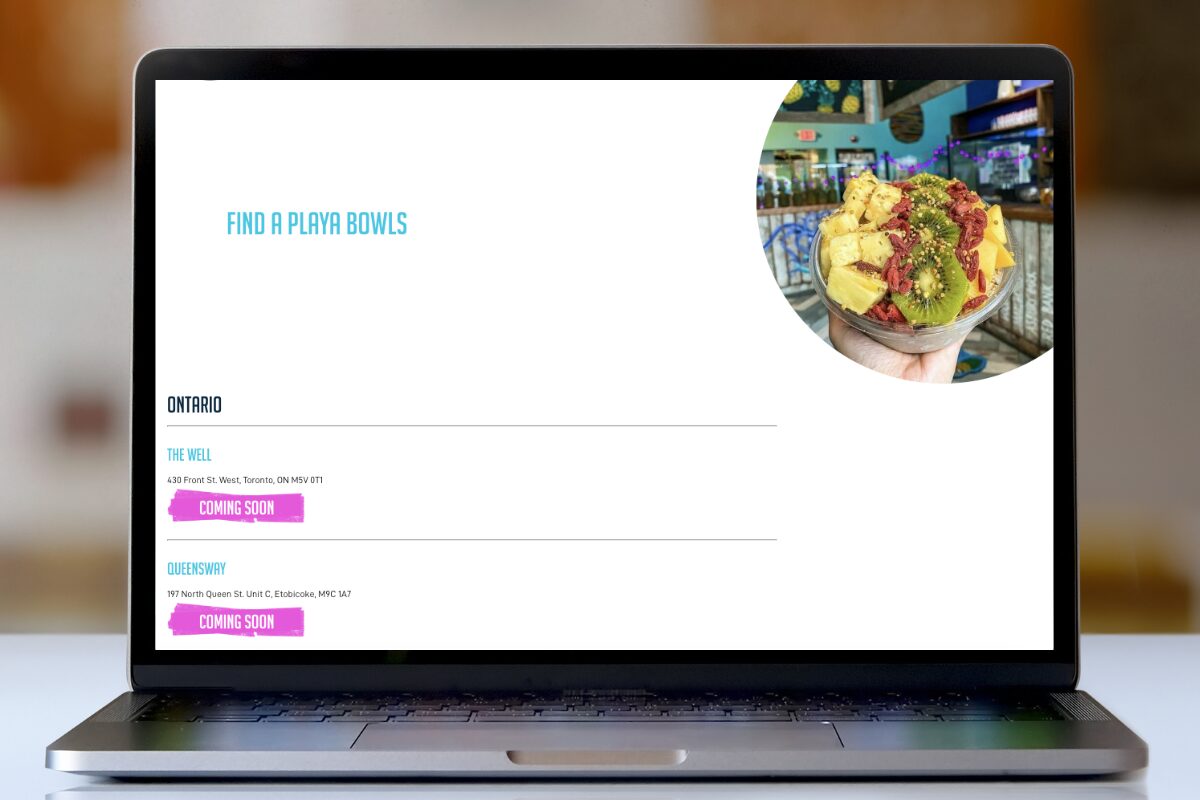
Its first Canadian location, and its first international location anywhere in the world, opens at The Well in June.
The Well has become something its earliest tenants could only have imagined when they were signing leases against architectural drawings. It is now the address that international brands choose when they want to say something about their intentions in Canada.
Earlier this year, 6ix Retail reported that Bobby’s Burgers by Bobby Flay had signed a lease at Wellington Market, with Canadian franchisor Falcon Capital Group committing to 65 locations nationwide. That opening is expected this summer. Two international debuts at the same development in the same calendar year is not a pattern that emerges by accident. It reflects deliberate curation by co-owners Allied and RioCan, and a growing recognition within the industry that The Well’s customer base, young, urban and food-forward, with an average household income approaching $125,000, is among the most qualified opening audiences in the country.
For a brand crossing a border for the first time, the address sends a signal that no press release can manufacture.
Heos has watched enough American concepts arrive in Canada to know exactly where they go wrong.
The food is usually fine. The branding holds up. What fails, consistently, is the assumption that the market will behave the same way it does south of the border. The economics of running a restaurant in Canada are fundamentally different. The supply chain requires its own architecture. Labour works differently. The cost structure demands a model built for this country, not adapted from another one.
“Most U.S. concepts see Canada as really an extension of the U.S.,” he says. “With our experience, we have learned that Canada is a genuinely different market. The local partner needs real control over that process to be successful. If that confidence in the relationship is not there from the beginning, we simply do not proceed. It doesn’t matter how much we believe in the brand.”
With Playa Bowls, the conversation was different from the start. The brand’s leadership knew Eat Up Canada‘s track record, and the master franchise agreement was structured to reflect it, giving Heos and Gerzon the operational control to build a Canadian version of the business rather than import one.
That commitment is visible in the details. Eat Up Canada has already signed an agreement with Smooth Commerce to power a Playa Bowls loyalty program across Canada before the first location has opened its doors. Supply chain, distribution and real estate strategy are all being developed specifically for this market. Beauleigh is handling national real estate as locations advance in Vaughan, Ottawa and Halifax alongside the two corporate stores currently under construction in the GTA. A second corporate location near CF Sherway Gardens in Etobicoke follows The Well opening shortly after. The master franchise agreement covers at least 160 locations across Canada.
The early signals are difficult to ignore. Without spending a dollar on Canadian advertising, Eat Up Canada has already fielded six to eight serious franchisee inquiries from operators who encountered the brand during their own time in the United States.
“The guests have an almost cult-like following for this brand,” Heos says. “We have seen it already here, before we have even opened. People knew Playa Bowls before we said a word.”
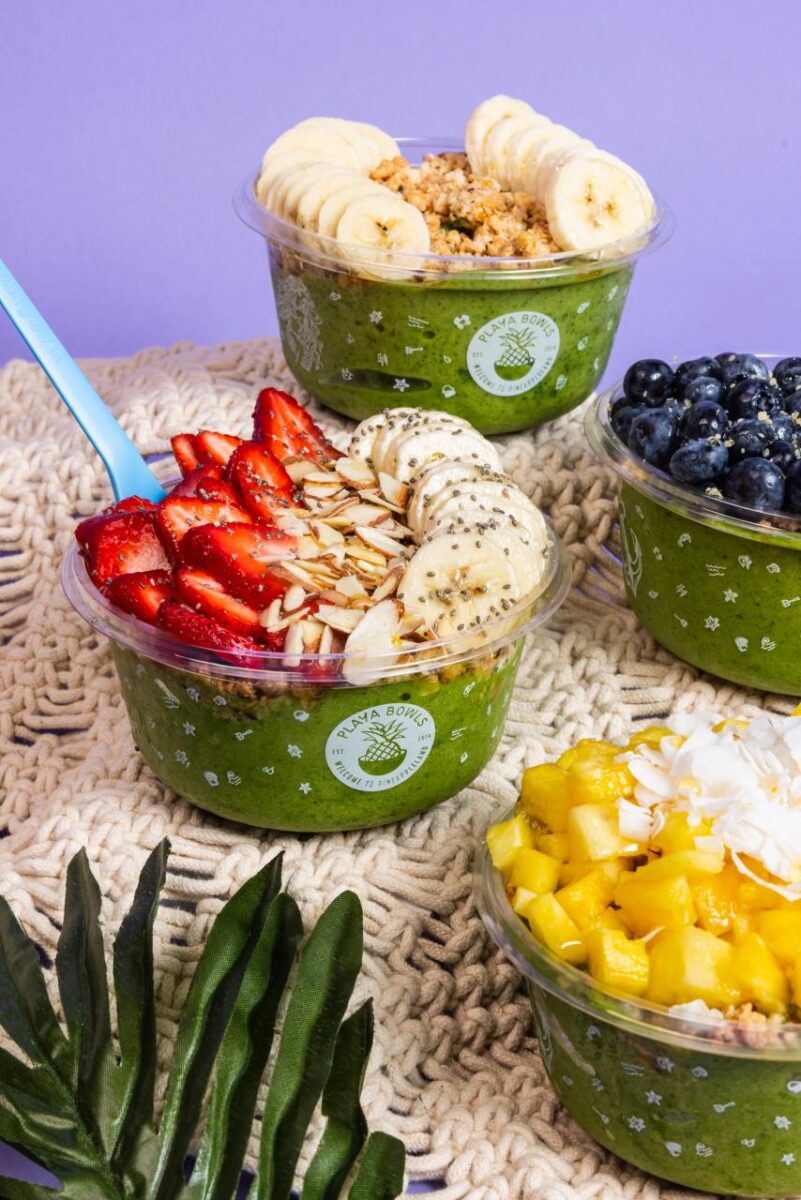
Heos describes what drew him to Playa Bowls with the kind of specificity that comes from having visited a lot of locations and eaten a lot of bowls. His personal order, established early in the evaluation process and unchanged since, is the OG Nut bowl which has acai, granola, banana, strawberries, coconut flakes and Nutella. He has a sweet tooth, and the bowl has not let him down once.
“When you walk into Playa Bowls, a smile comes to your face,” he says. “There is a vibrant energy that the brand has. It is a really interesting mix between great taste and a health-focused menu. And we were drawn to that combination immediately.”
But the menu, as Heos will tell anyone who asks, is only part of what makes a restaurant work over the long term. The other part is harder to systematize and far easier to get wrong. It is something he has watched the industry stumble over consistently, particularly in the years since the pandemic reset expectations in ways that many operators have yet to fully reckon with.
“At the end of the day it really comes down to execution, day in, day out,” he says. “Sometimes that is the forgotten ingredient in business, especially in the restaurant business. Service levels dropped off during COVID and people used it as an excuse to provide poor service. That has not fully recovered. And for operators who are serious about hospitality, that is actually an opportunity.”
The standard Heos and Gerzon hold themselves to across every brand they touch comes down to something simple and demanding in equal measure.
“My business partner Alex Gerzon says: Every guest who walks through our door is wearing an invisible sign on their chest. It reads: make me feel special. We don’t know what is going on in that person’s life. They could be having a very difficult day. What we can control is how they feel when they are with us. Great food and genuine hospitality is how we earn the right to have them come back. That is not something you can shortcut.”
It is a philosophy carried across every brand Eat Up Canada has built, and the one Heos believes will define what Playa Bowls becomes in this country.
The Well location opens in June. For an operator who once committed to a space he could barely walk through, watching a Playa Bowls shop take shape on one of Toronto’s most prominent retail corridors is proof that the best bets are sometimes the ones that didn’t feel like bets at all.
Playa Bowls Canada opens at The Well, 430 Front Street West, in June 2026. Follow at @playabowlsca on Instagram and @playabowlscanada on TikTok. For franchise inquiries, visit playabowlscanada.ca.

Dustin Fuhs is the founder and Editor-in-Chief of 6ix Retail, Toronto’s premier source for retail and hospitality industry news. As the former Editor-in-Chief of Retail Insider, Canada’s most-read retail trade publication, Dustin brings over two decades of expertise spanning retail, marketing, entertainment and hospitality sectors. His experience includes roles with industry giants such as The Walt Disney Company, The Hockey Hall of Fame, The Canadian Opera Company, Starbucks Canada and Blockbuster.
Recognized as a RETHINK Retail Top Retail Expert in 2024, 2025 and 2026, Dustin delivers insider perspectives on Toronto’s evolving retail landscape, from emerging brands to established players reshaping the city’s commercial districts.