
Gen Z is not coming back to physical retail out of nostalgia. They are coming back because the store offers something the phone cannot. New research from Lightspeed Commerce puts numbers to that shift, and for anyone making leasing and brand decisions in Toronto right now, the timing is worth paying attention to.
Fifty-four percent of young Torontonians surveyed said they have visited a retail location specifically for a third-space experience. Seventy-three percent say they would spend more in a store that offers non-shopping features. Seventy-seven percent say they would return. And 81% say they feel more emotionally connected to brands that create gathering spaces over those focused purely on transactions. But the number that sits underneath all of those is this: 93% said visiting a store with social or community features helps them feel less isolated.
That is not a retail statistic. That is a social one. And it says something important about the environment these consumers are living in, particularly in a city like Toronto, where people are increasingly living alone in smaller spaces, spending more time online, and looking for reasons to be somewhere rather than just somewhere to buy something. The store that understands that is not competing with e-commerce. It is offering something e-commerce structurally cannot.
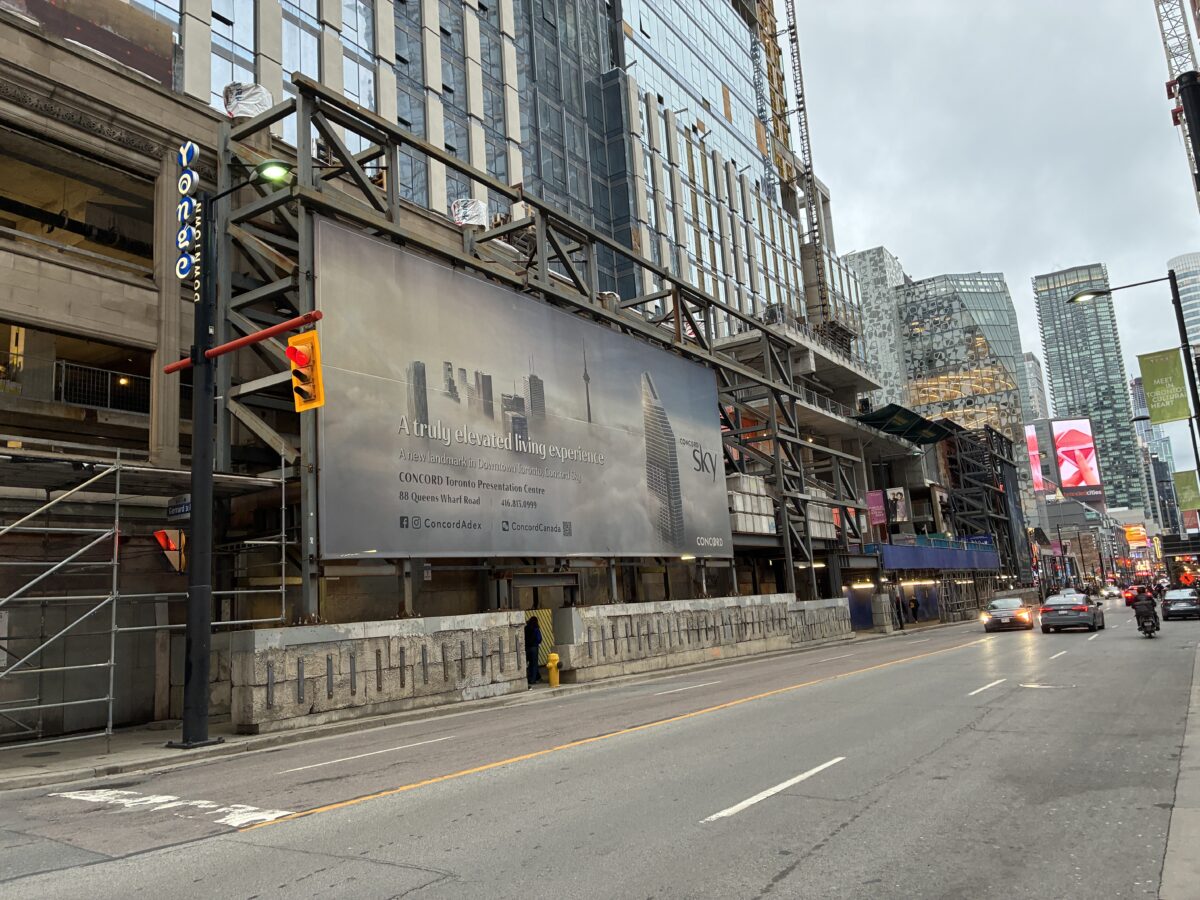
Toronto has thousands of new condo units coming to market in 2026 and beyond, most of them with ground-floor retail attached. That space is going to get leased regardless. The question is whether it gets programmed or just filled. The Lightspeed research suggests the answer to that question has a direct line to revenue, retention and foot traffic in ways that are increasingly hard to ignore.

John Shapiro, Chief Product and Technology Officer at Lightspeed, says Gen Z is approaching physical retail with a different kind of intention than previous generations. “They have grown up in a digital-first world, so physical retail needs to offer something distinct to earn their time,” he says. “What is new is how selective they are. They are not just showing up. They are choosing spaces that reflect their identity, offer a sense of community, and give them a reason to stay.”
That selectivity has real consequences for how ground-floor retail in new developments gets designed and leased. A row of businesses that serve morning coffee crowd and goes quiet by noon is not a third space. It is just retail with a nicer lobby. Shapiro is direct about what separates one from the other. “Developers and leasing teams need to think beyond occupancy,” he says. “The focus should be on tenant mix, complementary concepts, and how the space functions throughout the day. Spaces that can host events or evolve with the community will outperform those that are static. The goal is to create an environment that feels integrated into the neighbourhood, not just a row of storefronts.”
For leasing teams pitching prospective tenants, that reframe matters. The conversation is no longer just about square footage and traffic counts. It is about what the space can become and what kind of community it is being built to serve. A development that gets that mix right does not just fill its retail units. It creates a reason for people to be there, which is a different and more durable form of value. The third-space tenant is an anchor in the truest sense, not because of their brand recognition but because of what they make possible around them.
The pushback brands always have on experience-led retail is the same: how do you measure it? Emotional connection sounds compelling in a pitch deck and vague in a budget meeting. Shapiro has a direct answer. “Emotional connection may sound intangible, but the impact shows up in very concrete ways,” he says. “Retailers should be looking at dwell time, repeat visits, basket size, and customer lifetime value. Customers who engage with these environments are more likely to spend more and come back. Over time, that improves retention and reduces reliance on constant acquisition.”
That last point is worth sitting with. Customer acquisition costs have been rising steadily as digital advertising gets more competitive and crowded. A brand that builds genuine loyalty through in-store experience is not just generating repeat visits. It is reducing its dependence on paid channels to drive traffic. The math on that compounds over time in a way that a promotional campaign does not. The 81% emotional connection figure starts to look less like a soft metric and more like a leading indicator of long-term brand health.
The Lightspeed numbers support that. Seventy-three percent of respondents said they would spend more in a store offering non-shopping features. Seventy-seven percent said they would return. Put those two together and you have a customer who is spending more per visit and coming back more often. For a brand weighing the cost of programming a space against the cost of acquiring a new customer, that is a meaningful reframe. The experience is not a marketing expense. It is a retention strategy.
There is also a discovery dimension that changes the math on foot traffic entirely. Gen Z is not finding these spaces through traditional advertising. They are finding them through other people on TikTok and Instagram, through short-form video of someone else’s experience in a store they had never heard of. The content driving discovery is not coming from brands, it is coming from other shoppers. “They are seeing spaces through other people’s experiences, not just brand messaging,” Shapiro says. “That means retailers need to think about how their stores show up visually and how easily those moments can be shared. A strong in-store experience does not stop at the door. It extends into digital and brings new customers with it.”
This is where the third-space model starts to function as something more than a retail strategy. A store that consistently generates organic social content is effectively running a marketing channel it does not pay for. Every time someone films a coffee in a well-designed space, shares a moment from an in-store event, or posts about a brand that made them feel like they belonged somewhere, that content is doing acquisition work. For leasing, the implication is significant. A tenant whose space generates that kind of content is not just serving the building. It is pulling foot traffic from across the city and advertising the development to people who have never been near it.
Shapiro is careful not to overstate the case. “Emotional connection on its own is not enough,” he says. “It needs to be paired with strong fundamentals like product, pricing, and convenience.” The experience does not compensate for a weak offer. But in competitive categories where product and price are already comparable across options, and in Toronto that describes most of retail right now, the space becomes the differentiator. Where the fundamentals are matched, experience is what drives the decision. It determines where the customer goes, how long they stay, how much they spend, and whether they come back.
What the Lightspeed research ultimately points to is a realignment of what physical retail is actually for. The transaction was always the outcome. It was never supposed to be the whole point. For a generation that grew up with every product available instantly on a screen, the store has to justify itself on different terms. The brands and developers who understand that are not just adapting to a generational preference. They are building something with longer legs than any single trend. And in Toronto, with thousands of new retail spaces coming online in the next few years, the window to get it right is open right now.

Dustin Fuhs is the founder and Editor-in-Chief of 6ix Retail, Toronto’s premier source for retail and hospitality industry news. As the former Editor-in-Chief of Retail Insider, Canada’s most-read retail trade publication, Dustin brings over two decades of expertise spanning retail, marketing, entertainment and hospitality sectors. His experience includes roles with industry giants such as The Walt Disney Company, The Hockey Hall of Fame, The Canadian Opera Company, Starbucks Canada and Blockbuster.
Recognized as a RETHINK Retail Top Retail Expert in 2024, 2025 and 2026, Dustin delivers insider perspectives on Toronto’s evolving retail landscape, from emerging brands to established players reshaping the city’s commercial districts.