

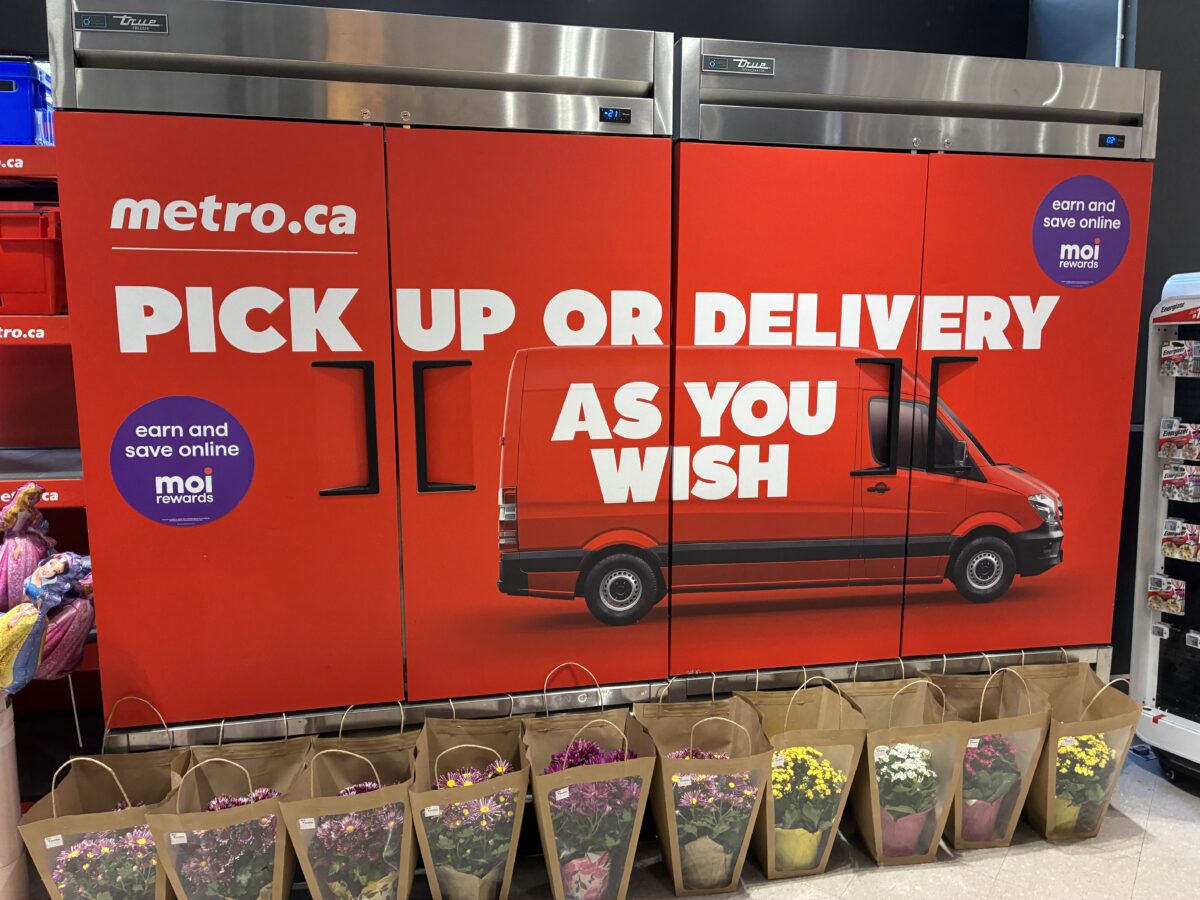
Last summer, Metro joined DoorDash’s marketplace, putting hundreds of Metro, Food Basics and Super C locations across Ontario and Quebec online for same day delivery at in store prices.
DoorDash cast the deal as a customer convenience play. “We’re committed to meeting Canadians where they are,” said Kyra Huntington, Head of Strategy and Operations at DoorDash Canada, in the company’s announcement.
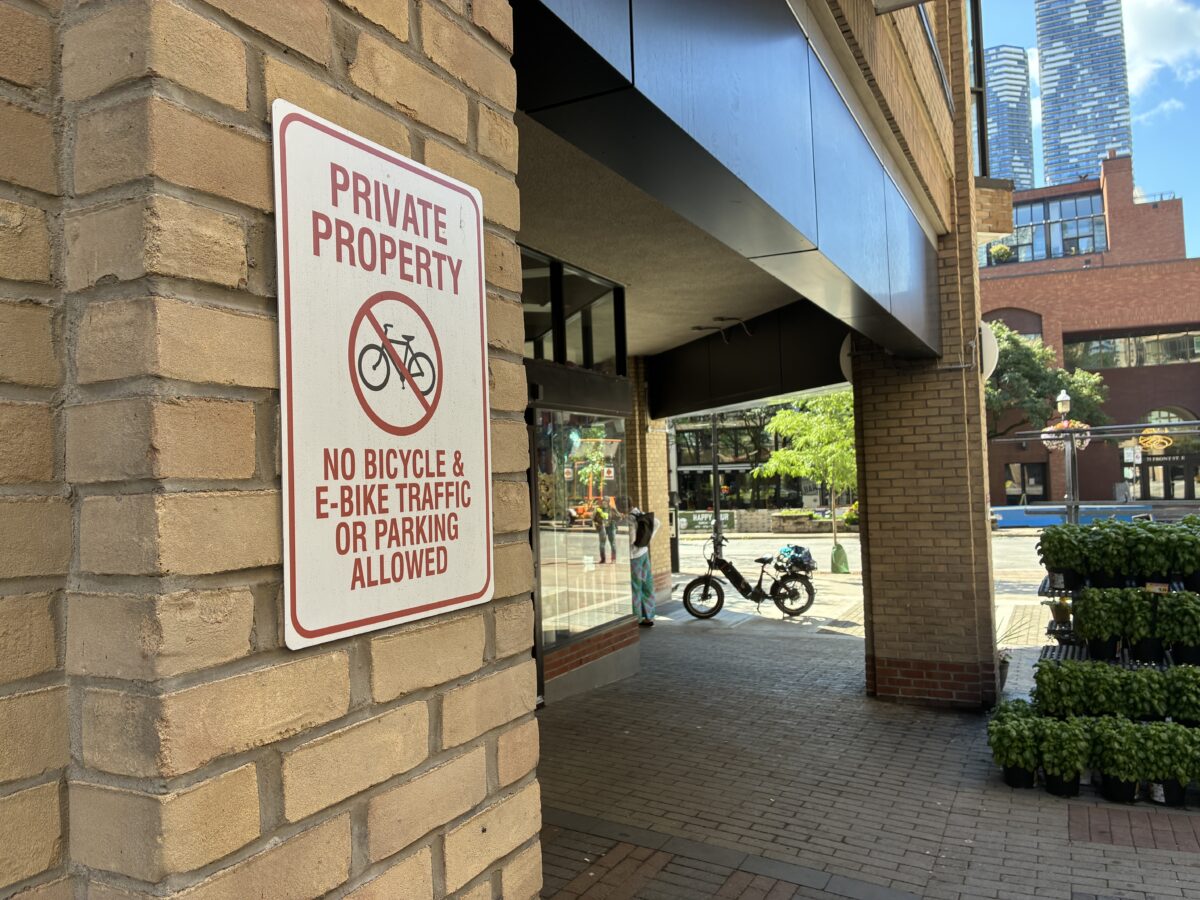
Outside the chain’s downtown Toronto location, the promenade is lined with signage banning bikes. The couriers bringing that store’s own DoorDash orders to customers arrive on exactly what the signs prohibit.
It is a minor detail, but it captures something larger playing out across Canadian retail. Roughly half of Canadians used Uber Eats or DoorDash in the past year, according to Statista survey data, and the country’s online food delivery market is on pace to grow past US$28 billion by 2030.
Grocery delivery is expanding even faster, with platforms like Instacart and Uber Eats gaining share inside grocery at close to an 11 per cent annual clip. National partnerships get signed at the pace that growth demands. Store design has not kept up.

“This is cart before the horse,” said Jeff Doucette, General Manager of Field Agent Canada, a firm that studies in-store shopper behaviour for retailers across the country. “These deals get signed without fully understanding the shopper who’s actually going to use the service.”
The mismatch, in his view, is geographic as much as operational. Urban shoppers drive far more third party delivery volume than suburban ones, and small orders, the kind a bike handles efficiently, make up a disproportionate share of that volume. A national rollout rarely accounts for what that means store by store. “If a courier can’t safely access a store, the delivery model collapses right at the door,” Doucette said. “You’ve just gone in a big circle.”
Grocery stores were built around a single kind of customer, and most were not designed to serve a second one moving through at speed. Farm Boy is explicit about this as a brand choice, not an oversight. “At Farm Boy, you won’t find any self-checkouts,” the company states on its own website. “That’s because we prefer doing things face-to-face.” That works well for a browsing shopper and creates friction for a courier standing in that same line holding an order they did not pick.

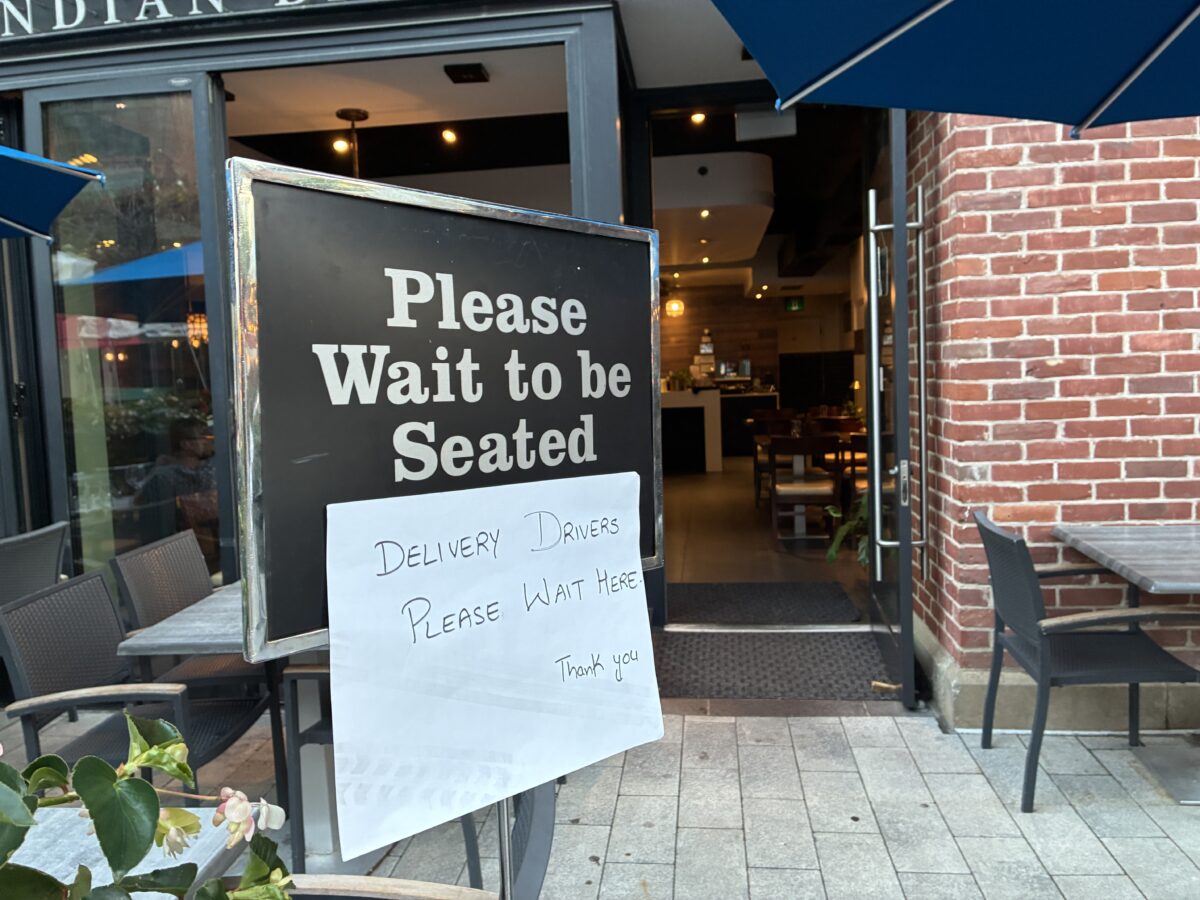
Food service is a few years ahead of grocery on this problem, according to Doucette, who has watched delivery drivers turn restaurant lobbies into holding pens over the last several years. “You’ve got a courier in flip-flops standing in the lobby of a full service restaurant,” he said. “That’s a brand disconnect.”
Some chains have already engineered around it. A newly built Cactus Club Cafe location in Calgary added a dedicated entrance at the back of the building solely for delivery pickups, removing couriers from the front lobby and freeing hosts to manage only dine in guests. A nearby McDonald’s took a simpler approach, adding a separate entrance built purely for speed on low margin orders.
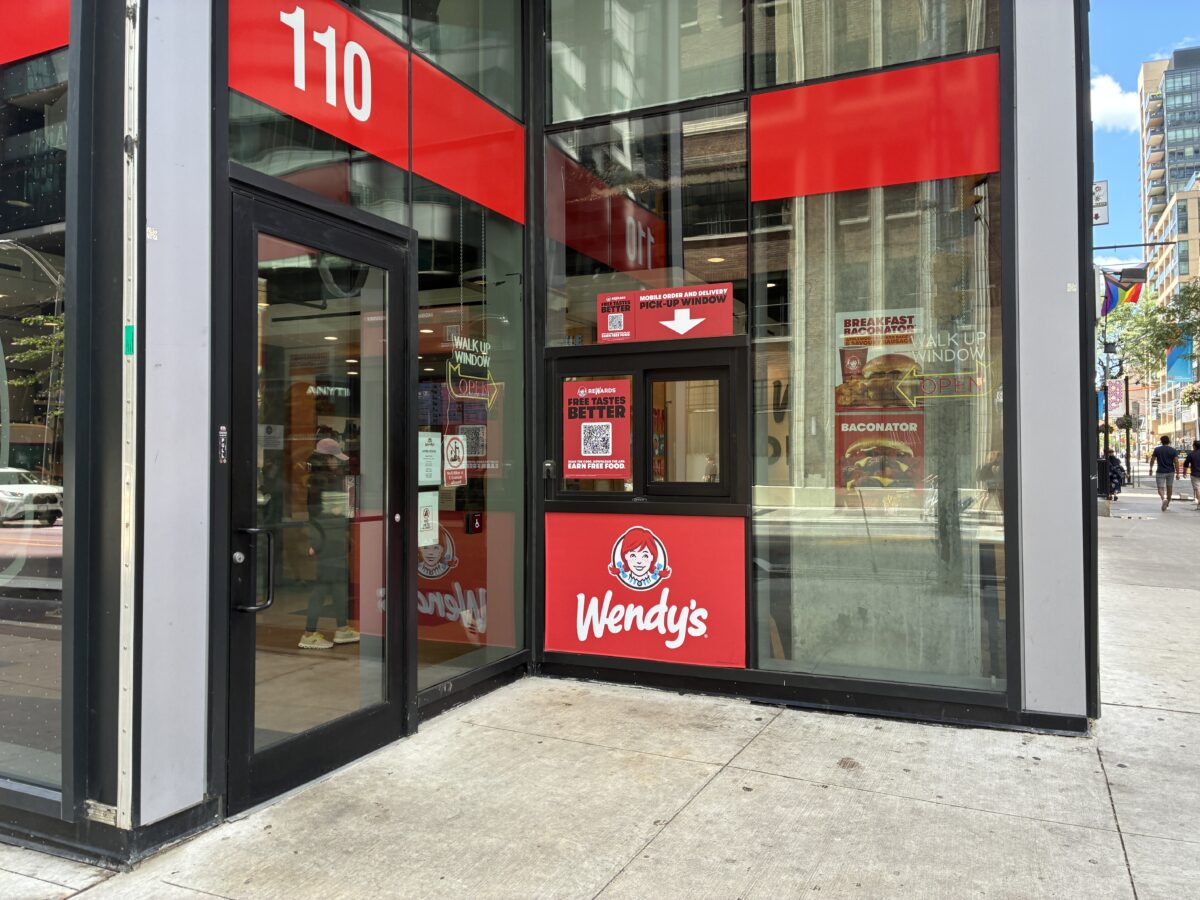
The fixes vary wildly in sophistication, but they cluster around the same insight regardless of budget: separating delivery traffic from the front door works, whether that means a purpose-built window poured into the blueprints or a sandwich board and a strip of tape. Both outperform doing nothing.
“Grocery is about six or seven years behind food service on this,” he said. “The question is what it borrows from that experience, for the drivers, for the shoppers receiving the goods, and for everyone else in the store.”
Doucette’s benchmark for a market further along is Argentina, where third party grocery delivery is deeply embedded and couriers on bikes, scooters and on foot are a constant presence.
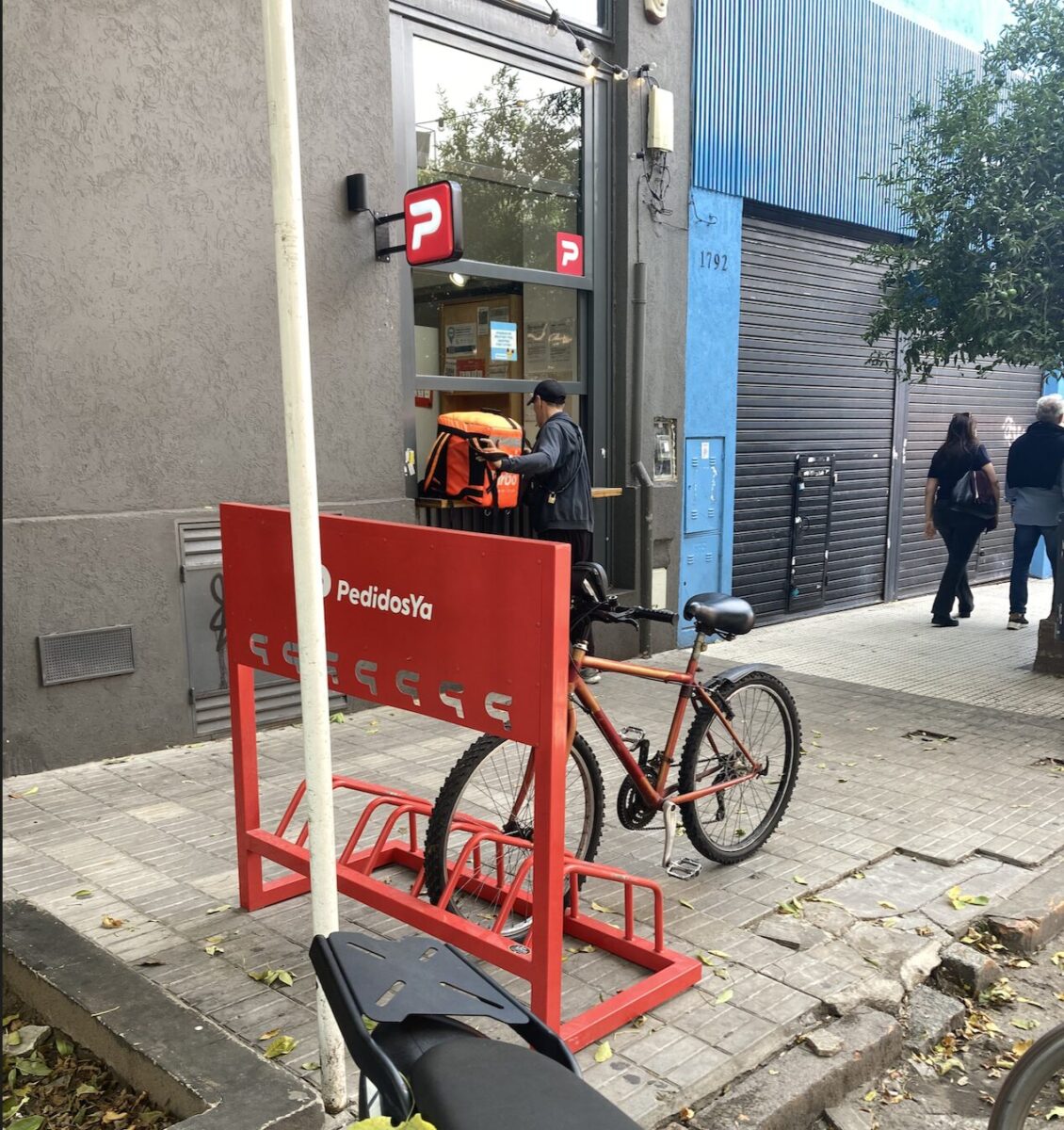
One operator stood out to him in particular: PedidosYa, a delivery platform founded in Uruguay and common enough in Argentina to rival the visibility of DoorDash. The company is now part of one of the year’s largest delivery transactions, with Uber agreeing in mid July to acquire its German parent, Delivery Hero, in a deal valued at US$14.8 billion that remains subject to regulatory approval.
In Buenos Aires, PedidosYa has industrialized the handoff. “These are hole in the wall fulfillment depots,” Doucette said. “The courier never sets foot in the store. Someone inside hands them an order that’s already been picked, and they’re gone.” Even the bike rack outside, he added, carries the company’s branding.
“If Canadian retailers want a model for how this should work, South America is where I’d point them,” he said.
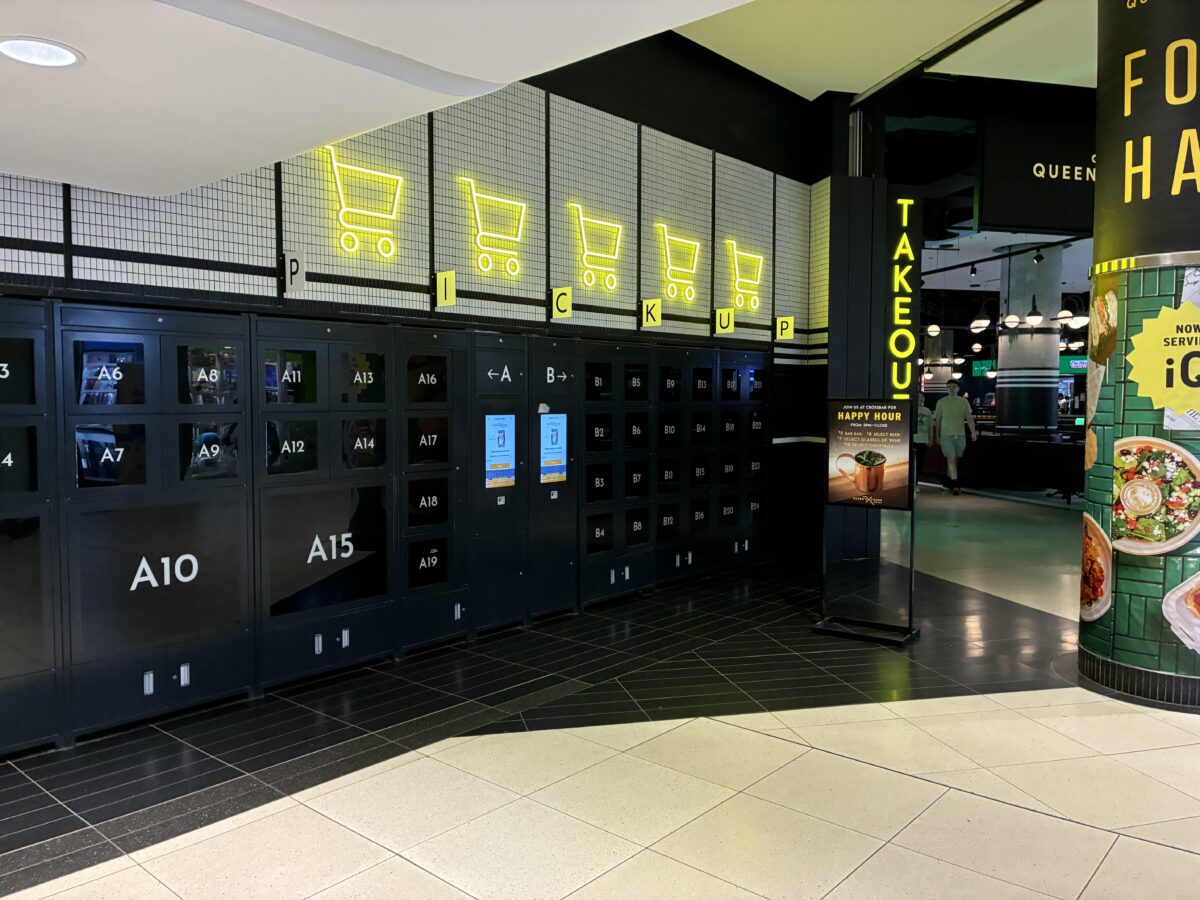
Toronto already has a version of that thinking closer to home. At Queen’s Cross, the Oliver & Bonacini food hall at CF Toronto Eaton Centre, pickup happens through a bank of numbered lockers instead of a counter handoff. A customer’s order goes into a locker as soon as it is ready, and only their code opens it. No lineup, no wandering the aisles with a bag, no moment where a courier and a browsing customer are competing for the same six feet of floor.
It is the same logic Doucette applies to Argentina’s fulfillment depots, applied to a Canadian food hall instead of a grocery aisle: remove the human handoff, and most of the friction goes with it.
Landlords are approaching the broader problem from the lease side, and not always in favour of more delivery traffic. “Any restaurant offering third party delivery inside a mall should be required to have a direct exterior exit, not a route back through the food court,” Doucette said. “Shopping centre congestion in this country is already at a breaking point.” He expects some landlords to begin writing delivery restrictions directly into lease terms.
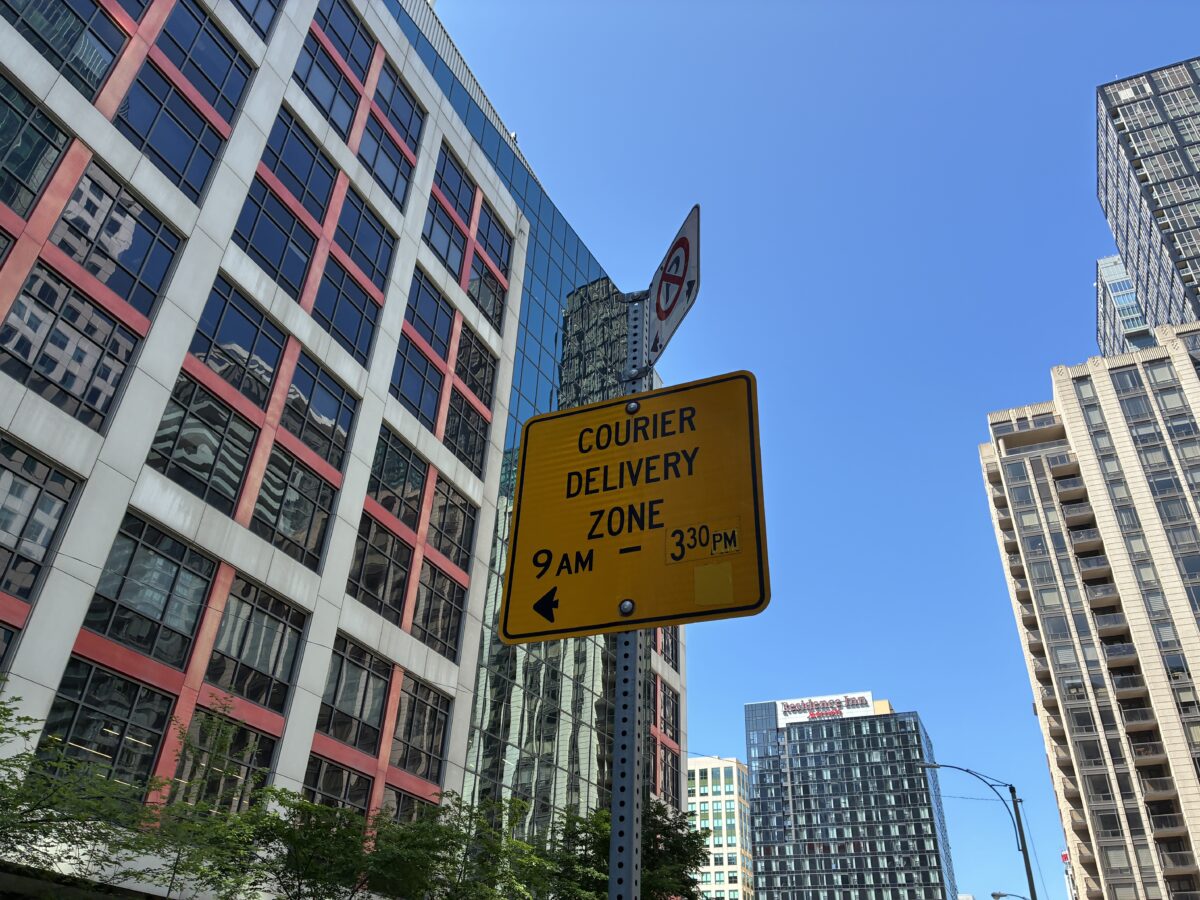
The city is already ahead of the landlords on this point. On a downtown Toronto street, a municipal sign designates a curb lane as a dedicated courier delivery zone from 9 a.m. to 3:30 p.m., a small sign that couriers now have enough collective volume to earn their own piece of the street.
Doucette’s own prescription for grocery is more specific than a locker wall. “You don’t want couriers wandering the aisles with delivery bags,” he said of how he would run a chain like Metro. “That’s a bad look, and it adds congestion on top of everything already happening on the floor. I’d build a dedicated runner role whose only job is servicing delivery orders, and use it as leverage to negotiate a lower commission with the platforms. If you’re solving part of their operational problem, your fee should reflect that.”
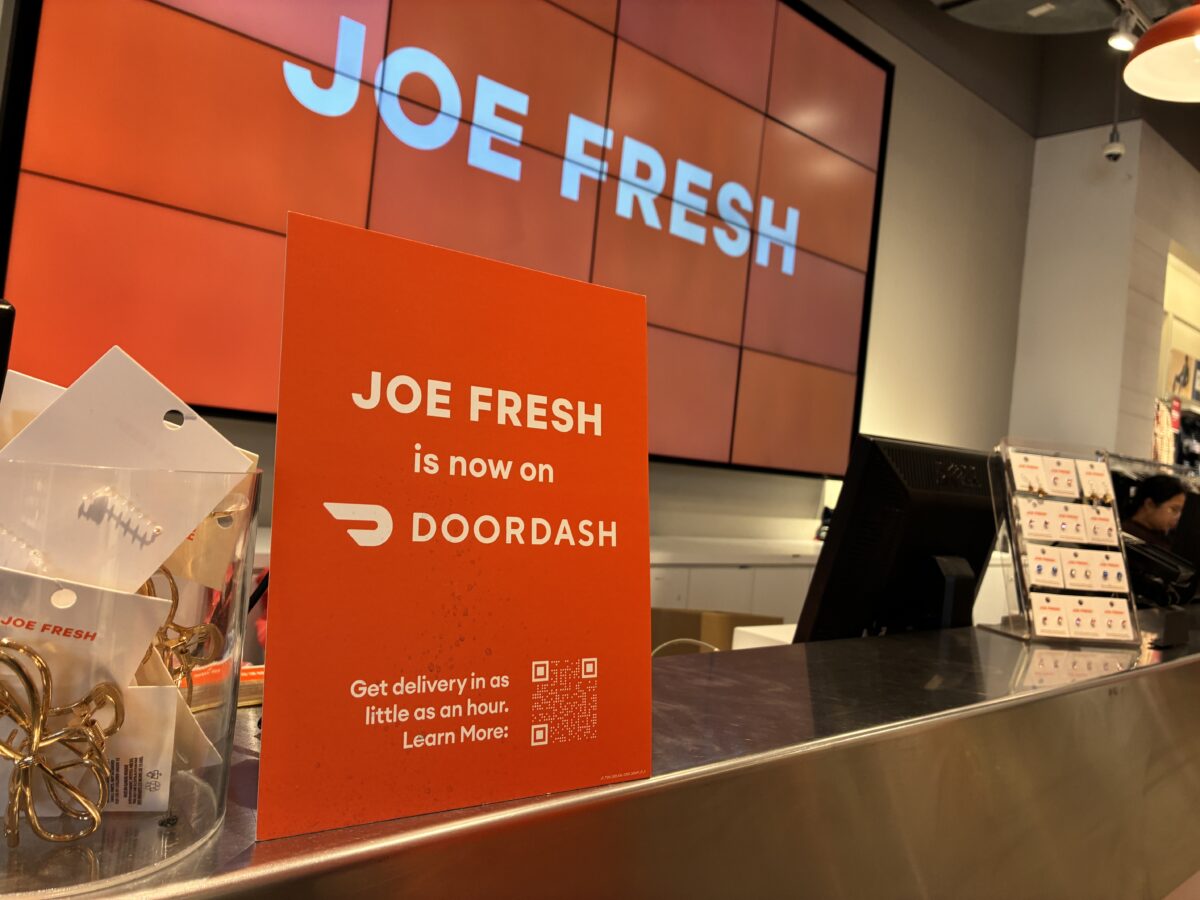
The broader shift Doucette sees is in how retailers are choosing to participate in delivery at all, and that participation is no longer limited to food. Joe Fresh, Loblaw’s apparel brand, now promotes DoorDash delivery at its own checkout counters, offering clothing in as little as an hour, a sign that the same infrastructure questions facing grocery and QSR are about to land on general merchandise too.
Dollarama has stepped back from operating its own online store, leaning entirely on Uber Eats, DoorDash, Instacart and Skip the Dishes instead. Walmart illustrates a more complicated version of the same calculation, running its own Walmart Plus membership while also operating through Instacart and Uber Eats, competing with itself for the same order.
“Walmart knows it can’t convert every customer to Walmart Plus, so it plays the Uber Eats game too,” Doucette said. “It wants to be everywhere a customer might order from. The tradeoff is a web of systems that isn’t well thought out yet.”
The part of this system that gets the least attention, in Doucette’s view, is the people doing the driving. Many couriers work across multiple platforms and rely on tips to make the work worthwhile, navigating one way streets, walk ups without elevators and increasingly congested pickup points with no equivalent of a taxi stand to take a break.
“Delivery companies need to think about infrastructure at these pickup points,” he said. “A driver’s lounge where couriers can use a washroom or fill a water bottle doesn’t need to be elaborate. It just needs to exist.”
“If this is the future of how Canadians get groceries and food, there are only two paths,” he said. “Either the industry builds that consideration for workers in on its own, or it gets forced into it through attrition or organizing.”

Dustin Fuhs is the founder and Editor-in-Chief of 6ix Retail, Toronto’s premier source for retail and hospitality industry news. As the former Editor-in-Chief of Retail Insider, Canada’s most-read retail trade publication, Dustin brings over two decades of expertise spanning retail, marketing, entertainment and hospitality sectors. His experience includes roles with industry giants such as The Walt Disney Company, The Hockey Hall of Fame, The Canadian Opera Company, Starbucks Canada and Blockbuster.
Recognized as a RETHINK Retail Top Retail Expert in 2024, 2025 and 2026, Dustin delivers insider perspectives on Toronto’s evolving retail landscape, from emerging brands to established players reshaping the city’s commercial districts.