

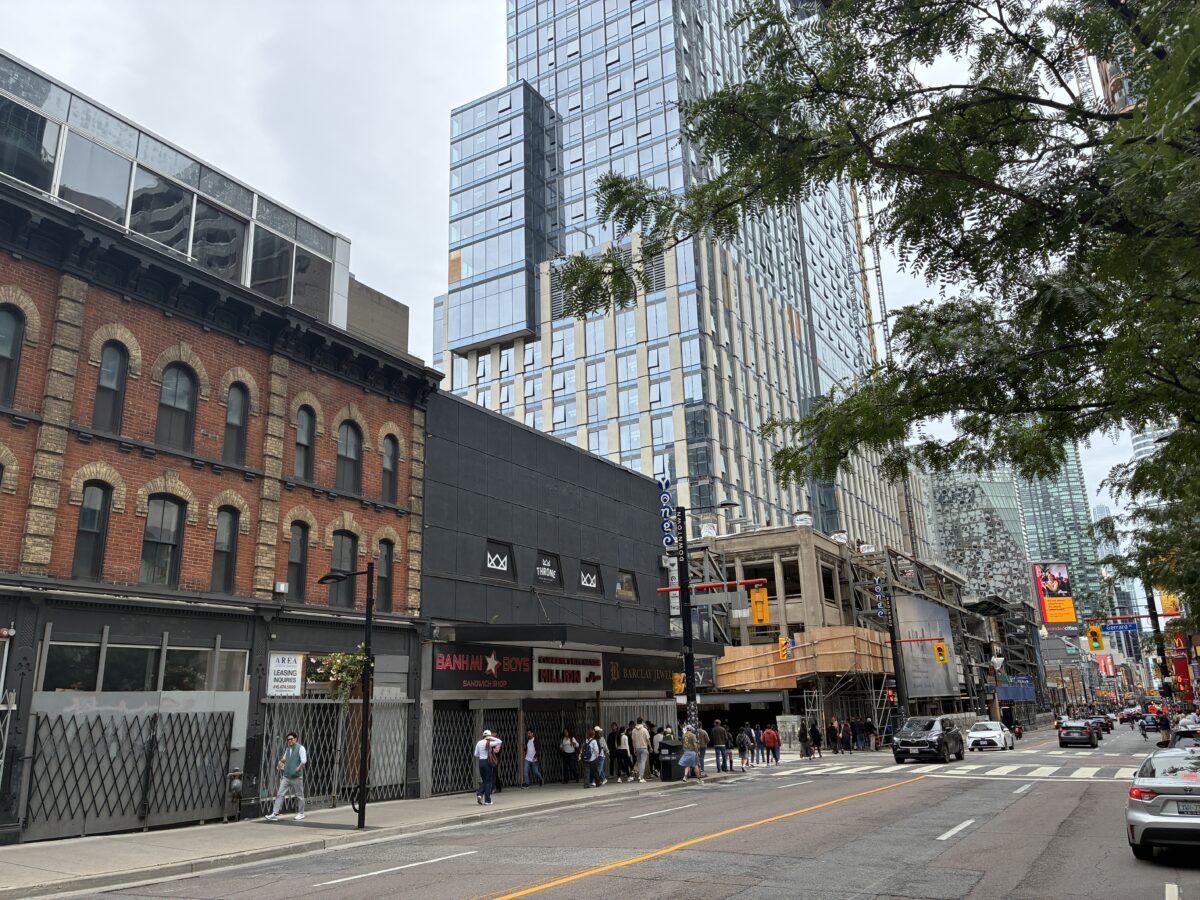
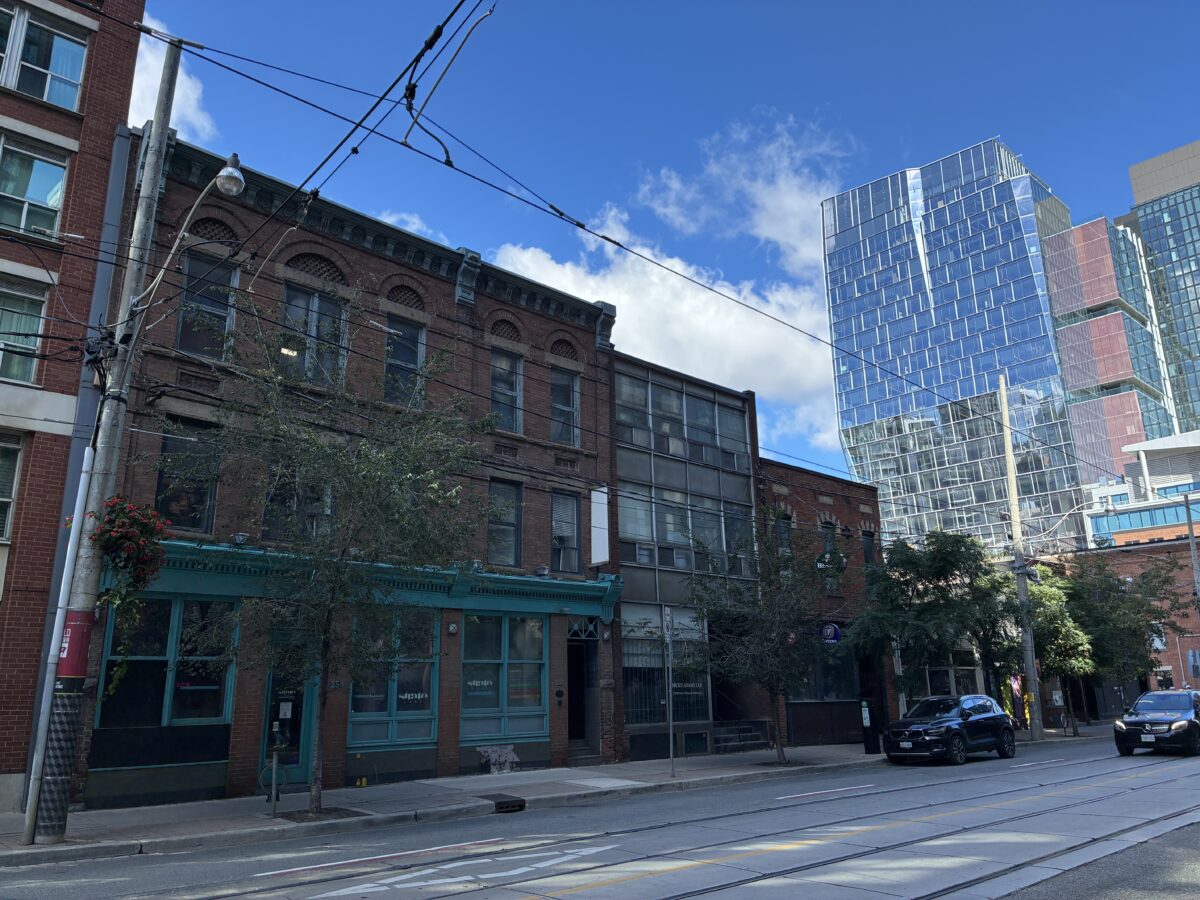
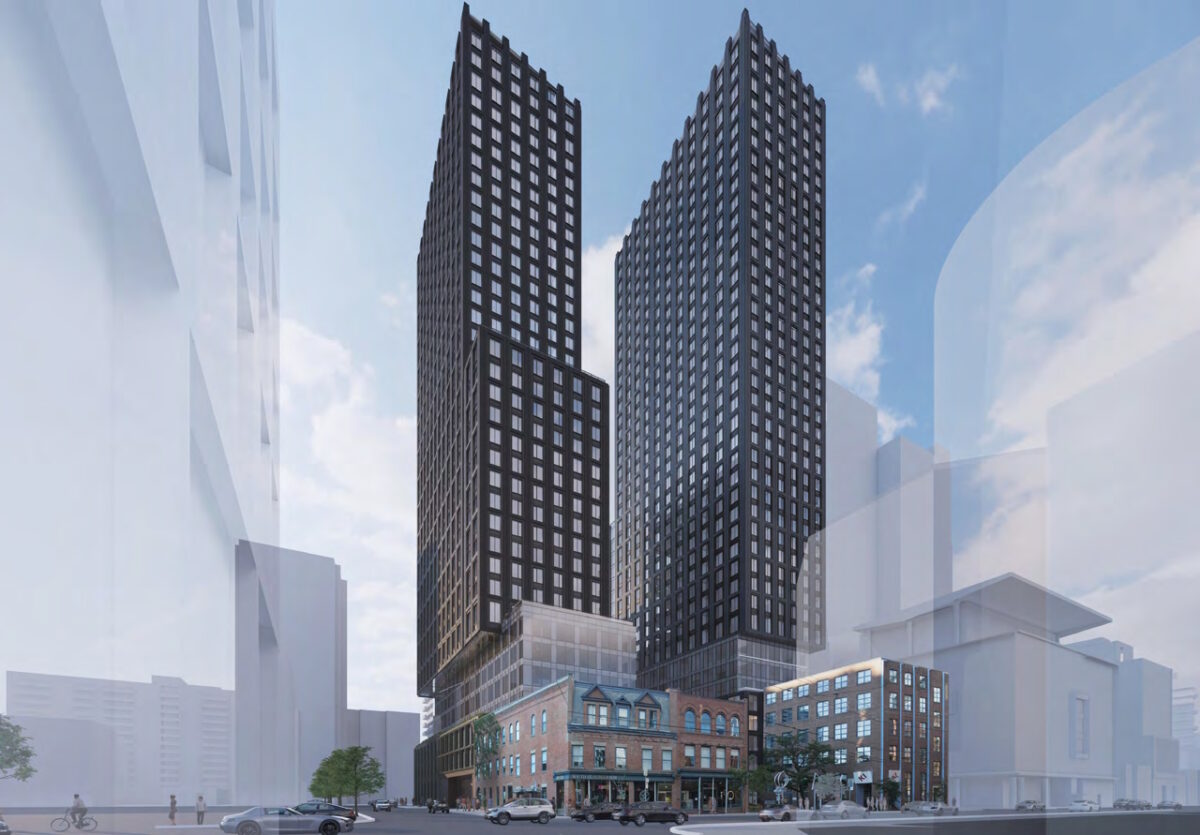
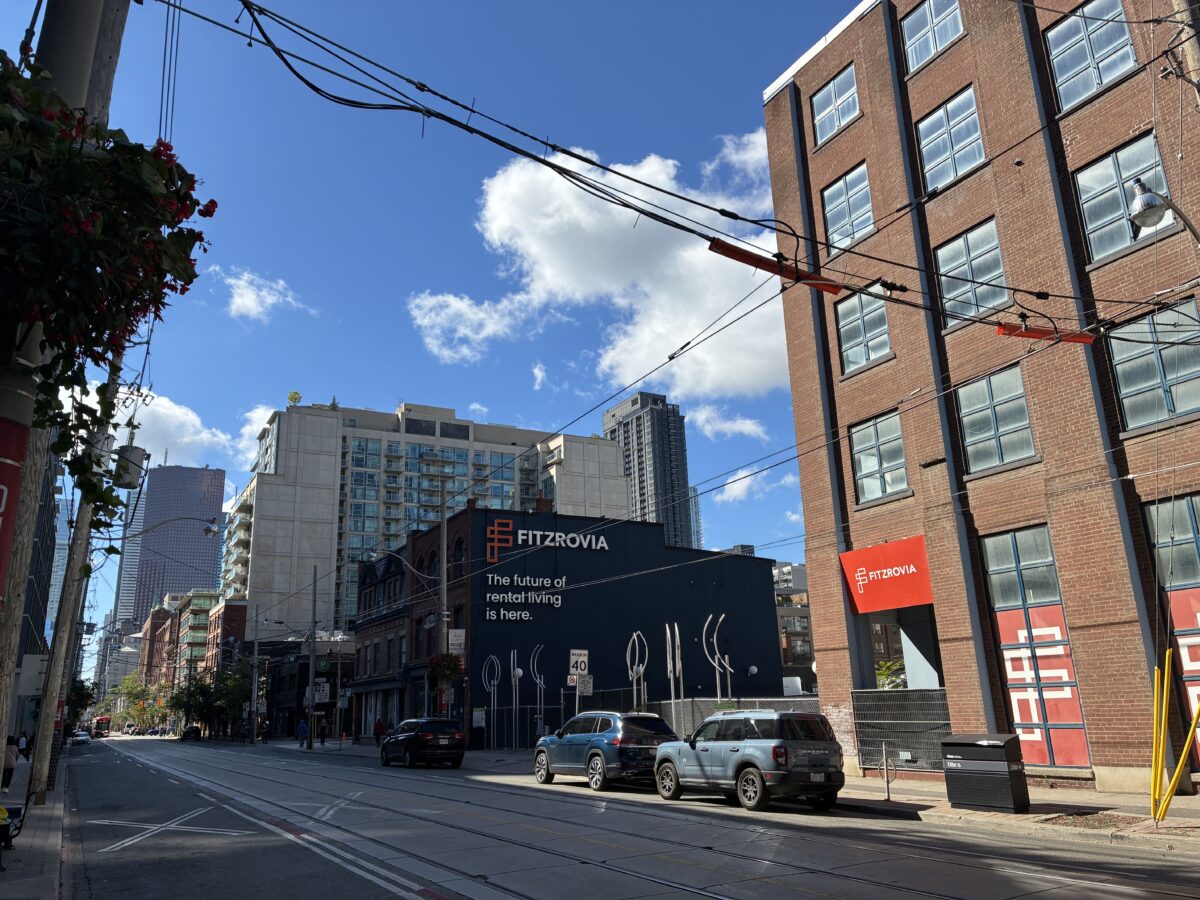
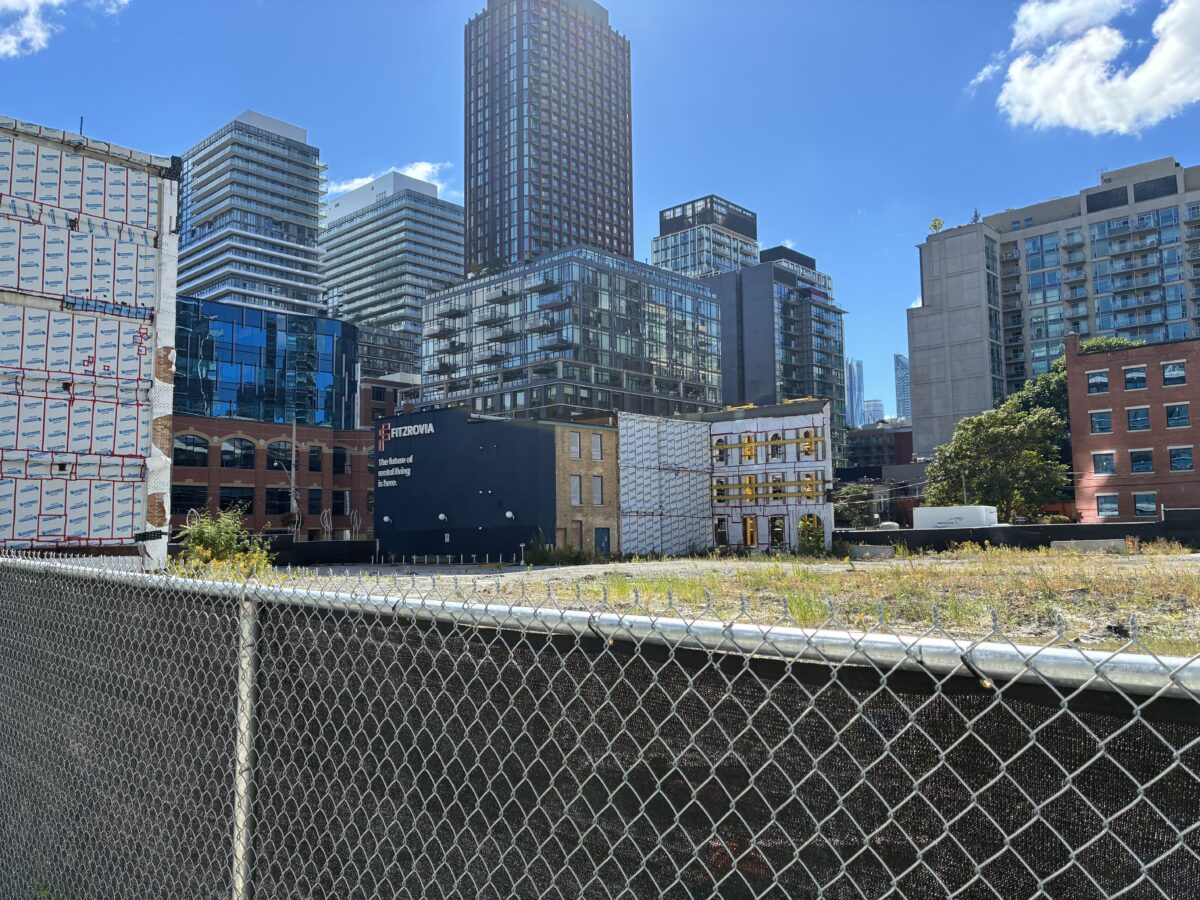
At 260 King Street East, the block is gone. Fitzrovia announced a new development, started demolition in late 2022, keeping only the facades of a few heritage-designated buildings to fold into the base of two planned rental towers. Nothing has gone up since. A few doors down, at 250 King, Emblem’s 43-storey Allure hasn’t reached that point. Betty’s, the King East bar that had poured beer there since the early nineties, closed in December 2022 to clear the site, relocated to Queen & Leslie, leaving the King East site standing still, waiting.
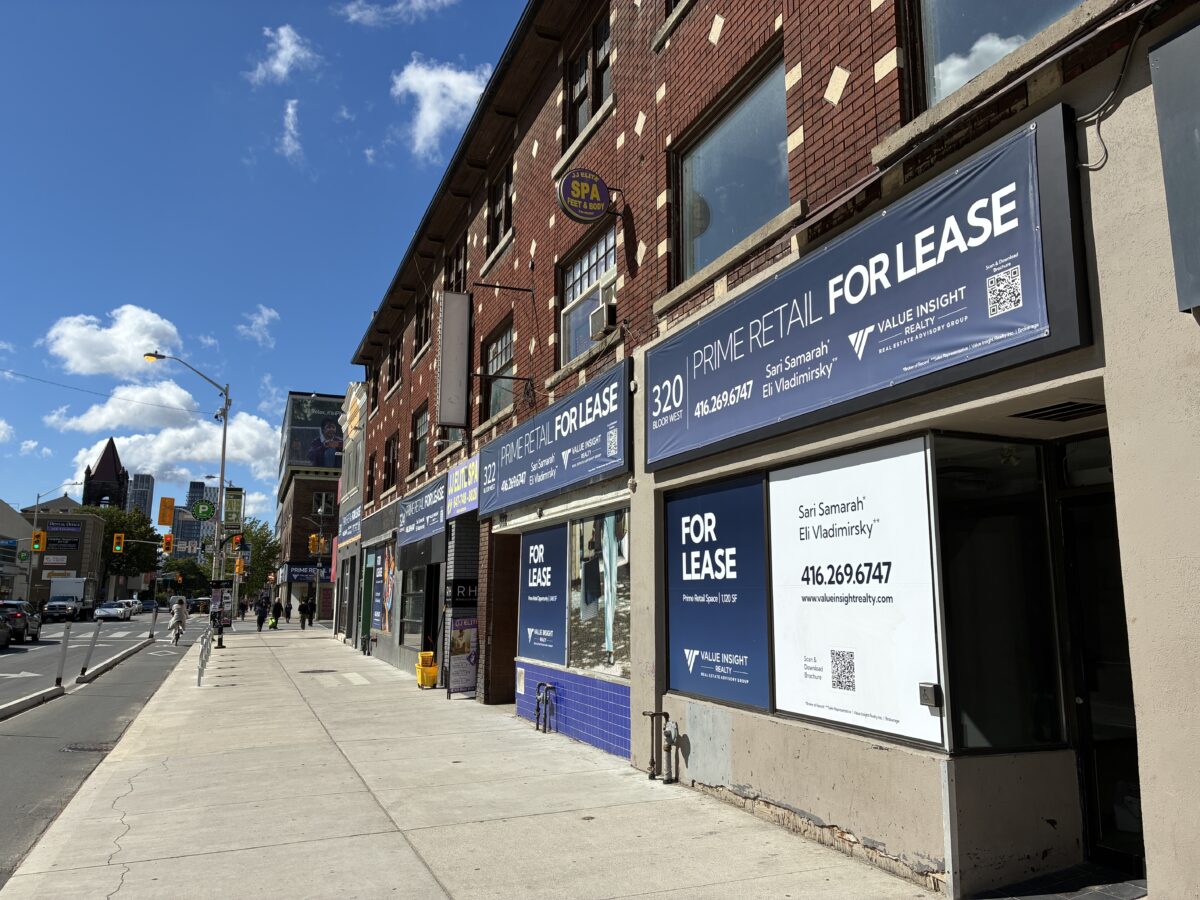
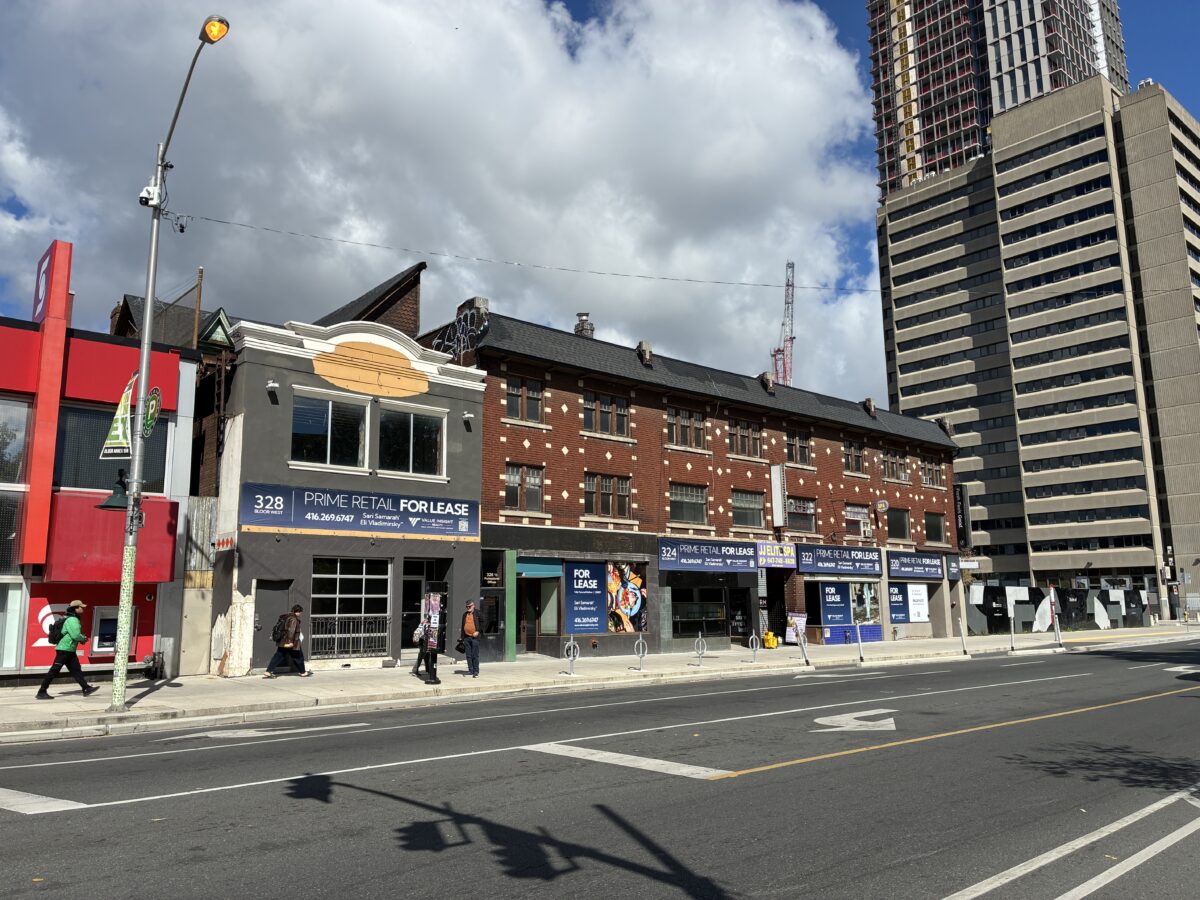
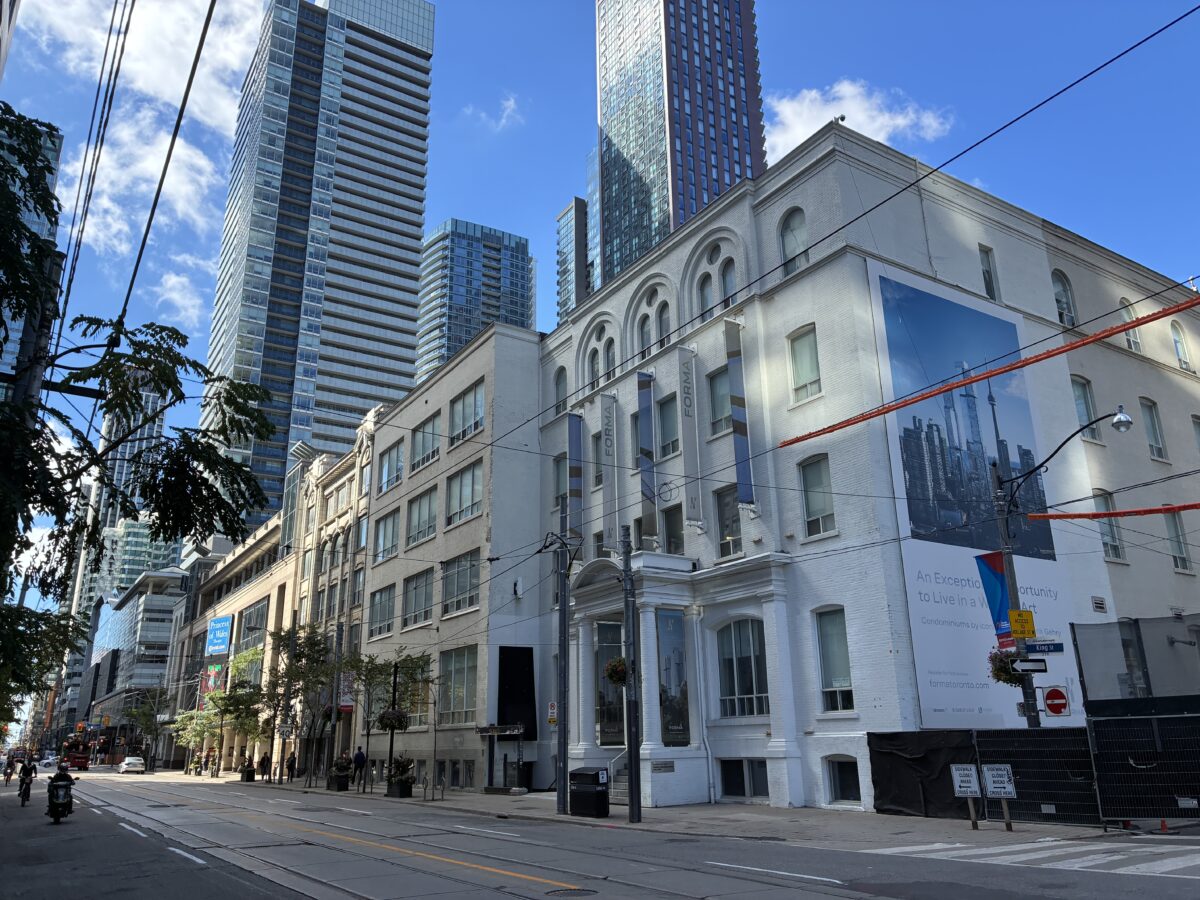
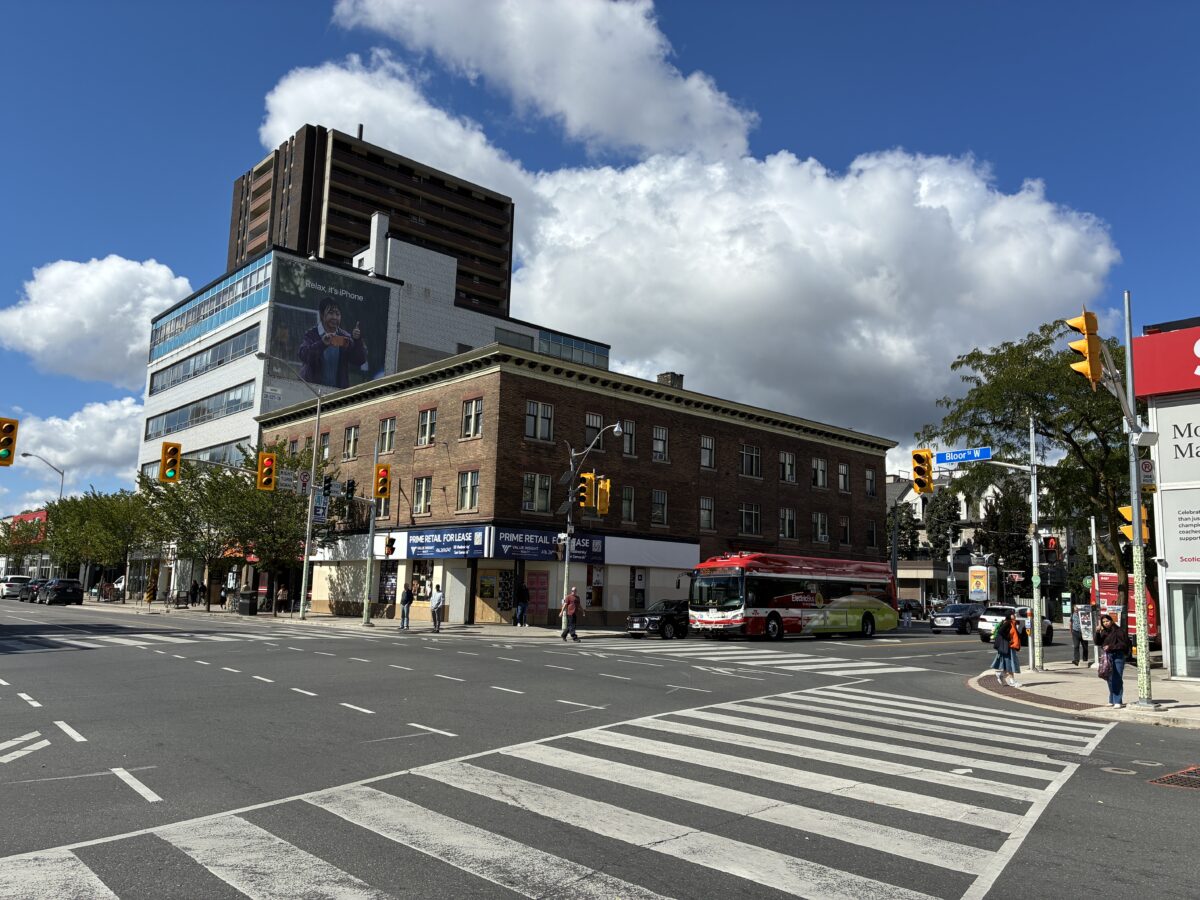
Head up to Bloor & Spadina and you’ll find the same split. Five units at 320 to 328 Bloor Street West, once Pizza Pizza, Wine Rack, Second Cup, Fresh and Noah’s, sit vacant and listed for lease, tied to a 37-storey proposal that hasn’t moved since a preliminary report in January 2022. One development plot over, at 316 Bloor, a nearly identical proposal from a different developer is on hold, after demolishing the existing building. Same street, same era, same market, two different outcomes. In the Entertainment District, Forma splits the difference again: the east tower has been climbing above King Street West since 2023, while its twin Frank Gehry-designed tower across Ed Mirvish Way hasn’t started.

Four sites, four points on the same ladder. Sari Samarah has been watching tenants get caught on every rung of it.
“What’s changed is that sites where landlords once wouldn’t even bring in a tenant, because they knew development was coming, are now actively on the market,” says Samarah, President and CEO of Value Insight Realty, a brokerage that has closed more than 3,100 transactions totalling over 11 million square feet across Ontario.
The retail underneath a stalled tower used to sit dark by design. Now it’s being leased, on real terms, whether the site has been cleared, half-cleared, or never touched at all.
The underlying deal structure hasn’t changed much.
Franchise and fitness tenants sinking real capital into a build-out still want 10 to 20 year terms. Where a lease includes a demolition clause, tenants will often require protection for their unamortized leasehold costs if the landlord terminates early. That protection can be structured through a declining reimbursement calculated over an agreed amortization period.
“Most of the sites where a demo clause was in place are now on the market, offering opportunities that didn’t exist before,” Samarah says. A site like Allure, could still be generating rent while it waits for demolition, or 328 Bloor West, where demolition has not occurred, fits that description exactly.
Samarah doesn’t read any of this as landlords changing their minds. “The landlord’s initial intention was to bring in a whole new level of building, more advanced, newer, more beautiful, something that would make the area better. That was always the intention. However, the market changed, and it wasn’t the developer’s plan for that to happen. You don’t remove tenants to keep the spaces vacant, you remove them to build something better.” The plan was always the tower. The market just didn’t cooperate on the timeline, and the retail space sitting in between has to be dealt with regardless.
Samarah pushes back gently on the idea that a stalled site is evidence of a broken promise. “You could argue many reasons as to why it’s happened, that’s a whole separate discussion,” he says. “But it was never the developer’s plan for this to happen. No developer wants to see a vacant space.” In his telling, the intent behind every one of these sites, the King East block, the Bloor Street corner, Forma’s second tower, was never to leave a hole in the streetscape. It was to replace what was there with something better, faster than the market ultimately allowed.
That vacancy isn’t spread evenly.
The effects are most visible in downtown Toronto, while similar challenges are increasingly appearing in suburban markets such as Mississauga, Scarborough and Niagara Falls. The issue appears less pronounced in markets such as Sudbury, Thunder Bay and North Bay, where there has generally been less large-scale development activity. Markets with greater development activity naturally have more exposure when projects are delayed, leaving the retail spaces connected to those sites in transition.
Who gets that retail has shifted along with it. Samarah is currently negotiating the former 7-Eleven space at Spadina and Bloor, where the frontrunner isn’t a national chain but an independent grocery operator with a handful of locations.
“The landlord community wants good tenants in place, tenants who can lease the space, stay in it, and provide a good level of service to the community,” he says, and the arithmetic behind it is as much practical as it is generous. A national chain in grocery or fitness will often want 20 years. An independent will take five or ten. On a site that might still see a demolition notice inside that window, the shorter commitment is the safer bet for everyone, landlord included.
None of this happens as fast as a “coming soon” sign makes it look. Behind every one of them is a slower process most people never see: confirming electrical capacity, sorting out permitted uses, working through landlord approval on both sides.
What the public sees, Samarah says, is rarely the full picture. “Sometimes when you see a storefront, you may assume nobody wants that space,” he says. “But there’s usually a process behind that, whether it’s five years out or ten, that most people never think about.” Landlords and brokers, in his account, are constantly weighing where a neighbourhood is headed well before a lease ever gets signed, which is part of why a strong location can outperform its own address. He points to Pizzaria Badiali at Mirvish Village as proof. “Its location is not directly on Bloor Street, yet they’re very popular,” he says. “Tenants are always looking for the right density, and if you offer a strong product, people will find you.”
The actual bottleneck, however, is not always the paperwork. “High construction costs are one of the biggest challenges affecting the feasibility and timing of new developments today,” Samarah says. When the CapEx on a build-out gets too high, the payback math simply stops working, and no landlord flexibility on term length can fix that on its own.
That same logic, that the right product finds its audience regardless of a stalled site next door, is part of why corner visibility still matters as much as it ever did, even with e-commerce fully normalized.
Heading into ICSC, Samarah expects the conversation to run wider than leasing terms and vacancy math. Trade policy sits at the top of the agenda, with the border and tariff situation weighing on how companies plan their next moves. But underneath that, he sees a more durable shift in what people actually want out of physical retail.
“People will continue to want to shop. They are looking for that physical retail experience, whether it’s grocery, food service or fashion,” he says. Years removed from the pandemic, when leaving the house wasn’t an option, Samarah says the pendulum has swung hard the other way. “It seems like everyone really wants to leave their homes, and that’s a trend I’ve been especially seeing for the past few years.”
That appetite is showing up in categories that barely existed on a leasing agent’s radar a decade ago. Indoor playgrounds and fitness clubs have become a legitimate anchor tenant, and Samarah points to the rise of pickleball and padel facilities as part of the same wave, entertainment concepts built specifically around getting people out of the house and into a physical space with other people. Grocery is telling its own version of the same story, with ethnic and specialty brands expanding aggressively, something he says the success of chains like T&T reflects directly.
At the same time, Samarah sees the market pulling toward both ends of the price spectrum at once, not settling in the middle. Premium food and fashion concepts continue to attract a segment of consumers willing to spend for quality, brand and experience, while Dollarama’s recent earnings, including an upcoming announced location on The Esplanade, and a new No Frills at the old Whole Foods site on Yonge and Sheppard tell the other half of the story. Both trends, he argues, are really the same trend: people want a reason to physically go somewhere, whether that reason is an experience, a deal, or both.
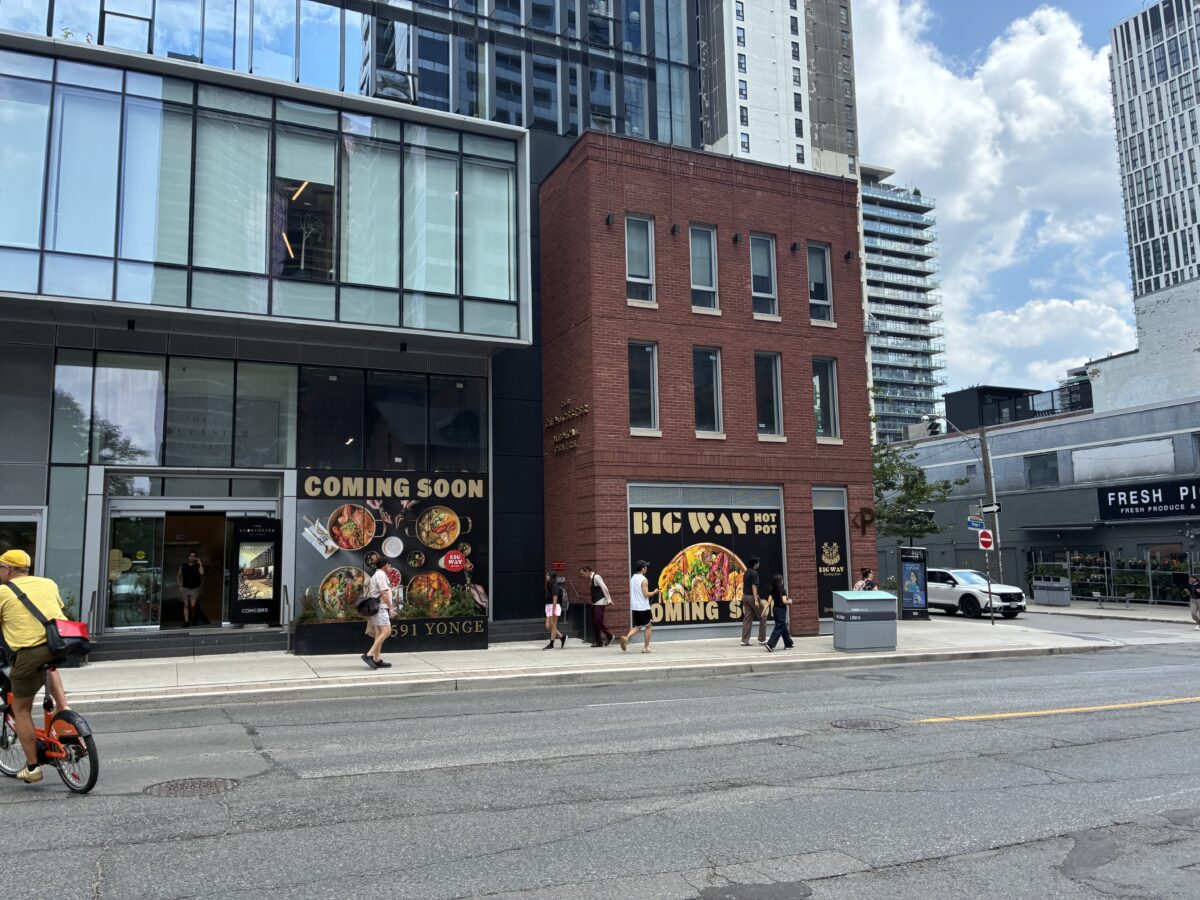
Value Insight’s active tenant mandates reflect that same split. On the food and beverage side, the firm is currently placing brands including Wingstop, Big Way Hot Pot, Kinton Ramen, Miznon and JaBistro, alongside established community mainstays such as Heal Wellness, Rosie’s Burgers, Yolks Breakfast, Ghost Taco and IQ Food Co, as well as growing brands such as Mr. Mikes and Neo Coffee Bar. On the retail and services side, its roster includes Healthy Planet, Fitness World, Lifemark Physiotherapy, Club Sudo, Connect Hearing and Funvilla, the indoor children’s entertainment concept behind its recent Walmart-adjacent Oshawa location, among many other tenants.
It’s a client list that runs from single-location independents to some of the fastest-growing names in Canadian food service, which is precisely the mix Samarah says landlords are now competing to attract rather than simply accepting whoever shows up first.
None of that happens by accident, and none of it happens as visibly as the vacancy that draws attention in the first place.
Every site on that ladder, whether it’s fully demolished, half-cleared, or still sitting exactly as it was in 2022, has a landlord, a broker and often a prospective tenant already working through the version of the process that doesn’t make it into a headline.
“There is a process behind it, and both parties, landlord and tenant and the respective brokers involved, really work hard to make sure that it works for everybody,” Samarah says. “If you have the right process and you work together to make sure it works for everybody, that’s how you create success.”
The city’s skyline may be written and rewritten by market conditions no single developer controls, but the storefronts underneath it are being worked out, block by block, by people who are very much still at their desks.

Dustin Fuhs is the founder and Editor-in-Chief of 6ix Retail, Toronto’s premier source for retail and hospitality industry news. As the former Editor-in-Chief of Retail Insider, Canada’s most-read retail trade publication, Dustin brings over two decades of expertise spanning retail, marketing, entertainment and hospitality sectors. His experience includes roles with industry giants such as The Walt Disney Company, The Hockey Hall of Fame, The Canadian Opera Company, Starbucks Canada and Blockbuster.
Recognized as a RETHINK Retail Top Retail Expert in 2024, 2025 and 2026, Dustin delivers insider perspectives on Toronto’s evolving retail landscape, from emerging brands to established players reshaping the city’s commercial districts.