

Canadians are drinking more coffee than they were a year ago, and much of it is being made in their own kitchens.
That’s one of the headline findings from The Canadian Coffee Cup, a new study Field Agent Canada released for National Coffee Day on Sept. 29. The research firm surveyed 1,410 Canadians over 10 days about how, when and where they drink coffee. Ninety-one per cent said they drink it regularly, and 40 per cent of coffee drinkers said they’re drinking more today than they were last year.
The findings show a market that moves between the kitchen counter, the drive-thru and the café. Drip is still the most popular coffee at 71 per cent, with iced coffee close behind at 68 per cent. The Keurig is the most common machine in Canadian homes, and 17 per cent of coffee drinkers regularly visit a local or independent café.

In Toronto, those habits are reshaping the city’s coffee map. National chains are competing hard on price for the everyday cup, while local brands are opening in hotel lobbies, office towers and heritage buildings to become somewhere worth the trip. 6ixRetail spoke with Jeff Doucette, General Manager of Field Agent Canada, about where the city’s coffee scene goes from here.
The kitchen has become a serious competitor for the coffee shop. According to the study, 93 per cent of coffee drinkers regularly have coffee made at home, averaging two cups a day.
Ontario is leading the way on convenience. Sixty-one per cent of at-home coffee drinkers in the province use a single-serve system such as Keurig or Nespresso, the highest rate in the country. Home setups are getting more ambitious, too, with 37 per cent of at-home drinkers owning a milk frother and 28 per cent a bean grinder.
“Cafés have had to keep pace with how creative and innovative people have become with coffee at home,” says Doucette. “When we asked people about making coffee at home, the main reason they gave was saving money compared with buying a coffee on the go.”
Still, there are drinks most people would rather leave to a barista. Away from home, 66 per cent of coffee buyers regularly order iced coffee, compared with 40 per cent who make it at home. Gen Z is a big part of that demand, with 96 per cent buying coffee away from home and 78 per cent regularly drinking iced coffee.
The big chains know it, and they’re using price and their apps to win that cup. McDonald’s brought back Summer Drink Days from May 19 to Sept. 7, offering $1 small iced coffees in restaurants and $1 small or medium iced coffees through its app. The promotion launched alongside a new permanent lineup of cold drinks, including McCafé Cloud Iced Coffees.
“Beverages are no longer a side offering. They’re a core part of how we show up for our guests,” McDonald’s Canada President and CEO Annemarie Swijtink said when the lineup was announced in May.

Tim Hortons has taken a similar approach, using app offers such as $2.99 iced lattes to nudge regular drip customers toward espresso drinks. Ordering habits have shifted with it. In the past 30 days, 64 per cent of Field Agent’s respondents ordered at a drive-thru and close to half placed a mobile order, while just 51 per cent ordered from a staff member at the counter.
What happens after the order is placed is just as telling. Only 43 per cent of respondents drink café-bought coffee in the café itself, while 84 per cent drink it in the car or on the go.
“The physical café still plays the role of the third space, but more and more that role belongs to independents,” Doucette explains. “Many chain cafés are busy, not always clean, and service can fall short, even at the premium chains. So customers there tend to grab and go.”
Neighbourhood cafés are a different story, he adds. “People are still willing to pay more for the experience. That means a great product, friendly service, supporting a local business and a relaxing place to enjoy their drink.”
There are really two kinds of coffee runs: the everyday cup and the destination. The everyday cup is about speed and value, and the national chains are built to win it. Tim Hortons alone is used by 82 per cent of Canadians who buy coffee away from home.
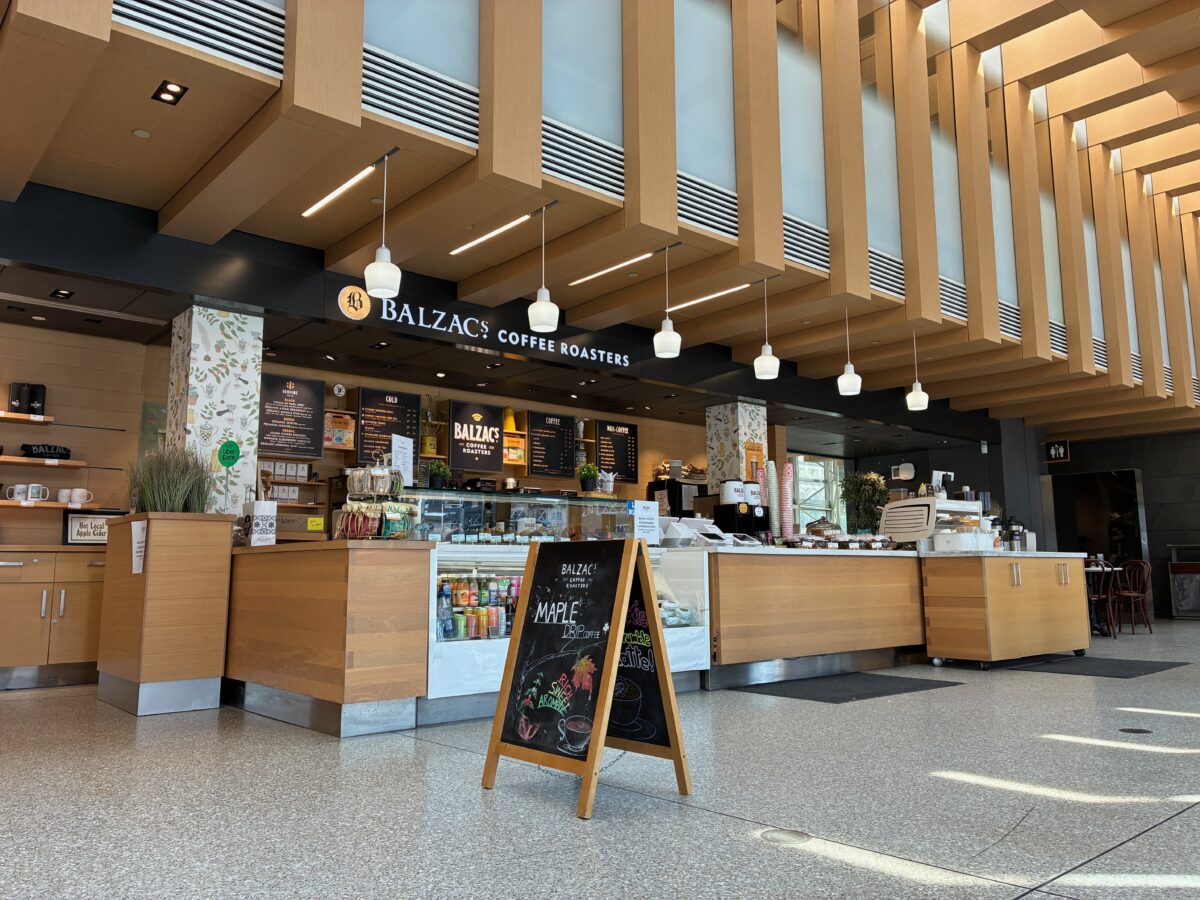
Destination coffee is something people plan around. It’s the café you take visiting family to, the spot you suggest for a first meeting or the one a tourist finds on a list before they land. Balzac’s Coffee plays to that crowd with cafés in the Distillery District and inside the Toronto Reference Library.
Toronto’s homegrown coffee brands are leaning into that role. Pilot Coffee Roasters, which started in 2009 as Te Aro Roasted in a former Leslieville garage, now runs nine cafés across the city. Dark Horse Espresso Bar, which opened on Queen Street East in 2006, recently added two more: one in a former Starbucks at College and Dovercourt, and another on Bathurst Street beside Article and Equinox.
Newer names are growing one café at a time. Skoom, which describes itself as “your neighbourhood third space,” has opened at 197 King Street East in a heritage building that sat under construction for years. Farther east, Cosette Coffee is in its soft opening at 489 King Street East, the second location for the bakery café that built its following at 1715 Bloor Street West. Across from the AGO, Evana Cafe & Lounge has taken over 334 Dundas Street West, the longtime home of Art Square Café.
“Independents have a real advantage with coffee connoisseurs and with people looking for a quiet, safe third space to spend some time,” Doucette says. “If they focus on staff training, clean cafés and great service, they’ve earned room to charge more. Customers aren’t just buying a cup of coffee. They’re buying the whole experience.”
Where those cafés open is changing as well. Some of the city’s most interesting new coffee spots are tucked into spaces that weren’t designed with coffee in mind.
Found Coffee, the Australian-born specialty roaster with cafés on Roncesvalles, on College Street and in Bellwoods, opened its first hotel location at the base of the InterContinental Toronto Centre at 225 Front Street West, steps from the convention centre. French coffee house Columbus Café & Co. has added a second Toronto location at 130 Adelaide Street West, in a previously unused corner of an office tower lobby.
Across from Union Station, the Union Hotel (formerly the Strathcona) reopened at 60 York Street in 2025 with Humble Donkey, a lobby café and lounge pouring Sam James coffee. For travellers, commuters and anyone setting up a meeting near the station, it offers something that’s hard to find nearby: a comfortable place to sit down.
It’s a model more hotels and landlords could follow. A good café gives guests a reason to linger, gives the neighbourhood a reason to visit and keeps a lobby busy well beyond check-in.
There is also an opportunity hiding later in the day. Coffee consumption peaks early, with 74 per cent of Canadian coffee drinkers having a cup in the early morning and 67 per cent mid-morning. By early evening, that drops to 19 per cent, and just 8 per cent drink coffee late in the evening.
That doesn’t mean the demand for a café disappears at 5 p.m. Forty-five per cent of coffee drinkers already drink decaf at least some of the time, and menus built around matcha, hojicha, tea and other non-coffee drinks give cafés something to sell after the afternoon rush.
The bigger draw is the space itself. Entrepreneurs, freelancers and students are always looking for somewhere to work and meet, and a café that stays open into the evening can become that place. Humble Donkey, which works as both a café and a lounge, shows one way to do it. For many neighbourhood cafés, closing at 4 or 5 p.m. can mean sending loyal customers somewhere else.
Winning at home is a tougher climb. Half of at-home coffee drinkers count Costco among the places they shop most for coffee, followed by Walmart at 39 per cent and Real Canadian Superstore at 28 per cent. Only 12 per cent buy from a local roaster or café, and Tim Hortons leads at-home brands at 25 per cent.
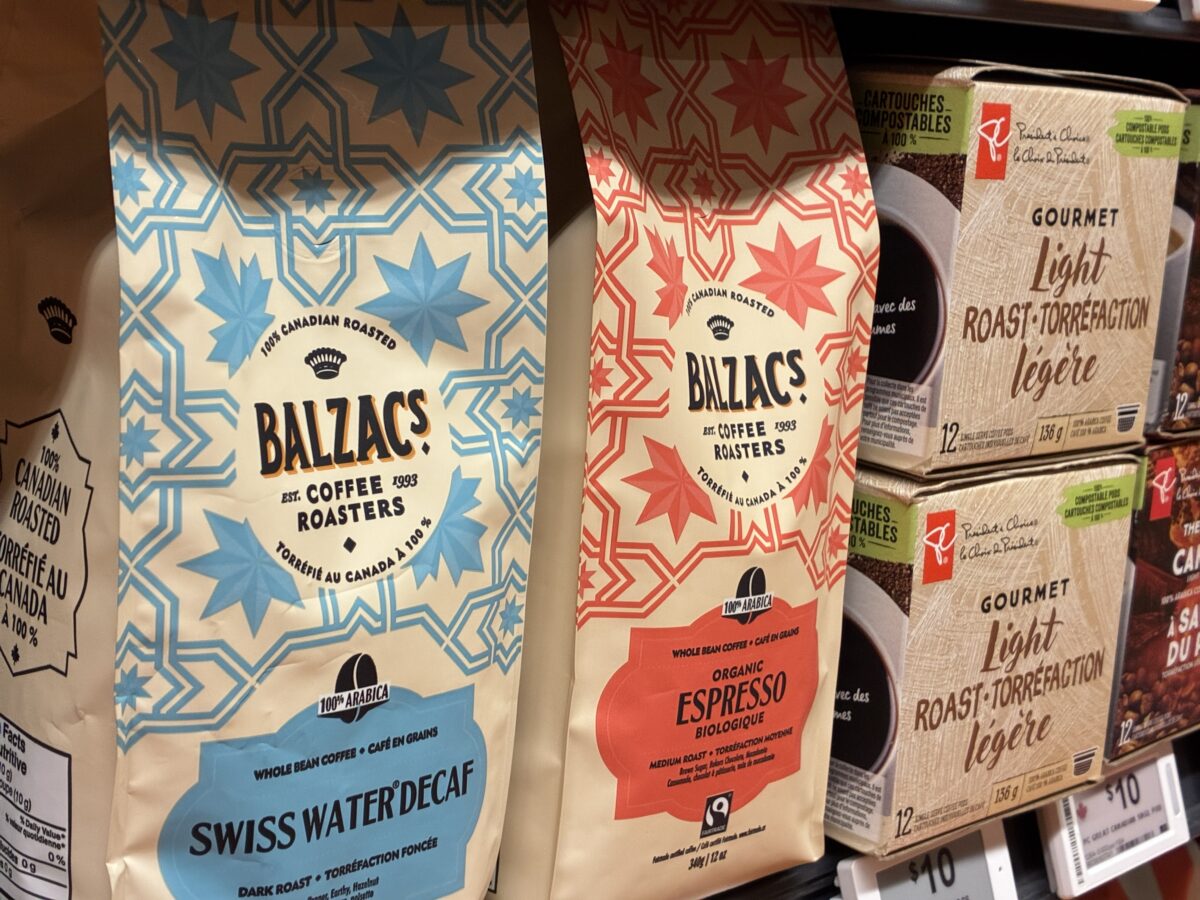
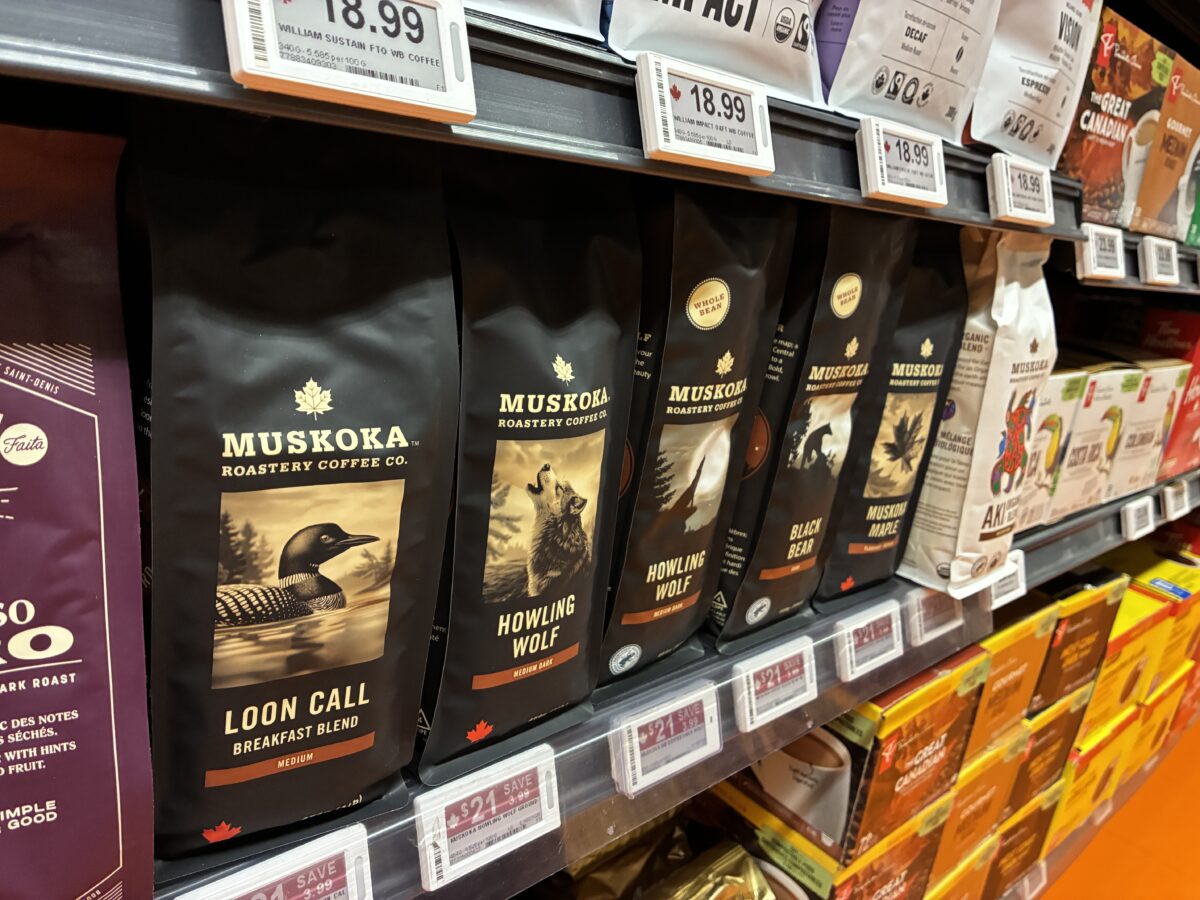
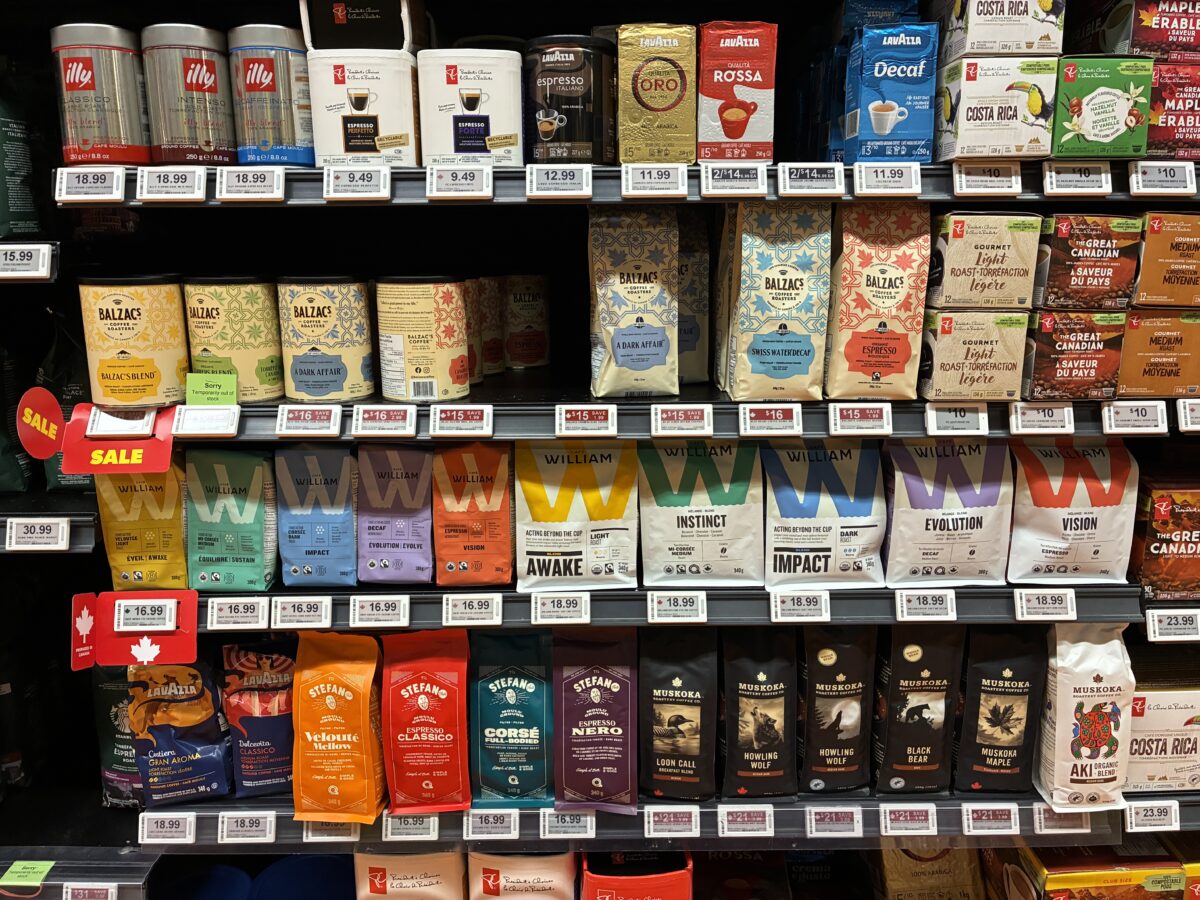
Some local names have broken through. Balzac’s has sold its beans in grocery stores since 2016, including Loblaws, Sobeys and Whole Foods, and can be found at Shoppers Drug Mart beside Tim Hortons and Starbucks. On a recent visit to a Toronto grocery store, its bags were priced at $15 to $16, a few inches from store-brand pods at $10, with regional roasters such as Muskoka Roastery, Café William and Stefano’s filling the shelves below.
Gifting offers another way in, especially heading into the holidays. Toronto-based subscription company The Roasters Pack ships coffee and matcha advent calendars across Canada, the U.S. and the U.K., and past editions have featured local roasters such as Subtext and Propeller. A bag of beans from a favourite café is the kind of gift that can turn a one-time visitor into a regular.
“Retail is hard,” Doucette admits. “Retailers like having local and independent brands because they give the aisle some street cred. But there are hundreds of small brands to choose from, so the retailer holds the power and it’s easy for an independent to get lost on the shelf.”
There is a way around it, he believes, and it starts in the neighbourhood store rather than at head office.
“The ideal approach would be for local brands to band together and give local grocery stores one point of contact and one supplier,” he continues. “These stores often have some planogram discretion, even within the national chains, to bring in local products. My vision is one roaster bringing a selection of local brands to the back door, all on one invoice.”
From there, the cafés themselves become the marketing. “Work with the retailer to build a four-foot local coffee set or a local end cap, then bring the assortment to life through the in-café experience,” Doucette suggests. “Run in-store contests for a free coffee at every participating café.”
“Local cafés may see each other as competitors and rivals,” he acknowledges, “but working together on retail will be good for the roasters and for the retailer, through more sales and more exposure for every brand involved.”
At the national level, the biggest arrival is Dunkin’. The chain left Canada in 2018, and Foodtastic signed a master franchise agreement in May to bring it back, with plans for 600 to 700 locations and the first expected in late 2026 or early 2027. Foodtastic already owns Second Cup, which it acquired in 2021, giving the company two very different coffee brands to grow at once.
Field Agent found plenty of curiosity. Fifty-two per cent of respondents said they would be likely to visit regularly if a Dunkin’ opened near their home, though price and value against the established chains came up again and again in their comments.
“I’m not sure Dunkin’s return will be the catalyst,” notes Doucette. “It will be another choice in a crowded market. It’s likely to build a solid following, but it will always trail Starbucks, Tim Hortons and McDonald’s simply because of how many locations they already have.”
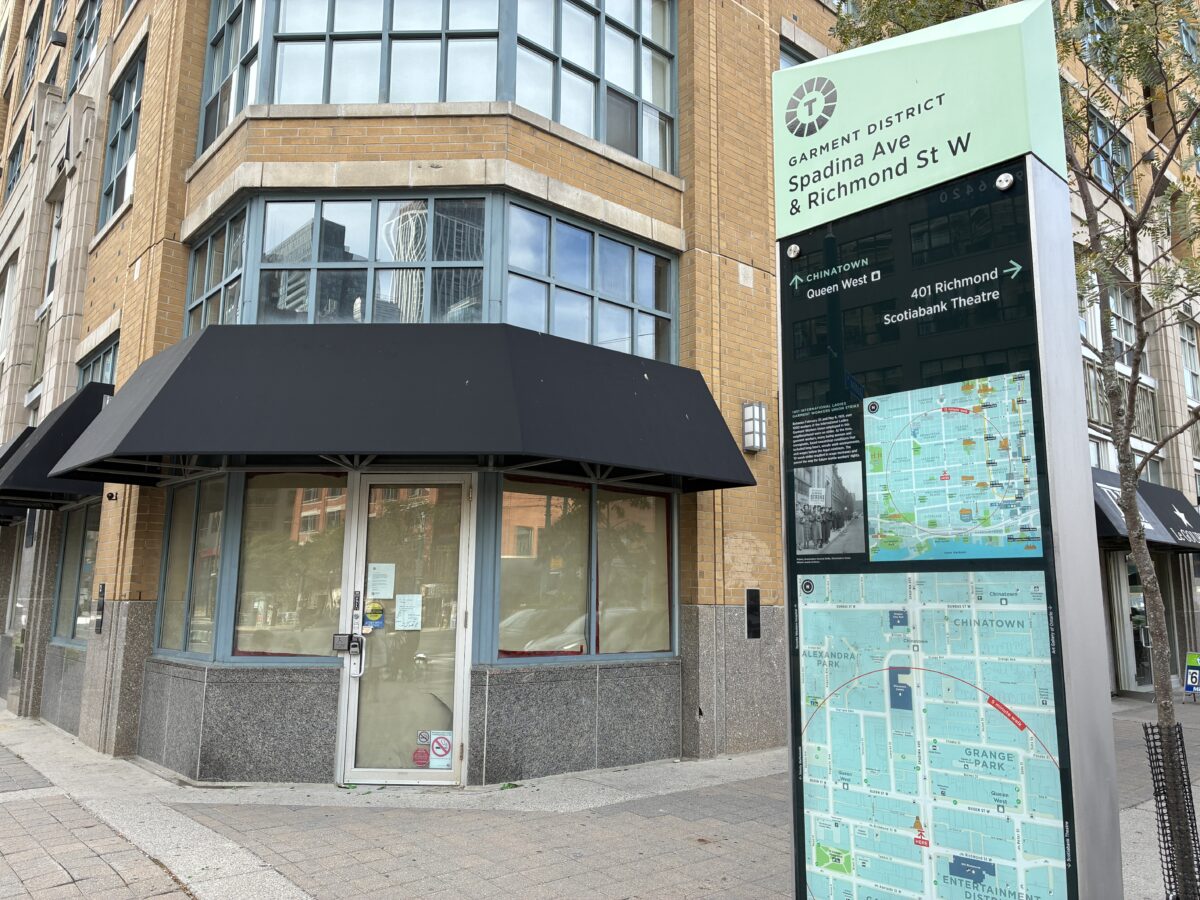
He sees a more meaningful shift in Starbucks, which announced about 250 closures across North America last month, including four in Toronto. Those spaces join the 13 Toronto locations the chain closed in 2025, most of which are still waiting for new tenants. BYND Coffee Bar is preparing to open at Adelaide and Peter, and Tim Hortons signage has gone up at the entrance to Liberty Village.
“Those closures suggest the chains may have more locations than they need to execute their strategy and make money,” he argues. “The chains need to go back to basics: staff training, product execution and clean cafés.”
Smaller operators, in his view, already know what works. “For independents, it’s about staying focused on quality products and the café experience, and keeping that third-space focus,” he says.
Scale is another matter. A single café buys its beans, milk, cups and equipment at small-business prices, while the national chains negotiate for thousands of locations at once.
“I wonder whether independents could work together through an industry association or buying group to bring their costs down,” Doucette says. “They can get lost in a big organization like Restaurants Canada. A more focused group, similar to what the Canadian Federation of Independent Grocers or ITWAL does for grocery, could help independents get organized and save on ingredients, supplies and equipment. That’s one of the primary benefits that Tim Hortons provides to its franchisees.”

Dustin Fuhs is the founder and Editor-in-Chief of 6ix Retail, Toronto’s premier source for retail and hospitality industry news. As the former Editor-in-Chief of Retail Insider, Canada’s most-read retail trade publication, Dustin brings over two decades of expertise spanning retail, marketing, entertainment and hospitality sectors. His experience includes roles with industry giants such as The Walt Disney Company, The Hockey Hall of Fame, The Canadian Opera Company, Starbucks Canada and Blockbuster.
Recognized as a RETHINK Retail Top Retail Expert in 2024, 2025 and 2026, Dustin delivers insider perspectives on Toronto’s evolving retail landscape, from emerging brands to established players reshaping the city’s commercial districts.