
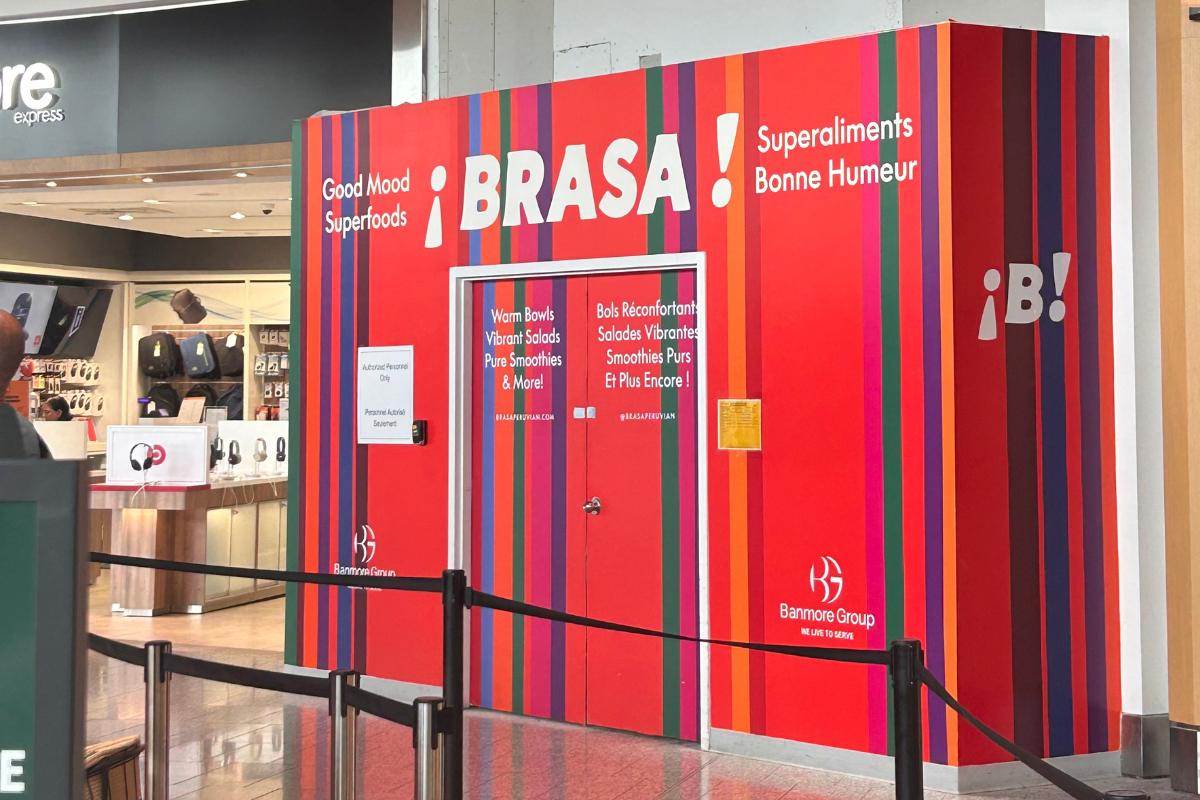

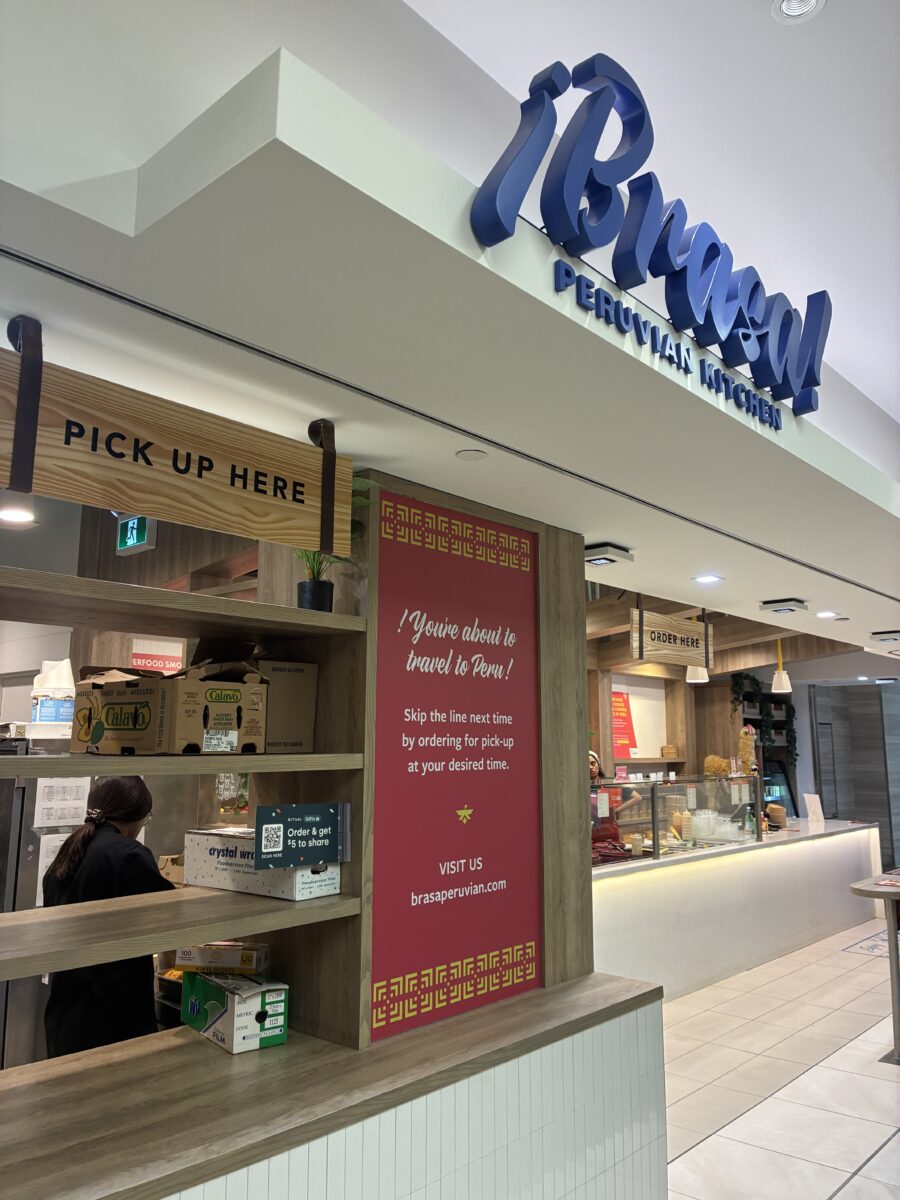
Every location Brasa Peruvian Kitchen has opened since its ghost kitchen days has had one thing in common: Michel Falcon was reachable, if not directly involved, in how it ran. That changes at Toronto Pearson International Airport, where Brasa’s next location will be built, staffed, and operated by someone else entirely.

The Terminal 1 location, opening post security next to the Air Canada Café, is Brasa’s first franchised site anywhere, run by Banmore Group, the family owned operator already behind Subway, Booster Juice and Osmow’s inside the airport. Falcon is targeting a late summer / early fall 2026 opening.
He didn’t go looking for the deal. “They came to us and said, we want to open a Brasa at Pearson Airport, we really believe in the brand,” he said. “I couldn’t have said yes fast enough.”
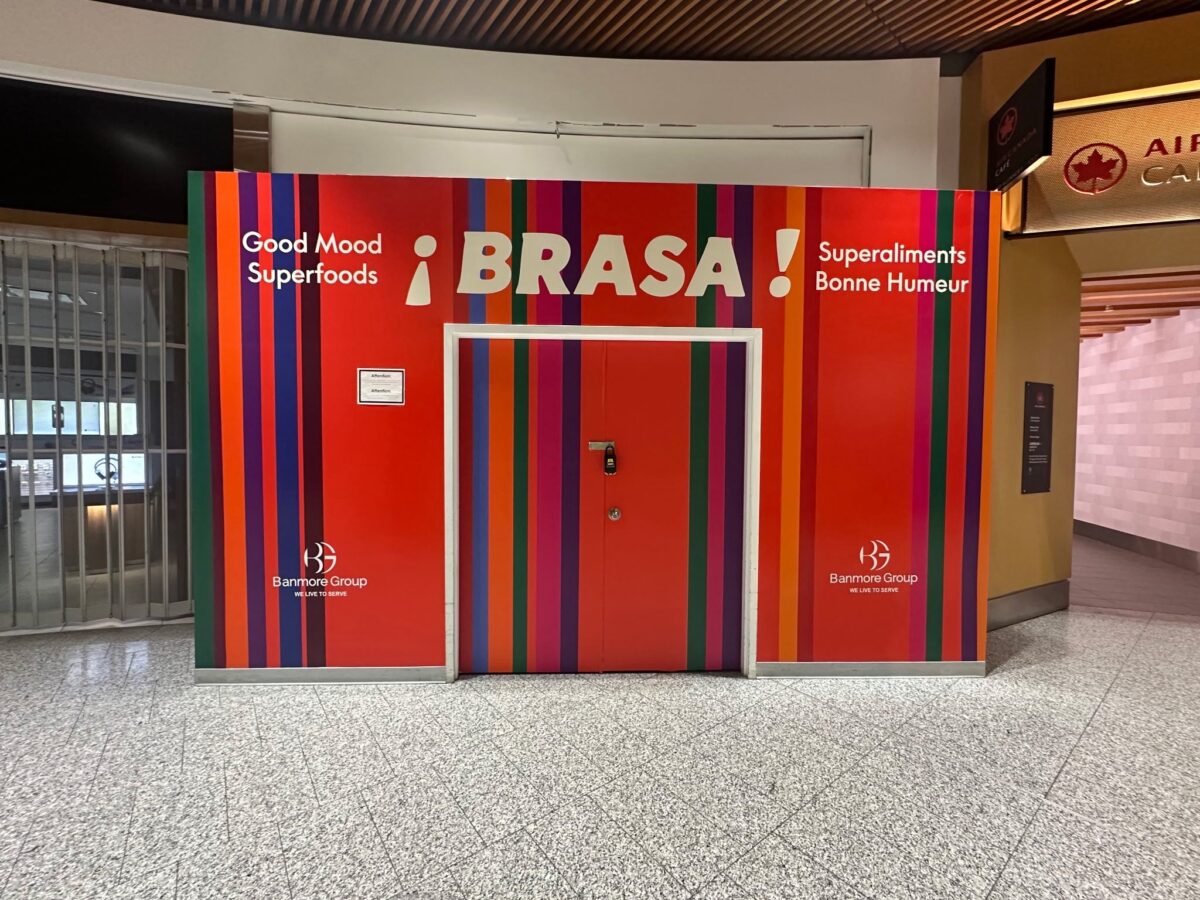
The relationship predates the pitch by six years. Falcon met Raj and Angie, the couple who run Banmore, in 2019 at Subway’s global franchise conference, where he was the keynote speaker. They later became investors in Brasa’s parent company, which is part of why Falcon isn’t treating Pearson as a typical franchise leap of faith.
“I’m a bit skeptical that hospitality can be trained. It has to be in someone’s DNA first,” he said. “With Banmore Group, there’s no learning curve. If anything, they may be teaching us a thing or two, because they’re proven operators at Pearson Airport.”
What he’s less certain about is the build itself. Airport construction runs on a different clock than a Toronto storefront. “You have security concerns, and I can’t have our trades coming in and out the way they would on Queen Street West,” he said, calling it a genuine learning curve on his side of the partnership, one he’s counting on Banmore’s almost two decades inside the terminal to help absorb.
The timing puts Brasa in the middle of a much larger shift at Pearson. Terminal food and beverage programs across the airport had been expanding to meet the needs of this summers FIFA World Cup, with new operators being added across multiple terminals as the airport works to catch up to what travellers expect from a major international gateway. Falcon wasn’t leaning on that wave for attention. He’s framing the location around flavour and nutrition rather than footprint or timing. “I’m always looking for flavour first, backed by brands with real nutritional value, especially at an airport,” he said. He sees the location doubling as an introduction to Peru for travellers who’ve never had reason to think about the country before their layover, pointing to Peru’s own rising profile as a tourism destination as something Brasa can ride alongside rather than compete with.
The customer changes too. Falcon has spent five years training staff around slower, relationship driven service, the kind that works on Queen West but doesn’t survive a boarding call. “The customer at an airport is very much go, go, go,” he said. The plan is to compress that same hospitality into smaller gestures, a nod to a traveller’s flight, a thank you on the way to a gate, rather than abandon it entirely.
He’s also resisting the urge to chase the idea further than Pearson right now. Stadiums and university campuses have both come up in conversations he’s had this year. “This is a flagship location in a non traditional environment,” he said. “We’re going to put our heads down, do good work, and win over every single customer. When it feels appropriate, we’ll look at other expansion opportunities.”
Handing a location to someone else exposed a problem Falcon hadn’t fully confronted until this year: Brasa’s menu wasn’t actually built to be run by anyone but Brasa. Fixing that meant an audit that ran for months and, eventually, a full relaunch across every Toronto and New York location in July.
“As we got franchise ready, we had to look at our menu and ask whether it made sense for a franchise system,” he said. The team worked from three questions: what customers already order most, what’s genuinely hard to execute once someone else is running the kitchen, and what’s missing that guests want but haven’t asked for.
That last question is where salmon came from, a protein Brasa had never touched before, now built into two Nikkei influenced bowls that lean on Japanese technique with Peruvian ingredients. Getting it right took longer than Falcon expected, partly because he held the flavour to his own standard as someone who grew up around Peruvian cooking. “We were stubborn about getting the flavour profile on the salmon right,” he said. “Early indications are that we’ve gotten it right.” He was careful not to read too much into a strong opening week. “We had a great Monday and Tuesday after launch, but the customer doesn’t care about Monday and Tuesday. They care about Wednesday.”
The harder call wasn’t what got added. It was what got cut. Brasa’s tuna ceviche bowl, a longtime favourite, didn’t make it through the audit. “The hard part wasn’t deciding what made the menu. It was deciding what had to come off,” he said. “I thought some customers were going to come for my head. It was a difficult decision, but a necessary one.” The standard for anything new, he said, isn’t just that it’s different from what it replaced, it has to be better.
Delivery ran through the same filter. Brasa has treated couriers as an extension of staff for years, offering the same washroom access and water given to employees, and Falcon said that policy wasn’t up for debate during the redesign. “We’re trusting them with what the customer expects of us, the brand,” he said. “It’s not that different from when our team member hands a meal to a customer in the restaurant.”
Looking past the July relaunch, Falcon said Brasa plans to introduce quarterly limited time offers, giving regulars something new to try without waiting for another full overhaul of the kind franchising just forced.
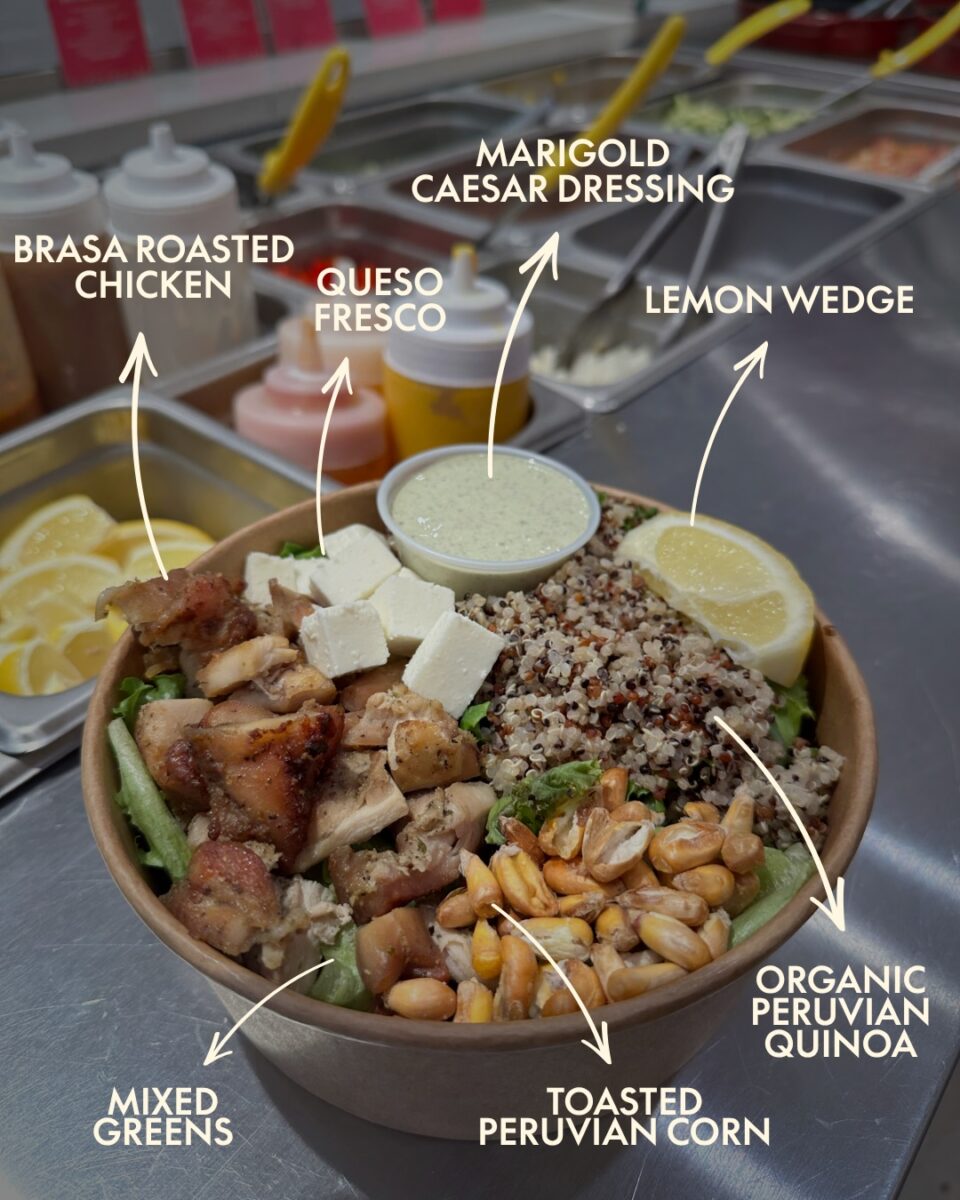
The name is next, eventually. Falcon confirmed Brasa Peruvian Kitchen will become Brasa Peruvian Superfoods, a change he’s holding off on until the airport opening and the new menu have both settled.
“A rebrand takes a long list of work to execute well,” he said. “We have to look at our strategic plan honestly and figure out what we’re doing, when we’re doing it, and what resources we actually have to pull it off properly.”
The name didn’t come from a branding exercise. It came from customers repeating the same word back to Brasa in research sessions. “In almost every conversation we had, customers kept pointing to the ingredients they recognized as Peruvian superfoods,” Falcon said. “I didn’t expect that to be powerful enough to change the name of the company.” He reads it as part of a larger shift in how people spend on food, closer to how they’ve come to spend on wellness generally, pointing to the way spas and bathhouses have expanded their own retail footprint in recent years as a comparable pattern. “Customers are spending real money to better themselves,” he said. “A meal can be the same kind of investment, in their mind and body, not just their taste buds.”
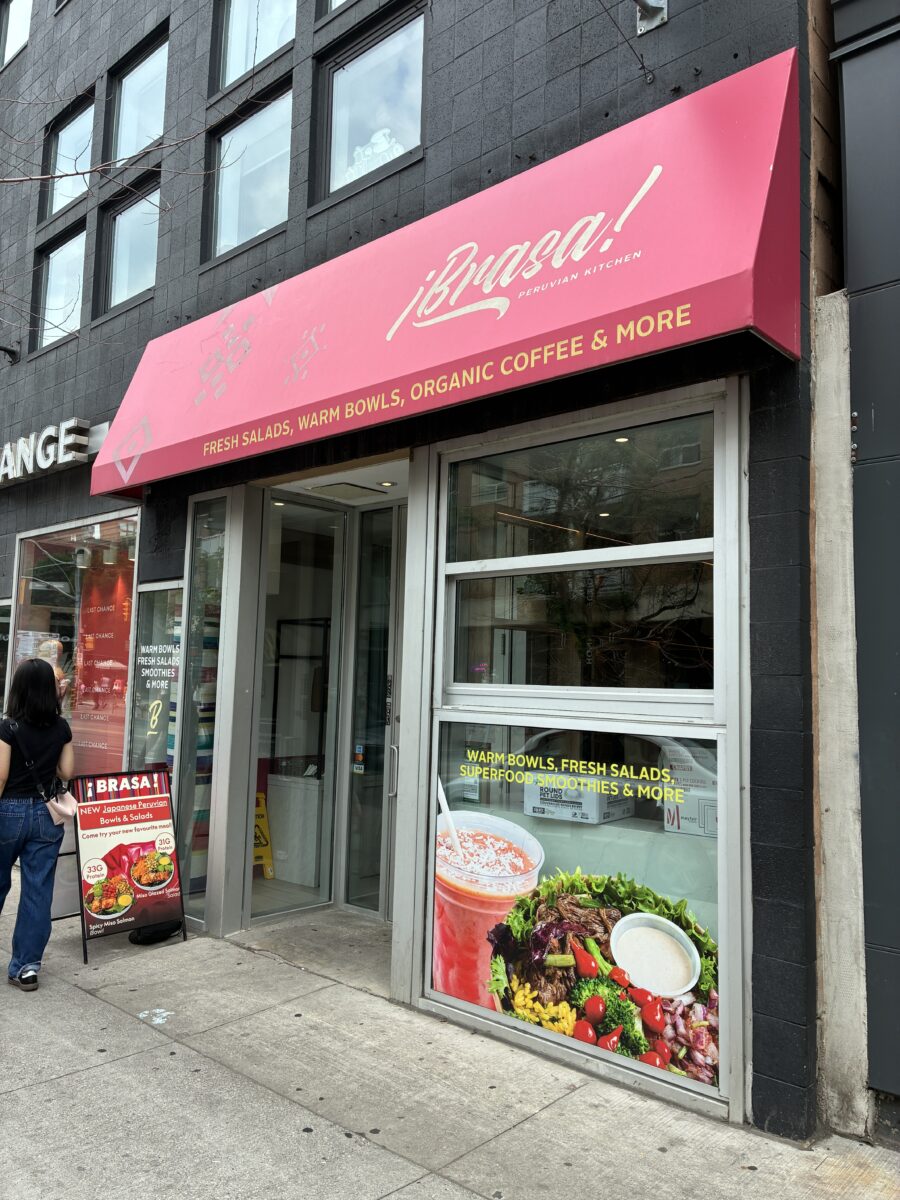
Falcon says the requests to bring Brasa somewhere new haven’t slowed down. “We hear that weekly. I think we’ve had at least one request from nearly every major city,” he said. He’s not chasing any of them yet. Pearson has to work first, under someone else’s hands, before the next bet gets made.
“I don’t want to build a company that just does well financially. That’s hollow to me. That’s table stakes,” he said. “I want to create careers. I want Brasa Peruvian Kitchen to be someone’s alma mater.”
That’s the test Pearson is actually running, whether the thing Falcon built can survive being run without him in the room. If it holds, the franchise conversations Banmore just started won’t be the last ones Brasa has.

Dustin Fuhs is the founder and Editor-in-Chief of 6ix Retail, Toronto’s premier source for retail and hospitality industry news. As the former Editor-in-Chief of Retail Insider, Canada’s most-read retail trade publication, Dustin brings over two decades of expertise spanning retail, marketing, entertainment and hospitality sectors. His experience includes roles with industry giants such as The Walt Disney Company, The Hockey Hall of Fame, The Canadian Opera Company, Starbucks Canada and Blockbuster.
Recognized as a RETHINK Retail Top Retail Expert in 2024, 2025 and 2026, Dustin delivers insider perspectives on Toronto’s evolving retail landscape, from emerging brands to established players reshaping the city’s commercial districts.