
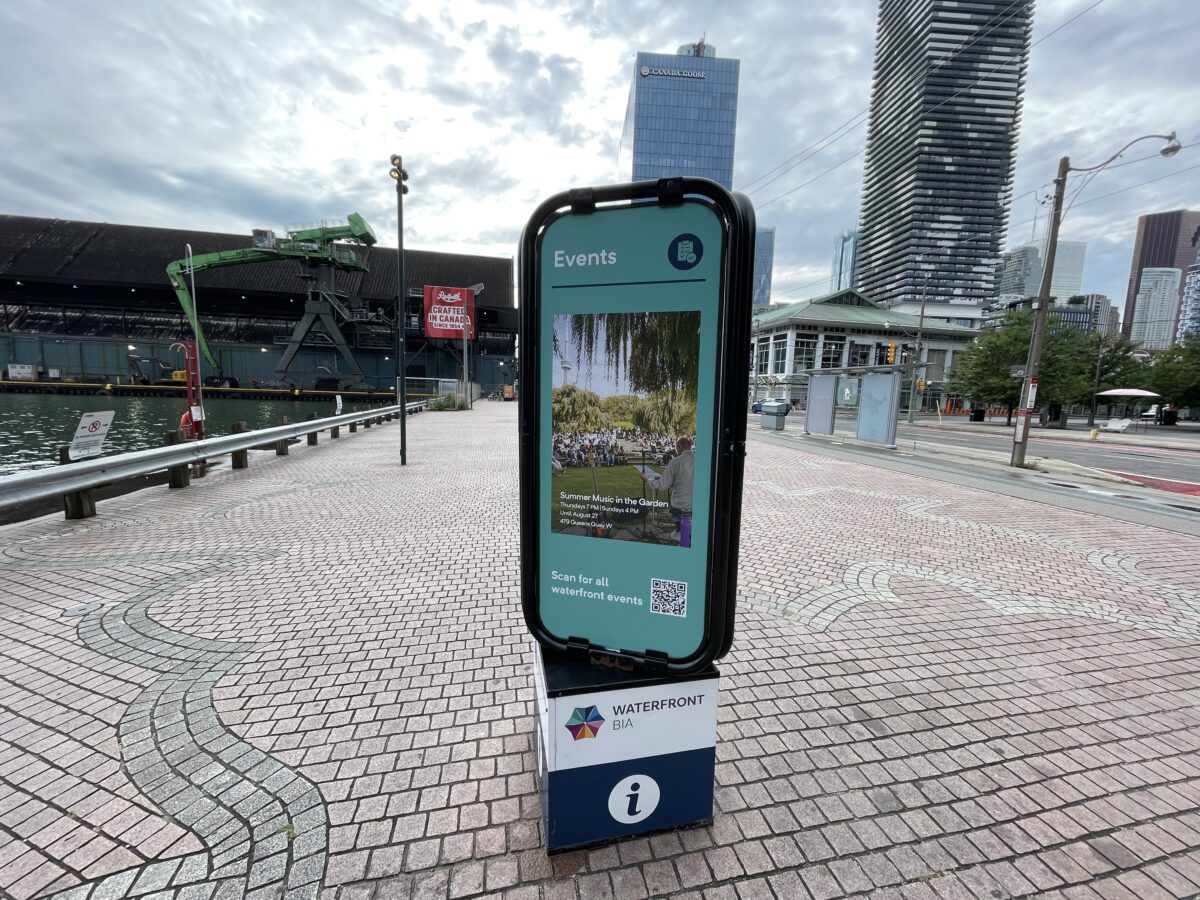

The Waterfront BIA (Business Improvement Area) has released a new 85-page review examining the current state of events and activations along the waterfront, with a series of recommendations aimed at turning the corridor into a more connected, year-round destination.
“We want Toronto to be recognized around the world as a premier destination ‘waterfront city’ in the future,” the report states. “That will mean being seen as active in all seasons, anchored by major attractions with recurring and community-scale programming in between, exciting things always happening on the water itself, easier to navigate, and supported by a coordinated set of partners who see the waterfront as a shared city-building platform.”
The report is candid about where that ambition is coming from. It quotes a member business who summed up the challenge facing the BIA in a single line: “We have the visitors, now what do they do next.” It’s a question the entire 85-page document is, in one way or another, trying to answer.
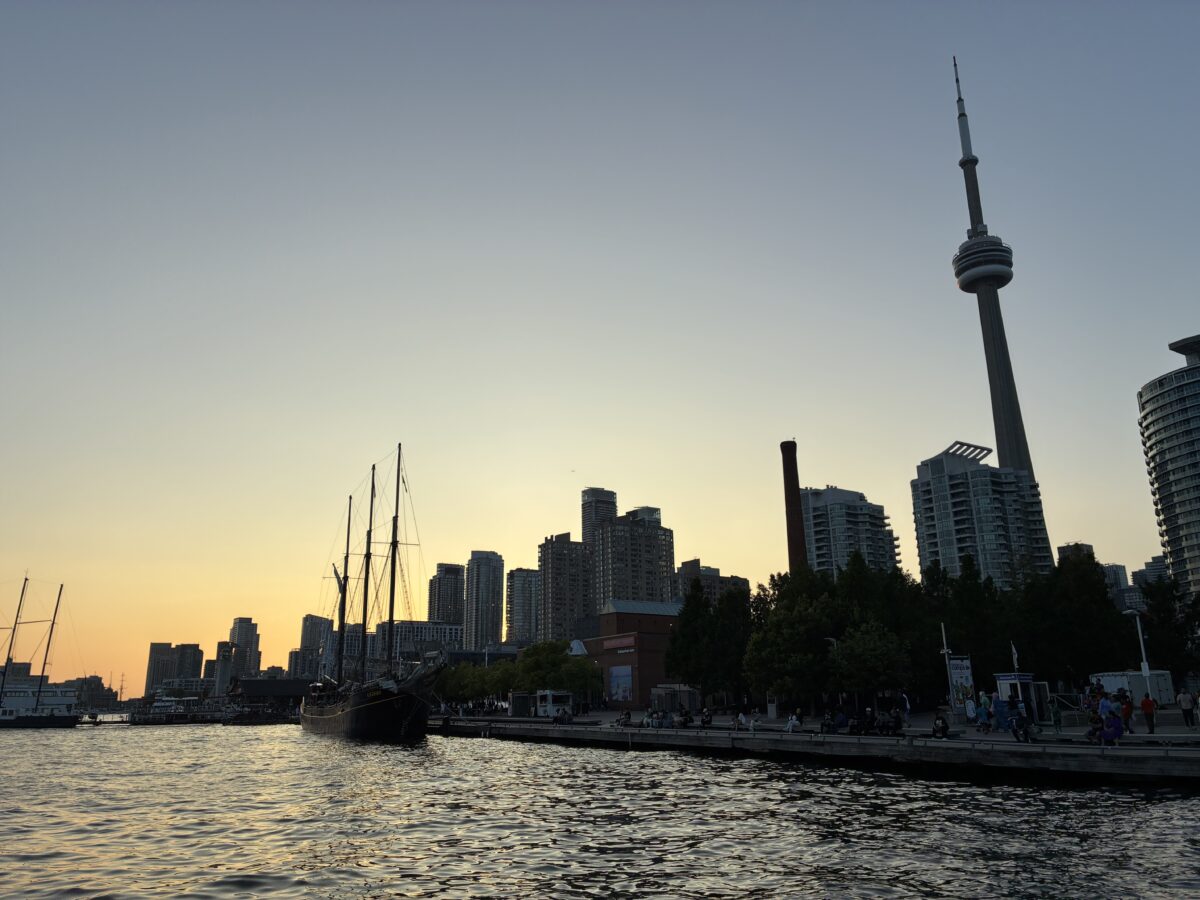
Among the report’s recommendations, one stands out as the clearest statement of ambition: a signature, multi-week international festival on the scale of Vivid Sydney, the light and culture event that transforms Sydney Harbour every Fall on the back of significant government investment.
The idea isn’t coming out of nowhere. The report notes that Destination Toronto’s own new Master Plan already highlights the potential for a “signature shoulder-season event” somewhere along the water, and the BIA sees itself playing a supporting role in getting one off the ground.
Tim Kocur, Executive Director of the Waterfront BIA, laid out what that would actually take.
“To have a large-scale, multi-week, 7-kilometre-long harbourfront-wide event like Vivid Sydney does in their shoulder season each year in Australia, you need significant government investment,” said Kocur. “Their event is kind of like if Nuit Blanche in Toronto weren’t one night but it was over three straight weekends. That would be something big enough that you can advertise around the world that Toronto is a time to visit in the Fall, and you see an event concept like this in Destination Toronto’s new Master Plan for this reason, too.”
Kocur was careful not to overstate how close that goal actually is. “Our waterfront does have one major advantage in getting closer to this type of event: we have a lot of great programmers working together already,” he said. “That’s a great start to build on.”
That existing groundwork, according to the report, is exactly what makes the idea more than wishful thinking. This year alone offered two very different proof points for what’s possible when the waterfront’s stakeholders work in the same direction.
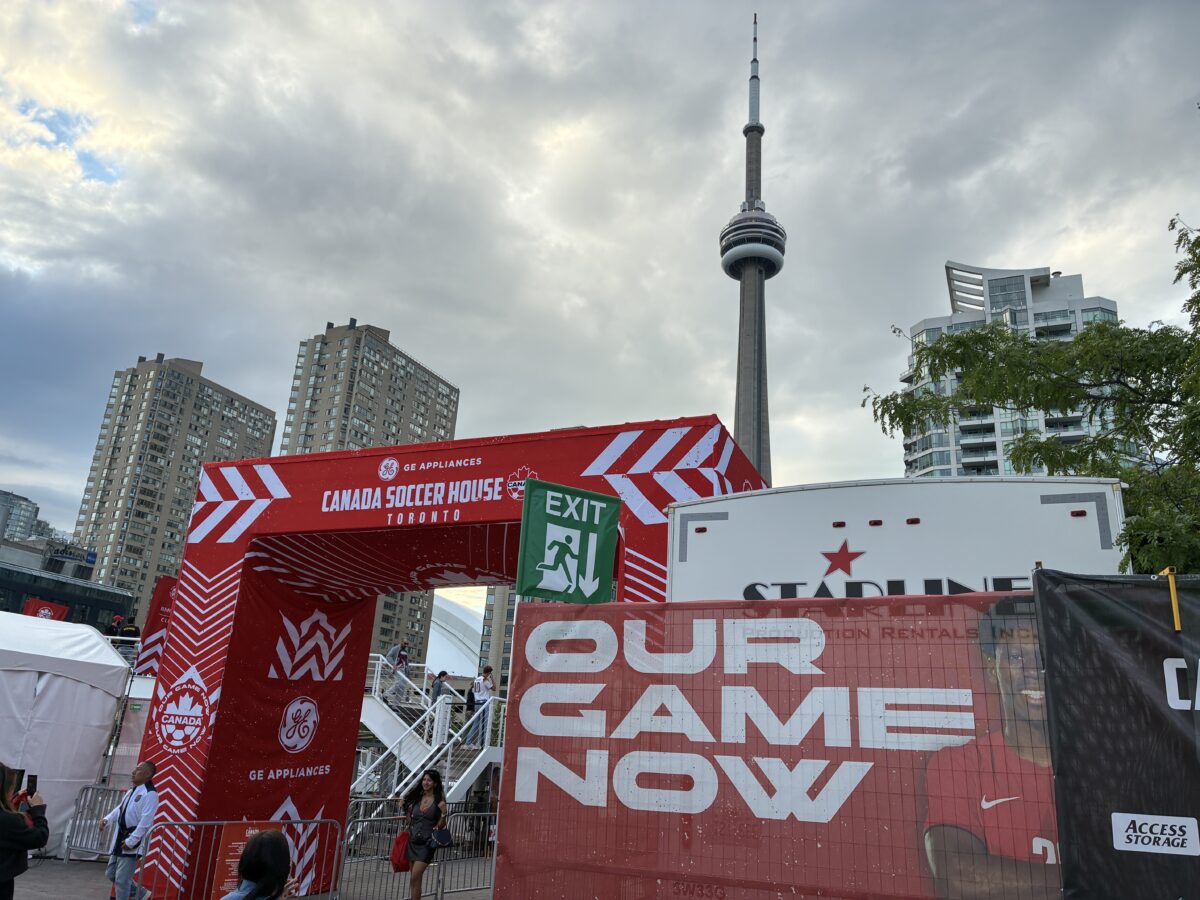
The first was the FIFA World Cup. Six games were played at Exhibition Place, but according to the report, the surrounding programming stretched far beyond the stadium itself. The Bentway hosted the main fan festival. World Cup banners lined the length of Queens Quay. Fan zones were set up at both Harbourfront Centre and George Brown Polytechnic. The Malting Silos area near the Island Airport hosted light shows and a food market for the first time. And on the east side of the harbour, a water shuttle began dropping visitors at a new dock in Biidaasige Park, in the newly flood-protected Port Lands, for the first time ever.
Kocur put it simply.
“The World Cup was obviously an example of the potential for the waterfront to play host to very, very large events,” said Kocur. “Seeing it come together is why we’re now encouraging people to see all the parts of the waterfront as an inter-connected system that can support events. Canada Soccer and Pride House both chose Queens Quay for their fan zones, and the City worked with us to do a market for the first time near the Malting Silos.”
The BIA’s own pedestrian counters back up the scale of that moment. June 20, 2026, the day Summer Music in the Garden kicked off and Germany played a match in Toronto during the FIFA period, was the busiest day the BIA has tracked so far this year, with a combined 68,077 pedestrians and cyclists counted across the York, Rees, and Spadina intersections on Queens Quay. June 27, also during the FIFA period, ranked second at 63,217. Both totals outpaced every long weekend the corridor saw in 2025, including Labour Day and Canada Day.
The second proof point didn’t need an international tournament at all. The report points to the City of Toronto’s 2024 Nuit Blanche as evidence the same kind of collaboration can happen on a purely local scale.
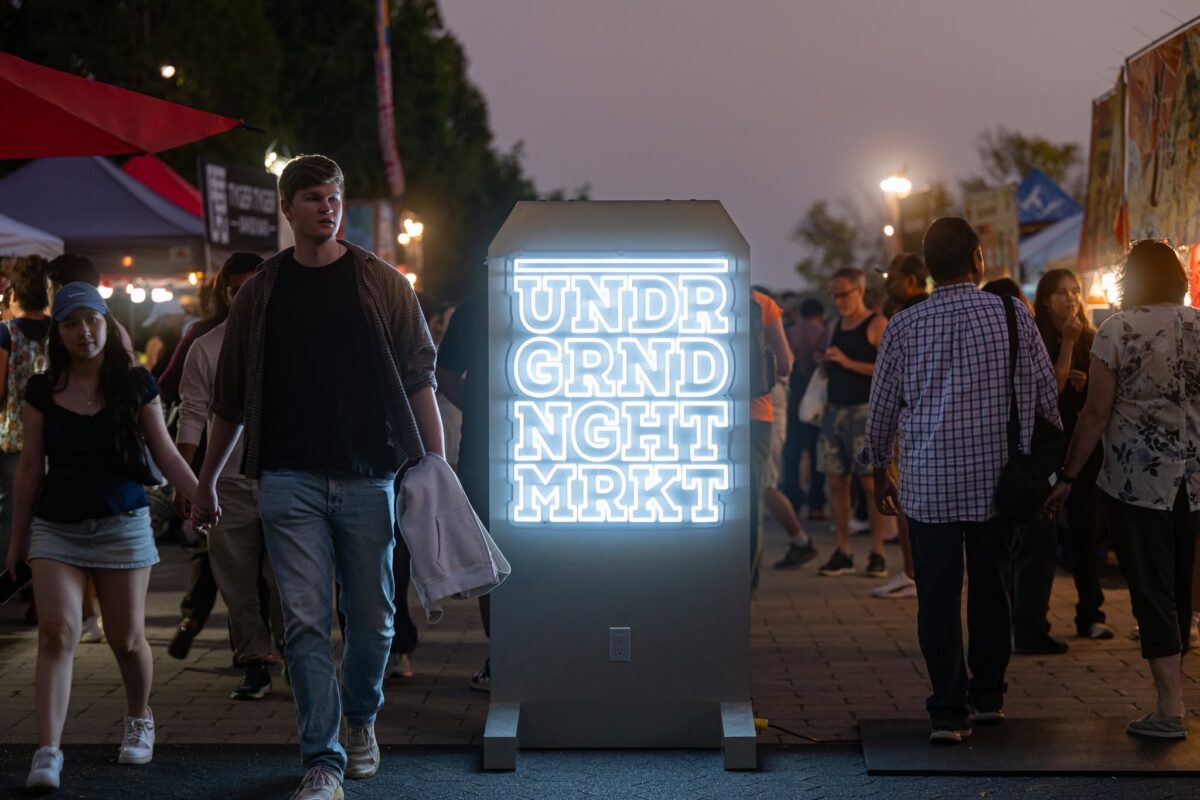
“Nuit Blanche 2024 was the largest extended selection of activations at a single time ever seen on the waterfront,” the report says, noting that more than 30 installations were spread across Queens Quay that night, with sponsor or programming support from nearly every waterfront stakeholder, including an installation at Little Norway Park, a spot usually considered a quiet residential park rather than an events site.
The report treats last year’s Water/Fall Festival the same way, an early test of whether that kind of collaboration can be sustained over a longer stretch of time, not just a single night. The two-weekend co-promotion brought together 15 area stakeholders and events across the western waterfront, and the BIA tracked more than 100,000 total visits over the course of the festival.
Zoom out, and the report’s opening question, what do they do next, gets a bit sharper. The waterfront drew 74.3 million total visits in 2025, strong by any measure, but down from a peak of 81.1 million in 2024, and modestly below 2023’s 77.0 million too. The report doesn’t treat that dip as a crisis so much as a case for its whole argument: connected, recurring programming is what turns a one-off visit into a repeat one. Nearly two-thirds of 2025 visitors, 62.8%, travelled 20 km or less to get there. Almost all of the closest ones, 90.9% of visitors living within a kilometre, fit a single Environics profile the BIA calls “Eat, Play, Love,” younger, multi-ethnic, upper-middle-income urban singles and couples. Further out, the audience shifts toward more suburban and family-oriented visitors, according to the report, exactly the kind of pull a signature international festival would need from beyond the immediate neighbourhood.
None of this collaboration was inevitable. The report is direct about how unusual it is by historical standards.
“Too often, Toronto sees its waterfront as one thing or another,” the document states. “Toronto Islands, Ontario Place, and Harbourfront Centre are all great destinations, all separate. All created or led by different levels of government.”
The report cites the 2024 study Ripple Effect: Unlocking Toronto’s Waterfront Potential, produced by Business of Cities and the Toronto Region Board of Trade, which found that major economic districts often come together this way. “There isn’t always a grand plan from the beginning,” the report notes, paraphrasing the study’s findings, “but as separate entities grow closer to each other, they will all benefit from coming together around a shared vision.”
Kocur doesn’t credit a masterplan for the waterfront’s recent progress on this front. He points to the pandemic.
“Since the pandemic, when everyone was looking to help each other out and we all had the same problems for a while, there was a noticeable increase in what our BIA had been hoping to see in terms of cross-waterfront collaboration and shared visioning,” he said. “We’ve always been eager to help organize or sponsor events or roundtables whenever possible to have voices across the waterfront speak together. Since then we’ve been a part of events on the future of the waterfront with ULI, Empire Club, the Toronto Region Board of Trade, and last year we helped Destination Toronto bring together a meeting with tourism and waterfront stakeholders with Ontario Ministers.”
“We take the perspective that if all governments and all the major waterfront stakeholders succeed, our business community has the best chance to succeed,” Kocur added. The report describes the BIA’s own role in blunter terms elsewhere, noting that in a crowded field of stakeholders, the organization has consistently heard it’s most effective simply as a “convenor” and “barrier-breaker,” a role it says it intends to keep leaning into.
Part of that is because so much is changing at once. Alongside its own review, the BIA names a handful of parallel efforts now underway that it says it will need to stay aligned with: Waterfront Toronto is preparing a Destination Development Strategy to identify where new permanent attractions could go over the long term, the City of Toronto has its own Festivals Strategy in the works, and a funded plan to extend light-rail transit along the waterfront, connecting Union Station westward to Exhibition Place and, separately, eastward into the new Port Lands, is expected to reshape how easily people move along the corridor once construction wraps up.
To make sense of all that movement, the report leans on a framework it calls “activity hubs,” essentially treating the waterfront less as one continuous strip and more as a string of distinct centres of gravity that need to be connected rather than built up in isolation. It names five: a Western Waterfront Hub around Ontario Place and Exhibition Place, an emerging arts and culture hub forming around the Malting Silos near the Island Airport, the Central Waterfront Hub anchored by Harbourfront Centre and the ferry terminal, the Downtown Attractions cluster just north of the Gardiner, and a future Distillery-Ookwemin hub taking shape to the east.
The corridor connecting all of it is best understood, the report suggests, as one long system rather than a series of unrelated stops. The document describes it stretching “from Exhibition Place and Ontario Place in the west through the Harbourfront Centre, The Power Plant Contemporary Art Gallery, Jack Layton Ferry Terminal, Billy Bishop Toronto City Airport,” and more than ten parks along Queens Quay, including Toronto Music Garden, HTO Park, Love Park, and Sugar Beach, before continuing east into the new Port Lands.
That system is no longer purely theoretical, according to the report. Sites still under development, including a planned “Signature Structure” at Quayside’s Block 5 and new flexible park space at Rees Park and 50 Queens Quay East, are all being considered in terms of how they complement the rest of the corridor, rather than as standalone projects.
One of the more counterintuitive threads in the report concerns Billy Bishop Toronto City Airport, itself a piece of that emerging western hub. The BIA’s own 2024 retail review had already flagged Queens Quay West as under-activated compared to the rest of the corridor, and an airport expansion might seem, on its face, like an unwelcome disruption to an already quiet neighbourhood.
The report argues the opposite. “Expansion or modernization of Billy Bishop Toronto City Airport could be a challenge, or a benefit, depending on whether its plans are integrated with an arts and culture hub emerging around its entrance where the Canada Ireland Foundation’s Corleck Building just opened with programming this year,” it states.
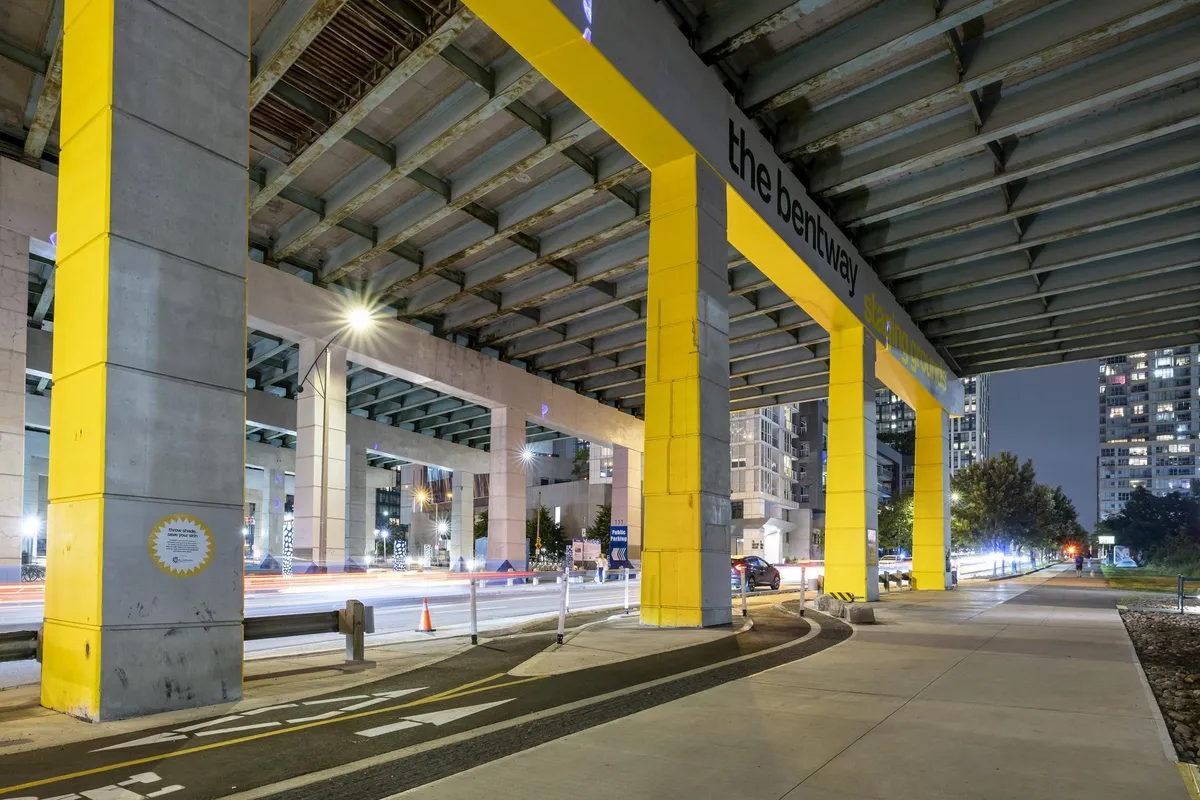
The report also flags ongoing work by The Bentway, in partnership with the City of Toronto, to improve the underpasses beneath the Gardiner Expressway, the physical seam between the Downtown Attractions hub and the water’s edge, and long considered one of the biggest obstacles keeping downtown visitors from making their way to the waterfront at all. “Along this waterfront corridor, The Bentway added lighting elements at two north-south underpasses for the first time,” the document says, part of a broader vision to improve what’s often called “a barrier to the lake.”
The BIA’s own role is evolving too. Asked how the organization decided to pull back on direct event funding, Kocur didn’t hedge.
“As a small organization like ours, you’re always looking at where you can make the most impact with our modest investments,” he said. “As Queens Quay has grown, there’s more interest in doing events as the crowds have grown and the programming spaces have expanded with new parks. So we’re finding that it’s probably more important we help identify ways to recruit events and share playbooks on how to program new spaces than to directly sponsor.”
Nowhere is that shift clearer than in how the BIA now talks about Harbourfront Centre, the anchor of the Central Waterfront Hub and the waterfront’s longtime programming leader.
“We’re delighted to be working more regularly with Harbourfront Centre,” said Kocur. “They’ve been the premier programmer on the water for 50 years, and any opportunity we have to help expand their presence and programming wider along the growing east and west Queens Quay, we’re open to that, too.”
According to the report, key areas of focus for the BIA going forward include:
- Convening and information-sharing: Increase hosting of meetings and sharing of information about waterfront events schedules and opportunities to collaborate.
- Waterfront-wide strategy alignment: Encourage all stakeholders and programmers to work together on arts, culture, and programming strategy, even informally.
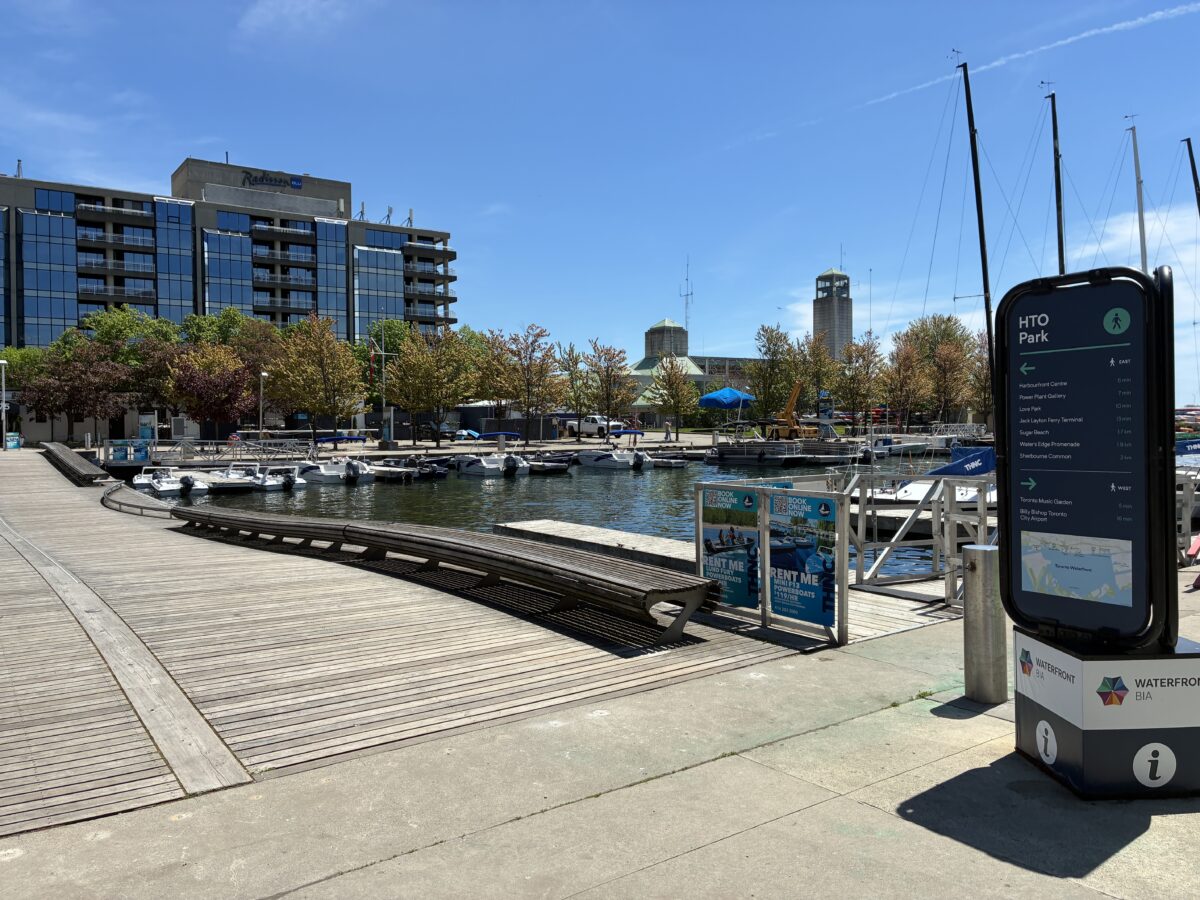
- Priority market and event zones: Focus direct programming support on HTO Park and Sugar Beach/Water’s Edge Promenade, both located in the gaps between larger activity hubs like Harbourfront Centre and the Malting Silos.
- Protection of key sites: Advocate for future development to preserve large, flexible “gathering spaces,” including Rees Park, the 50 Queens Quay East temporary park, and Quayside’s Block 5, for large-scale event use.
- Local and community event partnerships: Support resident associations and community groups interested in programming their own events, alongside continued sponsorship of larger destination-scale events.
Kocur pointed to two parks in particular.
“We think HTO Park and Sugar Beach are the best places for us as a smaller organization to focus on providing more regular programming,” he said. “They’re prominent parks with fun events potential, but also just far enough from the major hubs like Harbourfront Centre that they encourage exploration of more of Queens Quay when they’re active.”
The report also highlights the waterfront’s rapid residential growth as a factor shaping the BIA’s approach. Queens Quay had roughly 10,000 residents in 2010; that number is closer to 40,000 today.
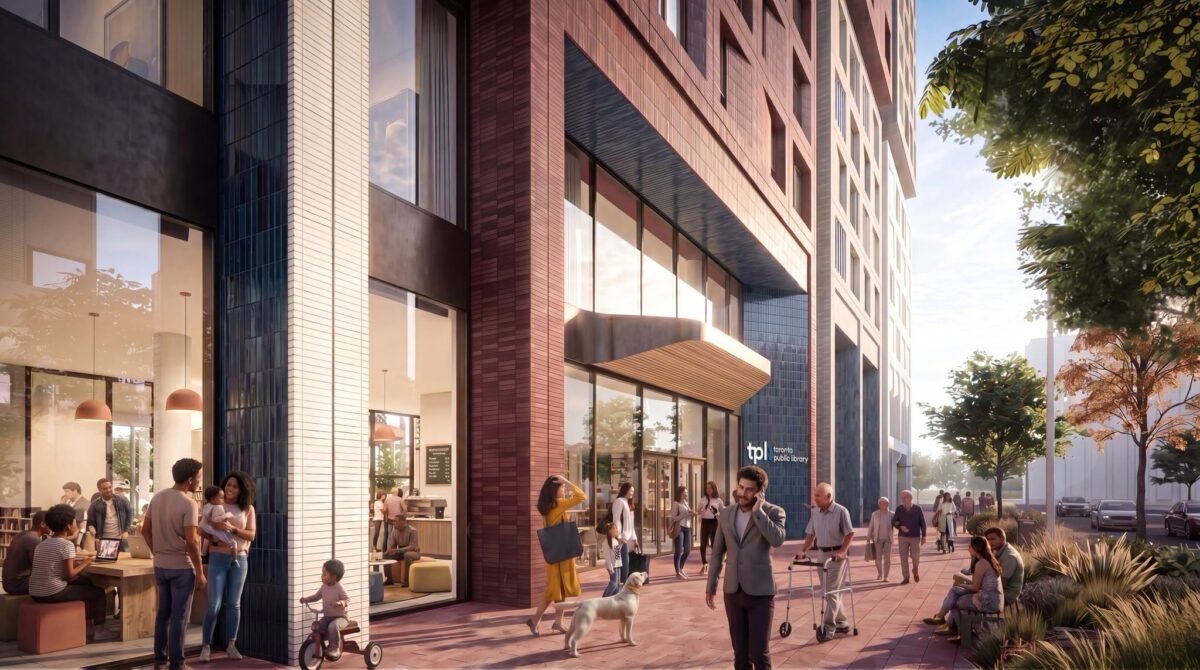
Those new residents also skew toward exactly the demographic the BIA is trying to program for: young, urban, and reasonably affluent, with an average household income of $151,857 and an average age of 38. Nearly half, 45%, are immigrants. The corridor also scores 92, 92, and 93 on Walk Score’s walk, bike, and transit indices, numbers that put it among the most accessible neighbourhoods in the city, and a factor the report suggests makes it easier for locally-driven events to draw both residents and nearby office workers without anyone needing to drive in.
“The waterfront is a true mixed-use neighbourhood and residents are a big part of that,” said Kocur. “We met with all three active resident groups, they were all very encouraging of our approach to hopefully support more events, and they were all receptive to our offer to more directly sponsor their own events.”
One recent example came from the York Quay Neighbourhood Association, which organized a summer fun fair at Harbour Plaza Park with BIA support, drawing more than 500 people on a single Friday.
“That’s not a park we’d likely do our own events, it’s already so busy with the Ferry Terminal there,” said Kocur, “but it was a great location to get a lot of local residents and kids out.”
Asked what surprised him most about this past year of programming, Kocur didn’t point to anything on the scale of the World Cup or Nuit Blanche. He pointed to a food market.
This year’s May long weekend event at Sugar Beach, run in partnership with Street Eats as part of the Festival of Flavours, wasn’t an obvious fit on paper. There are already plenty of restaurants nearby, and a market of that size could easily have pulled business away from them instead of toward them.
“All credit to the ‘Festival of Flavours’ market with Street Eats, because they were such a draw for that long weekend that most of the restaurants nearby were telling us they were also busier than the previous May long weekend,” said Kocur. “Some people ate at the food market, but some people wanted to sit down on a patio or lounge nearby, and it went well for everyone at the market and in the local business community.”
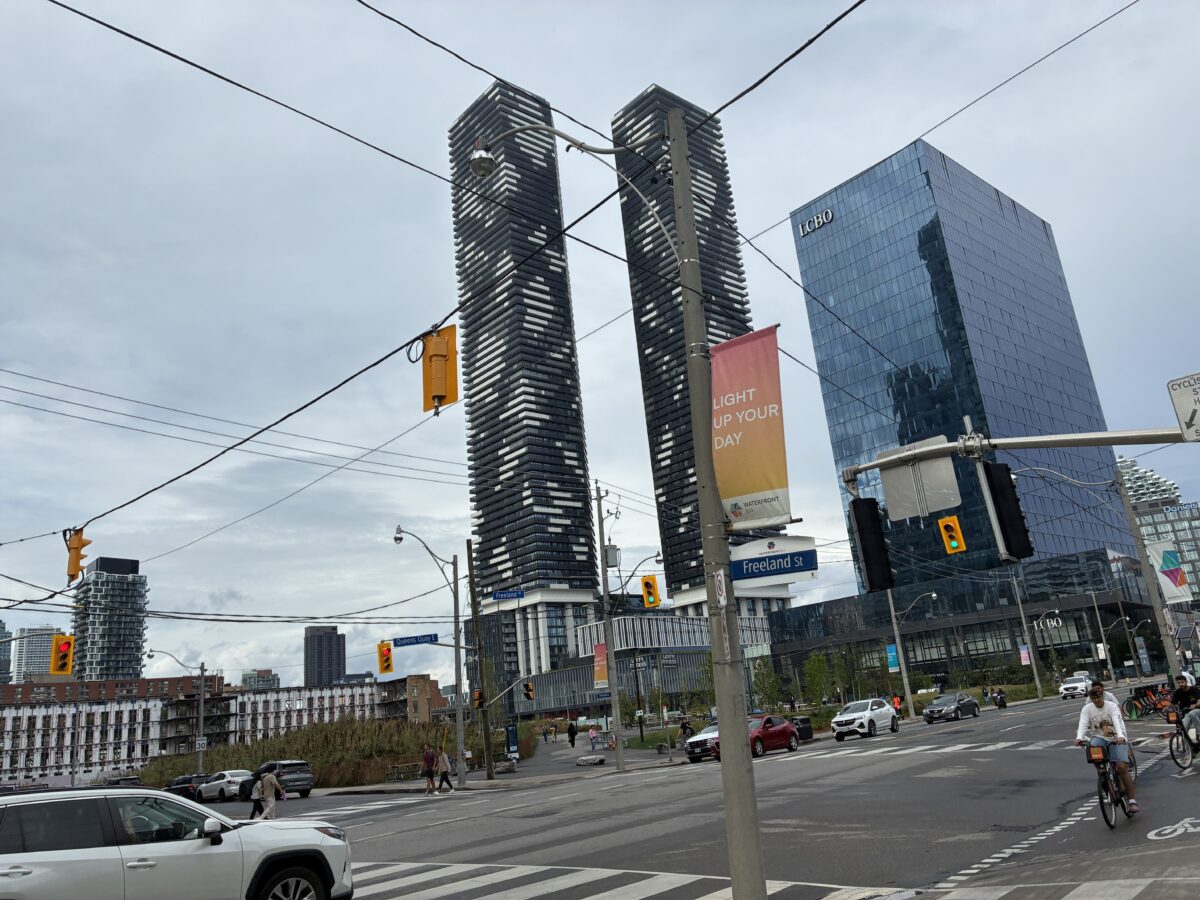
The review lands as the waterfront heads into a multi-year construction period, including the rehabilitation of Queens Quay East, a lengthy closure of the Union Station to Queens Quay tunnel, and continued work on the Gardiner Expressway. The BIA said its programming and business support efforts will need to adapt accordingly in the years ahead, though the same construction is also what’s expected to eventually knit the waterfront’s light-rail line together end to end, from Exhibition Place through to the Port Lands, by the early 2030s.
All of this needs a retail base to stand on too, and the BIA’s companion data and broker packages show one that’s held up better than the raw vacancy numbers might suggest at first glance. Commercial inventory grew slightly this year, from 297 to 300 units, and while the count of open businesses dipped by one to 260, twenty-six new businesses opened their doors along the corridor in the same stretch. Most of the net change on paper traces back to just two sites, Quayside and the 1 Yonge redevelopment, which together removed seven operating businesses and five vacant units as both properties prepare for construction. Vacancy across the whole waterfront sits at 13.3%, roughly in line with other parts of downtown, though it splits unevenly by stretch: 8% in the west, 7% in the central corridor, and 27% in the east, where that same Quayside and 1 Yonge construction is concentrated.
New tenants keep arriving anyway. Sushi Yeon, Mita Mita, and Bar Butcher have all opened recently along the corridor, and Tacos De Princessa and Pür & Simple are both set to open soon at 1 York Street, a sign that appetite for waterfront retail hasn’t slowed down even with years of construction still ahead.
The broader numbers back that up, if less dramatically. Employment on the waterfront has grown 214% over the past 25 years, to 38,695 full-time jobs, 92% of them in the office sector. Hotel occupancy across the city hit 74% in 2025, its highest mark in three years, and international visitors to Toronto climbed to 2.68 million, 57% of them from the U.S. None of that is specific to the waterfront, but it’s the kind of backdrop, office workers, hotel guests, and tourists all still showing up in growing numbers, that any future signature event would be counting on.
Even so, the report’s overall tone is less about bracing for disruption and more about building toward the vision laid out in its opening pages, a waterfront that stretches, uninterrupted, from Exhibition Place to the Port Lands, with something worth stopping for at nearly every point along the way. A signature international festival may still be years away. But between the World Cup, Nuit Blanche, and a growing list of partners willing to program together, the BIA’s report makes the case that Toronto’s waterfront is closer to that future than it’s ever been.
The full Waterfront BIA Events and Activations Review, along with the organization’s current data package and broker package covering waterfront leasing opportunities, is available directly through the Waterfront BIA.

Dustin Fuhs is the founder and Editor-in-Chief of 6ix Retail, Toronto’s premier source for retail and hospitality industry news. As the former Editor-in-Chief of Retail Insider, Canada’s most-read retail trade publication, Dustin brings over two decades of expertise spanning retail, marketing, entertainment and hospitality sectors. His experience includes roles with industry giants such as The Walt Disney Company, The Hockey Hall of Fame, The Canadian Opera Company, Starbucks Canada and Blockbuster.
Recognized as a RETHINK Retail Top Retail Expert in 2024, 2025 and 2026, Dustin delivers insider perspectives on Toronto’s evolving retail landscape, from emerging brands to established players reshaping the city’s commercial districts.