


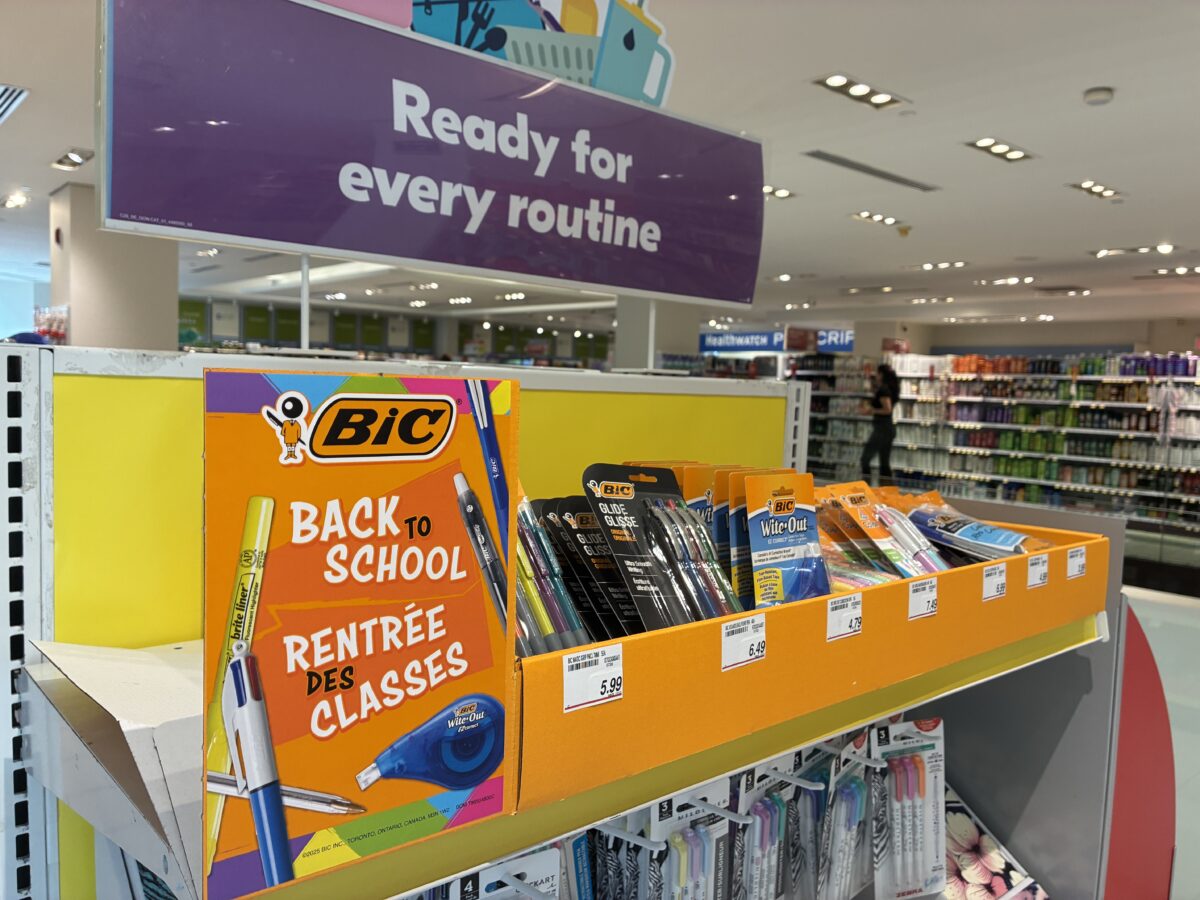
Five percent. That’s how many Canadian parents typically start their back-to-school shopping in June, according to new data from Lightspeed Commerce. Promotions have been running since then anyway.

Fifty one percent of parents with a child in school say they’ve already started shopping this year, but only 5 percent of that group typically begins in June or earlier. Most are waiting for early August, at 35 percent, or late August, at 25 percent, timing that lines up far more closely with when Canadian kids actually go back after Labour Day than with the American school calendar most retail planning still runs on. Sixty percent of Canadians say June promotions are too early, 31 percent say much too early.
6ixRetail asked Dax Dasilva, the founder and CEO of Lightspeed, how a mismatch like that happens in the first place.
“A lot of retail planning still starts upstream with when inventory is bought and delivered, not with when the customer is actually ready to shop. That is the tension here,” he said. “Only five percent of Canadian parents typically start in June, yet the industry is already in back-to-school mode. That tells me retailers have gotten very good at planning the supply side of the season, but there is still room to get much better at planning around demand.”

The reason that gap has persisted for as long as it has comes down to how a retail calendar actually gets built. Inventory has to be ordered, shipped and placed on shelves months before a single customer walks in, which means the whole season gets planned around production and logistics timelines set an ocean away, not around when a Canadian parent is actually ready to buy. Closing that gap has less to do with moving the calendar and more to do with how much a retailer can still adjust once the season is already underway.
“What is changing is the ability to react, as retailers can see sell-through earlier, replenish faster and make smaller in-season bets instead of committing everything months in advance,” he continued. “The calendar does not have to be as rigid as it once was. Through technology like NuORDER by Lightspeed, we’re seeing that shift already, with retailers moving toward smaller, more frequent in-season orders and using sell-through data to respond to demand faster.”
Asked what he’d tell a Canadian retailer to do differently with their promotional calendar, Dasilva didn’t hedge.
“Plan promotions around when customers are actually ready to buy, not just when the retail calendar says the season starts,” he said. “Our data says forty percent will buy when they see a good deal, but only seventeen percent do their shopping in one trip. That means retailers are dealing with a customer who is watching, comparing and buying over time. Watch what is actually moving, protect full price where demand is healthy and promote when there is a reason to promote.”
Back-to-school running on American timing is really just one visible symptom of a habit that shows up across the industry.
Most national retailers plan on a single calendar because it’s simpler to execute, one buy, one campaign, one launch date applied everywhere at once. The trouble is that a shopper in Halifax, Toronto and Calgary isn’t working from the same set of pressures or the same sense of when the season actually starts, and a plan built for convenience rather than for the customer ends up serving neither particularly well.
“You see it anywhere a national retailer takes one calendar, one assortment or one promotional strategy and applies it across very different markets,” he said. “The bigger shift I see is toward local decision-making. What works in Toronto may not work in Montreal or Calgary. Retailers now have much better store-level and market-level information. The next step is actually using that information to make different decisions by market rather than just reporting on the differences afterward.”
Toronto is the clearest proof of that in this data set. Forty one percent of Torontonians say back-to-school promotions run much too early, compared to 30 percent everywhere else. It’s also the most AI comfortable market Lightspeed measured, with 40 percent willing to trust AI to compare products against 24 percent nationally.
Those two numbers sitting together aren’t a coincidence in Dasilva’s reading of it. A shopper who’s comfortable letting a tool do the comparison work for them is, almost by definition, a shopper willing to slow down and look before they commit to buying, which is the same instinct behind resisting a June sale in the first place.
“Toronto seems to be a market where shoppers want more control over when and how they buy,” Dasilva said. “Forty one percent say back-to-school promotions happen much too early, especially with some sales starting in June. Meanwhile forty percent are comfortable using AI to compare products. That points to shoppers using more information before deciding when something is worth buying, a pattern we also see nationally as Canadians do more deal research, trade down and compare more carefully. Retailers are dealing with a customer who has more tools and is increasingly comfortable waiting.”
The pattern isn’t limited to Toronto or to timing alone, either. It’s a market-by-market difference in how ready a customer actually is to buy, and Dasilva’s point is that a single national campaign has no way of seeing that difference, let alone acting on it.
Twenty years running Lightspeed, the company he founded in 2005 and returned to lead again in 2024, has given Dasilva a fairly consistent read on what separates the operators who get seasonal planning right from the ones who don’t, and it isn’t really about who makes the boldest bet at the start of the season.
It’s closer to the opposite. The retailers who consistently get it right are the ones disciplined enough to trust what their own sales history already tells them about a product, while staying loose enough to notice the moment that history stops applying. That combination, confidence backed by data and flexibility earned by watching closely, is harder to build into an organization than either instinct on its own.
“The retailers that get seasonal planning right are using their historical sales data to understand what has consistently worked, while still watching what is happening in the market now,” he said. “You want to plan with confidence around products that have proven demand, but you also need enough flexibility to respond as new trends emerge.”
“Doing that requires a clear view of sales and inventory,” he continued. “You can see what is selling, where demand is building and what can be replenished quickly, rather than making one big bet at the beginning of the season and hoping you got it right. After twenty years, I’d say the advantage comes from knowing which products have proven demand, watching closely for new signals and being able to move quickly when customer demand shifts.”
That same discipline shows up again once the conversation turns to margin, and it’s arguably where it matters most, because pricing is the one lever a retailer can pull too hard without realizing the damage until the season is already over.
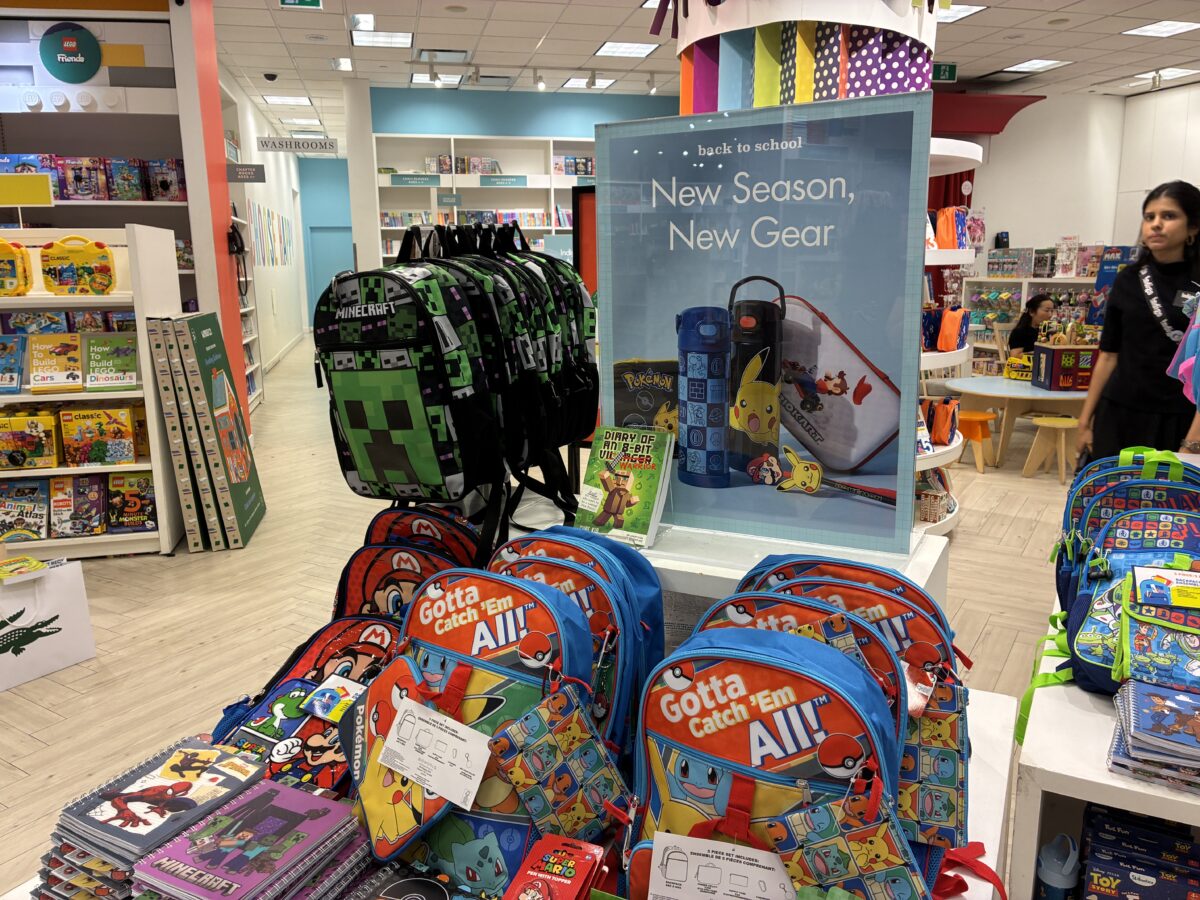
Fifty six percent of parents expect to spend more this year, which on its own would suggest room to hold prices firm. But that demand is arriving alongside a shopper doing more work than usual to justify each purchase, which means a retailer treating every product the same way, either all in on early discounting or all in on holding full price, is guaranteed to get some of that mix wrong.
“The answer isn’t to choose between early sales and full-price selling, it’s to make that decision at the product level,” Dasilva said. “Demand is still there, fifty six percent of parents expect to spend more this year. But shoppers are also doing more research to find value, with thirty nine percent looking harder for deals. That makes visibility into sell-through, inventory and margins more important than ever.”
“If a product is selling, protect the margin and let demand work,” he continued. “If it’s not moving, act early with a targeted offer, a change in merchandising or a different channel. A blanket promotion is a blunt instrument, it treats every product as if it has the same problem. The retailers that perform best will use data to stay disciplined, preserve full price where they can and respond quickly where they need to.”
The conversation closed on a question that stretched past back-to-school entirely, toward a calendar now packed end to end, back-to-school, Halloween, Thanksgiving, Christmas, each one landing before the last has finished, with less and less room in between for a retailer to simply sell what it sells without a promotional reason attached.
Dasilva sees a real cost to leaning too hard on that rhythm, one that doesn’t show up immediately but compounds over several seasons. A customer conditioned to expect a sale within two weeks of any full price tag stops trusting the full price tag at all, which means every event on the calendar has to work a little harder than the one before it just to move the same amount of product.
The alternative he describes isn’t complicated, but it does require a retailer to resist the pull of the calendar rather than ride it. It means having a reason for someone to walk in during the stretch between Thanksgiving and Christmas that has nothing to do with either holiday, evergreen products they trust will be in stock, a store experience that doesn’t depend on a discount to justify the visit.
“I think retailers have to be careful when the strategy becomes moving customers from one promotional event to the next,” Dasilva said. “If customers believe another sale is always two weeks away, you train them to wait.”
“The strongest retailers still have a core business between those moments,” he continued. “They know their evergreen products, keep the right inventory available and give customers reasons to come back that have nothing to do with a holiday. Seasonal events should add momentum to a healthy business, not be what keeps it alive. Planning beyond the peak also helps protect profitability between seasons.”
Canadian shoppers, Toronto especially, seem to have already worked that out for themselves. The season didn’t start when the promotions did. It started whenever families were actually ready to buy, and the retailers who noticed that first are the ones with the better shot at the sale.