
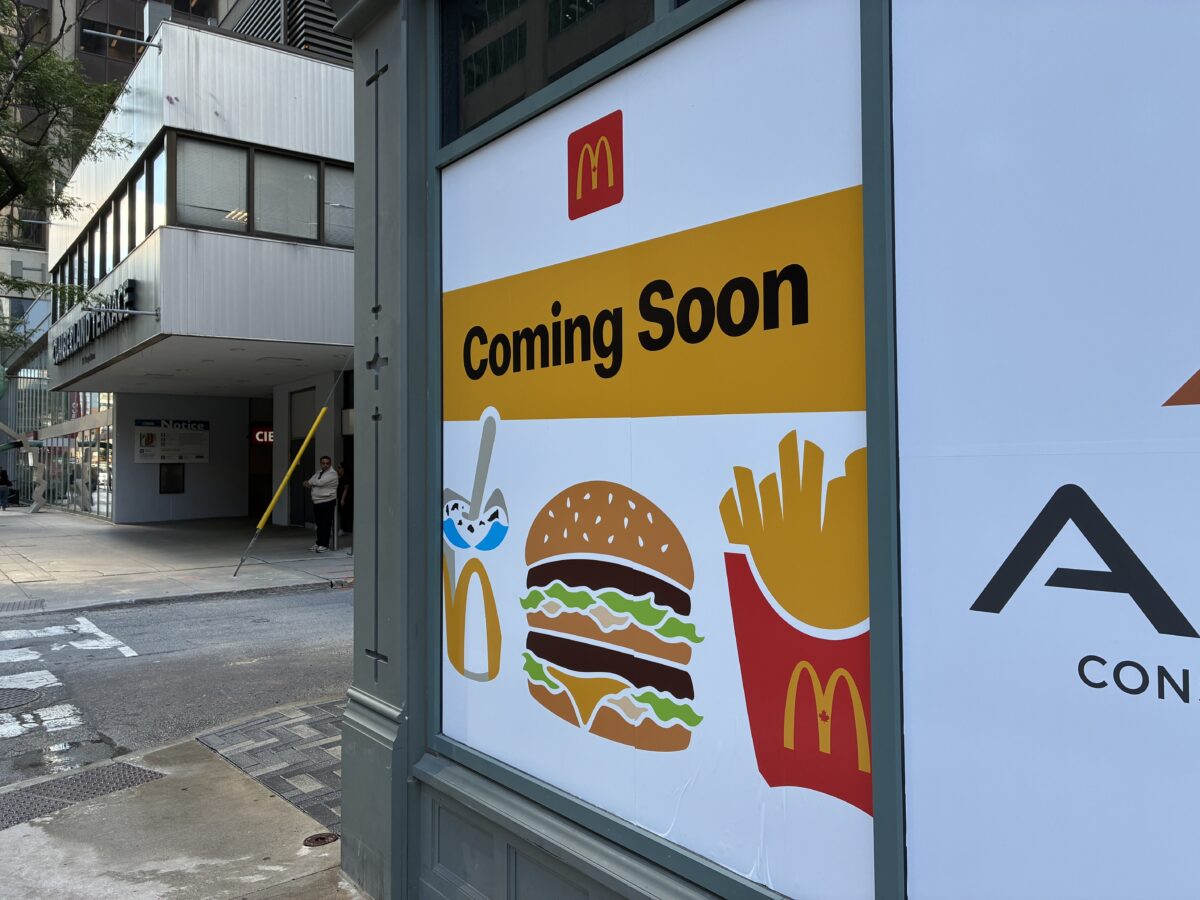

McDonald’s is opening new locations across Toronto right now, and the pattern behind them isn’t really about the brand chasing new territory. It’s about existing demand catching up to where people already are, whether that’s foot traffic on a neighbourhood main street or the volume of Uber Eats and McDonald’s app orders already moving through a given postal code.
That split shows up in the locations themselves. Some of what’s opening looks built for people walking in, sitting down and ordering at a counter. Other locations look built primarily to keep up with delivery volume that’s already happening in an area, with less of the footprint given over to a dining room at all. Neither approach is new for McDonald’s globally, but seeing both appear across the same city at once says something about how unevenly the company is reading different pockets of Toronto.
McDonald’s Canada did not respond to a media inquiry for this piece, so what follows is built from site visits and public building permits, not company confirmation. Treat it as an observation of what’s visibly happening on the ground rather than a confirmed rollout plan. More locations could easily surface as neighbourhoods notice construction crews and coming soon signage before any of us do.
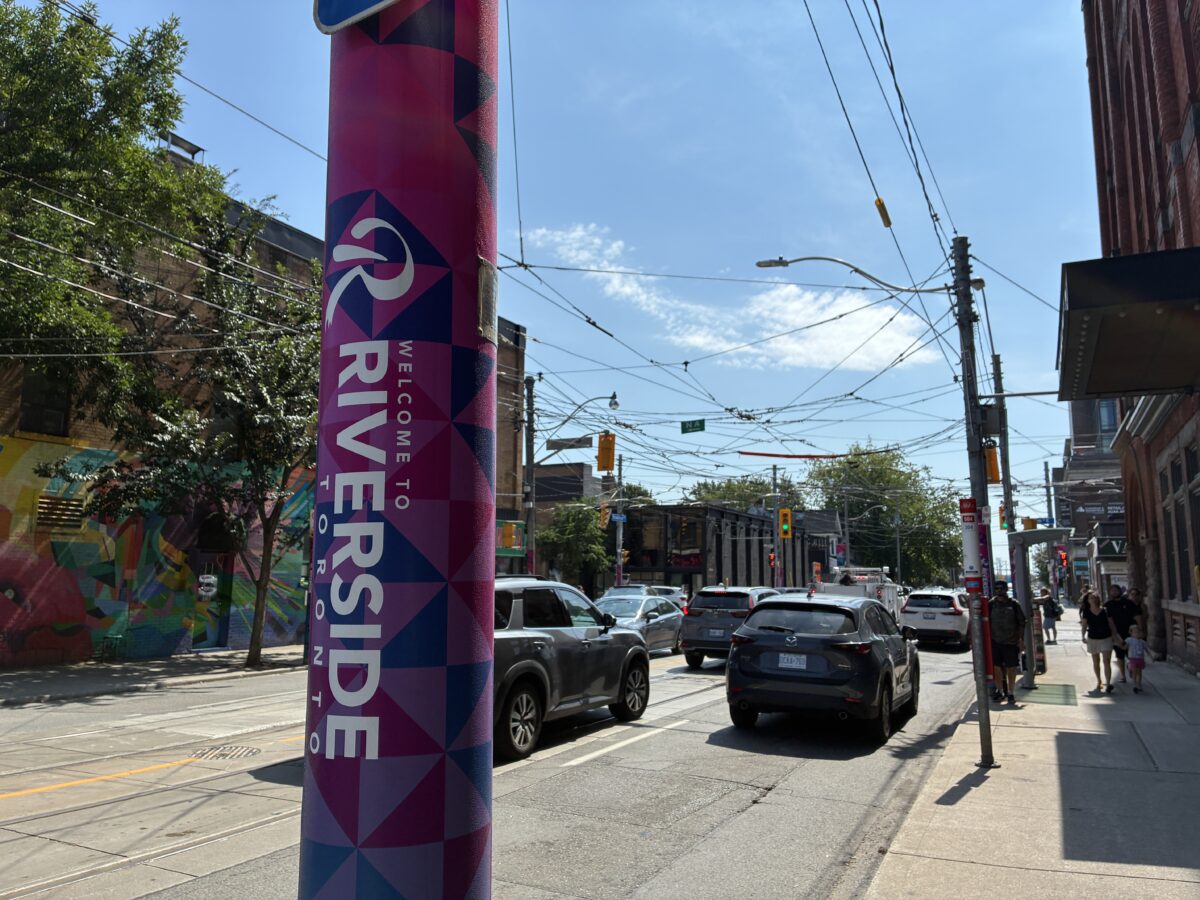
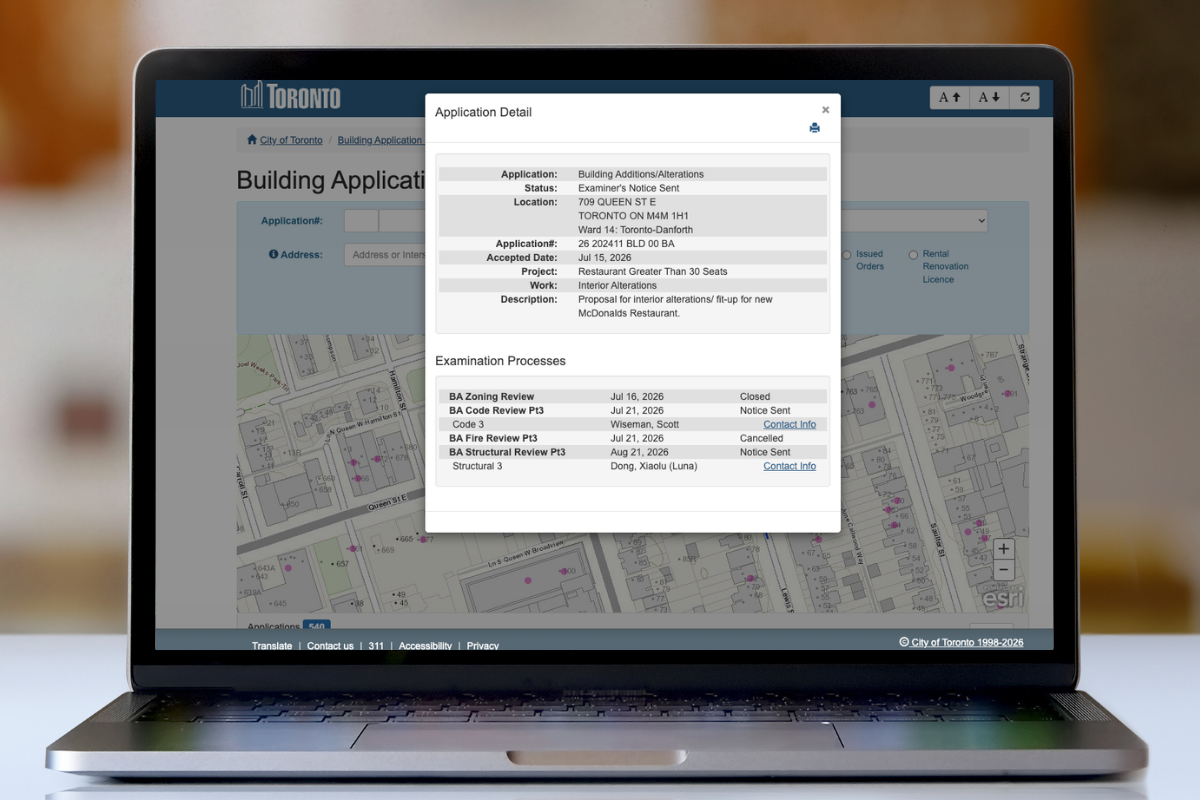
Start with the clearest example of the full-size format: Queen St. E. and Broadview Ave. The address, 709 Queen St. E., was most recently home to Duke’s Refresher Riverside, a sit-down restaurant with a pub-like feel that closed permanently last September. Before Duke’s, the same space held Brickworks Ciderhouse, and before that, the original location of The Real Jerk. That’s a long run as a proper dine-in space, not a quick-serve counter, and the building permit backs that history up. Accepted in mid-July, it classifies the project as a “Restaurant Greater Than 30 Seats.”
It’s a notable shift for that corner regardless. A space that’s spent years as a sit-down restaurant and bar is becoming a quick-service chain, and that’s the kind of change a neighbourhood like Riverside tends to notice. As of our last check, the permit was still at the examiner’s notice stage, so there’s no construction timeline or opening date attached to it yet. We’ll be watching for movement on that front.
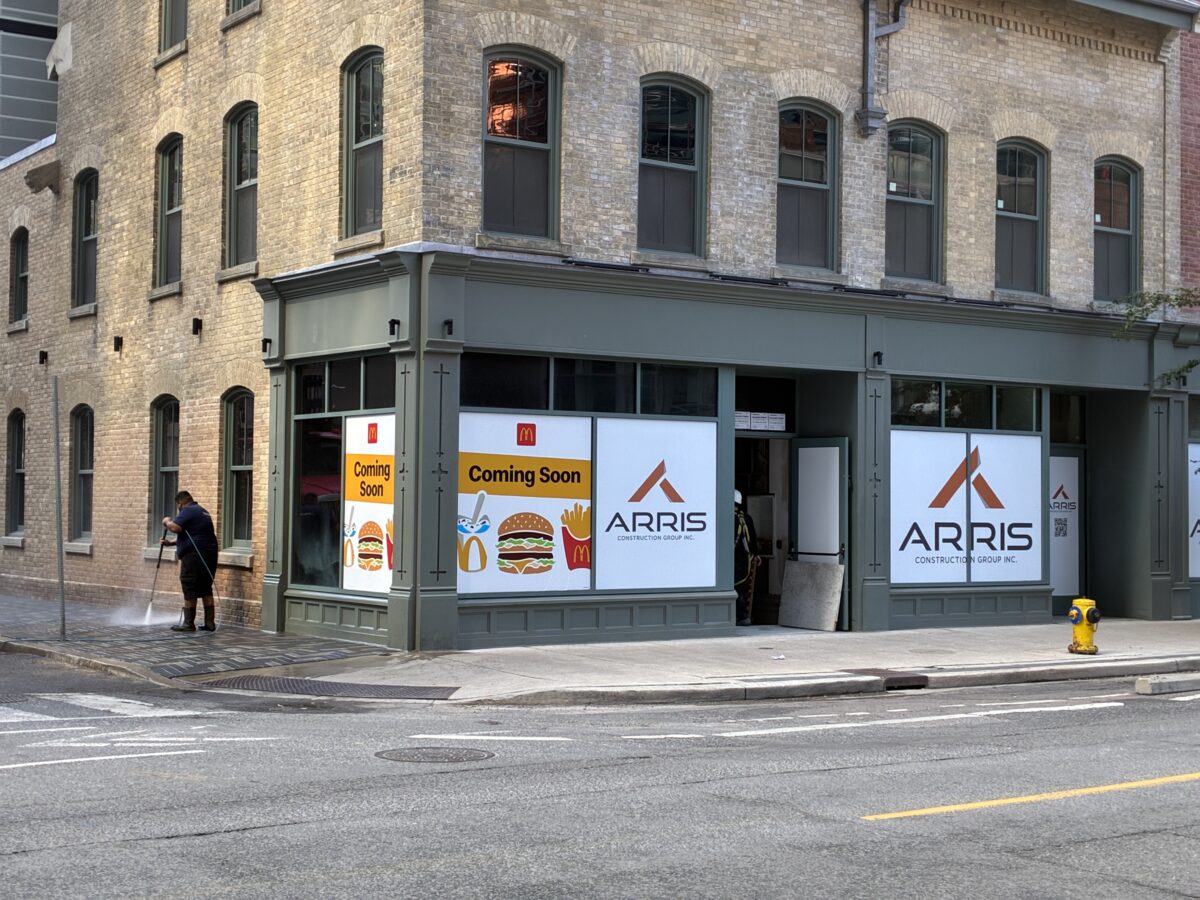
A few kilometres north, at 826 Yonge St. just north of Bloor, a different kind of story is taking shape. This one sits inside the William Hewlett Building, part of the Eight Cumberland heritage retail base, and unlike Broadview, we don’t know yet what format the restaurant here will take. What we do know is that the site itself is substantial, and it’s landing in the middle of a lot of other activity: it’s being built directly across the street from an incoming Shake Shack, close to planned TTC work at the Yonge-Bloor interchange, and near redevelopment activity expected around Cumberland Terrace, also just across the street.
Two quick-service brands committing to the same block, alongside transit work and a major redevelopment nearby, points to a corner that’s going to look different in a few years regardless of what either restaurant ends up looking like inside.
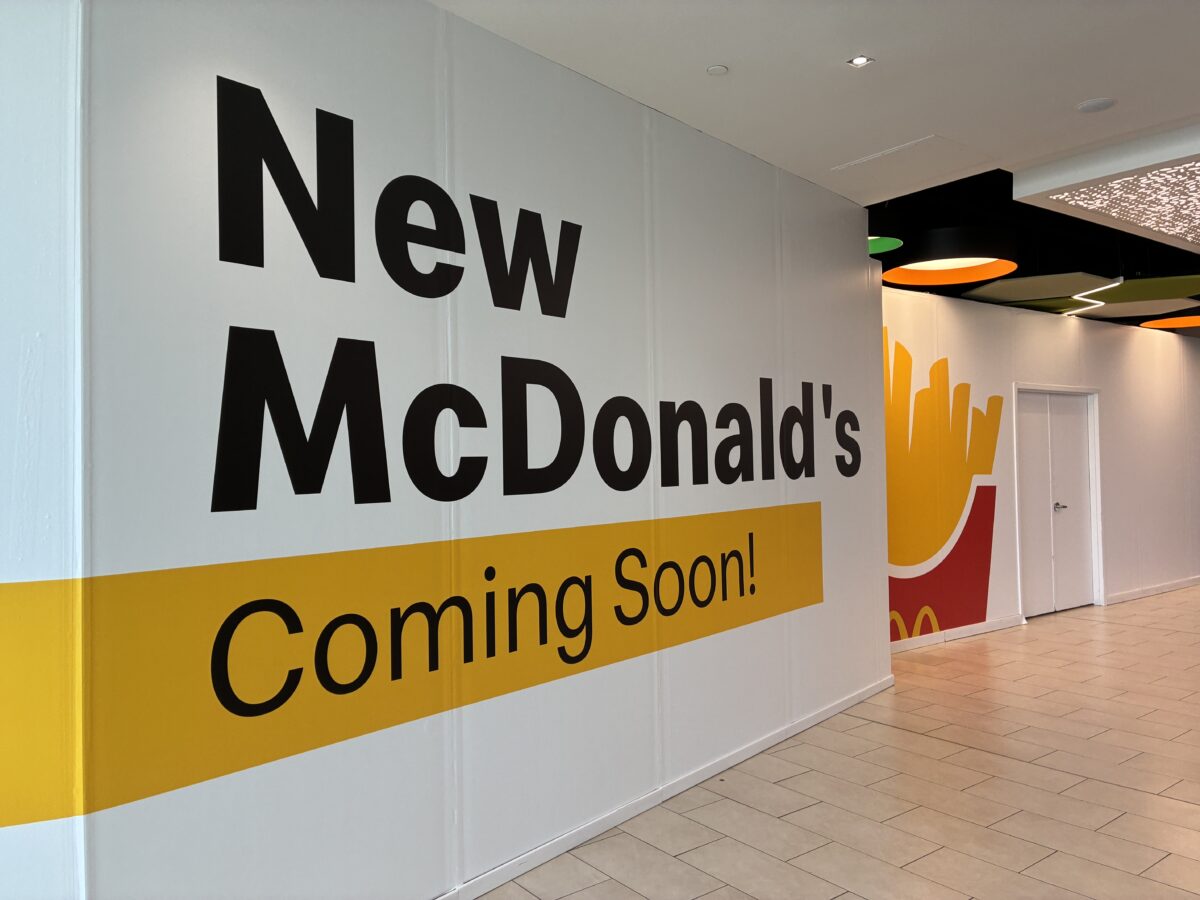
Head north again, into Yorkdale Shopping Centre, and the story shifts once more. A new McDonald’s is going into the food court there, in a back corner of the space, an addition the company has confirmed on its own social media channels, though without a firm date. Because this location sits inside existing mall infrastructure rather than a standalone building, it’s a different proposition than the street-level sites: a food court counter doesn’t need its own dining room, kitchen footprint or storefront, so this one may end up looking more like a compact service counter than a full restaurant, simply because of where it’s going.
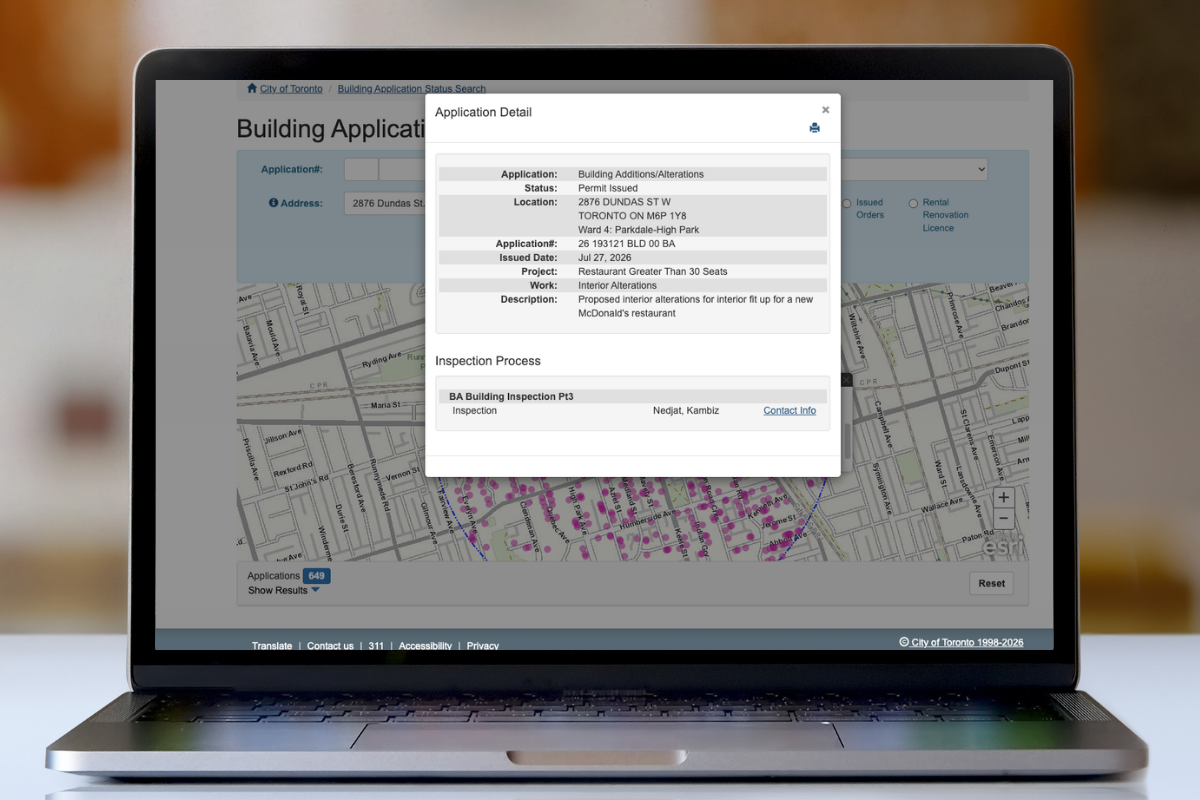
Further west, in the Junction, the pattern swings back toward the Broadview end of the spectrum. The address is 2876 Dundas St. W., the former home of Indie Alehouse, which closed for good last October after 13 years in the space. Word from people in the neighbourhood lines up with what’s on file at the city: a building permit issued in late July, under the same classification as Broadview, “Restaurant Greater Than 30 Seats.” That points to another full-size restaurant rather than a pickup counter, and it puts Broadview and the Junction, the two sites where we have permits on file, on the larger format rather than the smaller one.
For the Junction, this is another case of a long-running hospitality space changing hands into a quick-service chain. It’ll be worth watching how the neighbourhood’s business community responds to a major chain filling that particular storefront.
The most interesting story in this whole roundup might be the one furthest from Toronto. In Niagara Falls, a new McDonald’s opened this summer at the very top of Clifton Hill, not tucked into the middle of the strip. The address is 5759 Victoria Ave., in the former Montana’s Cookhouse space, with a soft launch in mid-July followed by an official grand opening on July 24.
What makes the timing notable is what happened just down the street a few months earlier. The Tim Hortons at 4950 Clifton Hill, one of the busiest in the country and a fixture on that strip for close to 20 years, closed permanently in early January. Niagara Falls’ mayor said at the time that the closure was the operator’s own decision rather than anything tied to the property itself, and that whatever eventually fills that space would relate to tourism in some way.
So rather than adding to an already crowded strip, this McDonald’s opened into a corridor that had just lost one of its busiest quick-service anchors. That’s a different kind of opportunity than what’s happening at Broadview or in the Junction: it’s less about repurposing an existing sit-down restaurant, and more about tourism traffic on Clifton Hill staying strong enough to support a new full-size location even after a major departure.
Back in Toronto, none of these five sites are landing in a vacuum. McDonald’s already has a well-established presence across the city, including inside Union Station’s food court, at CF Toronto Eaton Centre, at Yonge and Elm, at Yonge and Wellesley, and at Queen and Spadina. This wave of openings adds to that existing network rather than building one from scratch.
What’s notable is where McDonald’s has been pulling back at the same time it’s expanding elsewhere. Almost every location that used to operate inside Toronto’s underground PATH network has closed in recent years. The location inside TD Centre has shut down entirely, and so has the one that used to run out of Atrium on Bay. At Brookfield Place, the McDonald’s has been replaced by a Burger King. Simcoe Place’s food court location appears to have gone the same way. At Exchange Tower, the space that used to house a McDonald’s is now home to Michel’s Bakery.
None of that reads like a company retreating from Toronto, not with everything happening at street level and in malls right now. Decisions like these rarely come down to one reason. Lease terms expire, rents get renegotiated, foot traffic patterns shift, and franchisees weigh the cost of a location against what it’s actually bringing in, all before a single storefront changes hands. The PATH closures and the new wave of street-level and mall openings are likely both outcomes of that same ongoing calculation, not a single strategic pivot away from one kind of location toward another.
Zoom out from any single address, though, and none of this activity is unique to one street or to McDonald’s specifically. Downtown Toronto still has pockets that don’t have a nearby McDonald’s, or much in the way of quick-service options at all, and this wave of activity suggests those gaps aren’t likely to stay empty for long. That’s an opening for other quick-service brands too, not just this one, as more chains look at which Toronto neighbourhoods are still underserved.
There’s also a pattern worth naming on its own: at least two of these sites, Broadview and the Junction, were previously large-format, sit-down restaurants that had either closed or been sitting vacant for a while. Big hospitality spaces getting a second life as quick service, rather than another attempt at a full-service concept, is its own small trend inside this bigger one.
The hope from the community, and frankly from us, is that these locations get built with some respect for the neighbourhoods they’re landing in, and that McDonald’s treats each one as specific to its block rather than a copy-paste rollout. We reached out to McDonald’s Canada through media channels for this piece and didn’t hear back, so everything here reflects what’s visibly happening on the ground, not a confirmed company roadmap.
We’ll keep watching as more of these locations take shape.

Dustin Fuhs is the founder and Editor-in-Chief of 6ix Retail, Toronto’s premier source for retail and hospitality industry news. As the former Editor-in-Chief of Retail Insider, Canada’s most-read retail trade publication, Dustin brings over two decades of expertise spanning retail, marketing, entertainment and hospitality sectors. His experience includes roles with industry giants such as The Walt Disney Company, The Hockey Hall of Fame, The Canadian Opera Company, Starbucks Canada and Blockbuster.
Recognized as a RETHINK Retail Top Retail Expert in 2024, 2025 and 2026, Dustin delivers insider perspectives on Toronto’s evolving retail landscape, from emerging brands to established players reshaping the city’s commercial districts.