

There is a question Paola Marques says she keeps coming back to, regardless of the category, the client, or the format: what actually happens when someone walks through the door?
Not what the brand strategy says should happen. Not what the concept deck promised in a boardroom six months before opening. What actually happens when a real customer walks in off the street.

After 30 years designing retail environments across Canada and internationally, Marques has developed a sharp eye for the gap between those two things. And right now, she thinks that gap is widening in ways that most brands are not willing to honestly confront.
“There’s a tendency in this industry to look for a universal answer,” she says. “To benchmark what’s working somewhere else and apply it wholesale. But that’s not strategy. Every brand has a distinct story, a distinct customer, a distinct reason to exist. What works brilliantly for one brand can completely undermine another. The brands that are winning have done the deep work. They’ve interrogated their own identity before they’ve drawn a single line.”
“The magic is in immersing yourself in a brand until you understand it from the inside out,” she says. “It’s an investment, and not everyone is willing to make it. But the difference between a space that resonates and one that simply exists comes down to exactly that.”
“The boring middle has died off,” Marques says. “There’s an interesting split. And what I find is that even in convenience, the bar has risen. It’s no longer enough to be accessible and well-located. The question is whether you’re giving someone a reason to choose you. Can it be fun? Can it surprise? The operators who are asking those questions are the ones doing interesting work.”
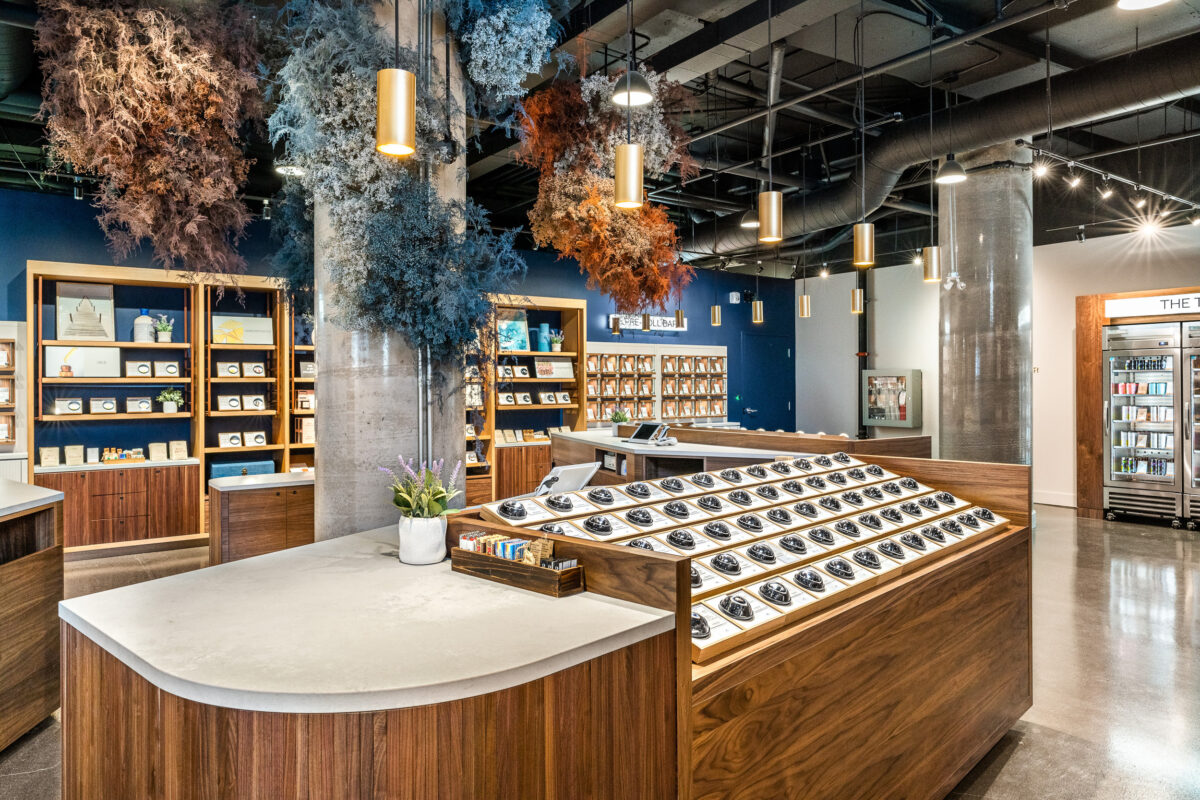
A joint report released by ICSC and McKinsey in April 2026, based on a survey of more than 3,000 consumers, found that shopping trips are becoming more intentional, oriented around either pure convenience or active discovery, and that a clear mission for each physical location is now essential for retailers to stand out.
Marques draws a direct line from this split to the strategic work that most brands are avoiding. A flagship, a mall location, a suburban store, and a neighbourhood shop each have a fundamentally different job to do. “You have to be intentional about each format from the very beginning,” she says. “What is this location asking of the brand? What is the customer coming here for that they cannot get anywhere else? Those are not questions you can answer retroactively once the lease is signed.”
The neighbourhood question is one she is tracking closely. Toronto City Council voted in November 2025 to allow small-scale retail back onto residential streets in select wards for the first time in decades, a policy shift that reflects genuine appetite for walkable, community-integrated commercial life. Brands are opening in communities that would not have made a location shortlist five years ago. Marques welcomes the direction. She is clear-eyed about the execution.
“Moving into a neighbourhood is not the same as belonging to one,” she says. “There’s a real difference between a brand that has thought seriously about how it adapts to the building, the streetscape, the local community, and one that has simply opened a door and placed a chalkboard sign outside. You take a retailer and say, what’s going to draw people to come in? And then you have to be honest about the answer. Adding a café sounds like an answer. But does the café make sense for the brand? Does it serve the customer you’re trying to reach? Does it work operationally? A feature without intention is just noise.”
She sees the same gap between intention and delivery in the next generation of designers she mentors. Marques sits on design juries in Montreal and recently spent time with second-year Interior Design students at CEGEP du Vieux-Montreal. The pattern she notices in student work maps almost exactly onto what she sees in built environments in the field.
“The most common thing I encounter in student critiques is a beautifully articulated concept that never fully arrives in the space,” she says. “The story is compelling at the start, but by the time you reach the floor, it has evaporated. If you’ve promised your customer a certain kind of experience, every design decision has to earn that promise. You have to deliver on the end what you committed to at the beginning.”
“Some people are wonderful at designing because inherently they have that empathy,” she says. “And when you get it right, people feel it. They talk about it. They come back. You track it with data, but you also feel it. That’s one of the things that keeps drawing me to this work. You actually feel it.”
She is equally direct about what design education still underweights. “There’s a level of intricacy that goes into the business behind the business,” she says. “The best designers I’ve worked with over the years understood that a great concept lives or dies on its commercial logic. That balance, between creative vision and genuine business thinking, is the thing I look for and the thing I find hardest to teach.”
On the e-commerce question, Marques declines the premise that online and physical retail are in competition. She shops online. She finds it efficient. Most Canadians do. Statistics Canada put e-commerce at just 6.1 percent of total Canadian retail trade in December 2025. The channel is not winning the war. But that does not mean every physical store is doing what physical retail is uniquely capable of doing.
ICSC’s research into Gen Z shopping behaviour found that 97 percent of respondents shop at brick-and-mortar stores, driven by the ability to get items immediately and to see, touch, and try products before buying. And in its December 2025 Super Saturday survey, ICSC found that Gen Z led all generations in planned shopping centre visits, with 89 percent intending to visit a retail property. These are not reluctant visitors. They are choosing to show up. The question is what happens when they get there.
“Online retail is efficient. I use it, most people do, and that is not going to change,” Marques says. “But efficiency is not what brings someone into a physical store. What brings them in, and what brings them back, is human connection. Staff who genuinely understand the brand, who are enthusiastic about the product, who can read what a customer needs before the customer has articulated it themselves. When you get that right, the store becomes something closer to a neighbourhood institution than a retail format. You keep coming back because you know the people, and they know you.”

On artificial intelligence, she is measured in a way that reflects actual experience rather than performed enthusiasm. She expects AI to absorb time-consuming tasks and reduce human error. That part does not concern her.
“What I am protective of is the thinking that happens before any of that,” she says. “The ‘what if.’ The moment in a room when someone says something that reframes the entire project. The discovery phase, the open-ended exploration before constraints are applied, the intergenerational exchange of ideas before a brief is locked: that is where the real value is created. That is not something any tool replicates. If AI compresses execution time, I read that as more capacity for the part that cannot be automated. The risk is the same one I see with benchmarking: reaching for a solution before you have properly understood the problem.”
“The best operators in convenience are asking genuinely interesting questions about how a format that has always prioritized function can also create delight,” she says. “That balance is harder to achieve than it looks, and the brands getting it right deserve more attention than they receive.”

“Healthcare spaces have traditionally been designed around process, around moving people through efficiently,” she says. “What I find compelling is the opportunity to apply a retail and hospitality sensibility to that environment. How do you make someone feel genuinely cared for the moment they arrive? How do you reduce the anxiety that clinical environments so often create? How do you build the kind of experience that earns trust and loyalty over time? The underlying design questions are exactly the same as in any other sector. The stakes are just considerably higher.”
The global retail clinic market was valued at USD $6.64 billion in 2025 and is projected to reach nearly $20 billion by 2035. The design logic, as Marques frames it, is identical to what she applies everywhere else: understand who you are designing for, build the experience from that understanding outward, and make sure the space delivers on what it promised.
Banking she sees as the most open question of the three. Branches are asking whether they should be community hubs, whether the design vocabulary of retail and hospitality belongs in a financial environment, whether the brief is to be a transaction point or something more meaningful. “Every branch concept you see right now is a different hypothesis about what the format should become,” she says. “I don’t think anyone has landed on the definitive answer yet. But the willingness to ask the question seriously is itself significant. These are sectors where retail thinking can drive real change, and that is exactly the kind of brief that gets me out of bed.”
“The store has to earn the visit,” she says. “That used to be assumed. It isn’t anymore. And the brands that understand that, that are willing to do the real work to understand their customer, their brand, their community, and build something genuinely intentional from that understanding, those are the ones I’m excited about. The rest are going to keep wondering why benchmarking isn’t working.”
Studio Ormonde Marques is based in Montreal and Toronto. Paola Marques serves as President of the Retail Design Institute Canada.

Dustin Fuhs is the founder and Editor-in-Chief of 6ix Retail, Toronto’s premier source for retail and hospitality industry news. As the former Editor-in-Chief of Retail Insider, Canada’s most-read retail trade publication, Dustin brings over two decades of expertise spanning retail, marketing, entertainment and hospitality sectors. His experience includes roles with industry giants such as The Walt Disney Company, The Hockey Hall of Fame, The Canadian Opera Company, Starbucks Canada and Blockbuster.
Recognized as a RETHINK Retail Top Retail Expert in 2024, 2025 and 2026, Dustin delivers insider perspectives on Toronto’s evolving retail landscape, from emerging brands to established players reshaping the city’s commercial districts.