


Most commerce platforms will tell you what AI feature they’re building next. Bhawna Singh, Lightspeed‘s chief technology officer, is just as interested in what her team decided not to build.

Singh describes a simple three-part test she applies to AI investments: Does it save merchants time? Does it reduce their costs? Does it help them grow? Ideas that don’t clear that bar shouldn’t make the roadmap, no matter how easy they are to build.
That filter came up early in a conversation with 6ixRetail, one that started with what Singh thinks most people outside the engineering room don’t appreciate about building AI into a commerce platform in the first place.
“The most important part is usefulness. If we’re building technology just for the sake of building it, we’ve already missed the goal,” she said. “The what and the why has to be for the merchant and for the customer, solving their problem. If we take our eyes off that outcome, we’re just building something to tick an AI checkbox, and the industry already has enough of those.”
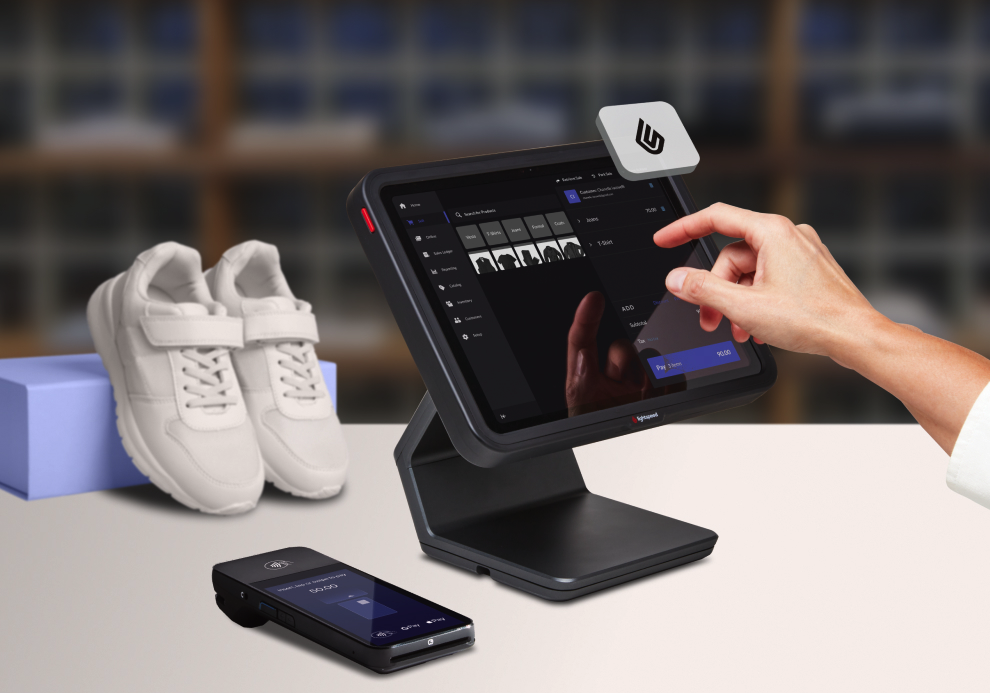
Singh describes the last two years of commerce AI as moving through fairly distinct stages: first a conversational layer that hallucinated often and improved slowly, then a shift toward insight, systems that could read a business’s data and hand back a report or a recommendation. What comes next, in her view, is a stage most platforms haven’t actually reached yet, and one that changes who AI is really working for.
“We’ve talked a lot about conversation and insight, and that’s largely where the industry has stopped,” she said. “Where we want to go next is action: technology that can take a step on a merchant’s behalf to solve a real problem, not just tell them what’s happening. A lot of that is happening internally right now, and you’ll increasingly see it reflected in how we build merchant workflows.”
What survives that transition, in her view, isn’t any single feature but a layer underneath it that has to be built first and rebuilt constantly.
“The question I keep asking is what AI will not wash away, and the answer is context, data, and personalization for that specific merchant,” she continued. “That’s what we understand about a business today, and it has to keep evolving as the business does. When we’re building product, we want the technology itself to learn about the business and improve alongside it, so on day one what a merchant has is a fully onboarded agent, one that already knows their business rather than a blank tool they have to teach from scratch. Then it takes the journey with them from there.”

That evolution looks different depending on who Lightspeed is building for, and Singh is careful to draw a line between the platform’s horizontal reach and where it goes deeper.
“Lightspeed has broad context across commerce, but depth matters,” she said. “A golf operator, a bike retailer and a restaurant may share common commerce needs, but they also have very different workflows. The opportunity is to combine the scale and intelligence of a common platform with the context required to understand those differences.”
The reason that distinction matters, in her view, comes back to how personal running a business is. It’s a line she says she hears constantly secondhand from Lightspeed’s own hospitality merchants.
“If you ask any restaurant owner to describe their restaurant, the first thing they’ll say is, we’re a very unique business,” she added. “That’s the industry we’re working in, and we can’t forget it.”
That instinct, protective of something an owner built themselves, is exactly what Singh says AI has to earn its way past rather than assume. Left unprompted at the end of the conversation, she went further than the usual trust framing, naming the anxiety sitting beneath it on both sides of the counter.
“There are real concerns right now about job loss, people’s sense of their own value, and what AI means for them. On the customer side, there are equally important questions about transparency and trust: is AI taking my data and doing something with it?” she said. “As leaders, and as editors, we need to push people to think about this holistically instead of retreating into that.
She treats the practical side of that trust the same way she’d treat bringing on a new employee.
“You don’t hand a new hire full ownership on day one. You give them smaller tasks, you supervise, and over time you see they can work on their own,” she continued. “Configurability is foundational to how we think about AI rollout. A merchant decides how much they want AI to lead versus how much they want to hold onto themselves, and that decision isn’t fixed. As trust builds, they can hand over more.”
That range matters because Lightspeed’s merchant base doesn’t all start from the same place.
“We have customers who want the AI and want to do their own integration on top of it, and we have customers who don’t even know what an integration is, they’re just trying to run their business,” she added. “We have to show up with enough support to meet both of them.”
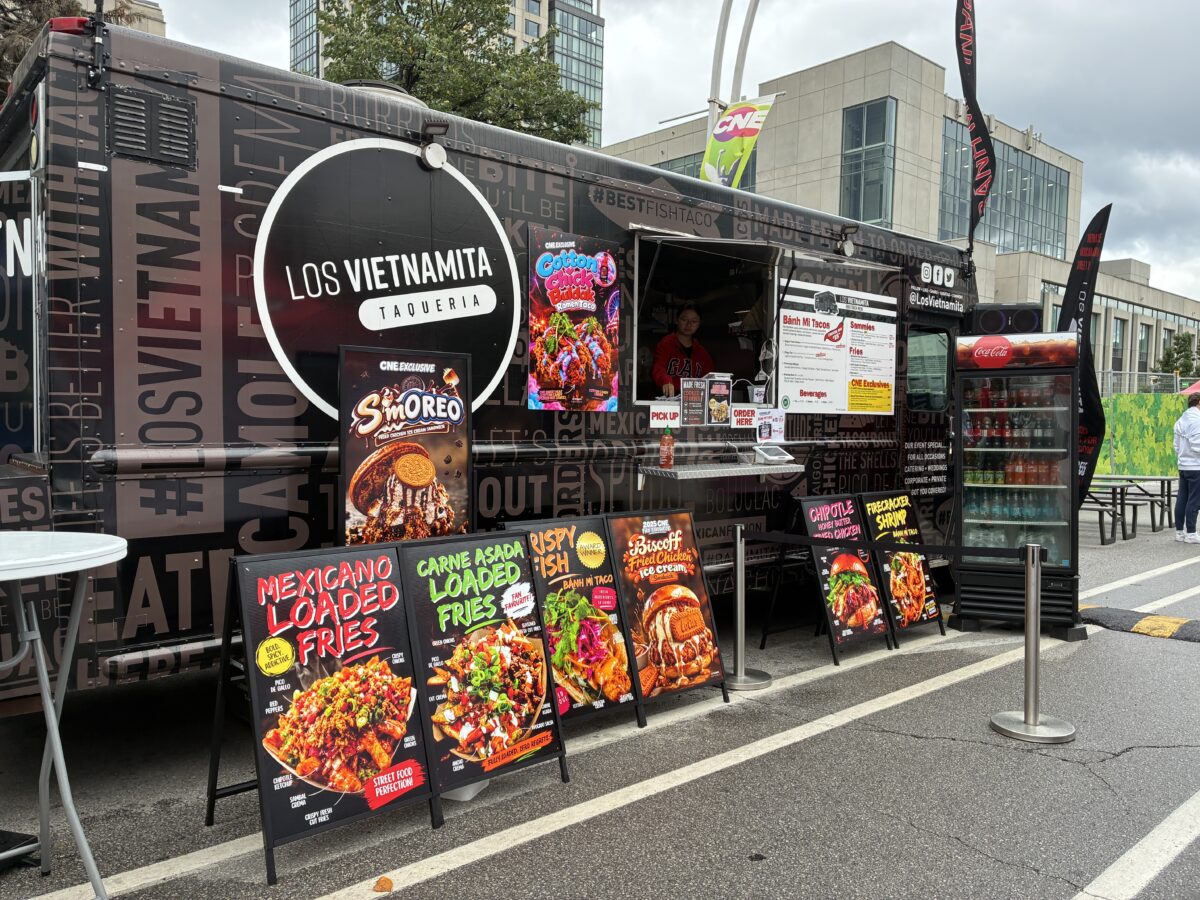
Singh sees the same instinct that drives good AI, building for a real problem instead of a market expectation, showing up as a visible failure everywhere it’s ignored. She points to storefronts and mall signage as the clearest public evidence of AI shipped for the sake of being seen rather than being useful.
“If you pick any technology and set AI aside for a second, there’s a good path to it and a bad path to it, and that comes down to us,” she said. “What this technology has done is bring a lot of non-technologists into the ability to build and create, which is genuinely powerful. But I’d agree that a lot of what’s out there right now feels like the same template rolled across every storefront and salon. That’s step one. I’d expect a better application of it in the next phase, because we as an industry have to evolve alongside how we use this.”
The difference between that first wave and something more useful, as she sees it, comes down to whether the AI is just executing what it’s told or contributing something back.
“We don’t want AI to take the prompt and just do the thing,” she continued. “We want it to take the prompt, do the thing, but also give back information: here’s what’s generic about this, do you want to make it more your own, here’s what others in your industry are doing, here’s what else you could consider. That’s the difference between a horizontal, one-size-fits-all layer and something that actually makes a business more itself.”
Inside Lightspeed’s own product decisions, she says avoiding that flatness is a matter of discipline, not inspiration.
“With technology making it easier for anybody to build, not just engineers, the discipline every company needs is deciding what we will not build,” she explained. “If everything can be built, we have to have that discipline, or we end up building everything just because it can be built, instead of being driven by the problem and the outcome.”
The conversation eventually turned to what she believes will separate the platforms that change how people shop and run their businesses from the ones that just added AI to their pitch deck, and Singh’s answer circled back to the same discipline she’d described throughout the conversation.
“We are not in the race for an AI check box, we are in competition for our merchants and our customers,” she said. “If you look at any successful company, they’ve obsessed over the customer. That’s the obsession we want to bring when we’re working on AI-supported technology. We want to make AI invisible, not the core part of the conversation, so it’s clearing workflows out of a merchant’s way instead of becoming one more thing for them to manage.”
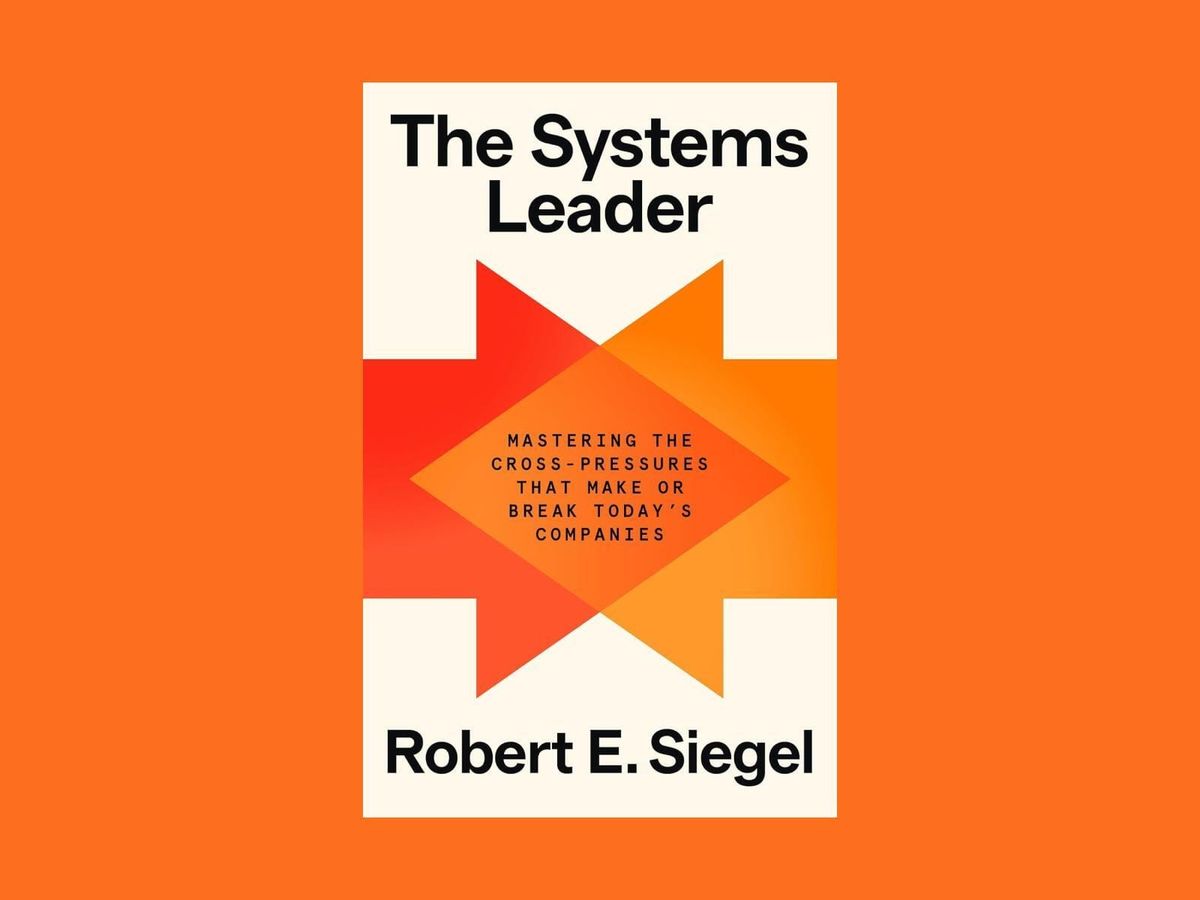
Behind her on screen for the entire interview sat a shelf of books, and Singh made it clear one title in particular wasn’t just backdrop. The Systems Leader, by Stanford lecturer Robert E. Siegel, had become newly relevant to her only the week before the conversation, by her own account, and it was still on her mind as she sat through the interview. Two ideas from the book in particular had stayed with her.
“The first is thinking from the customer’s lens, whose problem are you actually solving, rather than a technology lens or a revenue lens,” she continued. “When you start from the customer, you’re generally solving something real, and the business outcome follows from that. The second is that leaders pass along decisions all the time without passing along the context behind them, which means the next time something varies even slightly, everyone waits to be told what to do. When you share the context along with the decision, people can make good calls even in the room where the leader isn’t present.”
Three months into the role, Singh is already building toward what she describes, not away from a gap she’s trying to close. What she’s clear on, before any of it ships, is exactly what she isn’t willing to build to get there faster. By the end of the conversation, she said as much herself, unprompted: it hadn’t felt like an interview to her. It had felt like a conversation, one she said she genuinely enjoyed because it kept returning to real examples rather than staying in the abstract.


Dustin Fuhs is the founder and Editor-in-Chief of 6ix Retail, Toronto’s premier source for retail and hospitality industry news. As the former Editor-in-Chief of Retail Insider, Canada’s most-read retail trade publication, Dustin brings over two decades of expertise spanning retail, marketing, entertainment and hospitality sectors. His experience includes roles with industry giants such as The Walt Disney Company, The Hockey Hall of Fame, The Canadian Opera Company, Starbucks Canada and Blockbuster.
Recognized as a RETHINK Retail Top Retail Expert in 2024, 2025 and 2026, Dustin delivers insider perspectives on Toronto’s evolving retail landscape, from emerging brands to established players reshaping the city’s commercial districts.