
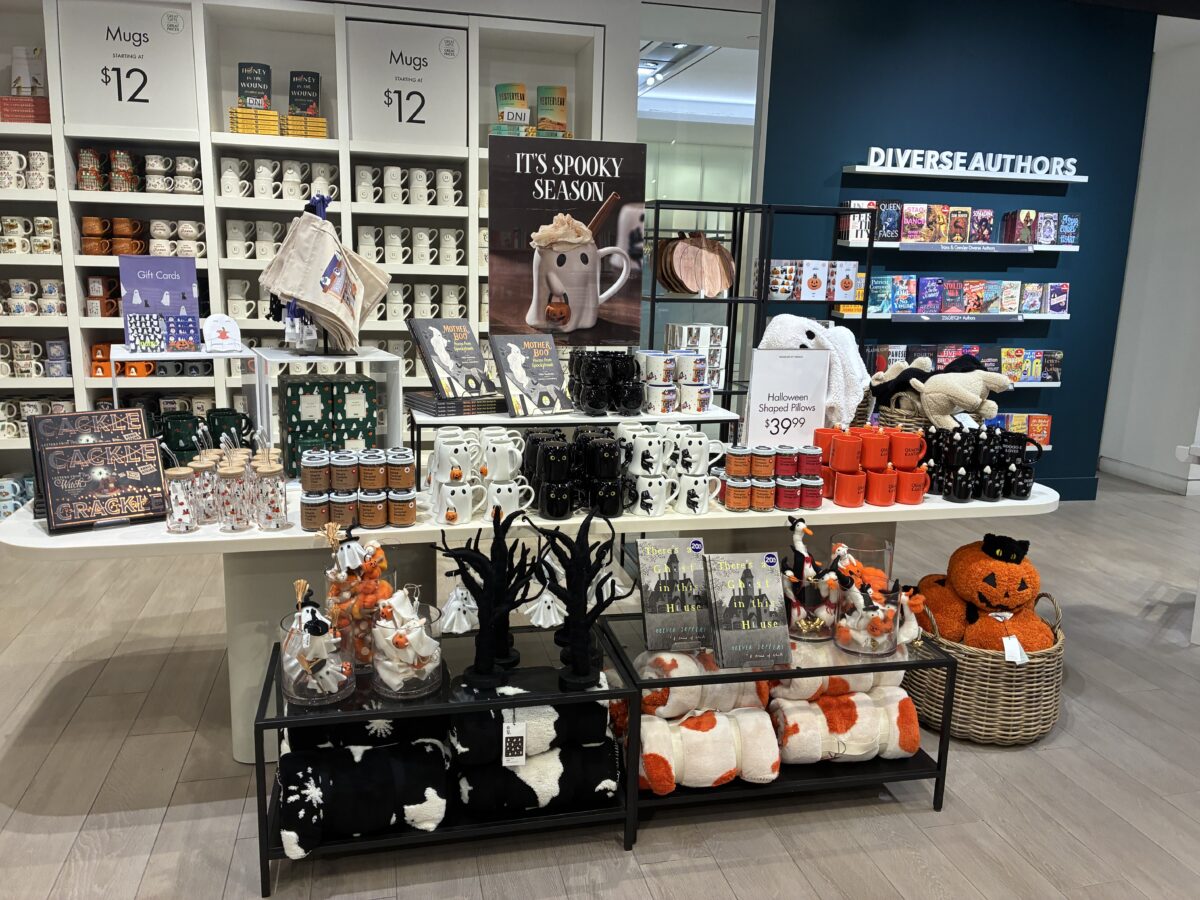

Halloween has a new lead customer, and it isn’t a child carrying a pillowcase. New research from Lightspeed Commerce finds that half of Canadians aged 25 to 34 say the holiday matters more to them than it did three years ago. That’s double the national rate of 24%.
They’re also prepared to spend. Shoppers in that age group are budgeting an average of $135 for Halloween this year, a third more than the $101 expected by the typical Canadian household.

Toronto sits at the front of the shift. More Torontonians plan to decorate, host parties and buy costumes than Canadians anywhere else, and the city’s expected household spend of $118 is the highest of any major market. Meanwhile, on Toronto shop floors, 6ix Retail has watched generic, mass-produced and AI-generated Halloween merchandise linger far longer than seasonal product has in years past.
We spoke with Kate Woelffer, Senior Vice President, North American Retail at Lightspeed Commerce, about who this new Halloween customer is, why Toronto behaves differently, and how local businesses can capture more of the spend before October 31.
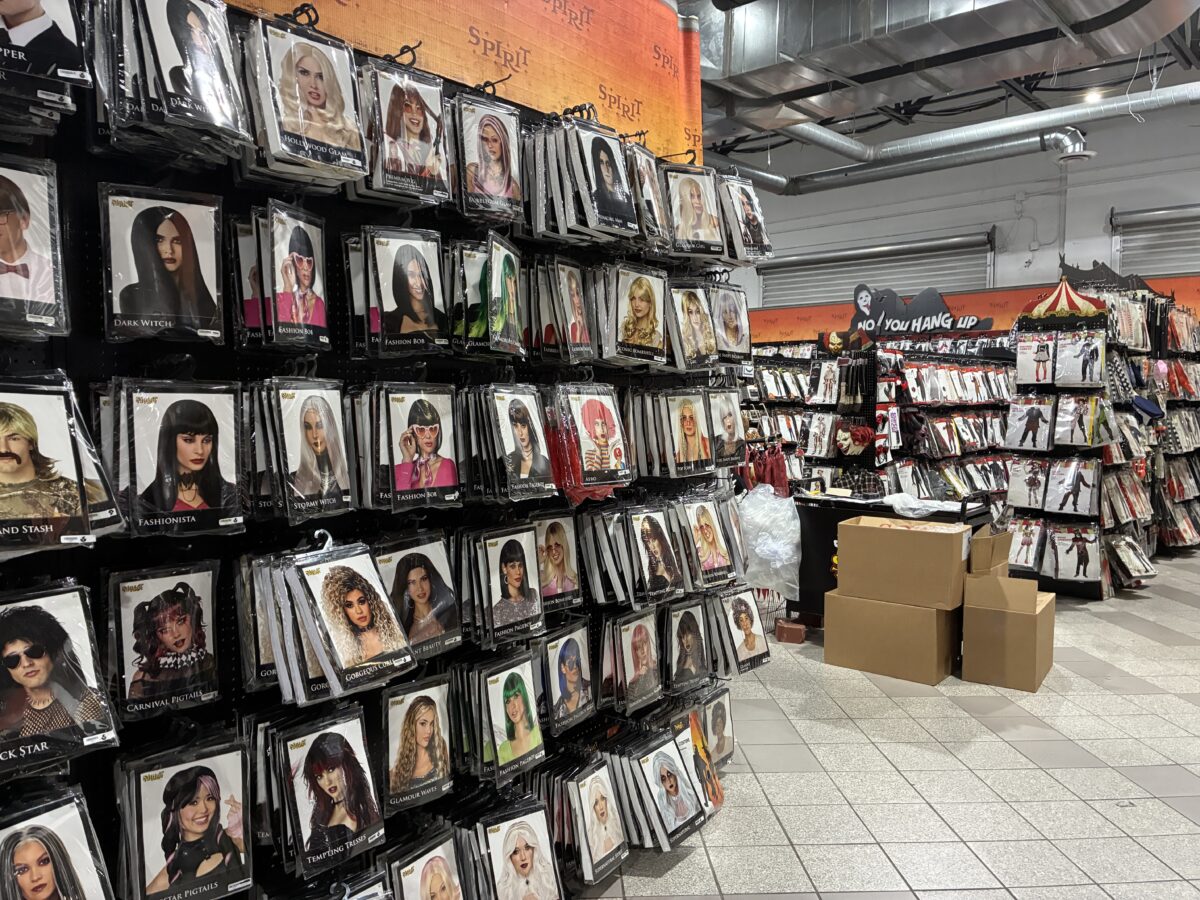
For decades, Halloween retail has followed a family script: candy by the checkout, kids’ costumes in the seasonal aisle and a few pumpkins by the door. Lightspeed’s data suggests that playbook now covers only part of the market.
Among Canadians aged 25 to 34, 44% say Halloween has become more adult-oriented, compared with 26% nationally. Adult parties, nightlife and social media are the biggest reasons cited. This group also shops more widely, with 43% planning to spend on food and drinks, 43% on home décor and 43% on costumes or makeup.
“The biggest shift is understanding that people are shopping for very different Halloween celebrations,” says Woelffer. “Someone hosting a party has a completely different list than someone putting together a costume for a night out, and your assortment has to work for both of them.”
That means rethinking the traditional seasonal display. “Party décor belongs next to entertaining essentials, and costumes, makeup and accessories should be merchandised together,” she explains. “When you make those purchases easy to put together, you capture more of the basket.”
Timing matters just as much. Seventy percent of Canadians who wear costumes decide what they’ll wear within three weeks of Halloween. “Popular sizes and accessories need to be on the floor when people are making up their minds,” Woelffer notes. “Be ready to reorder strong sellers or move stock between locations before the season ends. Buy around how people are actually celebrating, and leave yourself room to react.”
Toronto’s enthusiasm shows up in nearly every category Lightspeed measured. Thirty-seven percent of Torontonians say Halloween matters more to them than it did three years ago. Sixty percent plan to decorate and 35% plan to attend parties, against national rates of 40% and 18%.
Costumes are where the city stands apart most. Nearly half of Torontonians expect to spend on costumes or makeup, compared with 28% of Canadians overall.
According to Woelffer, that gap should shape how local retailers stock the coming weeks, right down to the individual store. “Toronto retailers have a real opportunity to be more deliberate about costumes, makeup and entertaining,” she says. “A store near a busy entertainment district will likely see more demand for last-minute accessories and makeup, while a residential location may need more décor and party supplies.”
The same thinking applies from one city to the next. “Montreal shoppers are less interested in spending on costumes and makeup, and planned party spending is lower in Calgary,” Woelffer points out. “Those differences should inform your opening assortment, and then real store sales should guide inventory as Halloween gets closer.”
She cites Canadian retailer Forward Furniture, which uses inventory visibility to coordinate stock transfers across its locations. “That discipline is especially valuable at Halloween,” she adds. “You only have a few weeks to get popular merchandise into the stores where customers want it.”
This year, Halloween lands on a Saturday, giving Toronto a full night of foot traffic without a workday to follow. Lightspeed found that 60% of Torontonians are likely to spend at nearby restaurants, bars, shops or hotels when they attend a Halloween event, compared with 44% nationally.
The city’s events calendar gives that number plenty to work with. The largest is Halloween on Church, which the Church-Wellesley Village BIA has expanded to two nights in 2026, with the Saturday street party closing six blocks of Church Street. Last year, tens of thousands packed the Village, and many of its bars and restaurants decorated, waived cover charges and hosted events of their own.
Ghost tours have grown well beyond a walk around the block. The Haunted Walk of Toronto, known for its Original tour and Spirits of the Distillery, now partners with heritage sites and attractions across the city. Its lineup includes Ghosts of the Don Valley at Evergreen Brick Works, Ghosts of the Village at Black Creek, and Toronto’s Haunted Harbour, a boat cruise with Pirate Life.
Its Alone in the Dark series goes further, offering small-group, after-hours paranormal investigations at the Village at Black Creek, the Elgin and Winter Garden Theatres and Stanley Barracks at Exhibition Place, where all eight nights sold out. This year, the Toronto Railway Museum opened its doors to paranormal investigations for the first time, and those dates sold out too. The Stanley Barracks edition is presented with Hotel X Toronto, pairing a night out with a hotel a short walk away.
The newest addition lands on Halloween weekend itself. Beneath the CN Tower, presented with the CN Tower on October 31 and November 1 only, takes groups of 16 through the landmark’s working spaces and into caverns two floors below ground, with admission to the observation levels included.
Each of these experiences sends a crowd into a specific neighbourhood at a predictable time, but the evening crowd is a different customer from the daytime one.
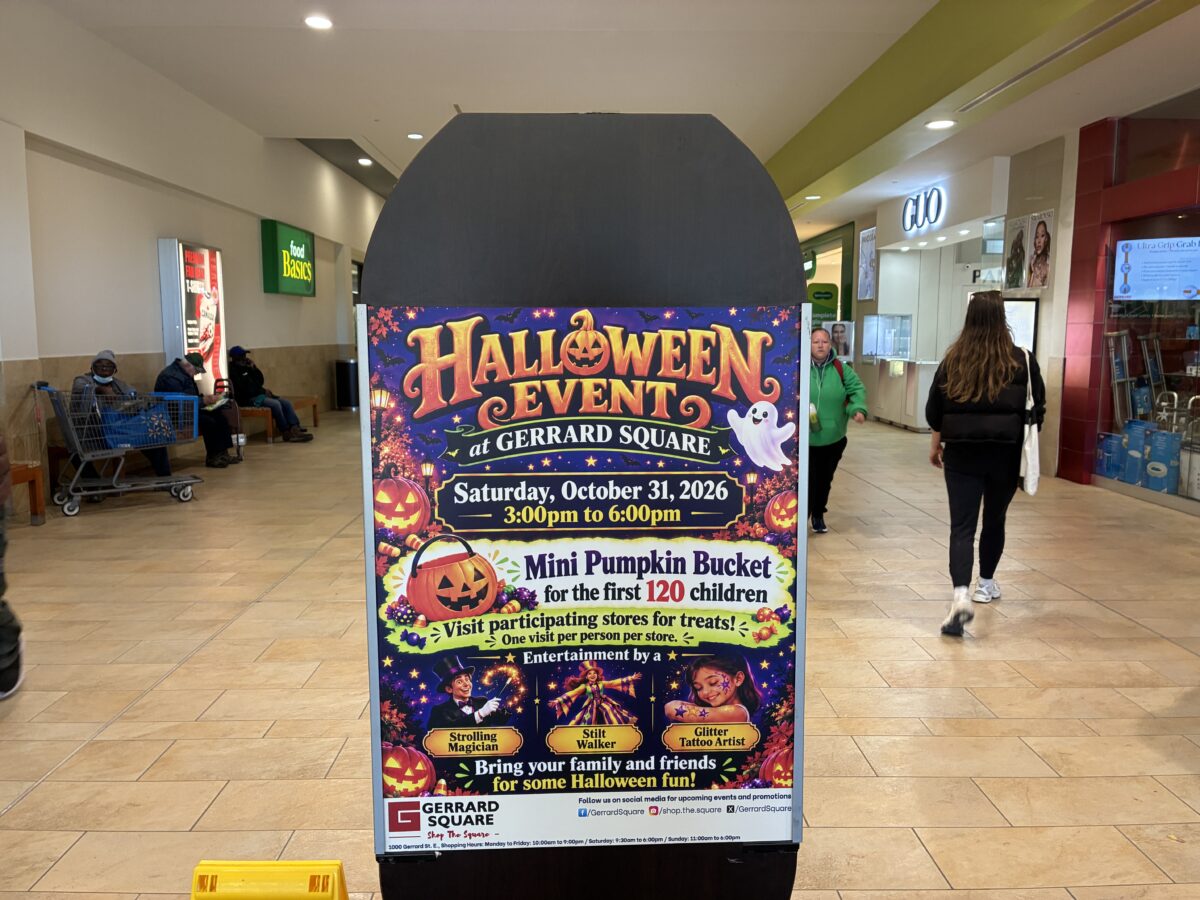
Gerrard Square’s Halloween event wraps up at 6 p.m. and is built around children, with treat stops and pumpkin buckets for the first 120 kids. The Haunted Walk’s Alone in the Dark investigations start after dark and are open only to guests 16 and older, drawing an adult crowd with very different spending in mind.
Knowing who is out, and what they’re looking for, shapes everything from the menu to the staffing schedule. Annual traditions like Halloween on Church bring people back year after year, but ticketed events add another kind of customer: locals who plan their night in advance rather than stumbling onto it the way a tourist might. For nearby restaurants and bars, that planning window is a chance to become part of the evening before it starts.
“For retailers, the window is often before the event, when people realize they need a last-minute accessory or makeup,” Woelffer says. “Restaurants and bars get their turn afterward, when people want something to eat or a place to keep the night going. The event schedule should be shaping your staffing, your hours and even what you have available.”
Her advice to operators is practical. “If hundreds of people are walking out of an attraction at 10 p.m. and you closed an hour earlier, you’ve potentially missed a valuable selling window,” she cautions. “The businesses that plan around those moments are the ones that benefit from customers who are already coming into the neighbourhood.”
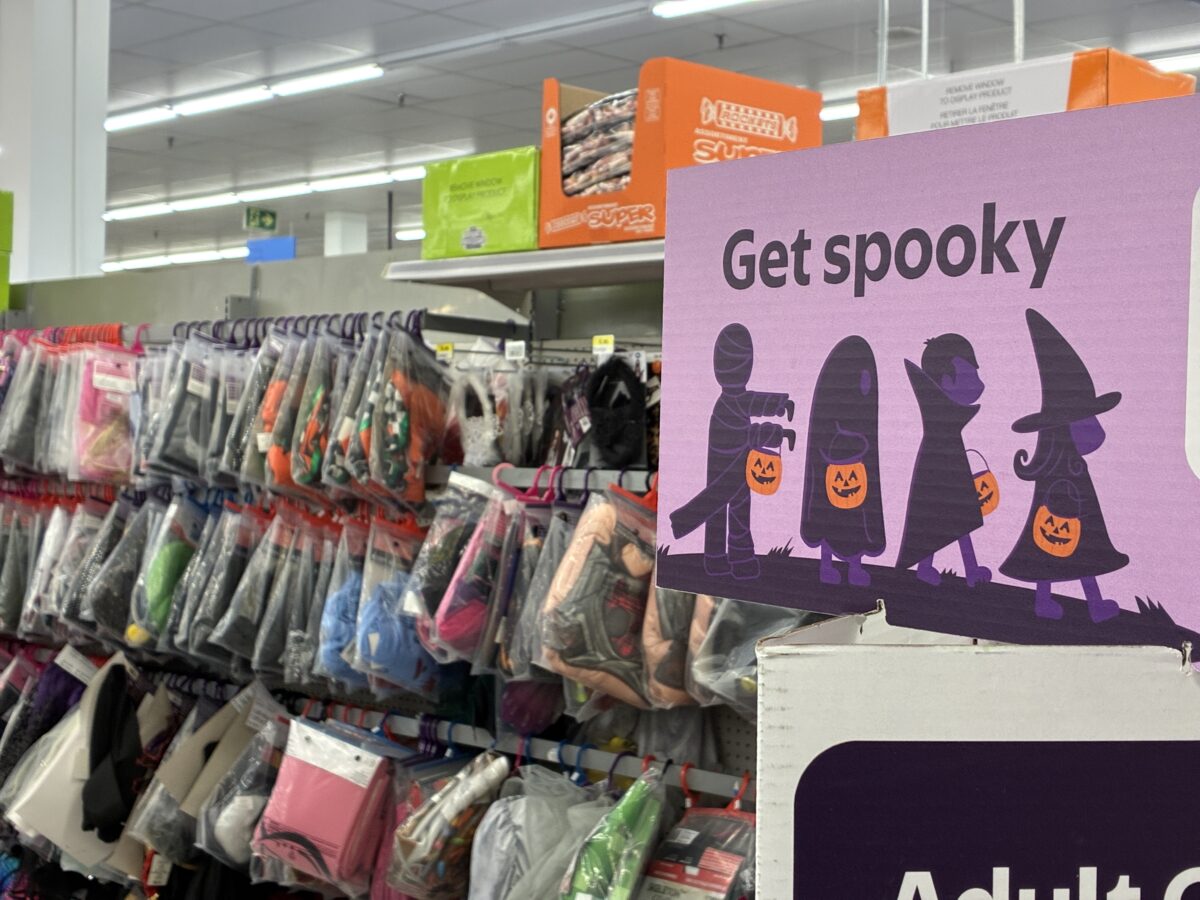
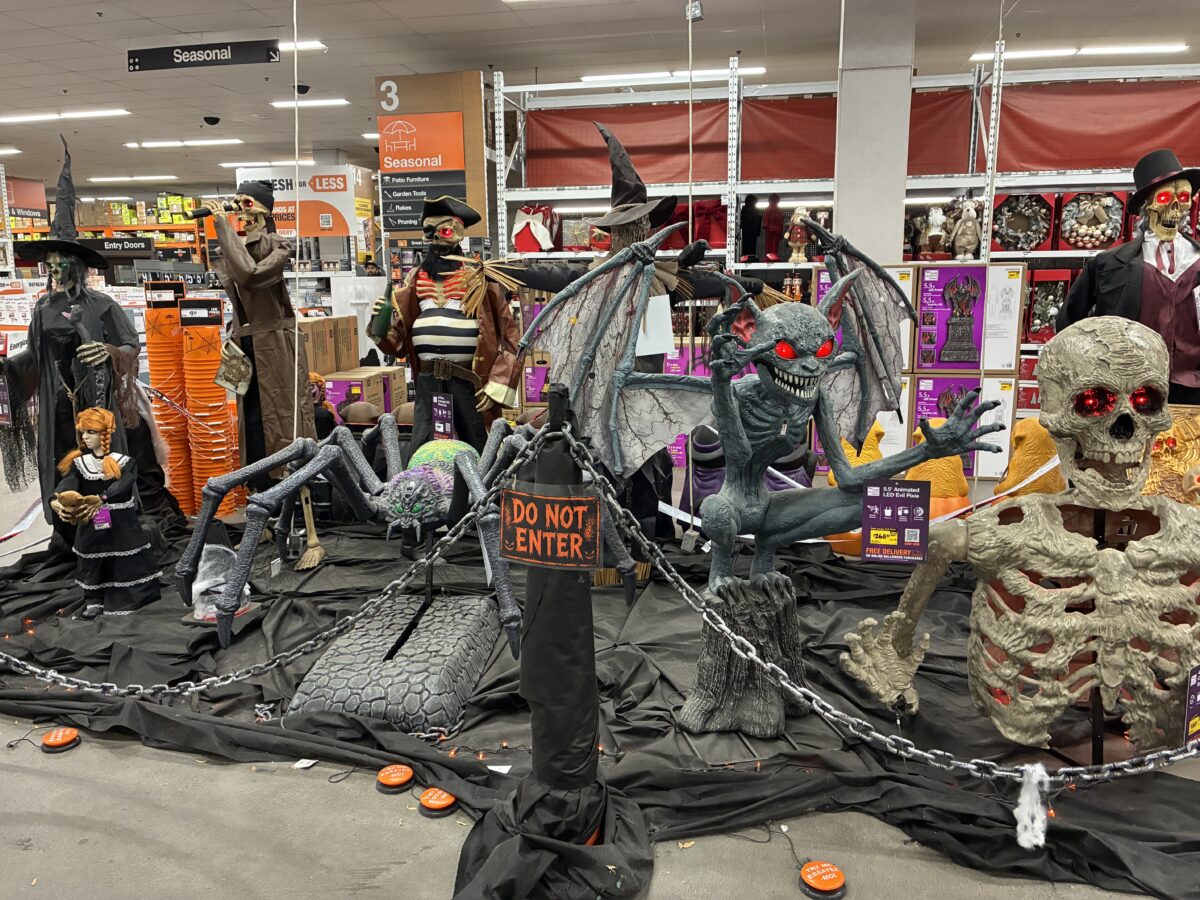
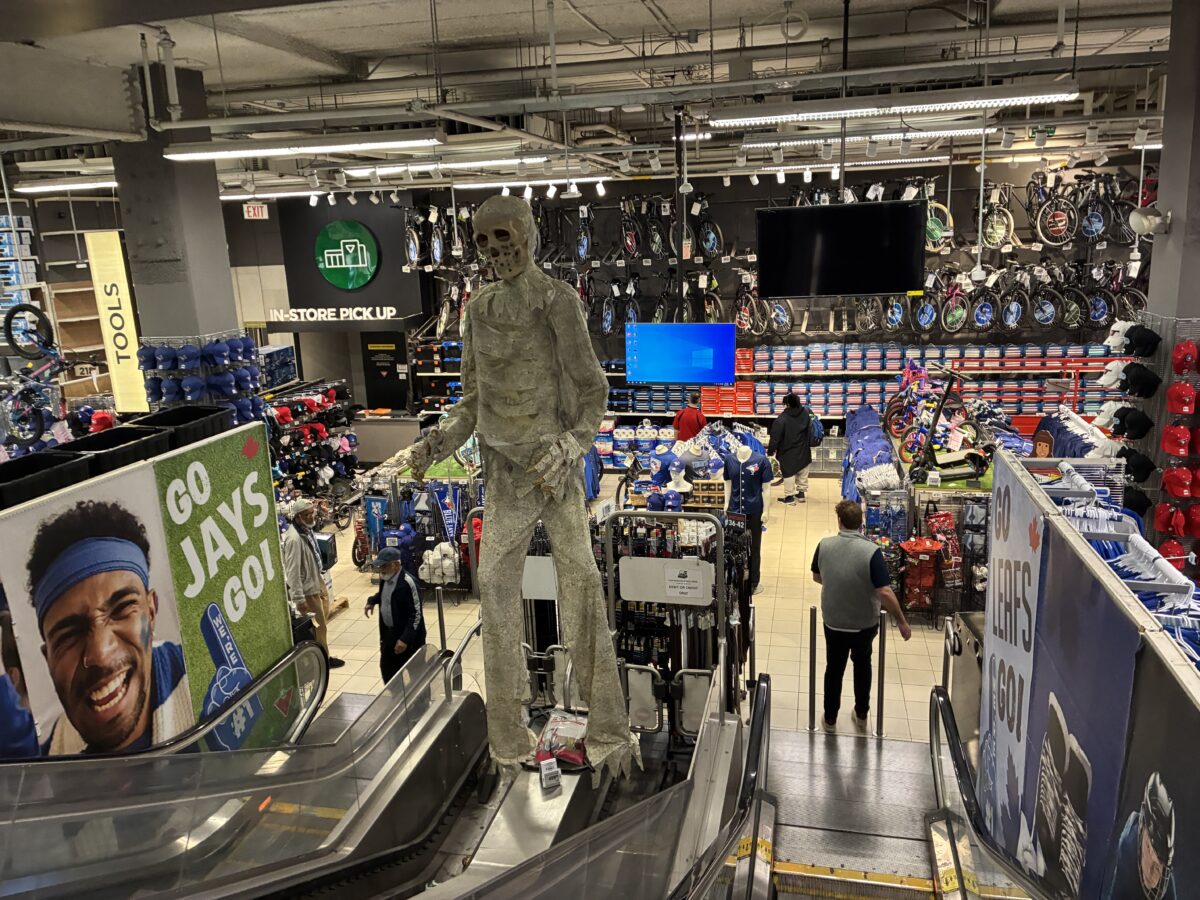
The merchandise itself is telling a story this season. Several large chains were early adopters of generic, AI-generated and lower-quality Halloween product, moving away from the distinctive finds of earlier years. Across Toronto, much of it is still on the shelves deep into October.
Shoppers have good reason to be selective. More than half of Canadians have re-worn a past costume, and originality ranks as the top influence on costume choice, just ahead of price.
“Retailers have to give shoppers a compelling reason to buy something new, especially when there’s already a costume sitting at home,” says Woelffer. “If the merchandise looks too much like what people already own, it’s going to be much harder to convince them to spend.”
She sees slow-moving product as useful information. “A collection sitting on the shelf is a signal to revisit the assortment,” Woelffer explains. “That might mean cutting back on similar styles, rethinking price or giving your stronger products better placement while there’s still time to sell them.”
On AI, she draws a clear line between speed and judgment. “AI can help teams explore ideas and develop product faster, but it doesn’t replace the judgment it takes to decide what belongs on the shelf,” she says. “More options don’t help if none of them gives the customer a reason to buy. Halloween merchandise needs personality, quality and a price that makes sense.”
Last October, Former Lightspeed Chief Product & Technology Officer John Shapiro told 6ix Retail that retailers rushing to Christmas displays risked cannibalizing their own Halloween sales. A year later, the company’s view hasn’t changed.
“Clearing a Halloween display that’s still selling, just because the holidays are coming, doesn’t make commercial sense,” Woelffer says.
Lightspeed’s 2025 research found that 53% of Canadians had bought an everyday product simply because of its Halloween packaging. Combined with this year’s finding on late costume decisions, the data points to demand that keeps building as October goes on.
“The holiday season is an important selling period, and preparing early makes sense,” Woelffer acknowledges. “But look at how each category is performing before you replace it. If costumes are moving but a particular décor collection has slowed, that’s where the transition can start. Both seasons can share the floor.”
Whether retailers who held on longer came out ahead this year is still an open question. With Halloween underway, Woelffer says that answer will depend on completed merchant sales and inventory results.
For now, the takeaway for Toronto’s shops and restaurants is clear. This year’s Halloween shopper is older, more social and more discerning than the one the season was built around, and the businesses that follow what’s actually selling over the next two weeks are best placed to benefit.

Dustin Fuhs is the founder and Editor-in-Chief of 6ix Retail, Toronto’s premier source for retail and hospitality industry news. As the former Editor-in-Chief of Retail Insider, Canada’s most-read retail trade publication, Dustin brings over two decades of expertise spanning retail, marketing, entertainment and hospitality sectors. His experience includes roles with industry giants such as The Walt Disney Company, The Hockey Hall of Fame, The Canadian Opera Company, Starbucks Canada and Blockbuster.
Recognized as a RETHINK Retail Top Retail Expert in 2024, 2025 and 2026, Dustin delivers insider perspectives on Toronto’s evolving retail landscape, from emerging brands to established players reshaping the city’s commercial districts.