

JLL Canada released its 2026 Commercial Real Estate Outlook last week, and the headline numbers on the retail side are stronger than most people expected.
National retail investment volumes reached $6.6 billion in 2025, up 10% over 2024 and 14% above the five-year annual average. In Toronto specifically, GTA retail investment sales climbed 46% to $1.6 billion, with major transactions including La Caisse selling Oshawa Centre to Primaris REIT for $375 million and Brad-Jay Investments selling Jane Finch Mall to Hullmark for $200 million — the latter widely expected to be repositioned for residential redevelopment.

Scott Figler, JLL Canada’s Senior Director of Research and one of the report’s authors, sat down with 6ixRetail.com to provide exclusive commentary on the findings. His read: the market is more resilient than the headlines suggest, but also more complex than the top-line numbers let on.
“The economy performed much better than most of us anticipated a year ago,” he says. “And a significant part of that was driven by consumer spending shifting toward local producers.”

That spending shift comes with an important caveat. While overall retail spending was up, the report notes it was increasingly concentrated in discount goods, with dollar store and thrift store openings surging across Canada in 2025 — a pattern tied directly to food inflation running at 7.3% against an overall CPI of just 2.3%. Consumers are spending, but watching every dollar while doing it.
That dynamic sits at the heart of the Buy Canadian conversation the industry has been tracking since U.S. trade tensions started dominating the news cycle. The report flags the imminent renegotiation of CUSMA — the Canada-United States-Mexico Agreement that governs trade between the three countries — as likely to reignite Buy Canadian sentiment after a recent softening.
“As those negotiations heat up this spring, I expect we’ll see a renewed Buy Canadian movement. It’s going to get contentious — I think we all understand that — but ultimately, consumers in an inflationary environment are going to be driven by price. That’s the tension,” Figler says.
Early signals exist. Domestic travel destinations like Niagara saw measurable bumps in 2025 as Canadians stayed on this side of the border. Whether that same energy holds at the retail level once negotiations find resolution is the open question — and one the industry won’t be able to answer until it plays out in real time through the spring and summer.
The most immediate structural story in the report is Hudson’s Bay.
The nationwide HBC closures drove Canada’s first negative net retail absorption in over a decade, pushing overall retail vacancy up 80 basis points to 2.5% and sending enclosed mall vacancy surging from 3% to 7.5% in a single year. Limited new completions and declining construction starts are expected to keep overall vacancy contained within the 2-3% range going forward, but the short-term disruption — particularly in communities where an HBC location served as a true anchor — is real.

In Toronto, the boxes at CF Toronto Eaton Centre and the former Hudson’s Bay Centre at Yonge & Bloor have been sitting dark long enough that the conversation has shifted from shock to strategy. Retail cap rates have bifurcated significantly, with essential retail cap rates compressing while enclosed mall cap rates continue to trend upward — a signal that investors see opportunity in the right assets at the right price.
“The rents HBC was paying were indexed back a long time ago,” Figler says. “For landlords, there’s a real medium-term opportunity to reset those rents to current market rates.”
Redevelopment, once the default answer for big-box vacancies, is a harder sell right now. The report projects GTA housing deliveries falling from a peak of approximately 35,000 units in 2025 to fewer than 5,000 units by 2029 as the condo market effectively seizes up. With condos representing roughly 70% of new GTA housing construction over the past decade, the pro forma for residential redevelopment of retail sites simply doesn’t pencil the way it did two years ago. That reality is pushing landlords toward creative demising and new retail configurations instead.

The condo market story deserves its own conversation, because its implications for retail extend well beyond the vacancy question.
The report is direct about what’s coming. Condo investors can no longer recoup their carrying costs given where sale prices and market rents currently sit, and new condo development has effectively stalled. The downstream impact on neighbourhood retail demand across the GTA will be felt through the back half of the decade — a slower-moving story than a mall closure, but ultimately a more significant structural shift.
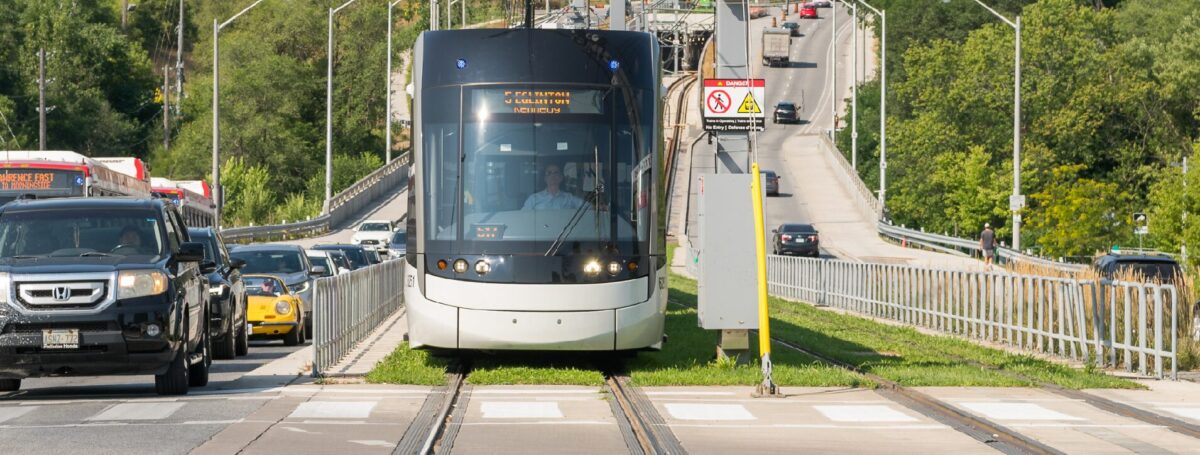
In the short term, the picture is actually positive. Units currently under construction are coming online, bringing new residents and new retail spending into developing corridors across the city. The Eglinton Crosstown’s long-awaited opening is already accelerating momentum in key nodes. But the pipeline behind those deliveries is thinning fast, and the industry needs to be planning for that now rather than when it arrives.
What’s also changing in those corridors is the type of development coming online. The report notes that 2025 was the first year where more purpose-built rental units were under construction nationally than condos or single-family homes — a historic shift driven by public sector financing programs and tax incentives. For retail landlords and developers, that distinction matters more than it might appear.
“It’s a different type of consumer that you’re targeting,” Figler says. “The profile of a purpose-built rental resident and what they want from the retail around them is night and day from a condo building. Those are very different conversations when you’re thinking about tenant mix.”
The report specifically identifies the Eglinton Crosstown’s opening as a significant mobility enhancement for Toronto, flagging Mount Dennis, Yonge & Eglinton, Don Mills, and Scarborough’s Golden Mile as nodes that stand to benefit most.
“Mount Dennis is genuinely underrated,” Figler says. “You have a GO Train and UP Express station now connecting to the Crosstown — I think you’ll see significant activity there over the next few years.” He also points to the Golden Mile between Kennedy and Victoria Park, where major landholders like SmartCentres are positioned to move once the residential development market becomes more viable, and Gerrard Square, sitting directly in the path of the Ontario Line. Yonge and Eglinton, he notes, is already largely priced in — years of anticipation did their work before the Crosstown ever opened.
On the experiential side, service-producing industries — restaurants, fitness, entertainment — have been a key driver of economic growth nationally, with goods-producing industries essentially flat for two years. The report points to this as one of the defining economic trends of the current cycle, and Figler connects it directly to how Canadians are living.
“Canadian cities are becoming more vertical. The average dwelling size is shrinking,” he says. “When you’re living in 600 square feet, you adjust your spending — you’re not buying more stuff to fill a room you don’t have. What you’re buying is experiences.”
The broader point about Canadian cities is one Figler returns to throughout the conversation — and it’s a meaningful reframe for anyone tempted to read the current challenges as something more dire than they are.
“You go to a mid-sized American city and the downtown is dead,” he says. “That’s not what you see here. Even in a Barrie or a Kitchener, there are still people on the street, there’s still activity. Canadian retail has a very high floor. The positive attitudes around density really help — in big cities, in medium cities, and in smaller towns too.”
That density advantage is also what makes the international brand story so straightforward, according to the report. Canada’s diverse, foreign-born population base is a compelling case for international retailers looking at growth markets — and the numbers bear it out.
“Toronto and Vancouver don’t have to make a hard sell to international brands — they’re two of the most diverse cities in the world, and that speaks for itself,” Figler says. “When an Asian retailer like Uniqlo looks at growth markets globally, the case for Canadian cities is obvious. You have large foreign-born populations, people who speak the language and identify with the culture. That’s an incredibly compelling retail market.”
The more nuanced emerging story is how Canadian consumers respond to American brands coming north in the current trade climate. Figler draws a distinction the industry would do well to pay attention to — between brands that come into the Canadian market and genuinely integrate versus those that arrive assuming the playbook that worked south of the border will translate directly.
“There’s a real difference between a brand that comes in and creates jobs, builds supply chain relationships, and earns its place in the community, versus one that assumes it already knows how this market runs,” he says. “Those are very different stories, and Canadian consumers are going to tell them apart.”
The contradictions in the market are real. But so is the floor underneath it.
JLL Canada’s 2026 Commercial Real Estate Outlook is available at jll.ca.

Dustin Fuhs is the founder and Editor-in-Chief of 6ix Retail, Toronto’s premier source for retail and hospitality industry news. As the former Editor-in-Chief of Retail Insider, Canada’s most-read retail trade publication, Dustin brings over two decades of expertise spanning retail, marketing, entertainment and hospitality sectors. His experience includes roles with industry giants such as The Walt Disney Company, The Hockey Hall of Fame, The Canadian Opera Company, Starbucks Canada and Blockbuster.
Recognized as a RETHINK Retail Top Retail Expert in 2024, 2025 and 2026, Dustin delivers insider perspectives on Toronto’s evolving retail landscape, from emerging brands to established players reshaping the city’s commercial districts.