

For years, the downtown PATH was a corridor for coffee and dry cleaning. Marco Capizzano saw something else — 200,000 office workers a day moving through the world’s largest underground shopping network with nowhere to decompress, recover, or reset. He decided to build that place himself.
The result is b-Stretched, a stretch therapy and wellness brand that has quietly grown to six locations across Toronto since Capizzano opened the first clinic in 2017. Two weeks ago, the brand opened at Scotia Plaza, 40 King Street West — its second location inside the PATH and the clearest signal yet of where Capizzano is taking the business. Within 48 hours of the announcement, his inbox was full of realtor pitches for the next one.
The Idea

Capizzano is a Doctor of Chiropractic with nearly 20 years of clinical practice in Toronto. The concept for b-Stretched came directly from his treatment room. He had a habit of sending patients home with stretching routines. They rarely followed through.
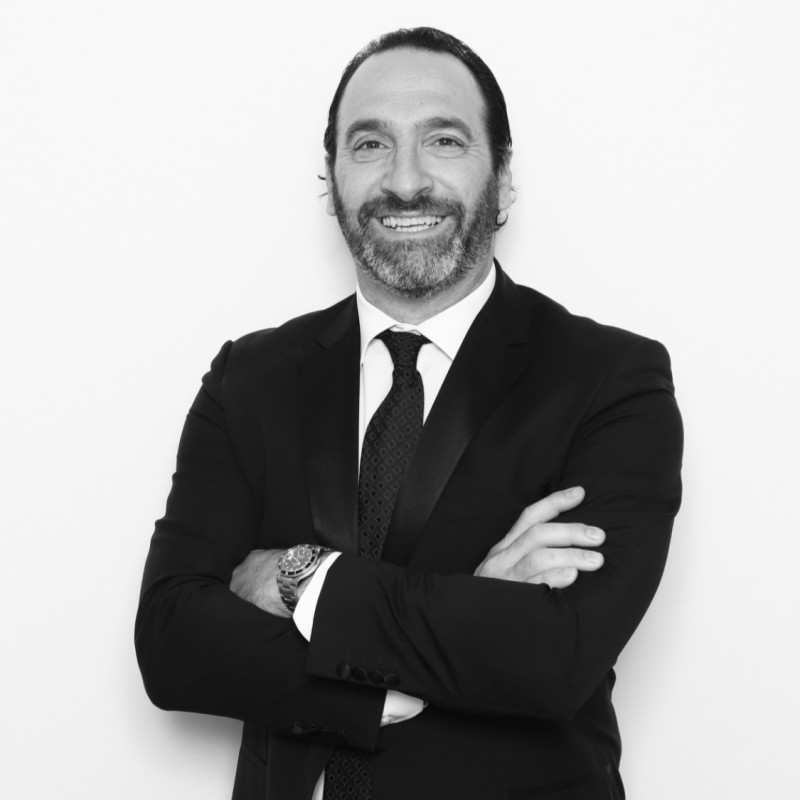
“I would give patients eight stretches to do at home. They wouldn’t do them,” he says. “I’d cut it to five, then three. They still wouldn’t do them. So I said — I’m just going to stretch them myself.”
The response was immediate. Patients started asking specifically for stretch sessions. Capizzano drew a parallel that stuck. Nail salons exist because people could do their nails at home but choose not to. Blow-dry bars for the same reason. It was a service. And people embraced it.
“The idea was to create a space where stretching was treated with the same importance as training,” he says. What began as a niche concept quickly resonated well beyond the fitness community — athletes and fitness enthusiasts first, then office workers, then virtually everyone dealing with the physical cost of modern life.
The Growth
There was no master plan for six locations. The brand grew because clients told it to.
“When we opened the first location, the focus was simply on building awareness around stretching and proving that there was real demand for the service,” Capizzano says. “Once people experienced the benefits firsthand, the word of mouth was strong. Clients started asking for more convenient locations across the city.”
Then COVID arrived. Where most wellness operators retrenched, Capizzano accelerated. With one location to his name when the pandemic hit, he made a deliberate decision to expand hard into neighbourhoods while foot traffic had dried up and lease terms were more favourable. He read the moment clearly — people weren’t going back to offices anytime soon, and the neighbourhoods surrounding those empty towers still needed wellness infrastructure. The street-front clinics at Queen West, Bloor Street West, St. Clair West, and Charles Street East were the direct result of that counter-cyclical bet.
Toronto, he notes, is a city that rewards that kind of conviction. Health, performance, and wellness are embedded in how the city thinks about itself. “Opening six locations wasn’t the original plan,” he says. “But people quickly embraced b-Stretched as part of their wellness team.”
The Space That Took a Year

Long before the PATH locations existed, Capizzano was already going to where the office workers were. b-Stretched ran corporate on-site programmes — sending practitioners directly into companies to deliver stretch sessions in the workplace. The demand was real, the results were visible, but the model had a ceiling. Pulling staff away from clinics to run corporate events was a constant tension.
“I said — we need a location downtown,” he recalls. “I felt that with downtown, it’s really your flagship.”
The PATH was the answer. His first underground location at Bay Adelaide opened while office towers were still running well below pandemic-era capacity. Traffic was thin. He waited it out.
“I knew the traffic was still mild because people were still not going to work as often,” he says. “So it just took time. But the flow of traffic has picked up and they love the service.”
The Scotia Plaza location took even longer to materialise. Capizzano first walked past the space a year ago, stopped, and knew immediately.
“I only had to pass by it one time,” he says. “I had a flow of traffic going left and I was missing the flow going right. That’s not 100 people. You’ve seen the traffic there. That’s thousands.”
What followed was a year of patience. A cosmetic tenant occupied the space while Capizzano maintained contact with the leasing team and waited. He had already mentally named what the corridor could become. “I needed this to be the wellness tunnel,” he says. When the space finally came available, he moved.
The deeper logic behind both PATH locations has always been about removing friction rather than adding to it. A lunch-hour stretch session underground solved the problem without asking anyone to sacrifice their evening.
“You have 30 minutes on a break — shoot downstairs, get your stretch, go back upstairs,” he says. “Not interfering with when they have to go home, whether it’s to their kids or their other responsibilities. It’s a convenience and a service, but it’s also just needed.”
Two Cities, Underground and Above
Running locations both inside the PATH and on the street has given Capizzano a precise understanding of how differently those two environments function — and how different the clients are who walk through each door.
The street-front clinics draw neighbourhood clientele and skew decidedly family-oriented. Parents are increasingly bringing their children in, a trend Capizzano has watched accelerate as kids log more hours in front of screens and begin showing the same postural complaints as adults.
“They’re breaking down at a record pace,” he says. “Back pain, head leaning forward. It’s something I haven’t really seen before at this scale.”
The PATH locations serve an entirely different rhythm. The client is a professional on a clock, moving through a system that sees more than 200,000 people on a typical business day. The breadth of who walks through either door reflects how far the brand has come from its early days.
“Today we see a much wider range of clients — busy professionals, elderly, young kids that spend hours on their computers, runners, people simply looking to improve how they feel and move day to day,” Capizzano says. “Many clients come in for specific issues and stay because they realise how much better their overall mobility and energy feels when stretching becomes part of their routine.”
The two models are not competing. They are complementary expressions of the same underlying idea — that stretching and mobility work belong everywhere people are, not only in dedicated wellness districts.
The Brand, Not the Clinic
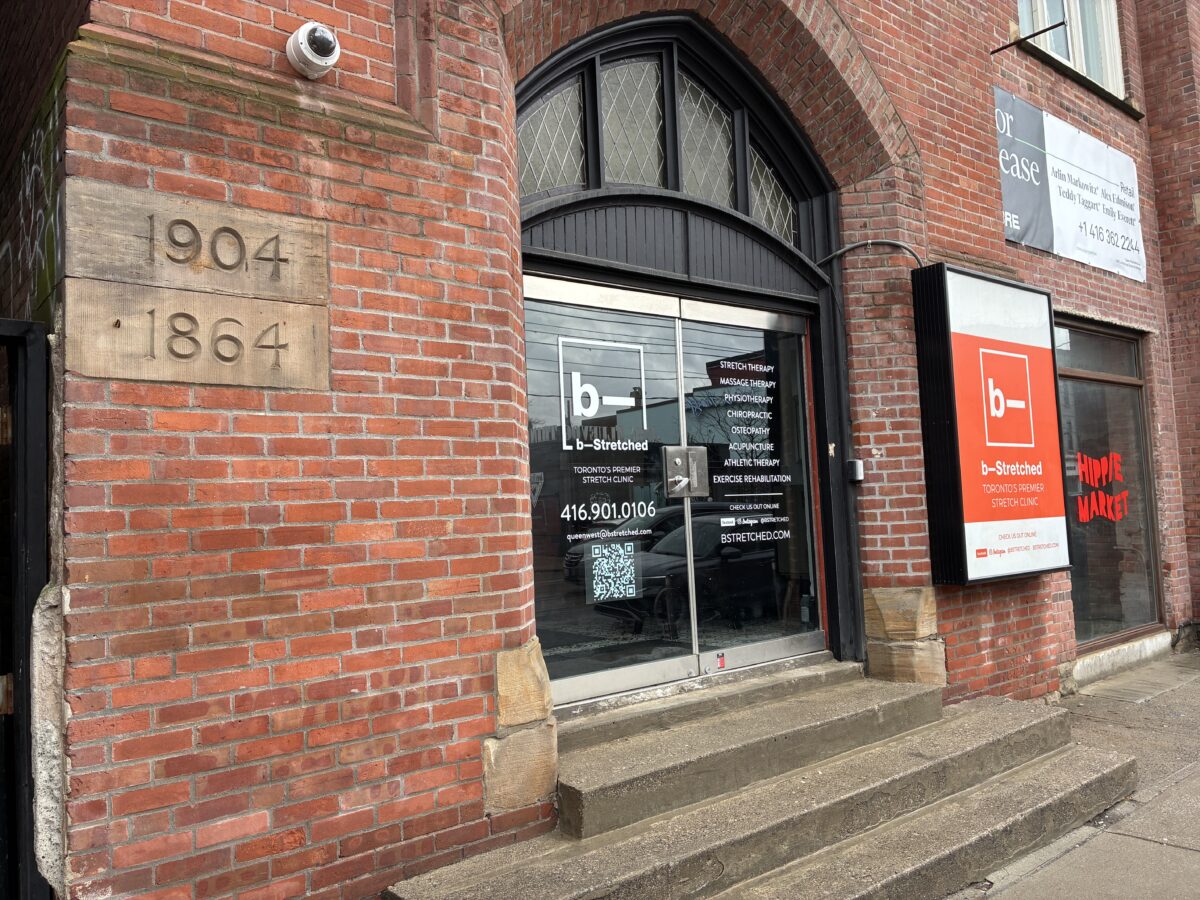
From the beginning, Capizzano has been deliberate about one thing: b-Stretched should never feel like a medical appointment. No blue curtains. No clinical sterility. The environment — the lighting, the music, the energy in the room — is as intentional as the treatment itself.
“I don’t want to be your medical clinic with blue curtains,” he says. “When people come in our doors — the brightness, the music — we want them feeling good before anyone touches them.”
That positioning is not accidental. Capizzano has always understood that b-Stretched is competing as much for how people feel about spending time there as it is for the clinical outcomes it delivers. Recovery dressed as lifestyle is a much larger market than recovery dressed as rehabilitation. The brand has been built accordingly.
From the Ice to the Treatment Table

The instincts that shaped b-Stretched were forged long before Capizzano graduated from New York Chiropractic College in 2006. He played junior hockey at St. Michael’s College School in Toronto — an institution with a hockey lineage dating to 1917, whose alumni have included some of the most decorated names the sport has produced — and later at the University of Wisconsin-Stevens Point. The game gave him an early education in what the body absorbs, and what it needs afterwards.
That background eventually led to a role as team doctor for the St. Michael’s Buzzers, the OJHL club whose roots stretch back over a century to the earliest days of organised hockey in Canada. The connection came through alumni loyalty rather than any formal process.
“The assistant coach who was there when I played is still the assistant coach at the Buzzers now,” Capizzano says. “They reached out and asked if they could send players to our St. Clair location. I said absolutely.”
The relationship reflects a conviction Capizzano has held for years — that elite athletes arrive at the off-season with bodies that need rebuilding before they ever touch a weight. He wrote about it in The Hockey News. The argument has since entered mainstream sports culture, but he was making it from a treatment table long before it became doctrine.
“When the summer comes, I see a lot of NHL clients,” he says. “Their bodies are broken. All they need is mobility work, stretch work — just to repair all the tissue.”
Elevating the Offering
b-Stretched is not standing still as a stretch studio. Alongside the Scotia Plaza opening, the brand is introducing IV drip therapy, vitamin shots, and a premium branded vitamin line — the most significant expansion of its service offering since launch. The additions are designed to sit alongside existing disciplines and give clients a more complete recovery toolkit.
The move is consistent with how Capizzano has always thought about the brand — not as a single-service studio, but as a platform for integrated wellness where clients can address mobility, recovery, and performance under one roof. The elevated environment he has spent years building is now being matched by an elevated service menu.
Building the Pipeline
In November 2025, Capizzano co-founded Learn2Stretch, a professional education platform built to train and certify stretch therapy practitioners. The venture grew out of years of frustration sending staff to third-party certification programmes and absorbing the inconsistency that came with it.
“I said — I want to own the whole thing,” he explains. “If you’re going to come here, you’re going to learn the stretch routine I’ve designed with my colleagues. You’re going to get your certificate, and all b-Stretched practitioners will know the routine.”
The platform has completed approximately six courses to date and is collaborating with Lifemark, one of Canada’s largest physiotherapy networks, to test the broader market. For b-Stretched, the dividend is consistency across every location. For the stretch therapy category, the ambition runs deeper — establishing the discipline as a credentialled practice within mainstream healthcare rather than a wellness industry footnote.
What Comes Next
Since Scotia Plaza opened, the interest arriving from outside the brand has told its own story. Within 48 to 72 hours of the announcement, realtors were pitching spaces at Union Station, the RBC Building, and several addresses along University Avenue. Private equity has been in contact. Expansion outside Ontario is the stated goal.
“The next phase for b-Stretched is about expanding our wellness offering and elevating the client experience,” Capizzano says. “We’re continuing to explore new locations and partnerships that allow us to bring the b-Stretched experience to more communities in Toronto and beyond.”
He hasn’t looked at any of the new spaces yet. Scotia Plaza needs to find its footing first. But the market has already made its position clear. The PATH, it turns out, was only the beginning.
b-Stretched Current Locations
- Bay Adelaide — 333 Bay St., Toronto PATH
- Scotia Plaza — 40 King St. West, Toronto PATH
- St. Clair West — 101-30 St. Clair Ave. West
- Charles Street East — 73 Charles St. East
- Queen Street West — 761 Queen St. West
- Bloor Street West — 2336A Bloor St. West
For bookings and information, visit bstretched.com

Dustin Fuhs is the founder and Editor-in-Chief of 6ix Retail, Toronto’s premier source for retail and hospitality industry news. As the former Editor-in-Chief of Retail Insider, Canada’s most-read retail trade publication, Dustin brings over two decades of expertise spanning retail, marketing, entertainment and hospitality sectors. His experience includes roles with industry giants such as The Walt Disney Company, The Hockey Hall of Fame, The Canadian Opera Company, Starbucks Canada and Blockbuster.
Recognized as a RETHINK Retail Top Retail Expert in 2024, 2025 and 2026, Dustin delivers insider perspectives on Toronto’s evolving retail landscape, from emerging brands to established players reshaping the city’s commercial districts.