
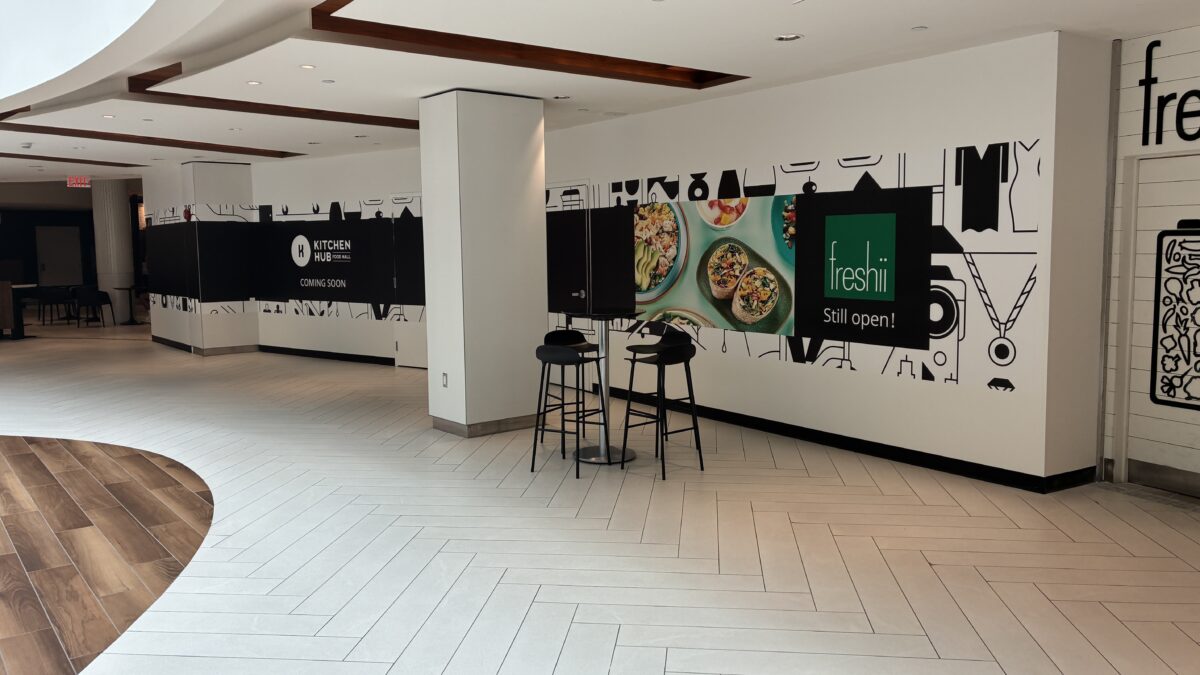
Kitchen Hub Food Hall’s forthcoming Yorkville Village location will serve as the prototype for a nationwide transformation of food court operations, with President & Co-Founder Adam Armeland positioning the 55 Avenue Road development as a scalable digital infrastructure model designed to revitalize retail food service across Canada’s major shopping centres.

“The pandemic taught people how to cook with their phones,” Armeland told 6ixRetail in an exclusive interview. “Everybody’s comfortable with kiosks at McDonald’s and Tim Hortons, but food courts have just not caught up to that. Based on what we’ve seen and what we’ve learned over the last almost six years, that’s what we bring to the table – that next phase of food courts and food halls.”
The Yorkville Village project represents what Armeland characterizes as Kitchen Hub’s “first coming online of a repositioning of a food court” – a strategic milestone that coincides with the company’s rapid multi-market expansion. Kitchen Hub simultaneously announced their first location outside Ontario with a Calgary development “just off of 17th Ave in Q4 2025” in partnership with First Capital REIT, while completing major renovations at their Liberty Village location within Longo’s. The Liberty Village expansion adds “two new kitchens and marks the rollout of our evolved food hall strategy” focused on restaurant brand storytelling, authenticity, and multi-brand ordering, according to Armeland’s recent announcements.
Kitchen Hub’s competitive positioning centres on proprietary digital infrastructure that enables sophisticated multi-brand ordering and neighbourhood-wide delivery capabilities – operational efficiencies that traditional food court operators fundamentally lack. “We have a tech-driven approach to running our food halls, which no other food hall operator does,” Armeland explained. “We believe that we’re going to be able to drive additional sales, additional interest and additional digital channels that the neighbourhood can take advantage of.”
The platform’s multi-vendor ordering system allows customers to aggregate purchases across restaurant brands within single transactions. “You can order a Shake Shack burger and your spouse can order a Mandy’s salad and your kid can order some Wingstop wings,” Armeland illustrated, describing the seamless integration that differentiates Kitchen Hub from traditional food court operations. This technological capability fundamentally expands Kitchen Hub’s addressable market beyond traditional food court foot traffic to include delivery throughout surrounding neighbourhoods, creating new revenue streams that transform food court economics.
Strategic Location Selection Addresses Market Inefficiencies
Kitchen Hub’s selection of Yorkville Village followed comprehensive demographic analysis that identified specific market opportunities in Toronto’s most affluent retail corridor. Director of Business Development Daniel Hoffer leveraged local market intelligence to validate the strategic opportunity. “I happen to live right next to Yorkville Village, and I know for a fact that there is not a ton of convenient, affordable, but still quality offerings in Yorkville,” Hoffer explained. “A really good example of the fact that the neighbourhood’s been missing that is the success of Mandy’s and Nutbar going in there recently. Those have been consistently slammed.”

The site selection benefits from strategic proximity to anchor tenants Whole Foods Market and Equinox, which generate predictable foot traffic patterns while serving Yorkville’s affluent demographic. Kitchen Hub’s analytical approach prioritizes identifying market gaps rather than replicating existing dining options, according to Armeland’s strategic framework.
Kitchen Hub’s accelerated restaurant deployment timeline has enabled partnerships with major franchise brands like Shake Shack, which launched at the company’s Castlefield location during the interview period. The partnership represents a significant validation of Kitchen Hub’s model, with Shake Shack Canada describing Kitchen Hub as “one of Toronto’s leading multi-restaurant food halls” while noting that “not everyone lives within delivery range of our flagship downtown Shacks.” “We’ve launched a restaurant as quick as two weeks from signing a document instead of the typical nine to 12 weeks,” Armeland noted, quantifying Kitchen Hub’s operational efficiency advantage over traditional restaurant development cycles.
This rapid deployment capability provides landlords access to restaurant brands that would never economically justify standalone locations at their properties. “Opening a Kitchen Hub here gives you access to a range of brands that you otherwise might never be able to land in this specific location. It’s a huge benefit to the landlord,” Hoffer explained, articulating the compelling value proposition for retail property owners.
Current Kitchen Hub restaurant partnerships include Shake Shack, Wingstop, Mandy’s Gourmet Salads, Pai Northern Thai Kitchen, and MTY Food Group’s newest concept BO[W]LD across five Greater Toronto Area locations spanning diverse market segments and demographic profiles. The Calgary expansion will feature “7 state of the art kitchen spaces designed for restaurants to provide the Beltline community with incredible meals available for takeout, delivery and order ahead,” positioning Kitchen Hub for western Canadian growth.
Food Courts Repositioned as Strategic Asset Value Drivers
Hoffer provided crucial industry context explaining how Kitchen Hub’s model transforms traditional food court positioning within retail environments. “The purpose of food courts was never to drive traffic,” he analyzed. “People come to shop here and they need to stay a long time and they get hungry, so landlords put something in that satisfies that hunger and drives dwell.”
However, Canada’s retail landscape has created performance challenges where secondary and tertiary shopping centers struggle with food court vacancy rates and tenant turnover. Kitchen Hub’s digital platform strategy aims to reverse this dynamic by repositioning food courts as traffic generation assets rather than convenience amenities.
“It starts with a conversation about how can we drive overall asset value for you,” Hoffer explained. “In shopping centres that might be in the form of traffic. In an office or apartment building, if we’re in the retail space, that might just be bringing fantastic brands and driving convenience for the tenants or residents of those buildings.”
For First Capital REIT, Kitchen Hub’s partnership aligns with their neighbourhood amenity development strategy at Yorkville Village. “They create neighbourhood amenities. When they take over a space, they’re looking to make that neighbourhood amenity,” Armeland observed. “As Kitchen Hub, as a food amenity, that’s what we’re looking to exemplify from the food perspective.”
The collaboration positions First Capital REIT at the forefront of retail food service innovation, providing their shopping centres with competitive advantages that traditional food court operators cannot match. Kitchen Hub’s business model prioritizes landlord success metrics, with Hoffer emphasizing that “our top client is our landlord. We need to deliver on the promise of Yorkville Village.”
First Capital REIT’s leasing team, led by Vice President Terry Ledamun and Director Leah Feeley, handles transactions at the property.
Hybrid Operational Model Attracts National Landlord Interest
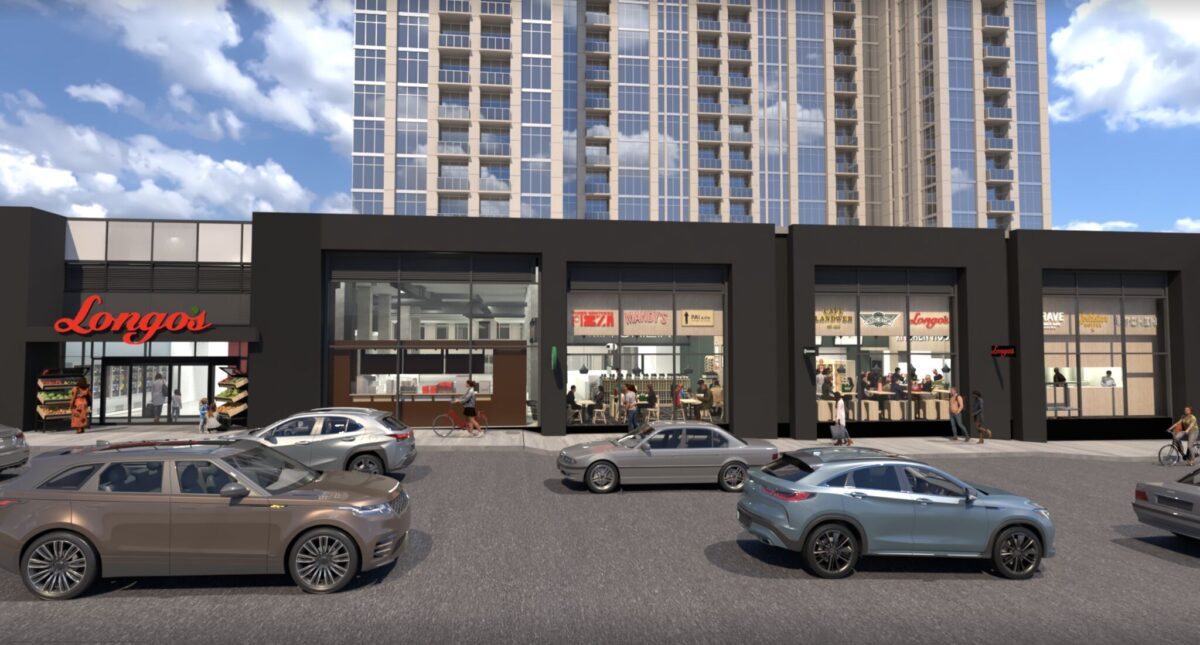
Kitchen Hub’s strategic approach addresses critical infrastructure challenges that have limited food court effectiveness, particularly delivery logistics and digital ordering integration. “We’re going to bring brands that the shopper coming for Whole Foods or Equinox are excited about. We want to make sure that we’re fulfilling that guest experience,” Hoffer explained, describing how Kitchen Hub enhances rather than competes with existing anchor tenants.
Armeland distinguished Kitchen Hub’s operational philosophy from the broader virtual restaurant industry, emphasizing their hybrid approach that integrates in-person dining experiences with digital ordering capabilities. “We were born out of the ghost kitchen industry and we were never a ghost kitchen. We never wanted to be considered that because very quickly we learned that delivery only doesn’t work for the restaurants,” he explained.
Instead, Kitchen Hub developed spaces accommodating multiple consumption preferences across different customer segments. “Our goal is to give the customer all the opportunities to eat other than that formal dining experience,” Armeland said. “We are not Gusto 101, we are Gusto’s delivery outpost.”
The model’s appeal extends beyond operational efficiency to significant cost advantages for restaurant partners. “The restaurant model is incredibly beneficial for restaurants from a cost perspective,” Hoffer noted. “So it allows them to consider locations that they would never otherwise consider for a brick and mortar.”
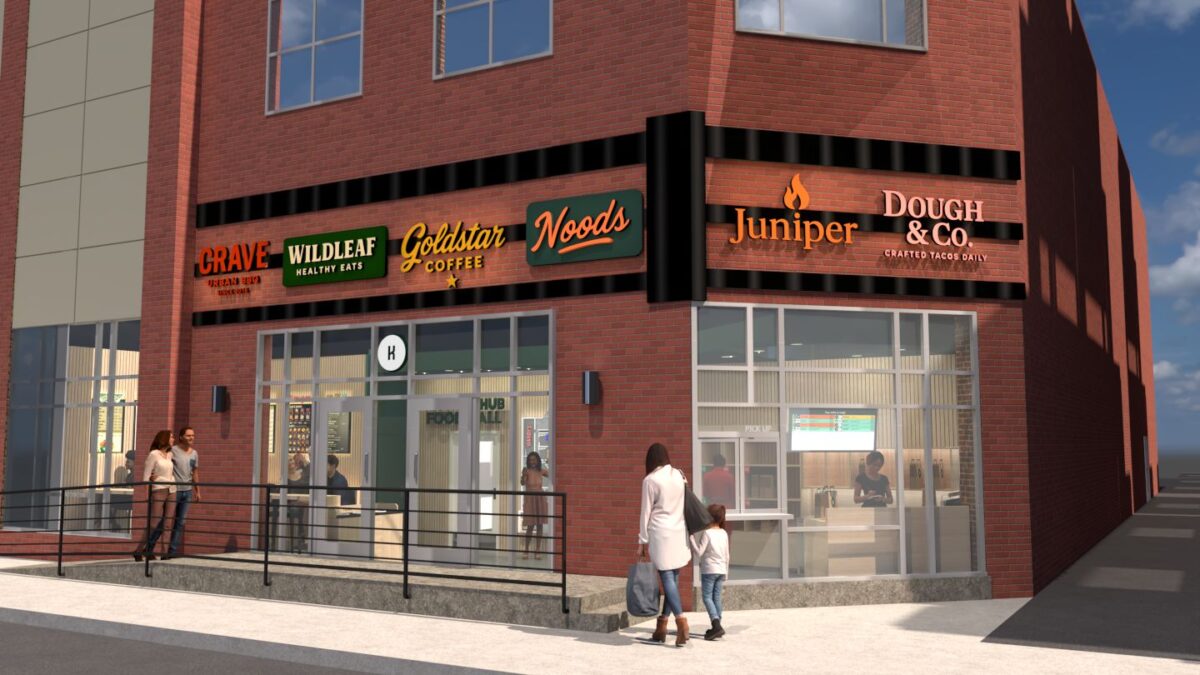
Each Kitchen Hub location includes dedicated seating areas and customer service staff trained across all restaurant partners, with Castlefield employees knowledgeable about 13 different restaurant brands operating within the space. Founded in January 2020 by Adam Armeland (President & Co-Founder), Oren Borovitch (Head of Digital & Co-Founder), and Mat Abramsky (CEO and Co-Founder), Kitchen Hub has raised $10 million to support nationwide expansion plans, with Armeland noting accelerating landlord interest in their food amenity repositioning model.
“Many landlords are now talking to us and getting us to implement our food amenity in their buildings to service their customers, to service the building, and then to service the surrounding area,” Armeland said, indicating strong market demand for Kitchen Hub’s operational model across multiple asset classes.
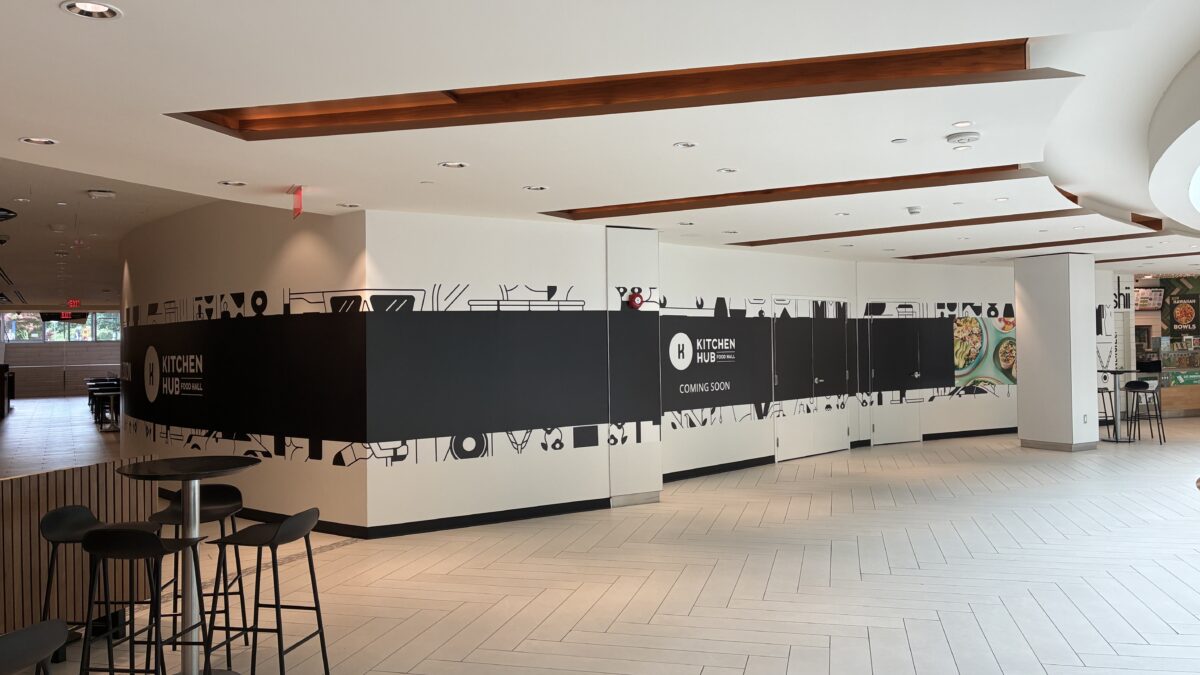
The company’s measured approach to timeline commitments reflects their focus on operational excellence over promotional announcements. While declining to specify opening dates for Yorkville Village, citing complexities associated with retrofitting existing retail spaces, Armeland emphasized their commitment to sustainable execution. “I don’t want to fall victim to putting a date on the hoarding and not hitting the date,” he explained.
Success at Yorkville Village positions both Kitchen Hub and First Capital REIT as leaders in retail food service innovation, potentially accelerating adoption among landlords seeking to reposition underperforming food service areas across Canada’s retail infrastructure. The collaboration demonstrates how forward-thinking landlords can leverage technology partnerships to enhance asset value while providing tenants and customers with superior dining experiences.
As Armeland concluded: “That is what Kitchen Hub is bringing to these food courts, to these food halls. And we think that that is the future.”
Kitchen Hub Food Hall’s Yorkville Village location is under construction at 55 Avenue Road. The company operates three existing Greater Toronto Area locations in Castlefield, Liberty Village, and Maple/Vaughan, with expansion underway in Calgary’s Beltline district in Q4 2025 and major renovations completed at their Liberty Village Longo’s partnership, adding two new kitchens and enhanced restaurant brand storytelling capabilities.

Dustin Fuhs is the founder and Editor-in-Chief of 6ix Retail, Toronto’s premier source for retail and hospitality industry news. As the former Editor-in-Chief of Retail Insider, Canada’s most-read retail trade publication, Dustin brings over two decades of expertise spanning retail, marketing, entertainment and hospitality sectors. His experience includes roles with industry giants such as The Walt Disney Company, The Hockey Hall of Fame, The Canadian Opera Company, Starbucks Canada and Blockbuster.
Recognized as a RETHINK Retail Top Retail Expert in 2024, 2025 and 2026, Dustin delivers insider perspectives on Toronto’s evolving retail landscape, from emerging brands to established players reshaping the city’s commercial districts.