

Toronto retail rents have increased 142 percent between 2019 and 2024, jumping from roughly $19 to nearly $50 per square foot. In a single year—2023 to 2024—retail rents spiked almost 70 percent according to the Toronto Regional Real Estate Board.
For context, minimum wages increased 23 percent over the same five-year period. For a typical micro-business with three employees operating out of 1,000 square feet, that means rent costs an additional $5,534 annually while wage increases add $3,994. Fixed costs are hitting 60 percent harder than labor increases.

These numbers come from the Better Way Alliance‘s recently released “Fixed Cost Crunch” report. The organization, which represents 100+ businesses across Canada that emphasize good jobs as deep business value, has become the only business advocacy group directly tackling commercial rent reform. Their membership includes retailers, manufacturers, food service operators, and professional services firms—all committed to what they call “good jobs” practices.
Aaron Binder, the BWA’s director, spoke with 6ixRetail about what’s actually happening in Toronto neighborhoods, why some landlords are finally coming to the table, and the conversation no business owner wants to have: when to close, how to communicate it, and why it might not be failure at all.
Landlords Are Starting to Get It
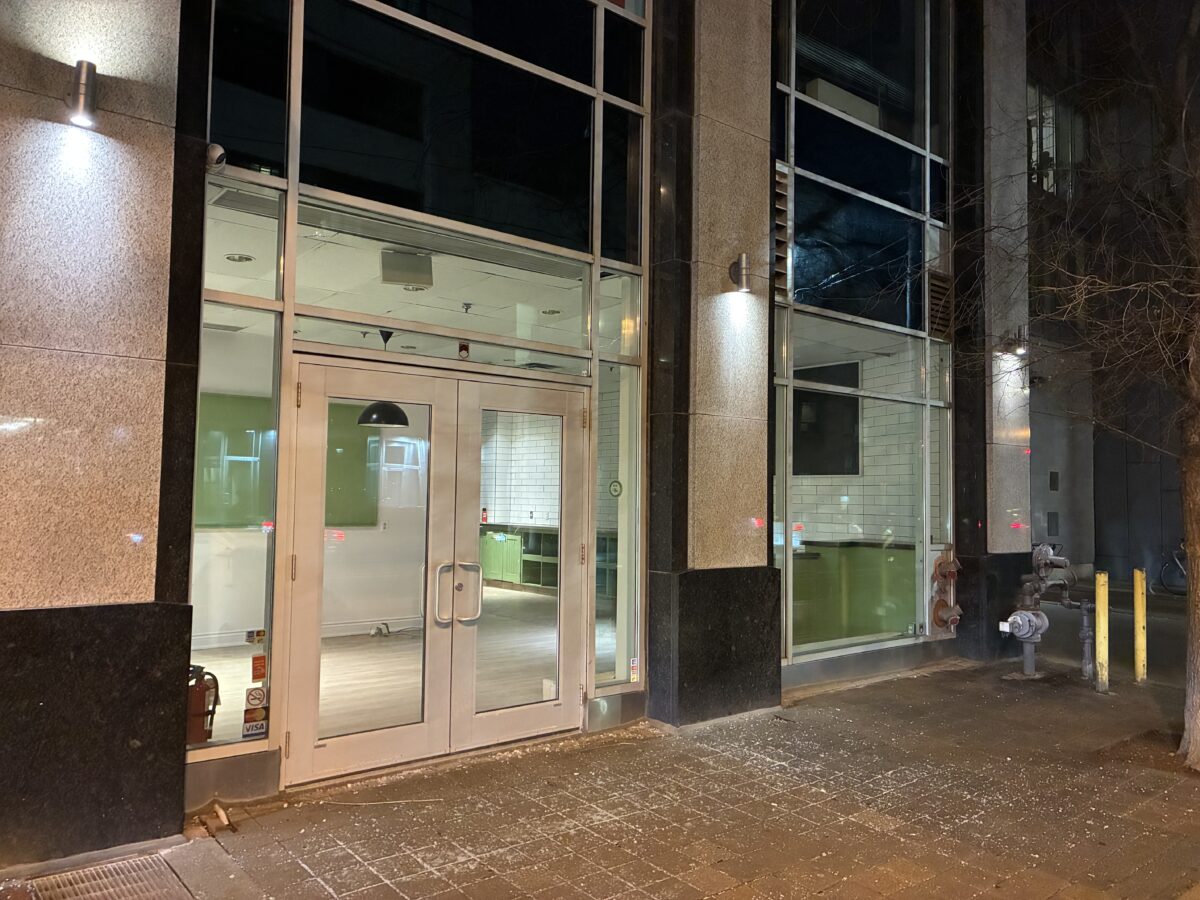
“I don’t think I’ve ever lived through such an uncertain time, and I’ve lived through five so-called economic catastrophes since the 1980s,” Binder said. “What’s gotten better is actually some of the relationships between landlords and tenants. What’s gotten worse is the uncertainty of it all—and it’s not necessarily a landlord-versus-business thing. It’s a general uncertainty impacting everyone right now.”
Some landlords are offering different lease terms than what’s written in standard agreements. Others are working with revenue-recovery models where the landlord takes a percentage of sales in lieu of eviction. Binder attributes this shift to smarter landlords understanding how squeezed businesses are—from supply chain costs to insurance premiums that have spiked upwards of 26 percent or more annually for certain business classes like restaurants and music venues.
“Landlords are coming to the table and supporting the small local businesses in their properties instead of defaulting to quick-service chains as a way to optimize short-term profit,” Binder said.
The 70 percent single-year rent increase didn’t happen in a vacuum. “The downside is what we’re seeing right now: landlords can’t just swap out a local business for a chain or franchisee willing to pay 40, 60, or 80 percent more,” he explained. “Even chains can’t rely on economies of scale anymore. You can’t guarantee a Starbucks will succeed in current global conditions.”
The question facing Toronto, according to Binder: “Can we get landlords, property managers, and tenants to come to the table and build deals that work for all of them? Or are we going to enter a phase where vacancy rates spike because nobody can afford the rents?”
The Neighborhoods Fighting to Keep Their Character

Toronto is known as a city of neighborhoods—currently home to 84-85 Business Improvement Areas and 158 social planning neighborhoods. But some are losing their character due to rent pressures. Walk through Chinatown on Spadina and you’ll see McDonald’s opening where mom-and-pop shops once thrived. Stroll along Bloor Street and empty storefronts sit where an entrepreneur’s dream could have taken root.
When asked which neighborhoods are actually figuring this out, Binder pointed to Ossington. “They’ve got a really strong BIA there, and landlords who are willing to identify and work with good businesses, both local and international. They really want a solid mix.” The street was named one of the top neighborhoods in the world in 2022 by Time Out Group.
“They have a deep understanding of how local, international, and even pop-up spaces can all benefit a neighbourhood when you’re working together toward greater cohesion,” he said. “That doesn’t just lead to greater financial returns. It leads to greater social returns as well.”
He cited Communist’s Daughter as an example—a tiny bar that exemplifies what works. “It’s charming, serves as a fun tourist destination, and serves locals very well. That’s the kind of operation that doesn’t necessarily make sense if your only metric is dollars and cents, but the social, economic, and cultural value it brings to that neighbourhood can’t be calculated. When you lose those kinds of properties, you start to lose the soul and tone of the neighbourhood.”
Beyond Ossington, Binder mentioned parts of the Danforth East corridor between Woodbine and Coxwell, sections of Rosedale, and parts of Bloor West. “I live at Coxwell and Danforth, and the corridor is a sleeper neighbourhood—there are fantastic strips with great locally-owned retailers doing unique things. There are tons of great little grocers. Those are the kinds of neighbourhoods that really work for the people who live in them.”
Outside Toronto, he pointed to Hamilton and Welland in the Golden Horseshoe as examples where entrepreneurs can open unique businesses without going $300,000 or $400,000 into debt from buildout costs alone—something that’s become standard in Toronto.
The common thread in neighborhoods that work? Strong organization, landlords who understand ecosystem value over short-term extraction, and a retail mix that serves both visitors and locals.
How to Talk About Closing
For businesses caught between unsustainable rents and loyal customers, the question of how to communicate financial stress is deeply personal. Binder was candid: “If I had a perfect answer, I’d give it to you right now—but it’s so situational. It depends on your relationship with your landlord, your customer base, and how long you’ve been in that neighbourhood.”
He pointed to Buvette Pacey in Corktown as an example of transparency done well. “The owner came out clearly, honestly, and kindly, and said ‘I’m having trouble here, I need help from the neighbourhood.’ And the neighbourhood showed up and supported. That’s someone communicating effectively to their customer base with candour and confidence.”
The café recently announced via Instagram that it’s shifting focus to coffee, wine, and lunch service rather than operating as a full bar—a strategic pivot that Binder sees as smart repositioning. “Knowing where you fit is critical for your success as a business. Market positioning is one of the most difficult things to pull off, especially for young businesses.”
When fixed costs are the culprit—rent doubling at lease renewal, insurance quadrupling—Binder believes businesses should name it. “If your rent doubled or your insurance quadrupled—things that are supposed to be fairly predictable but became completely unpredictable in recent years—I think it’s totally within reason to say ‘This wasn’t anything we did. These fixed costs are the reality.’ You’re not going to lose any goodwill by saying that. Hopefully you’re putting this issue in people’s minds.”
The challenge is that public reaction tends to be brief. “When a business closes, the reaction from the public is ‘Oh, that sucks. What else is open?’ We lose this character, there’s an instant outpouring of grief, but we all as consumers tend to move on fairly quickly.”
Closing Isn’t Always Failure
The narrative around retail closures tends to be binary: a sign says “open” or “closed,” and the public jumps to “another business failed.” But sometimes it’s not failure—it’s a smart exit from a bad deal or a strategic restructure.
Binder is blunt about the psychology of closing. “Closing may seem like failure to people on the outside, but I’ve talked to business owners who closed for many reasons—some just didn’t want to do it anymore, some couldn’t adapt, others saw their rent jump 100 percent and said ‘It’s not worth my time to figure out if I can move somewhere else.’ It’s a deeply personal decision.”
When is it time to shut down? “Do you want to be a business that enters a very uncertain year, not knowing if you can plan your labour for more than a week in advance? Are you willing to take zero salary for an indeterminate amount of time? These are all the questions you want to ask.”
He cited Ellery Market, a neighborhood grocer that closed its brick-and-mortar location in late 2024 when the numbers no longer worked. “The way they talked about their closure was really personal. Now, a year and a half later, they’ve said ‘We’re back’—with cooking classes and private dinners. That’s the best-case scenario.” The business was rebranded as The Ellery Rerooted in December 2025.
The key is leaving the door open for a potential return. “If you have to close and the door isn’t completely shut, you want to go out positively with grace, because that door can reopen in the future.”
The best examples of closures, Binder noted, focus on continuity: “We’re helping our employees find new jobs or if it’s a chain—to other branches. I think that’s the best case scenario—show the public that you’re invested in continuity because that helps your customers see you talking about ‘Here’s the plan. Here’s what we’re doing next,’ and they will stick with you if there is a next.”
Binder emphasized honesty without blame. “Talk about it honestly. Nobody’s going to fault you for being open and vulnerable. What they will fault you for is blaming other people—especially if it was your own lack of foresight that led the business to struggle.”
Don’t Cut Labor First
When facing a 142 percent rent increase or insurance spike, the instinct is often to reduce labor costs—cut hours, freeze wages, eliminate benefits. Binder argues this is exactly wrong.
“Cutting wages almost always starts a death spiral,” he said. “When you cut people, you’re putting more labor on your own shoulders as a business owner—and that’s only sustainable for a very short period before you burn out and everything crashes. It’s like trying to land an airplane in a hailstorm—and you’re not a pilot.”
The Better Way Alliance’s philosophy centers on what economists call the local multiplier effect. “When you treat your employees well, they invest back in your business. If I pay my 15 employees above minimum wage, they have extra income to spend at local businesses—buying a sandwich at a local joint instead of Subway, which keeps more money circulating locally instead of benefitting a small class of shareholders.”
This creates neighborhood resilience. “That local multiplier effect really matters, especially for BIAs. It’s integral because this kind of resilience turns a single business’s potential failure into every neighbour’s problem to solve. If you’re feeling crunched, you can have a conversation with neighbours and say ‘We don’t know if we’re going to make it another six months.’ Those neighbouring businesses, and their employees—if you’ve treated your own people well—your neighbours are going to show up and support you.”
The organization’s research shows member businesses recirculate two to four times more revenue locally than chains. “It’s not just about creating good jobs. It’s about creating an ecosystem where every neighbour can support each other, especially during tough times. The more we support each other, the more stable our jobs and, businesses and neighbourhoods are.”
He drew a parallel to premature business closures driven by poor market research. “When a business fails or decides to close, and an inevitable next business decides to open—is it a foundationally solid business or is it just someone that saved up $50,000 and thought ‘I think I could make a go at the restaurant industry?’ Too often we see that happen, where two or three years later, they’re now $100,000 in debt because they didn’t really understand the market, didn’t understand their customer base, and just figured ‘There’s so many of them out there. I can do this too.'”
Why the Alliance Is Growing
The Better Way Alliance is hiring a Membership Growth Lead to expand from 96 to 150 members by the end of 2026. When asked why now, Binder was direct: “We’re growing right now because what we offer—systemic solutions to the biggest problems facing businesses—is exactly what businesses, BIAs, chambers, and politicians at all levels in Canada are looking for during turbulent times.”
He differentiated the Alliance from traditional business organizations. “There are a lot of really good business organizations in Canada, and many focus on tax policy. There’s nothing wrong with that, but there’s much more to business advocacy than taxation policy. We’re answering questions like: How do we create better rent agreements? How do we treat employees well to increase productivity and retention on a Canada-wide scale? What tools can we build that business owners need to succeed?”
The organization’s Fixed Cost Crunch report calls for three government interventions: municipal governments encouraging developers to build right-sized retail spaces of 400 to 1,200 square feet; provincial adoption of a Commercial Renter Bill of Rights; and federal improvements to capital access programs so business owners can purchase their storefronts.
“Over half of Canadian businesses are micro-businesses getting squeezed by costs that provide no return on investment—unlike wage increases that actually boost productivity and social cohesion,” Binder said. “Our Fixed Cost Crunch analysis shows exactly what these businesses are facing. We need an all-hands response from every level of government because they all have tools to help.”
The stakes, for Binder, extend beyond individual businesses. “What we’re doing is best for Canada’s economy. It’s what’s best for Canada’s sovereignty—to make sure that our working class, be they business owners or workers, have what they need to succeed and that starts with good jobs. That helps our businesses succeed, which means they’re stable. On a global scale this creates better trade, and partnerships when Canadian business show up and meet our obligations and partnerships with other countries—and within our own country. There’s a better way forward—and it starts by investing in Canada’s working class business owners and staff.”

Dustin Fuhs is the founder and Editor-in-Chief of 6ix Retail, Toronto’s premier source for retail and hospitality industry news. As the former Editor-in-Chief of Retail Insider, Canada’s most-read retail trade publication, Dustin brings over two decades of expertise spanning retail, marketing, entertainment and hospitality sectors. His experience includes roles with industry giants such as The Walt Disney Company, The Hockey Hall of Fame, The Canadian Opera Company, Starbucks Canada and Blockbuster.
Recognized as a RETHINK Retail Top Retail Expert in 2024, 2025 and 2026, Dustin delivers insider perspectives on Toronto’s evolving retail landscape, from emerging brands to established players reshaping the city’s commercial districts.