

New data from Lightspeed Commerce reveals Canada ranks first globally for silent dining dissatisfaction, with 22% of Canadian diners doing nothing when service falls short. That figure is the highest across seven countries surveyed including the United States, the United Kingdom, Germany, France, Belgium, and the Netherlands, and sits well above the global average of 15%.
The finding comes with a striking contrast. Eighty-two percent of those same diners say personal staff attention matters deeply to them. They notice when the experience falls short. They simply never say so.
For Canada’s restaurant industry, that silence is not just a cultural tendency. It is a measurable revenue problem, and new research from Lightspeed Commerce is putting it in sharp focus.
When Guests Stop Coming Back Without Saying Why
Adoniram Sides, Senior Vice President of Hospitality at Lightspeed Commerce, leads the company’s global hospitality business across five platforms. Before joining Lightspeed, he spent years building product and technology teams at Upserve, navigating the hospitality industry through the pandemic and into a successful acquisition. When the research landed, his read on it went well beyond the cultural narrative.

“What we are seeing in this data is not a Canadian politeness problem. It is a systemic design failure in how the industry has built the relationship between restaurants and their guests,” he says in an exclusive interview with 6ix Retail. “Canadian diners absolutely know when service is poor. What is missing is the right moment and the right mechanism that makes sharing that feedback feel natural. When those conditions do not exist, guests make their decision quietly and operators never see it coming until the reservations stop.”
The review data makes the picture significantly worse. Sixty percent of Canadian diners rarely or never leave an online restaurant review, with fewer than one in seven doing so consistently. “The industry has invested heavily in reputation management platforms and review aggregators, but that infrastructure only works if guests are actually using it,” Sides says. “When the vast majority of your diners are not leaving feedback anywhere, you are not measuring guest sentiment. You are measuring the opinions of a small and highly motivated subset of your customer base. That is not a reliable foundation for making operational decisions.”
The consequence plays out quietly and consistently. “The only signal most operators ever receive,” Sides says, “is that the guest never makes a reservation again.”
Reading the Signals Your Guests Are Already Sending
The intelligence operators need to close that gap, Sides argues, already exists inside the platforms they run their business on every day. The issue is not access to data. It is knowing what to look for and where to find it.
“The most successful operators we work with have stopped waiting for feedback to come to them. They are reading the behavioural signals that their platforms generate every single day,” he says. “Reservation frequency, return visit cadence, loyalty redemption rates. When those numbers start moving in the wrong direction, your guests are communicating with you very clearly. They are simply doing it through their behaviour rather than through a written review.”
A drop in reservation frequency from guests who used to visit regularly is not background noise. It is a decision that has already been made, and in most cases the operator is the last to know.
Lightspeed built specific tooling around what Sides calls Tempo, the internal rhythm of a service experience. The concept addresses one of the most universal frustrations in dining, the moment when a guest realizes the floor has lost track of them.
“Tempo is everything in a restaurant, and when it breaks down, guests feel it before any member of your team does,” Sides says. “We built tools specifically to surface those breakdowns in real time, because a table that has not been attended to in 20 minutes should be something you can see and act on immediately, not something you reconstruct from missing reservations three weeks later. The technology exists right now to run a smarter operation. Operators need to start treating their platforms as an intelligence function, not just a transaction record.”
On where feedback actually lives today, Sides pushes back on the industry’s instinct to treat Google and review platforms as the primary measure of guest sentiment. “A significant amount of guest sentiment is already being expressed publicly. It is showing up in Instagram comments, in social conversations, in places that do not look like a formal review but absolutely function as one. That is where your guests are already talking about your restaurant.”
Timing the ask matters just as much as the channel. “There is nothing that prevents a great restaurant manager from approaching a guest at the right moment after the meal, when the pressure of the experience is behind them and they are ready to reflect,” he says. “The willingness to share is absolutely there. Guests are not withholding their opinions. We just have not been meeting them at the right time and place to receive them.”
The Revenue Opportunity Hidden in Plain Sight
The research surfaces a shift in Canadian dining behaviour that most operators have been slow to respond to. Seventy-four percent of Canadian diners say adult-only dining options should be available, and the sober-curious movement has moved firmly from niche preference into mainstream consumer expectation.
For Sides, this represents one of the clearest margin opportunities in the current market, and one of the most consistently overlooked.
“The industry has operated for decades on the assumption that beverage margin lives in the wine list and the cocktail program,” he says. “That assumption needs to be seriously reexamined. We are seeing a growing and genuinely committed segment of diners who want a thoughtfully developed non-alcoholic option, and who are willing to pay a premium price point for it. The operators who recognise that as a real margin opportunity rather than a dietary accommodation are the ones pulling ahead. Most restaurants are still leaving that revenue on the table entirely.”
The solution is not a longer menu. More options create more noise, and noise makes it harder to read what guests actually want. “The operators winning on this are the ones curating with intention, tracking what moves, and making disciplined adjustments based on what the data is telling them,” Sides says. “A tighter menu with genuine breadth will always outperform a long menu built on category assumptions.”
The same principle applies to how operators think about the full dining experience. Knowing who your guests are, what context they are coming from, and what they are actually there for is the foundation of delivering an experience that earns their return. “Increasingly, diners value choice and context,” Sides says. “Knowing who is coming to you and why, and then honestly asking yourself whether you are delivering on that, is essential. It is not enough to look at reviews. You have to do that introspection.”
Preparing for the Summer Ahead
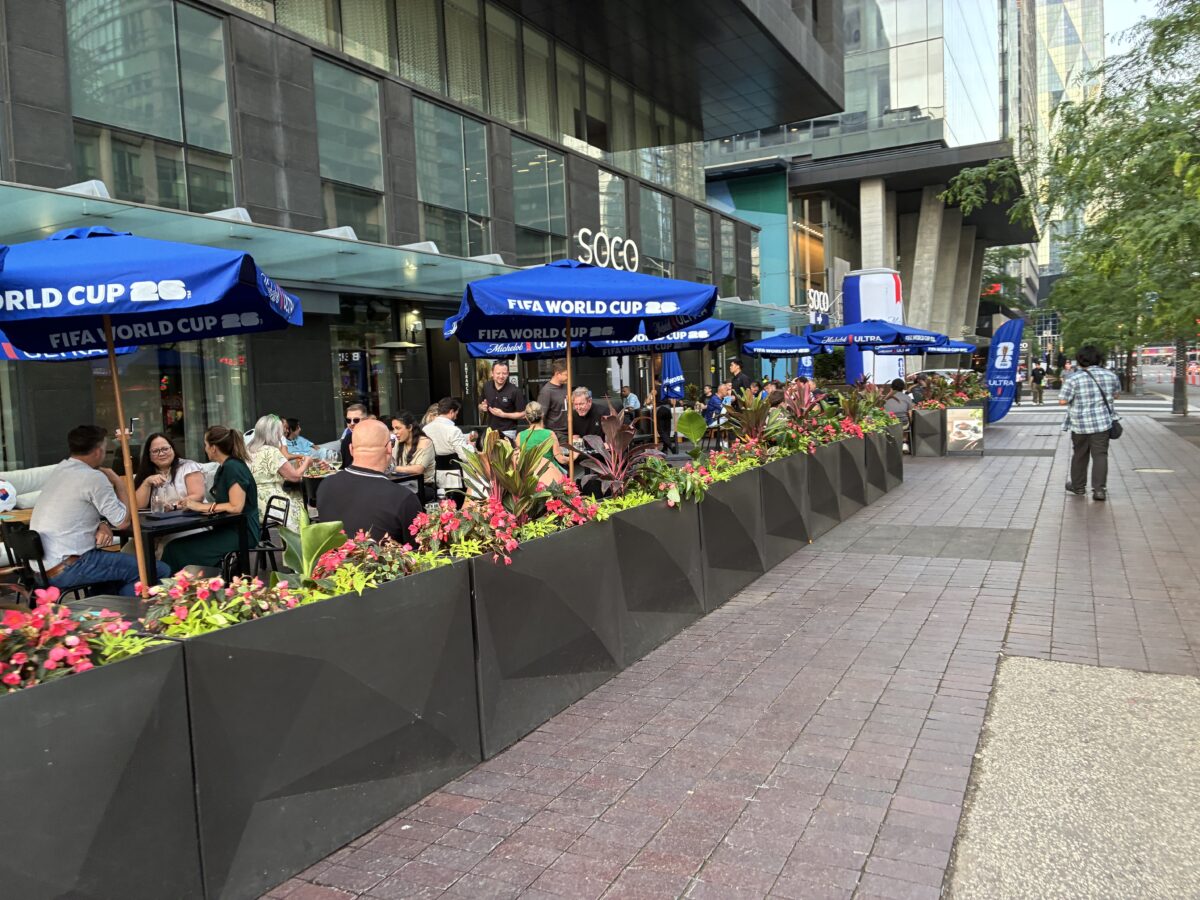
With FIFA World Cup matches bringing international visitors to cities across Canada, the stakes around all of this become significantly higher. First-time guests with no loyalty history, no inclination to leave a review, and one opportunity to form an impression represent the feedback gap at its most consequential.
“FIFA represents the highest-stakes version of everything this data is describing,” Sides says. “These are guests who have never been in your restaurant before and in most cases will never be again. There is no recovery opportunity, no second visit, no chance to correct a poor experience. The window is the visit itself, and the operators who are not prepared for that reality will feel it in ways that never show up in their review scores.”
Preparing for that moment means making decisions now, before the rush arrives. Sides is direct about where those decisions start. “Every operator knows which members of their team perform best when the room is full and the pace is relentless,” he says. “There are servers who are exceptional on a packed Friday night and others who are far better suited to a quieter lunch service. The question is whether you are being intentional and strategic about who is on the floor when it matters most. That scheduling decision is one of the most important revenue decisions you will make all summer.”
The back of house carries equal weight in that preparation. Front of house performance is directly dependent on what is happening in the kitchen, and the two cannot be treated as separate systems during high-volume periods.
“When the back of house is struggling under volume, that pressure transfers immediately through the entire service experience and lands on the guest before anyone on the floor can do anything about it,” Sides says. “A first-time visitor who waited 45 minutes for a cold dish is not going to factor in the context of a busy event weekend. That is simply their experience of your restaurant, and it is the one they will carry with them.”
The solution, Sides argues, comes back to the same principle that runs through the entire conversation. Operators need to look honestly at what their business is telling them and be willing to act on it.
“Taking action starts with taking responsibility,” he says. “If your dining room is quiet while the restaurant next door is full, that is information your business is giving you. The operators who come out of this summer in a stronger position are the ones who are willing to look at that gap honestly, ask what it is going to take to close it, and then actually do something about it.”
Adoniram Sides is Senior Vice President of Hospitality at Lightspeed Commerce, where he leads global product development for Lightspeed Restaurant. Data referenced in this article is from Lightspeed Commerce’s State of Hospitality research, conducted across Canada, the United States, the United Kingdom, Belgium, France, Germany, and the Netherlands.

Dustin Fuhs is the founder and Editor-in-Chief of 6ix Retail, Toronto’s premier source for retail and hospitality industry news. As the former Editor-in-Chief of Retail Insider, Canada’s most-read retail trade publication, Dustin brings over two decades of expertise spanning retail, marketing, entertainment and hospitality sectors. His experience includes roles with industry giants such as The Walt Disney Company, The Hockey Hall of Fame, The Canadian Opera Company, Starbucks Canada and Blockbuster.
Recognized as a RETHINK Retail Top Retail Expert in 2024, 2025 and 2026, Dustin delivers insider perspectives on Toronto’s evolving retail landscape, from emerging brands to established players reshaping the city’s commercial districts.