
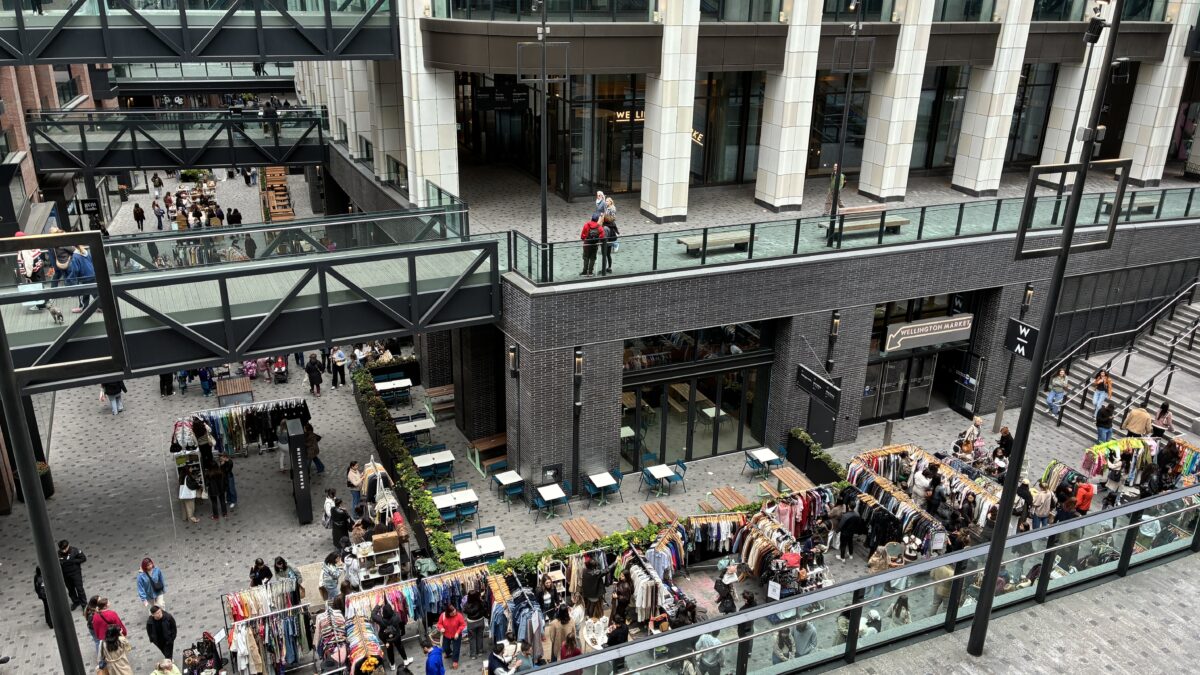
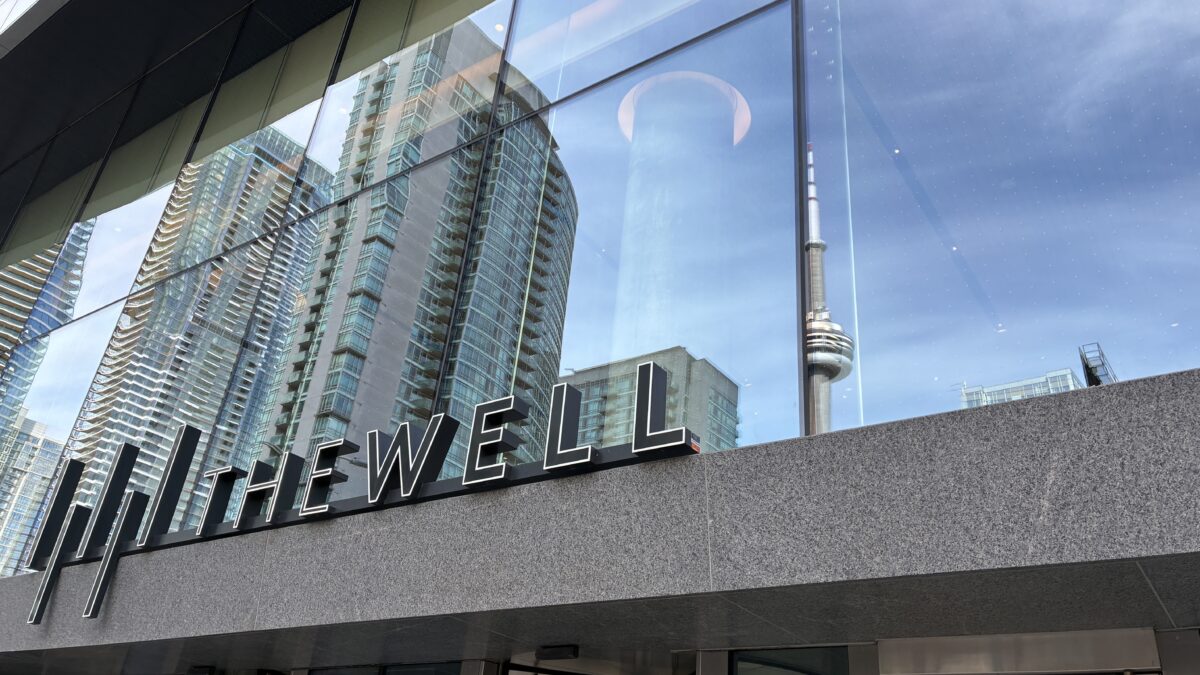
Wellington Market at The Well has completed its second phase expansion, adding 20,000 square feet and nine new food concepts to Toronto’s King West district. The expansion coincides with significant retail additions across The Well development, including new locations from Kit + Ace, Rodd & Gunn, and upcoming openings from Mine & Yours and Black Toe Running.
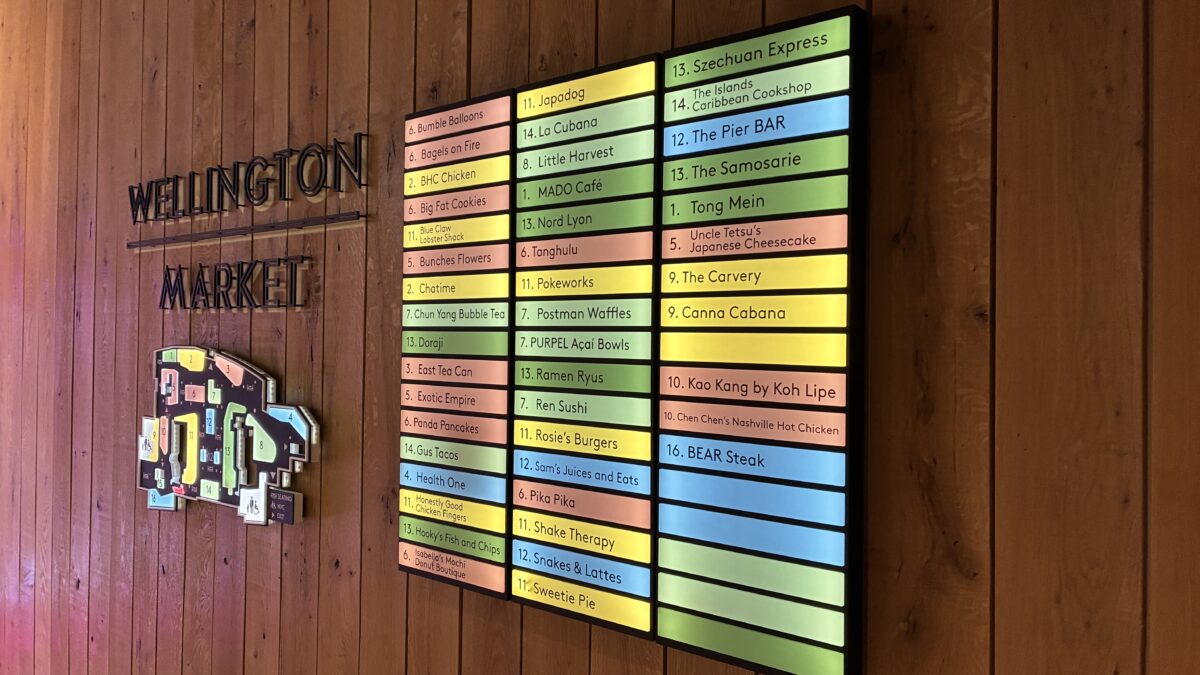
The food hall expansion introduces BEAR Steak Sandwiches, Chen Chen’s Nashville Hot Chicken, KAO KANG by Koh Lipe (from the Michelin-recognized team behind Koh Lipe restaurant), Panda Pancakes, The Carvery, and cannabis retailer Canna Cabana. August openings will include Cheezed, Lili Foods, and Michelin-recognized Taline serving contemporary Armenian-Lebanese cuisine.
“The market has performed beyond our expectations,” says Josh Katz, Assistant Vice President of Leasing at RioCan Real Estate Investment Trust. “We had pretty conservative expectations and we far exceeded those with the first phase.”
200,000 Weekly Visitors Drive Retail Interest

Wellington Market now attracts 60,000 weekly visitors, while The Well development overall draws around 200,000 weekly visitors. The food hall’s performance has become a selling point for major retail tenants considering space at the mixed-use development.

“We might be the only development like ours where we’ve had global retail brands ask us what the food hall sales are,” Katz explains. “This food hall has become a main anchor to The Well. The big brands are seeing that and they see how it’s unique and unlike what they’re seeing at other developments.”
The development’s retail strategy extends well beyond food service. Recent additions include activewear retailer KIT + ACE and New Zealand-based men’s clothing brand Rodd & Gunn, alongside service providers Men Zone Barber and Reformd Pilates Studio. Upcoming openings include women’s fashion boutique Mine & Yours and Black Toe Running.

Wellness-Focused Tenant Mix Targets Local Demographics

The tenant curation strategy targets Toronto’s “Urban Young & Social” demographic, which comprises 94% of the local 3km trade area—approximately 171,953 households with a median age of 36 and average household income of $124,634.
“There are a lot of young professionals with a good amount of disposable income that spend money on experiences and self-care,” Katz explains. “They’re focused on wellness. They want to treat themselves right. They want to have good quality food at a reasonable price.”
This strategy has influenced tenant selection across the development, with wellness-focused concepts including HealthONE, Sweat & Tonic, and Reformd Pilates Studio performing well alongside established retail anchors like lululemon and Sephora.
Extended Hours Drive Cross-Tenant Benefits
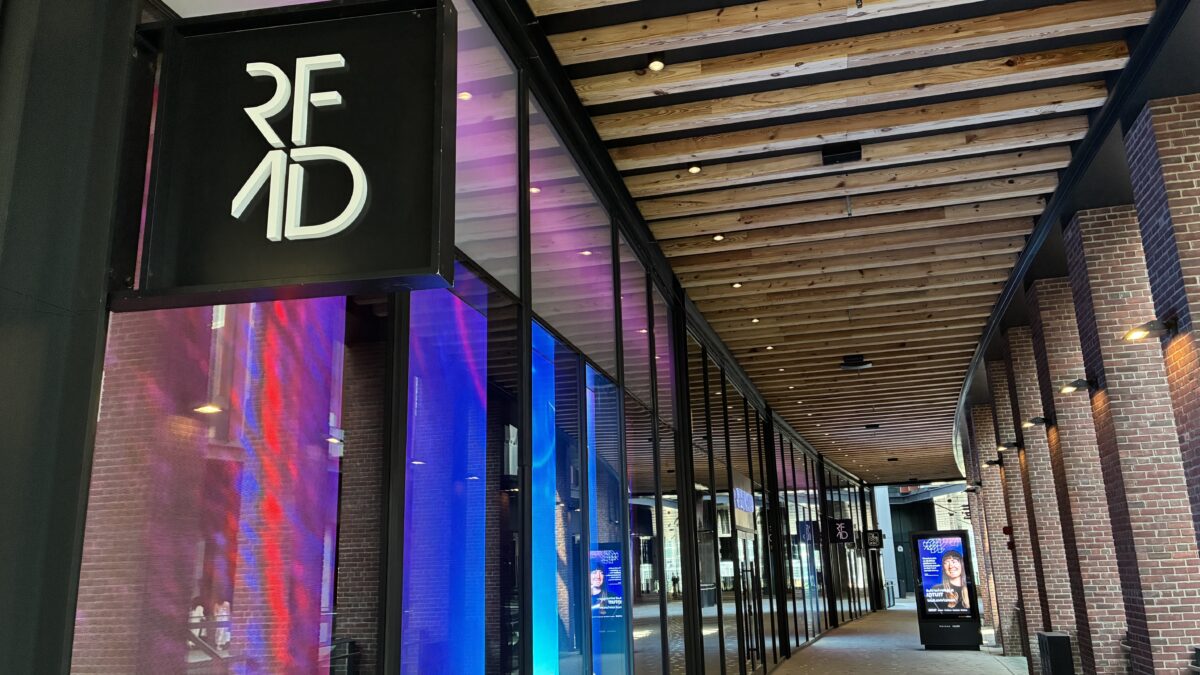
The success of Wellington Market has created opportunities for existing retail and experiential tenants to capture extended foot traffic. Established brands including Arcadia Earth, Gotstyle, and Etiket are benefiting from the market’s ability to draw visitors throughout the day and into evening hours.
“Some retailers have discussed staying open later on certain days of the week, which we encourage,” Katz notes. The food hall’s extended operating hours and The Pier bar’s evening service create sustained foot traffic that traditional retail hours haven’t historically captured in the area.
This symbiotic relationship demonstrates how food service anchors can drive retail performance beyond conventional shopping patterns. The market’s 60,000 weekly visitors represent a consistent customer base that existing tenants can leverage through adjusted operating strategies.
Pop-Up Program Converts to Permanent Tenants
“Brands recognize the unique opportunity this environment presents,” Katz explains. “The combination of high foot traffic, extended operating hours, and diverse visitor demographics creates optimal conditions for both brand activations and long-term retail strategies.”
At least one recent short-term activation is being evaluated for permanent tenancy, though specific details remain confidential pending official announcements. The market has also successfully rotated concepts, including the recent transition from a charcuterie board kiosk to Tanghulu, a candied fruit operator with an established tiktok following.
The Well has developed a strategic pop-up and activation program, hosting brand experiences ranging from a Lego Botanicals pop-up to Metallica merchandise sales during the band’s Toronto concert run. The 200,000 weekly visitor count has attracted consistent inquiries from brands seeking activation opportunities.

Selective Leasing Strategy with Limited Availability
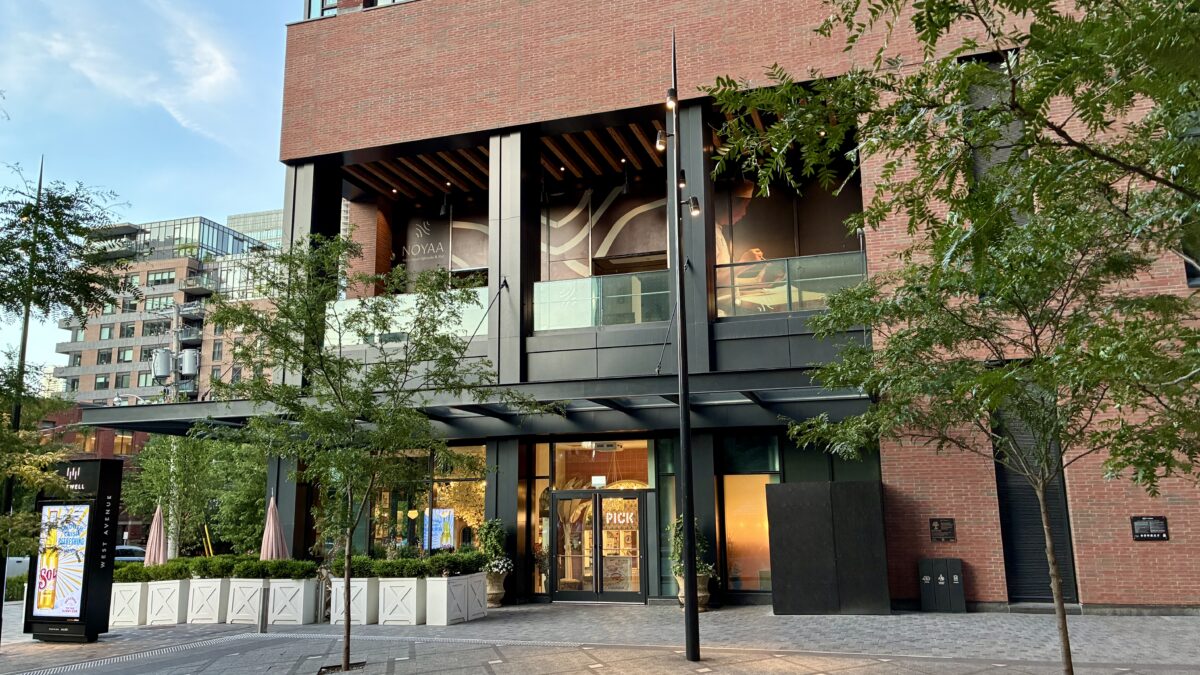
With limited space remaining across The Well’s 320,000 square feet of retail, RioCan has become increasingly selective about tenant mix. The development team conducts international research to identify emerging concepts from the United States, Europe, and Asia.
“We are absolutely out there trying to find the best of the best,” Katz explains. “As we go, we get even more honed in on that vision while maintaining relatively full occupancy.”
The phase two tenant roster has examples of operators who were initially interested but hesitant about the unproven concept. “A lot of those people we were in talks with for phase one, but they weren’t ready yet,” Katz notes. “Now that they can see the performance and the fact that people are coming and they’re spending, it allows us to get the best of the best.”

Market Operations and Customer Patterns
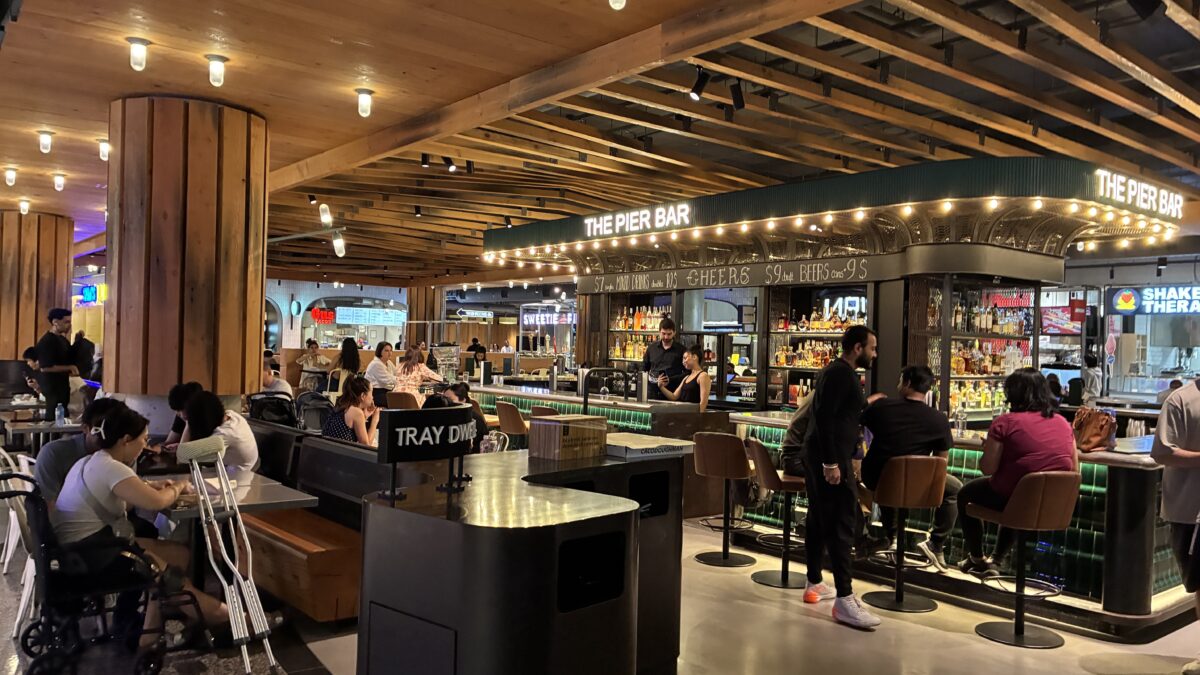
Wellington Market features 770 seats across multiple zones, including indoor dining areas, seating under The Glass canopy, and The Pier bar area. The central bar concept has generated longer customer dwell times than originally anticipated.
“We’re finding that people actually just like hanging out at the bar for a little longer than we expected,” Katz observes. “We’re seeing some longer dwell times there, and we’re just seeing a ton of turnover pretty much everywhere else where it’s tough to get a seat in the market sometimes because we’re just so busy.”
The development continues to seek new food concepts, with certain units designed for shorter-term operators to maintain freshness in the merchant mix. The food hall operates as part of a broader 70,000 square foot market space that includes The Wellington Event Venue, a 5,000 square foot space for culinary demonstrations and corporate events.
Neighborhood Development Context
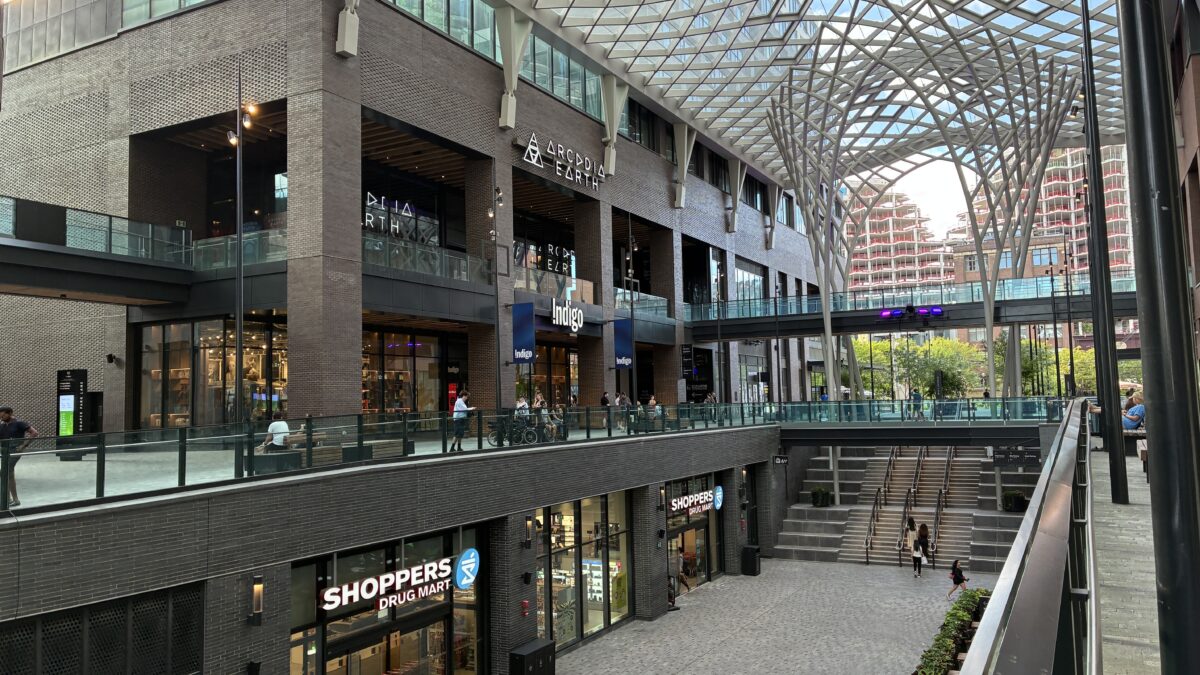
The Well’s success reflects broader development activity in the King West corridor, with new retail concepts opening throughout the immediate area. Recent additions include OCHE, which opened near King and Spadina, while Columbus Cafe is set to open at Portland Commons.
Katz notes that approximately 100,000 people live within walking distance of the development, representing a previously under-served market. “People are finally coming to meet that demand,” he says. “The development community has done a great job of making sure that the brands that they are bringing in fit the demographic well, and it means everyone’s going to be successful at the end of the day.”
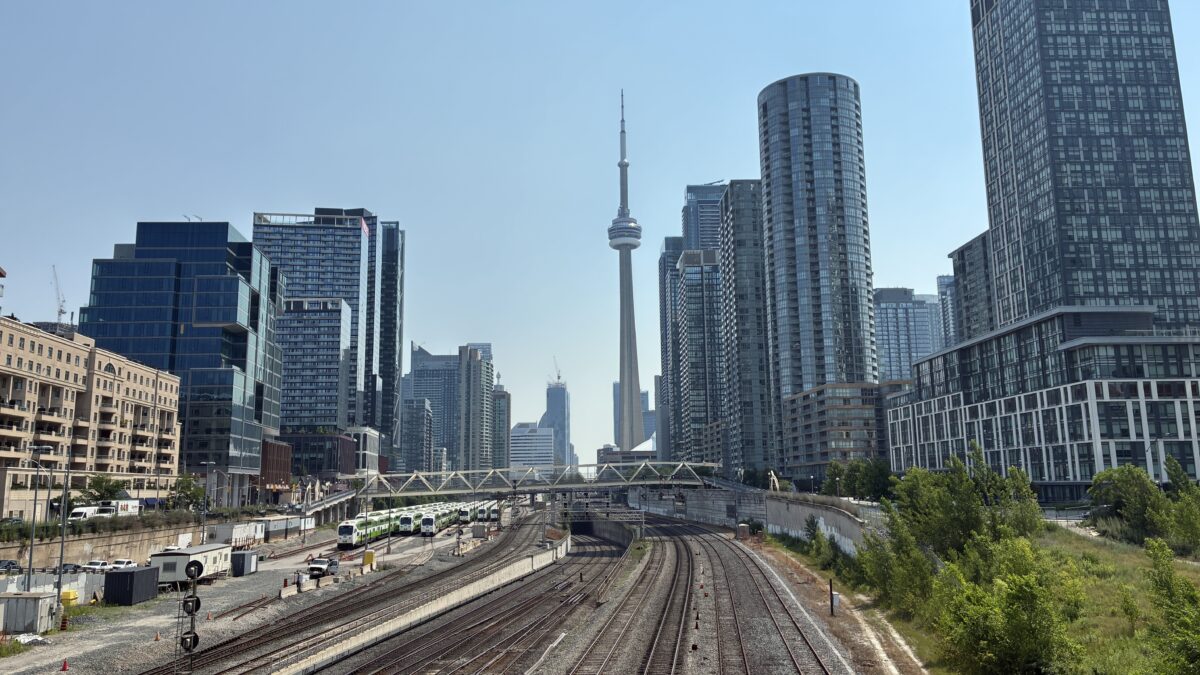
The Well, a joint venture between RioCan and Allied, is located at 486 Front Street at the intersection of Front, Spadina, and Wellington streets. The development combines 1.2 million square feet of office space with 320,000 square feet of retail across multiple levels, serving approximately 11,000 daily residents and office workers alongside major office tenants including Netflix, Intuit, and Dyson.


Dustin Fuhs is the founder and Editor-in-Chief of 6ix Retail, Toronto’s premier source for retail and hospitality industry news. As the former Editor-in-Chief of Retail Insider, Canada’s most-read retail trade publication, Dustin brings over two decades of expertise spanning retail, marketing, entertainment and hospitality sectors. His experience includes roles with industry giants such as The Walt Disney Company, The Hockey Hall of Fame, The Canadian Opera Company, Starbucks Canada and Blockbuster.
Recognized as a RETHINK Retail Top Retail Expert in 2024, 2025 and 2026, Dustin delivers insider perspectives on Toronto’s evolving retail landscape, from emerging brands to established players reshaping the city’s commercial districts.