

Over 1,000 residential units are preparing to land within blocks of Toronto’s three major downtown campuses. At 149 College Street, 480 purpose-built student residences will rise above a historic building. At 191 College near Henry Street, a 31-storey rental tower is working through approvals. Across the Greater Toronto Area, nearly 180,000 purpose-built rental units are currently under construction—enough to lift existing rental stock by more than 7%.

For hospitality operators near U of T, TMU, and George Brown, this represents the biggest shift in decades. Students won’t just be commuting in for classes anymore—they’ll be living across the street, looking for places to spend time between lectures, meet friends after dinner, work on laptops in the afternoon. The question isn’t whether demand exists. It’s whether operators understand what these new residents actually want.
“The general student dive bar will never completely disappear, but it will never be what it once was,” says Graham Heuman, Retail Insights Lead at JCWG. “Toronto is probably overindexed on bars right now. We’re going to see closures, and student bars will likely be among the first casualties as younger generations fundamentally shift away from alcohol consumption.”

The opportunity—and the challenge—is that these new residents want something different than the $1 beer dive bars that dominated campus edges for decades. They want spaces that work at 10am and 10pm. They want health-focused food alongside craft cocktails. They want Instagram-worthy design, not dark corners where nobody notices the finishes.
Tyler Fraser, Managing Director at abeco—a design-build firm specializing in hospitality construction—sees operators trying to figure it out in real time. “The winning strategy involves maintaining your existing concept while doubling your beverage programme. BarChef on Queen Street exemplifies this—Frankie Solarik has built an exceptional cocktail programme, but now offers an equally sophisticated non-alcoholic menu. That dual approach is proving highly effective.”
The shift isn’t about eliminating alcohol. Local craft beers and craft cocktails remain important. But operators need to offer both—premium non-alcoholic options alongside traditional drinks—to serve residents who might visit three times a day rather than once a week.
The Commuter Problem Changes Everything
Toronto’s universities and colleges have a structural issue that shapes everything about campus retail and hospitality: somewhere between 60% and 90% of students commute from across the GTA.
“This creates a fascinating double-edged sword,” Heuman explains. “When students stack multiple classes in a single day, they have guaranteed multi-hour gaps where staying near campus becomes essential. They’re not commuting back to Scarborough or Mississauga during those breaks, which creates significant opportunity. However, before and after classes, they’re heading straight home. That’s the challenge operators need to understand.”
So operators near campus aren’t just competing with what’s within walking distance. They’re competing with every option in Pickering, Oshawa, Mississauga, and beyond.
“With resident students, you’re competing against what’s immediately around you,” Heuman notes. “With commuter students, you’re competing against what’s around you plus everything in their home neighbourhood. That’s a fundamentally different competitive landscape.”

The incoming density fundamentally changes this equation. Purpose-built student housing experienced an all-time low vacancy rate of 1.5% in 2023, according to industry data. By 2024, the Greater Toronto Area’s purpose-built vacancy rate had climbed to 3%, with student-heavy areas seeing the largest increases as new supply came online. For the first time in years, operators will have actual residential customers—not just transient commuters.
Fraser sees ground-floor retail in these new towers trending differently than past developments. “Health and wellness concepts are dominating—saunas, cold plunge facilities, pilates studios, fitness centres. When paired with higher-quality grocery offerings, you’re seeing a fundamental shift away from the traditional convenience store model.”
The question becomes: are these developments creating centralized hubs where students naturally gather, or discovery-driven neighborhoods where local operators can bring their own personality to formerly franchise-dominated blocks? The answer shapes whether operators can build authentic community gathering spaces or just replicate chain concepts.

Why Gen Z Thinks Differently
The shift in what students want isn’t arbitrary—it’s driven by fundamental changes in how younger generations relate to alcohol and social spaces.
Youth drinking in Canada has declined sharply. According to the Canadian Student Alcohol and Drugs Survey, past 12-month alcohol use among students in grades 7 to 12 fell from 61% in 2006-07 to just 37% in 2023-24. Among young adults aged 18-34, 25% reported no alcohol consumption in the past month in 2023, up from 17% in 2018—a significant shift in just five years.
But the decline isn’t just about health consciousness—it’s economics. A 2025 TD survey found that 73% of Canadian Gen Z respondents say a single financial misstep could set them back, with 47% identifying cost of living as their biggest barrier to financial goals. Among younger Canadians actively reducing expenses, 41% have cut back on dining out specifically.
FP Canada’s 2025 Financial Stress Index found that Canadians aged 18-34 are significantly more affected by housing costs than older generations: 45% cite house prices and 43% cite rent prices as major financial factors, compared to less than a third for those aged 35-54. When you’re spending that much on rent, eight-dollar beers add up fast.
Statistics Canada data confirms the structural shift. Sales at drinking establishments have been essentially flat since 2010, with that year marking the peak for the past 15 years. Post-pandemic recovery stalled out in 2023, and sales haven’t returned to pre-COVID levels. Alcohol retailers show the same pattern—flat since 2017, with 2022 marking the peak and year-over-year decreases of roughly 2% since.

Cannabis legalization has accelerated the transition. Legal in Canada since 2018, the substitution effect is clear: young adults are choosing a different type of high.
“I genuinely believe that in 50 years, future generations will view our current alcohol consumption patterns the same way we now view cigarette smoking from 50 years ago,” Heuman says. “They’ll ask, ‘You regularly consumed alcohol?’ The health impact research continues to evolve, cannabis legalisation has introduced alternatives, and student preferences are fundamentally shifting as a result.”
But while alcohol sales decline, non-alcoholic beverages are surging. Canada’s non-alcoholic beverage market reached $199 million in sales between June 2023 and June 2024, growing 24% year-over-year. Ready-to-drink mocktails jumped 168% to $11.8 million. Mocktails have increased 142% on restaurant menus over four years and are projected to grow another 97% through 2028.
Crucially, about 75% of non-alcoholic beverage shoppers in Canada also purchase alcohol. The story isn’t abstinence—it’s moderation.
“When consumers previously spent eight dollars on a beer, they’re now equally willing to spend six dollars on a premium coffee, speciality tea, or matcha,” Heuman says. “There hasn’t been a transition away from wanting premium beverages—simply a transition away from alcohol being the default choice.”
Different Campuses Need Different Strategies
Ask most operators about “the student market” and they’ll describe something monolithic: price-conscious, late-night-focused, alcohol-driven. Heuman says that thinking is the problem.
“The hospitality concept you would develop at St. George and College needs to be vastly different from what you’d put at Queen and Beverley,” he argues. “Both locations sit directly adjacent to universities, but the OCAD student and the U of T student represent completely different demographics. We’ve made the mistake of treating students with homogeneity instead of recognising the unique characteristics of each campus environment.”
TMU’s Yonge-Dundas location attracts a different demographic than U of T’s traditional campus, which differs again from George Brown’s culinary and hospitality students near the waterfront. Different schedules, different cultural makeups, different priorities.
“Price consciousness and extended hours will always be fundamental requirements—that’s not changing,” Heuman says. “But what’s increasing dramatically is the diversity of needs. Different palates, different dietary restrictions, different cultural holidays and observances. This isn’t exclusive to campus environments, but it’s far more pronounced in university districts given the increasingly diverse student populations.”
The George Brown example is particularly stark. In November 2025, the college announced it would suspend enrolment for seven hospitality and culinary programmes for the 2026-2027 academic year, including Italian culinary arts, advanced French patisserie, event planning, and food and beverage management. The cuts reflect both federal immigration policy changes limiting international students and shifts in student preferences.
“That’s going to significantly impact the hospitality pipeline,” Heuman notes. “The question becomes what replaces those partnerships and employment opportunities.”
Extended Hours Become Essential
When students live in residence towers across the street from campus, they don’t expect everything to go dark at midnight or stay closed on weekends. The traditional bar’s 5pm-2am window doesn’t match how students actually live anymore—especially when they’re looking for places to study, work, or grab coffee throughout the day.
“Ideally, we’re moving towards 24/7 operations, and advancements in automation are making this increasingly feasible,” Heuman says. “But there’s also a significant opportunity to hire student workers who want non-traditional schedules precisely because they’re in classes during that typical 8am-to-7pm window. Their availability actually aligns with extended operating hours.”
The new standard, in Heuman’s view: “Operating hours need to extend as long as you can justify with your bottom line. Frankly, it still surprises me when retailers close on Sundays. We’re definitively past the five-or-six-day-a-week operating model. If you’re consumer-facing, you need to be a seven-day operation.”
The dive bar that opens at 5pm and closes at 2am is leaving significant revenue on the table—and completely missing the daytime student population that’s now living nearby.
Building Spaces That Transform

The most successful campus-adjacent concepts won’t be bars that occasionally serve coffee. They’ll be spaces that transform entirely based on time of day.
“There was a fascinating concept in Paris called Drinks&Co that operated all hours of the day,” Heuman recalls. “The space featured completely movable furniture that allowed it to function as a café, then lunch venue, then dinner restaurant, then bar, then late-night club. Between peak meal periods they even offered limited grocery items. Those are the operational models that need to evolve and scale.”
From a construction perspective, Fraser says the transformation is more achievable than operators typically assume. “The fundamental infrastructure requirements for a café and a contemporary bar are remarkably similar. What differentiates them is environmental control—sophisticated lighting systems, proper audio management, the ability to modify the atmosphere seamlessly. From a design and constructability standpoint, the differences are less dramatic than most people expect.”
He points to the former Portland Variety at King and Portland. “That space demonstrated excellent execution of day-to-night transformation. During daytime hours, it functioned as an inviting café. In the evening, it transitioned into a vibrant restaurant and bar. The key is intelligent environmental design rather than structural transformation.”
The example that consistently works, according to Heuman: Balzac’s Coffee in TMU’s Image Arts building. “I’ve never walked past when it wasn’t full. Finding a seat there is genuinely difficult.”
Cafés continue to explode in popularity for good reason. Mocktails now appear on 32% of casual dining menus, according to Monin research. The “sober curious” movement has nearly 2 in 5 consumers completely abstaining from alcohol, with Gen Z and Millennials intentionally reducing consumption due to health and wellness factors.
The Real Cost of Elevated Design
But achieving the Instagram-worthy spaces Gen Z expects comes with costs operators often underestimate.
Fraser, whose firm recently completed projects like Blu Ristorante’s King Street relocation and Golden Horseshoe BBQ, sees the budget realities firsthand. “There’s a direct correlation between aesthetic elevation and budget allocation. Construction budgets are now allocating significantly more resources to washroom design and finishes than we’ve ever seen historically. Creating an Instagram-worthy restaurant requires Instagram-worthy washrooms—makeup stations, premium fixtures, thoughtful design for both women’s and men’s facilities.”
One cost driver catches many operators off guard: washroom facilities have become a major investment category. “Elements like furniture-quality fixtures, integrated makeup stations or beauty bars, premium materials—these have become substantially more important over the past five years. Operators who underestimate washroom budgets often face difficult choices later in the construction process.”
The other major cost factor: millwork. “Millwork consistently emerges as a significant cost driver, and quality millwork is what truly creates that elevated guest experience,” Fraser explains. “Success comes down to partnering with design teams who can strategically allocate your budget where it delivers maximum impact—where guests directly experience and appreciate the investment.”
His advice: “Once you’ve established a functional kitchen workflow, prioritize investments where guests directly experience them. That guest-facing investment generates repeat visits.”
Fraser emphasizes getting the planning right from the start. “These conversations need to happen at the very beginning of a project, even before the design team begins producing drawings. This is fundamental concept development. You need to clearly communicate what you’re trying to achieve, and then it becomes everyone’s responsibility to assemble those pieces into a cohesive, functional concept.”
The Staffing Problem
Even if operators figure out the right concept and budget for elevated design, there’s another problem: who’s going to work there?
Student bars have traditionally served dual purposes—providing nightlife for students while employing them in flexible shifts. But the current tipping culture and employment model may be unsustainable.
“Consumers are increasingly questioning why they’re subsidising corporate wage structures through tips,” Heuman notes. “We’re already seeing significant pushback against tipping culture. When you offer genuine fair wages—say $22 per hour flat—many workers will choose that stability over tip-dependent income.”
The argument that tipping incentivises better service? “That’s an archaic notion,” Heuman counters. “Quality service comes from employees who are well-compensated and satisfied with their working conditions. That’s the employer’s responsibility, not solely the consumer’s. There are exceptional service experiences in countries without tipping cultures, as well as gratuity-included concepts in Toronto like Richmond Station.”
His prediction: “At the current trajectory, we’re heading towards a socially expected 25% tip within two or three years. Most consumers would prefer menu prices to increase by 25% to eliminate tipping rather than face that constant escalation.”
For campus bars specifically, this creates a paradox. Universities and colleges once provided first employment opportunities where students developed professional skills and responsibility. But if operators can’t offer fair wages and students won’t accept tip-dependent income, where does that crucial employment pipeline go?
What’s Actually Working
Heuman points to several concepts showing traction in the current environment:
Pop-ups and temporary activations are succeeding. TMU operates farmers markets and retail programme pop-ups within campus buildings. “These create excitement and variety without the burden of permanent overhead costs,” Heuman says. “The temporary nature actually enhances the appeal.”
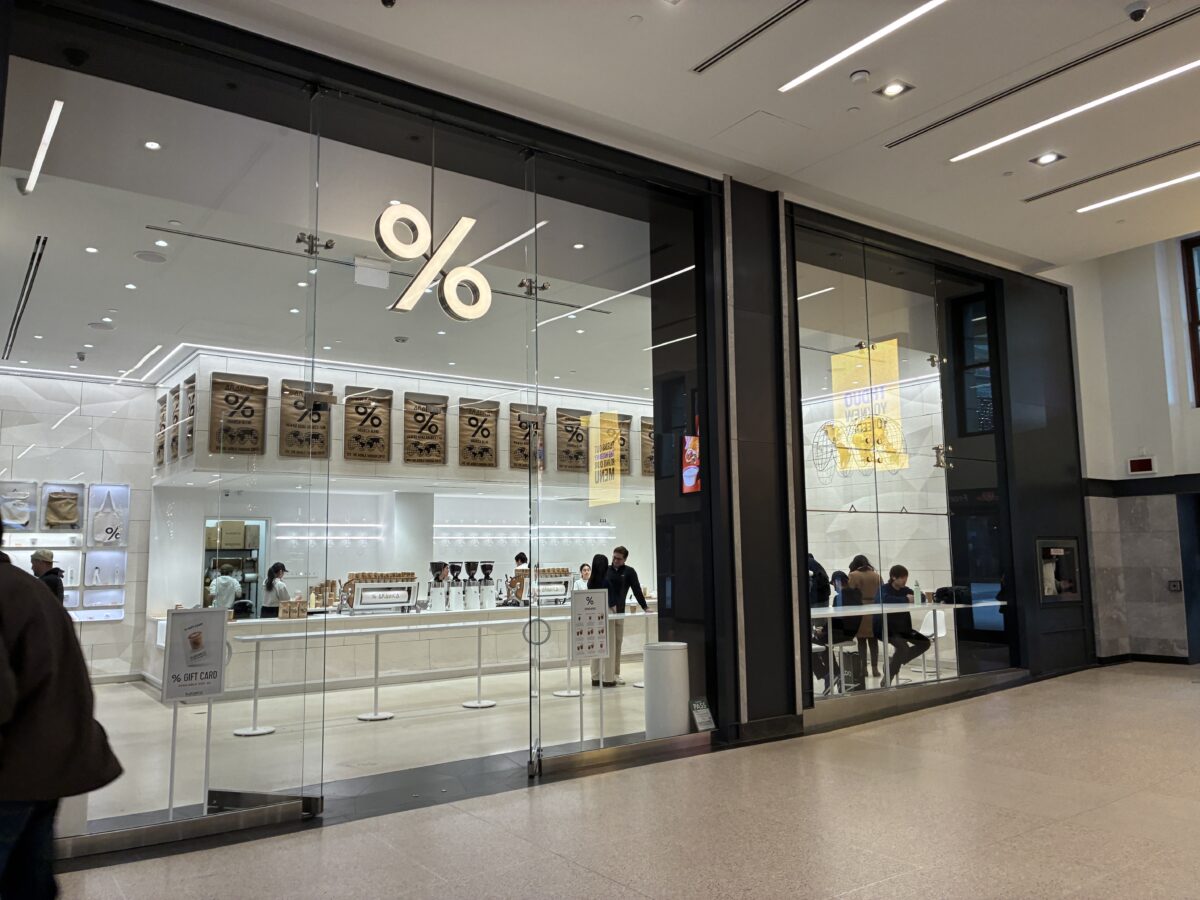
Transit hubs as destinations are proving successful. “Only recently have I started arriving at Union Station early rather than rushing to catch my GO train with minutes to spare,” Heuman notes. “With Pilot Coffee, %Arabica, and other quality options available, I’m now spending money there almost unconsciously. When 100,000 commuters make similar decisions daily, the impact is substantial.”
The common thread: retail and hospitality functioning as catalysts to actually bring students to campus.
“Professors report difficulty achieving even 50% lecture attendance,” Heuman observes. “Quality food, coffee, and social spaces genuinely influence whether students physically come to campus. That value extends well beyond individual transactions.”
The Window for Adaptation
As residential density arrives near Toronto’s campuses, operators have a narrow window to adapt. The traditional model—cheap alcohol, dark spaces, limited hours—won’t survive contact with Gen Z’s preferences and Toronto’s economics.
What might work: flexible spaces that serve coffee at 8am, co-working at noon, dinner at 6pm, and social experiences at 10pm. Robust non-alcoholic programmes that treat speciality beverages as core offerings, not afterthoughts. Campus-specific strategies that recognise OCAD students have different needs than U of T students. Fair wages that attract and retain staff without depending on tip escalation.
The dive bar will always exist in some form—there will always be demand for affordable social spaces. “But we may not need multiple bars per campus going forward,” Heuman warns. “We may not even need one dedicated bar per campus.”
That’s radical in a city where bars have clustered near universities and colleges for generations. But the data supports it: Canadian youth alcohol consumption has dropped dramatically, and the trend is accelerating.
“The demand for casual hangout spaces will persist, but dark rooms with big screens and cheap pitchers won’t be the viable model going forward,” Heuman says. “The critical question facing operators is what replaces it.”
“Demand for affordable student gathering spaces will always exist,” Heuman concludes. “The critical questions are what those spaces look like, how they operate, and whether current operators can evolve quickly enough to meet this moment.”
With 1,000+ residential units preparing to land within blocks of Toronto’s campuses, the market is about to deliver its verdict.

Dustin Fuhs is the founder and Editor-in-Chief of 6ix Retail, Toronto’s premier source for retail and hospitality industry news. As the former Editor-in-Chief of Retail Insider, Canada’s most-read retail trade publication, Dustin brings over two decades of expertise spanning retail, marketing, entertainment and hospitality sectors. His experience includes roles with industry giants such as The Walt Disney Company, The Hockey Hall of Fame, The Canadian Opera Company, Starbucks Canada and Blockbuster.
Recognized as a RETHINK Retail Top Retail Expert in 2024, 2025 and 2026, Dustin delivers insider perspectives on Toronto’s evolving retail landscape, from emerging brands to established players reshaping the city’s commercial districts.