

UPDATE: Central Design Market and MRKT Cafe have unfortunately closed as of May 2026.
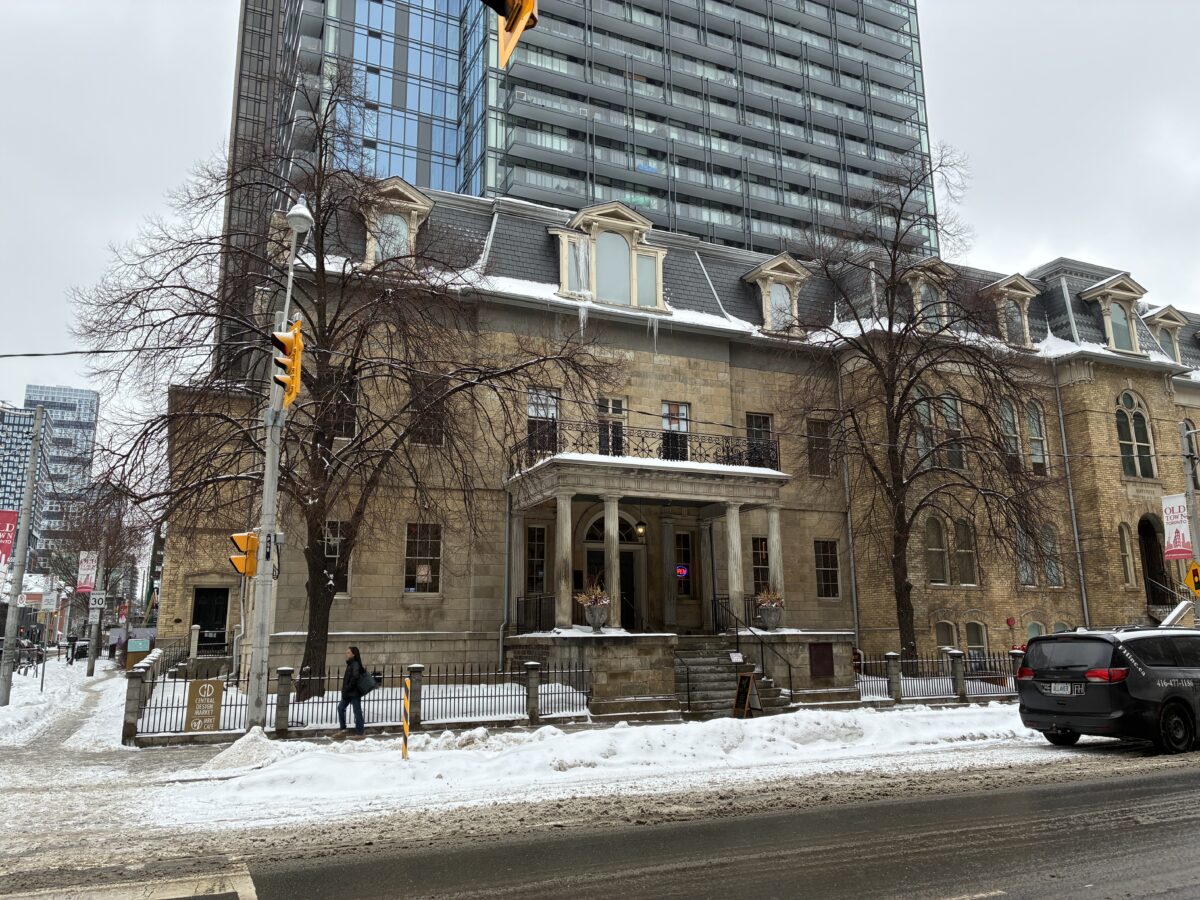
The Bank of Upper Canada Building has been many things since 1827: the colony’s first major bank, a target for rebellious reformers seeking gold, a Catholic boys’ school, a meat processing plant, a wartime recruitment centre. Now, in its latest incarnation, it’s a furniture showroom where you can order a flat white while testing out a sofa.
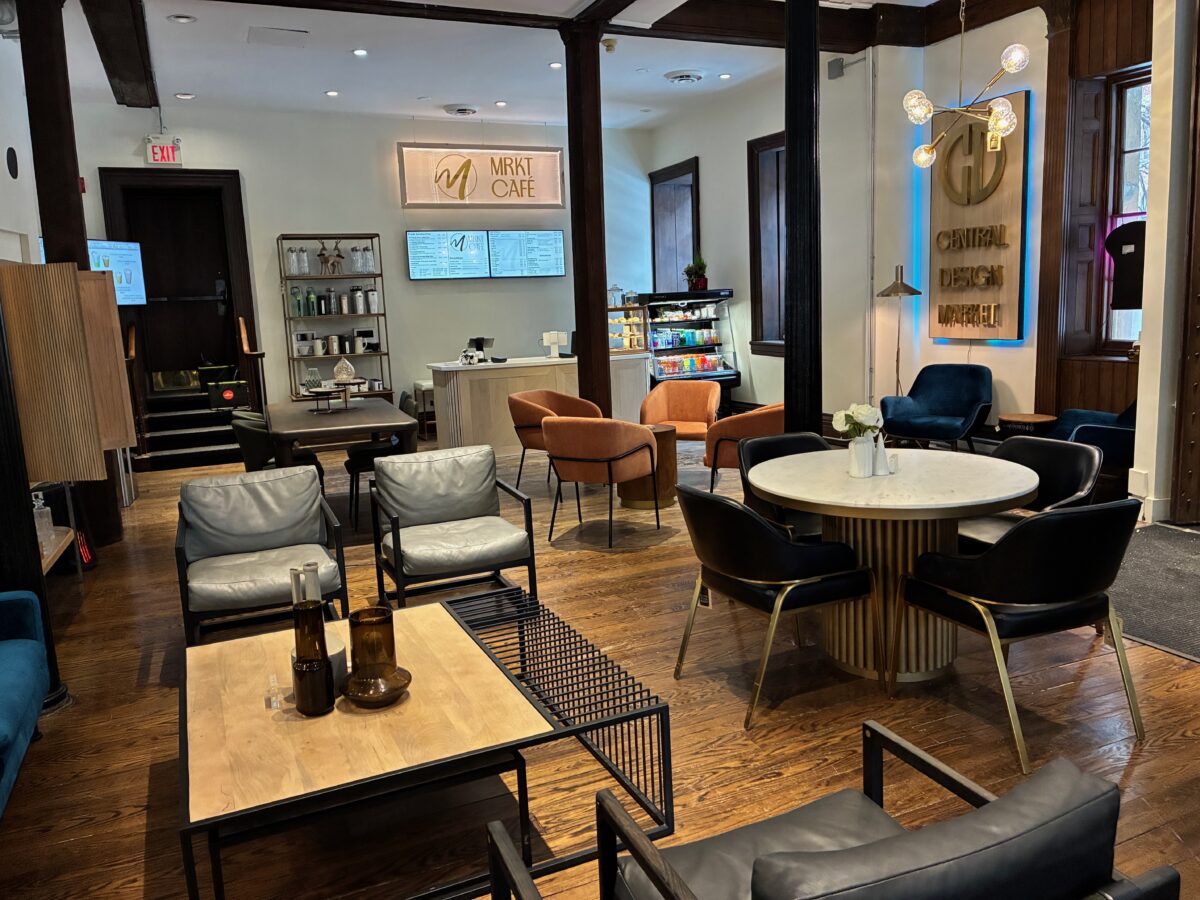
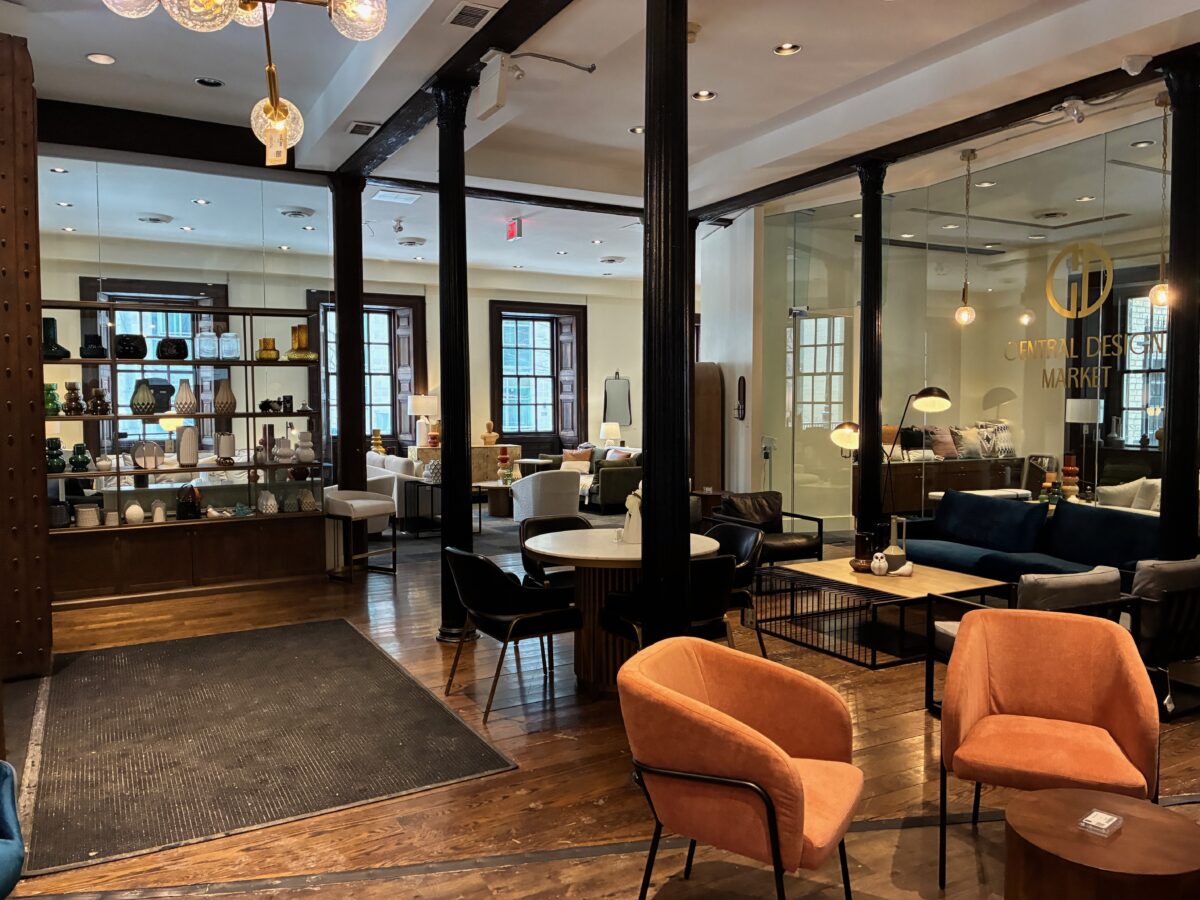
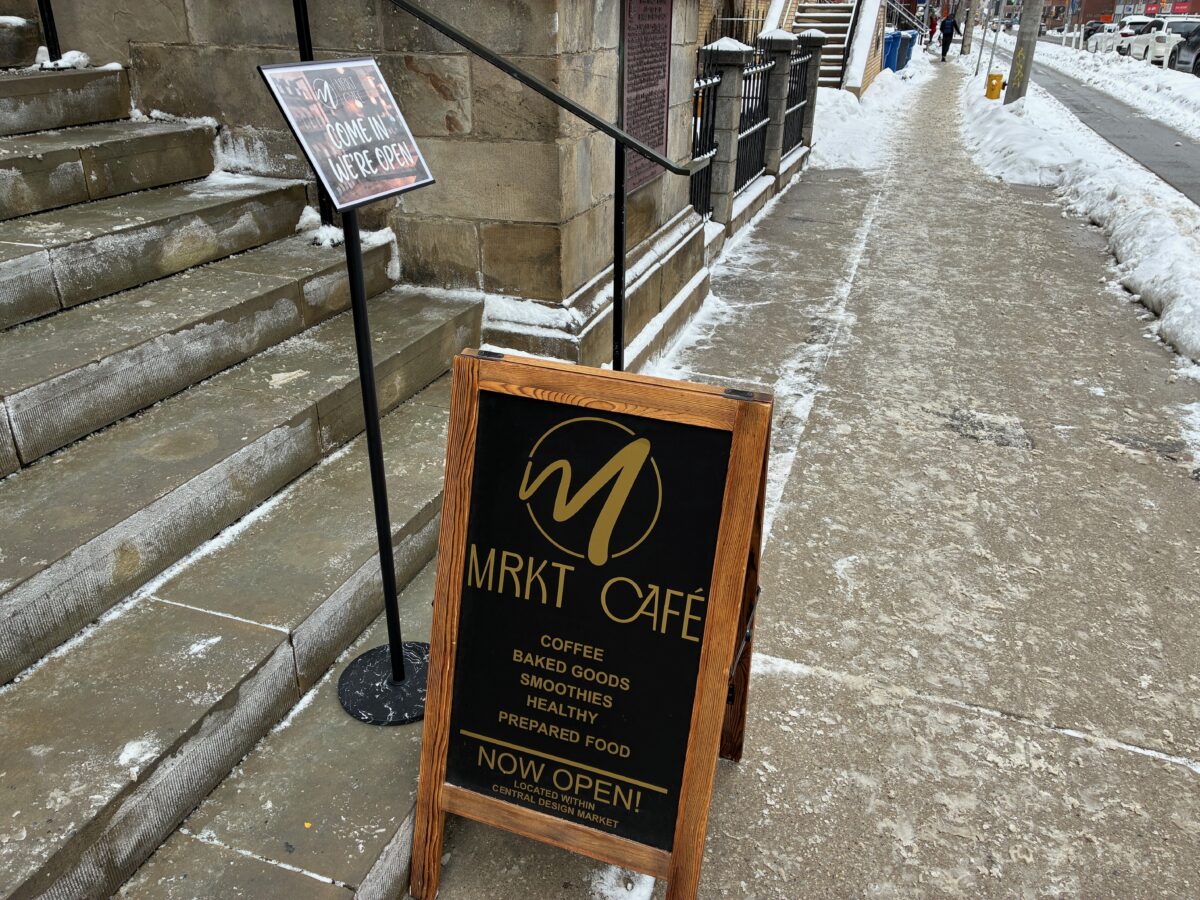
Brothers Mark Fraser and Rod Fraser opened Central Design Market in late November 2025 at 252 Adelaide Street East, combining curated furniture with MRKT Cafe in 3,000 square feet of National Historic Site-designated space. The timing wasn’t accidental. Toronto’s east end has been sprouting residential towers for years, but the cafes and shops that make neighborhoods livable have been slower to follow.
“This area is exploding with residential development. We saw the opportunity before a lot of the big chains did,” Mark Fraser said on a recent Monday morning, gesturing toward the windows facing Adelaide. “The residents are here, and there’s a great community that wants to exist here. They just don’t have the space to do it.”
The timing is particularly strategic. Two blocks north at Queen and Sherbourne, Metrolinx is excavating the future Moss Park Station for the Ontario Line, expected to open in 2030. The new subway connection will bring an estimated 7,300 customers through the station during peak hours, fundamentally changing transit access for a neighborhood that currently relies on the 75 Sherbourne bus and 501 Queen streetcar.
Central Design Market is now part of the Old Town Toronto Business Improvement Area, which represents businesses across the historic St. Lawrence Market neighbourhood from Yonge to Parliament. The BIA has spent years advocating for streetscape improvements and heritage preservation—efforts that align closely with the decision to restore a National Historic Site rather than lease generic retail space.
The residential transformation Mark referenced is visible in every direction. A 63-storey tower has been proposed just blocks west at Adelaide and Church. A 29-storey mixed-use building is planned at Adelaide and Berkeley. The corridor that was largely industrial and commercial a decade ago is rapidly becoming a high-density residential neighborhood—exactly the kind of community that needs local cafes and furniture stores rather than another chain.
The limestone building with its Doric portico has particular resonance for the Fraser brothers. Their father worked at George Brown College for decades, and they grew up wandering these streets when much of the area was still industrial. Mark remembers the building in its dilapidated state, before the 1982 restoration that saved it from the fate of so many Toronto heritage properties.
“I feel like a lot of the history in Toronto gets misused or underused,” he said. “It was about bringing a historic building into the public space and making it retail—something that people can come and experience.”
The Bank of Upper Canada Building has witnessed nearly two centuries of Toronto history. Completed in 1827 when the city was still called York, the limestone structure served as the young colony’s first major bank—complete with a Doric portico added in 1843 by architect John George Howard. William Lyon Mackenzie and the Reformers marched down Yonge Street during the 1837 rebellion with plans to raid the gold stored inside (they failed). After the bank collapsed in 1866, the De La Salle Brothers ran a Catholic boys’ school there until 1913. The building then cycled through incarnations as a meat processing plant, a World War I recruitment centre, and storage for the United Farmers’ Co-Operative before falling into decay in the 1970s.
A 1978 fire destroyed much of the roof, but by then the property had been declared a National Historic Site of Canada. The building was restored in 1982, and today it’s protected under both federal designation and the Ontario Heritage Act. Getting into the space required navigating approval from both the City of Toronto and provincial authorities to ensure renovations honored the building’s architectural integrity.
When Mark started looking for space two years ago, 252 Adelaide wasn’t available. He tracked down the owner and negotiated extensively to secure the location.
“I did not want just another glass box,” Mark said. “I wanted to provide something to the city and something unique that tied to what we were trying to do.”

The business model emerged from Mark’s growing frustration with his previous career. He’d been running a design-build firm, taking on increasingly large architectural and interior design projects that paradoxically isolated him from the human interaction he craved.
“The larger that we got, the larger projects that I got, the less people that I actually conversed with,” he said. “Being a workaholic, I would get a project and I’d hunker down, and I’d be months on my own just designing away. I realized that I needed something different. I’m a very social person.”
So he mapped backward through his career: furniture retail, cafes, fine dining, self-taught design work. The hybrid concept emerged naturally.
“The furniture is the love, and it’s where I truly love design and furnishings,” Mark said. “And then the cafe is a community. The cafe brings in people—a constant stream of new people, new faces, new stories mixed with regulars and people that you get to know.”
The brothers designed Central Design Market and MRKT Cafe to launch simultaneously, rejecting the conventional wisdom of starting small and expanding. They’re entirely self-funded—no venture capital, no angel investors—which Mark sees as essential to maintaining their community-focused approach.
“People are shopping for experiences now much more than they’re just shopping for products,” he said. “We’re an upstart. It’s just us putting this all together. I knew that we needed to provide more than just a furniture store, more than just a cafe, to be able to make it.”
The operation is a true family affair. Mark’s sister works in the business, along with Mark’s daughter, wife, and Rod’s wife and daughter. Beyond family, they’ve built a small team that reflects their community-first values. Carlton Simpson serves as chef, bringing his expertise to the cafe’s menu. Jennifer Shin handles the online site and operations, perfecting the digital side of the business.
“I think that’s what community is. It’s not necessarily just the people that you’re born with, but your family are the people that you choose to surround yourself with,” Mark said. “We treat employees as they are family, because without them, we wouldn’t have what we have, and it’s important to us that they benefit and prosper in the same ways that we do from the business.”
That philosophy extends to how the cafe operates. While Mark handles the front-of-house and cafe operations and Rod manages logistics and resource management, the day-to-day rhythm depends on Carlton, Jennifer, and the full team working together—making sandwiches, brewing coffee, helping customers navigate furniture options, and maintaining the warm atmosphere that distinguishes Central Designs Market from corporate retail.
Rod described the symbiosis between the two businesses. A customer stops in for lunch, notices a side table, asks about lead times. Someone browsing the showroom accepts the offer of coffee and settles in to review fabric samples.
“People come in for the cafe, and while they’re here, they may see a piece that they like, an accessory they like,” Rod said. “Pretty much everything you see is available for sale.”

The showroom deliberately breaks typical furniture retail conventions. Customers are encouraged to actually sit on the sofas, open the drawers, test the chairs.
“It’s much more of a ‘No, you should definitely sit on that. That’s what it was made for. That’s what you’re going to buy it to do,'” Mark said.
The furniture selection targets what Mark calls the “middle market”—a segment he believes has disappeared from Toronto retail. Walk into most furniture stores today and the choice is stark: IKEA and Structube at one end, expensive Canadian-made pieces at the other.
“Right now, your options are either IKEA or Structube, or you buy Canadian and it’s too expensive,” he said. “For the people who can’t afford the stuff made in Canada, they’re left with mass-market options because the middle market doesn’t exist. You can find sofas here that are only a small bit more expensive than what you’ll find at the big-box stores, but they’re significantly better quality.”

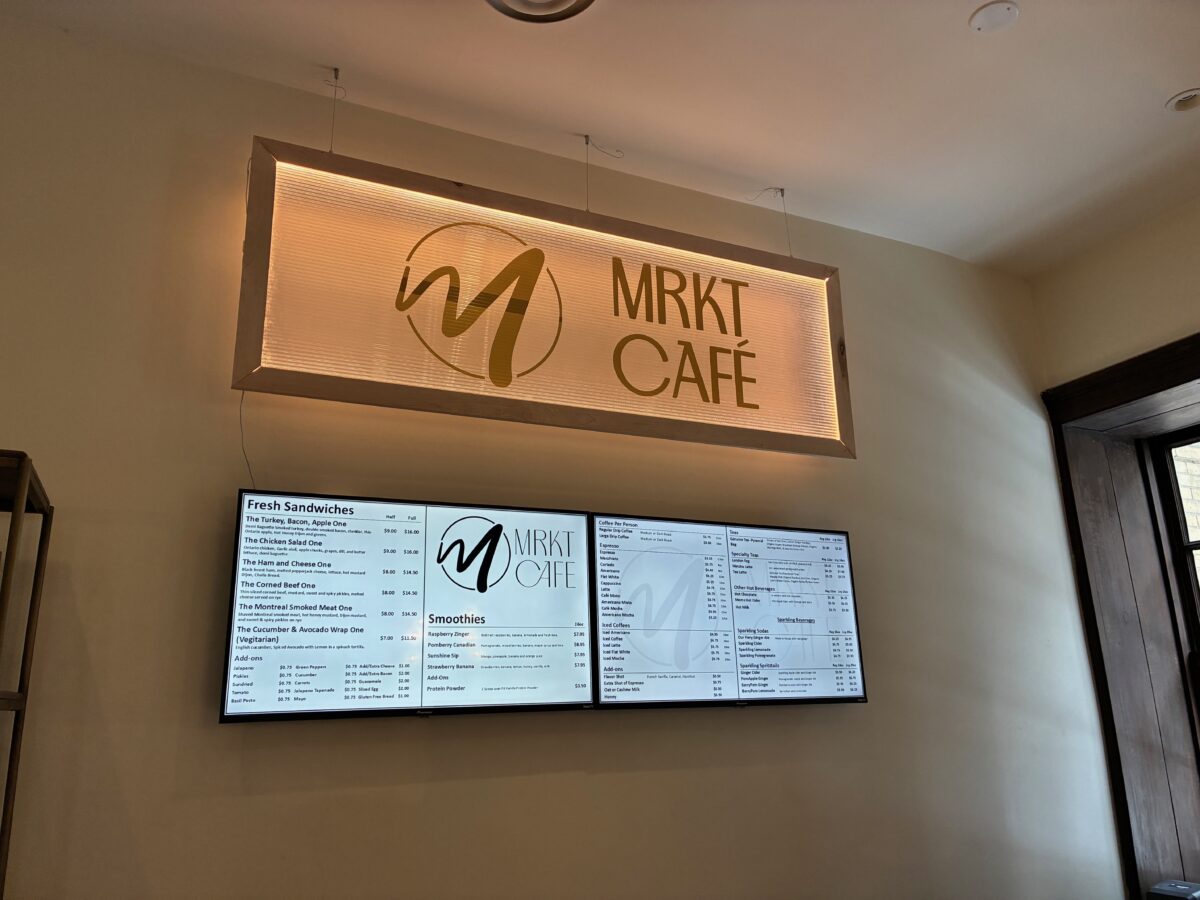
At MRKT Cafe, the menu reflects a similar philosophy about value. Sandwiches come in half and full portions—a simple acknowledgment that not every customer wants a full meal. Pricing deliberately undercuts the premium cafe culture that’s become standard across Toronto.
“We wanted to ensure that we’re not putting something on our menu for the sake of doing it,” Mark said. “Our goal is to be a business more like the old school businesses. We should provide something that makes them want to come to us, and I think the value for what you’re getting is what people are looking for these days.”
Many of the menu items carry personal stories. Mom’s (Soon-to-Be) Famous Hot Cider uses a recipe Mark’s mother made every Halloween for neighborhood parents trudging through the cold with costumed children. The cafe makes its own ginger ale syrup for sparkling ciders. The guacamole uses Mark’s custom spice blend.
“All the sandwiches are based on things that I personally make myself,” he said.
The sourcing decisions prioritize local suppliers even when cheaper options exist. Coffee comes from a roaster so new they barely have a functioning website. Genuine Tea, a Toronto company, supplies the tea selection. Stonemill Bakery provides the bread. Produce and meats come from St. Lawrence Market, a few blocks east.
“Could we get it cheaper from other places? Yeah, we could,” Mark said. “But we think it’s important that it comes from the market. We love the St. Lawrence Market and want that to exist for years to come.”
The building itself offers room for experimentation. The basement is set to become a speakeasy-style venue or coworking space—the team isn’t sure yet, and that’s by design.
“I think businesses these days need to be agile,” Mark said. “They need to be adaptable, able to change.”
George Brown College’s culinary school sits three doors down, creating natural partnerships. Central Designs Market participated in the college’s frosh week event earlier this month, and the team is planning movie nights with students for the future. Culinary students stop in regularly to discuss menu development. Future hiring will likely draw from the college—continuing the pattern of bringing people into what Mark describes as an extended family.
The soft opening through the December holidays gave the team time to refine operations and build neighborhood relationships. Customers have been finding them through Instagram, word of mouth, neighborhood chat groups, and foot traffic. The mix includes regulars already and new faces still discovering the space.
“We’ve gotten a great reception from the community,” Mark said.
The Frasers have expansion ambitions—the business name was chosen deliberately to avoid geographic limitations—but the focus remains on perfecting the Adelaide Street location first.
“Just because we are a small business doesn’t necessarily mean that we have a small business mindset, or that we plan on staying a small business,” Mark said. “We want to grow. We just want to do it in the right way.”
Future locations would follow the same model: historic buildings, community contribution, no venture capital controlling the vision.
“This space is something that I think people can call their own,” Mark said. “Whether you’re a George Brown student or you live in the buildings that surround us or you’re from the other side of the city just coming to explore. This is a building that you can call your own. You can say this is part of Toronto.”
On a Tuesday morning in early February, the cafe hosted a steady stream of customers—an office worker grabbing a half sandwich to go, a couple browsing the showroom while nursing lattes, a George Brown student working on a laptop in the corner. The Bank of Upper Canada Building, which survived rebellion and fire and decades of neglect, has found new purpose as exactly what the team envisioned: a gathering place for a community that’s been building around it for years.
As residential towers continue rising along Adelaide East and the Ontario Line construction reshapes the neighborhood’s transit future, Central Design Market is betting that what East Toronto needs isn’t another Starbucks or showroom that’s open by appointment only. It’s a place with 198 years of history where you can sit on a quality sofa, drink good coffee at a reasonable price, and feel like you’re part of the neighborhood’s story.


Dustin Fuhs is the founder and Editor-in-Chief of 6ix Retail, Toronto’s premier source for retail and hospitality industry news. As the former Editor-in-Chief of Retail Insider, Canada’s most-read retail trade publication, Dustin brings over two decades of expertise spanning retail, marketing, entertainment and hospitality sectors. His experience includes roles with industry giants such as The Walt Disney Company, The Hockey Hall of Fame, The Canadian Opera Company, Starbucks Canada and Blockbuster.
Recognized as a RETHINK Retail Top Retail Expert in 2024, 2025 and 2026, Dustin delivers insider perspectives on Toronto’s evolving retail landscape, from emerging brands to established players reshaping the city’s commercial districts.