
Dax Dasilva has spent twenty years building technology for retailers. As founder and CEO of Lightspeed Commerce, he has watched thousands of businesses succeed and fail — and he has a clear view of what separates the two. So when he posts something that makes the industry stop and think, it’s worth paying attention.

Earlier this month, Dasilva put a question into the world that a lot of retailers have probably avoided asking themselves: is self-checkout actually a good idea? “People think checkout is just payment,” he wrote. “It isn’t. Checkout is also the emotional receipt for a purchase.” It’s a simple line, but it reframes the entire conversation. The checkout moment isn’t an operational footnote — it’s the last impression a customer takes with them.
The post resonated. 6ixRetail reached out to go deeper — and what followed was a conversation that goes well beyond the self-checkout debate.

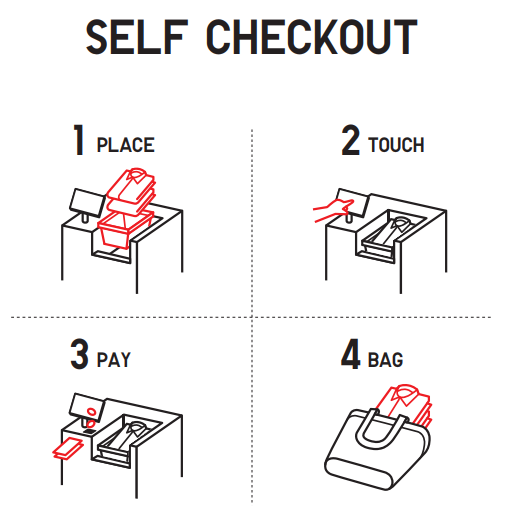
Dasilva calls it the finish line, and his argument is that too many retailers are fumbling it. The experience he describes is familiar to anyone who has stood at a self-checkout kiosk wondering if they scanned something wrong — scanning tags, tapping screens, waiting for a light to flash and an attendant to come approve the transaction. That is the final thirty seconds of the shopping experience for a growing number of retail customers. “The last 30 seconds of a shopping experience play an outsized role in helping customers decide if the whole thing was worth it,” he says.
What makes his argument land is that he isn’t romanticizing the staffed checkout lane. He’s making a brand argument. When a retailer routes a customer through self-checkout, it sends a signal — intentional or not. “When you make someone finish their purchase the way they’d buy a carton of milk, you’re telling them the product is basically interchangeable — and the store doesn’t value their business enough to get an employee involved. Even if that’s not your intention, it lands that way.”
He has seen both sides of this play out more times than he can count. “I have seen beautiful stores lose goodwill with a rushed, impersonal checkout,” he says. “I have also seen simple purchases turn into lasting loyalty because someone took a moment to connect.” The product, the merchandising, the store design — none of it is as durable as operators think if the last thing a customer feels before the door closes behind them is indifference.
Dasilva is measured about where self-checkout makes sense and where it doesn’t. He runs a technology company — Lightspeed crossed $1 billion in annual revenue for the first time in fiscal 2025 — and his argument is not anti-technology. “Technology should support your strategy, not dictate it,” he says. For grocery, pharmacy, or fast casual, speed is the brand promise and tools that reduce friction deliver on it. His concern is with the operators for whom that logic doesn’t hold, who are adopting self-checkout anyway because it feels like the direction the industry is moving.
In boutique, specialty, or any retail where the value is discovery and expertise, technology belongs out of sight. “In those settings, technology should operate in the background, equipping associates with customer insights, inventory visibility, and product knowledge so they can deliver more personalized service,” he says. “The goal is to elevate human interaction, not replace it.” His test for any operator is simple: does the technology strengthen trust, personalization, or efficiency in a way that reinforces the brand? “If it enhances connection, it belongs. If it distracts from it, it probably does not.”
The retailers who consistently get this right, he says, share something that is harder to systemize than margin or conversion rate. “The retailers who build real loyalty understand they are creating a feeling, not just completing a sale. The strongest ones are intentional. They know their customers. They curate with purpose. They empower their teams to have real conversations, not just close transactions.” Those who struggle, in his experience, get absorbed by the operational layer and gradually lose sight of what the experience is supposed to deliver.
“The in-store experience is where a brand becomes tangible and trust is built,” he says. “In a world defined by convenience, experience is the differentiator.”
Which brings the conversation back to the checkout itself — and what is actually being given up when a machine takes that final interaction. It is not just warmth. It is one of the highest-value moments in the entire visit. A staff member who mentions a new arrival, makes a recommendation, or introduces a loyalty program with genuine enthusiasm is doing something a kiosk simply cannot do. “That final interaction is a moment of trust,” Dasilva says. “It is when a recommendation can be made, a new arrival mentioned, or a loyalty program introduced with genuine enthusiasm.”
The case he makes is ultimately a commercial one as much as a philosophical one. “A machine can process payment,” he says. “It cannot read body language. It cannot sense curiosity. It cannot build memory. When the last touchpoint is purely transactional, the experience ends there. When it is human, the relationship has room to grow.”
For retailers navigating rising labour costs and shrinking margins, none of this is easy to act on. Dasilva isn’t dismissing that reality. His point is simpler — be honest about what you are trading away. The efficiency gains from self-checkout are real and measurable. What gets lost is harder to put on a spreadsheet, but it shows up eventually in the customer who stops coming back without ever being able to say exactly why.
Customers don’t always know why a store stopped feeling worth visiting. They just stop going. And by the time the numbers reflect it, the moment that caused it is long gone — thirty seconds at a time.

Dustin Fuhs is the founder and Editor-in-Chief of 6ix Retail, Toronto’s premier source for retail and hospitality industry news. As the former Editor-in-Chief of Retail Insider, Canada’s most-read retail trade publication, Dustin brings over two decades of expertise spanning retail, marketing, entertainment and hospitality sectors. His experience includes roles with industry giants such as The Walt Disney Company, The Hockey Hall of Fame, The Canadian Opera Company, Starbucks Canada and Blockbuster.
Recognized as a RETHINK Retail Top Retail Expert in 2024, 2025 and 2026, Dustin delivers insider perspectives on Toronto’s evolving retail landscape, from emerging brands to established players reshaping the city’s commercial districts.