

When Vancouver’s DL Chicken began its search for a Toronto location, founder Doug Stephen and his general manager George Biss didn’t start with a broker or a listing. They started with a bicycle. Biss, who had relocated to Toronto in early 2025 and didn’t want to leave the company, spent his first weeks riding the city’s major thoroughfares every day, cataloguing what was available and what felt right.

The shortlist that emerged in November included a space on Queen Street at Queen and Bathurst and another on Yonge Street, north of Wellesley south of Bloor — high-traffic corridors that would have given the brand immediate visibility. Stephen flew in to see them. Around the same time, the team sat down with Jenny Shin, President and CEO of Milestones Public Relations, who would go on to represent the brand. She didn’t love any of the shortlisted spaces either. “None of them felt right,” Stephen says. “When you walk into a place, it feels right or it doesn’t.”
The breakthrough came not from a listing but from a meal. Stephen and Biff spent a day eating their way through some of Toronto’s most compelling independents — Lambo’s Deli, Pizzeria Badiali, Made Rite Coffee. The pattern they noticed had nothing to do with foot traffic. Every one of those spots had built its own audience on a street that didn’t do the work for them. “They found their own voice in their own space,” Stephen says. “They weren’t trying to find their voice on a very, very busy street.”
With the major thoroughfares ruled out, Stephen and Biff went back to basics. Stephen thought about the neighbourhoods he had always loved — Ossington, College, the Annex. “And there’s a street that kind of sits in between them,” he told Biff, “called Harbord Street.” He remembered it at its best — the Harbord Room, Splendido, and what eventually became Piano Piano in that same storied space — and saw in it exactly the kind of density and character that DL Chicken was built for. Sure enough, a corner unit on Manning Avenue surfaced. Directly across from a high school, embedded in a neighbourhood dense enough to sustain a restaurant that builds its audience the old-fashioned way.

To understand why this opening matters, you have to go back further than Vancouver. Stephen’s father was in the hospitality industry — something the younger Stephen watched growing up, and swore he’d never repeat. His father didn’t see much of home. The industry had a way of consuming people. But his dad’s world had a long reach. He sat on a hospitality buying board called GroupX, alongside a gentleman named Andrew Laffy who owned the Hot House Cafe at Church and Front, and Peter Nachu, who at one point owned an entire strip of the Esplanade — the Organ Grinder, the Old Spaghetti Factory, Scotland Yard, and others — before consolidating down to just the Old Spaghetti Factory.
When Stephen got himself into some trouble as a teenager, his father told him it was time to get a real job. Through those connections, he landed at the Hot House Cafe in 1999 as a busboy. By his own admission, he was terrible at it. “I thought I was too cool for school,” he says. He was also, as he puts it, getting himself into trouble — including with the law. It was a server there, someone who knew his father, who sat him down one day and changed the trajectory of everything. The message was simple: you don’t have to operate this way. You can make good money in this industry if you choose to apply yourself.
Stephen applied himself. He became one of the top bussers on the team, was promoted to server, and at nineteen was the youngest server on staff by about five years. The Hot House GM recognised something in him and invested real time teaching him about food and wine. For a kid who had been heading in a different direction entirely, that mentorship landed hard. “I’ve had a number of relationships like this in the time that I was learning about the hospitality industry,” he says. “It helped me become who I am and form a lot of where my passion lies.”
In 2002 he made the move to Oliver and Bonacini’s Jump — again the youngest server on the floor, again by five or six years. GM Jared Young took the same kind of flyer on him, spending time fostering his growth rather than writing him off for his age. He remembered his first ninety days of probation, terrified every shift that he was going to be let go. He wasn’t. By 2004 he was a wine purchaser for Jump and Biff’s before he was twenty-five. The industry his father had given his life to, the one Stephen had promised himself he’d avoid, had become the thing he loved most. “I swore I would never get into the industry because I didn’t see much of my father when I was younger,” he says. “But it turns out it’s in my blood and I absolutely love it.”
He moved to Vancouver in late 2010, fell in love with the city, fell in love with his partner Lindsey Mann, and got a dog. A pit bull cross, as it turned out, which created a complication. Ontario’s breed restrictions meant going home with his family intact wasn’t straightforward. “Between my dog not being allowed in, and my partner” he says, “I was kind of bound to Vancouver as to where I was going to start my entrepreneurship.” A pit bull kept DL Chicken out of Toronto for fifteen years. That’s the origin story nobody else has told.
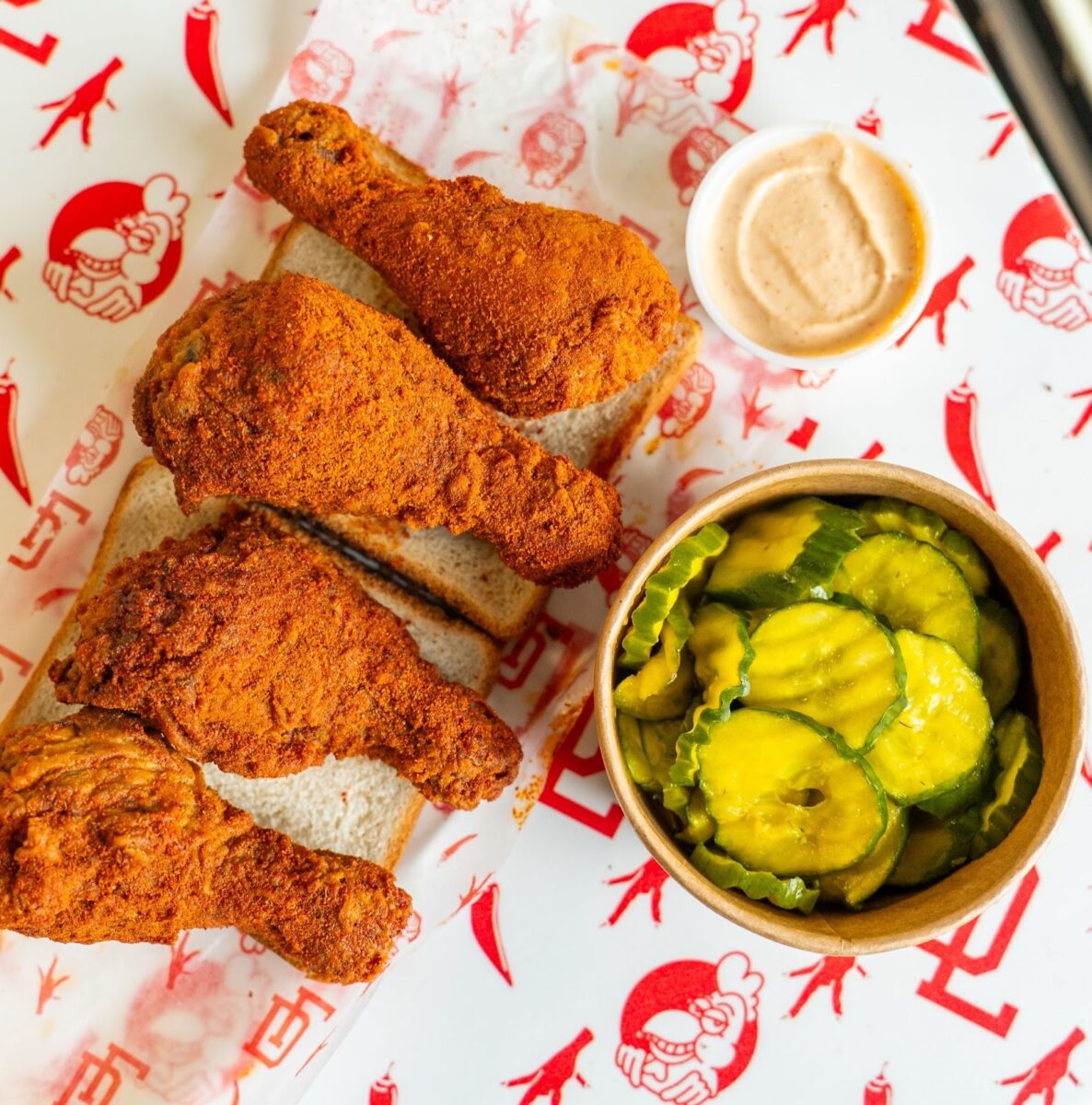
In Vancouver, Stephen and Mann opened Merchant’s Oyster Bar in 2012. It had its ups and downs, and when their chef abruptly left in 2013, Stephen made what he calls “the very, very fun decision” to move from front of house to back of house. He taught himself the kitchen, found his voice as a cook, and eventually launched a late-night fried chicken menu that drew lineups down the block. The problem was they were frying without full chemical suppression. A neighbour, caught for something else entirely, offered up that information to the fire department as a kind of currency. “They were kind enough to let the fire department know that we were frying illegally,” Stephen says. “And that’s when we said, man, we should have kept it on the downlow.”
The name stuck. The restaurant followed in 2018, properly licensed, on Commercial Drive. The lineups never really stopped.
What DL Chicken built over the years that followed wasn’t just a popular restaurant — it was a neighbourhood institution. Stephen built the brand around a philosophy that sits slightly outside the norms of quick service. The chicken is exceptional — open basket frying, made to order, quality birds. But the food is only one element. “Just because you’re coming in for a quick chicken sandwich doesn’t mean we can’t make you feel welcome,” he says. “Doesn’t mean we can’t be having fun while we’re doing it.” The best compliment the brand receives, he says, is that they can change people’s days. That someone walks in feeling whatever they’re feeling and leaves better for it. It’s a sensibility that reads less like a restaurant policy and more like something instilled in a teenager at a table in the Hot House Cafe on Church Street, twenty-five years ago.
Stephen is careful about how he talks about Toronto’s fried chicken scene. He’s not arriving as a critic. “I have a great deal of admiration for what’s been built out here,” he says, pointing to Chicas, Chen Chen’s, and PG Clucks as examples of what locally grown concepts can achieve. “The stuff that’s been kind of grown locally is all incredible.”
What he does see is a lane that hasn’t been fully claimed — and it has less to do with the chicken itself than with how it’s served. He grew up on Lick’s Burgers, the loud, boisterous, rambunctious Toronto institution that made getting a burger feel like an event. That energy, applied to quick service fried chicken, is closer to what DL Chicken is chasing than any direct competitive comparison. “I think we do something that’s wholly unique,” he says. “And I think that when people experience it, they’ll understand what I mean.”
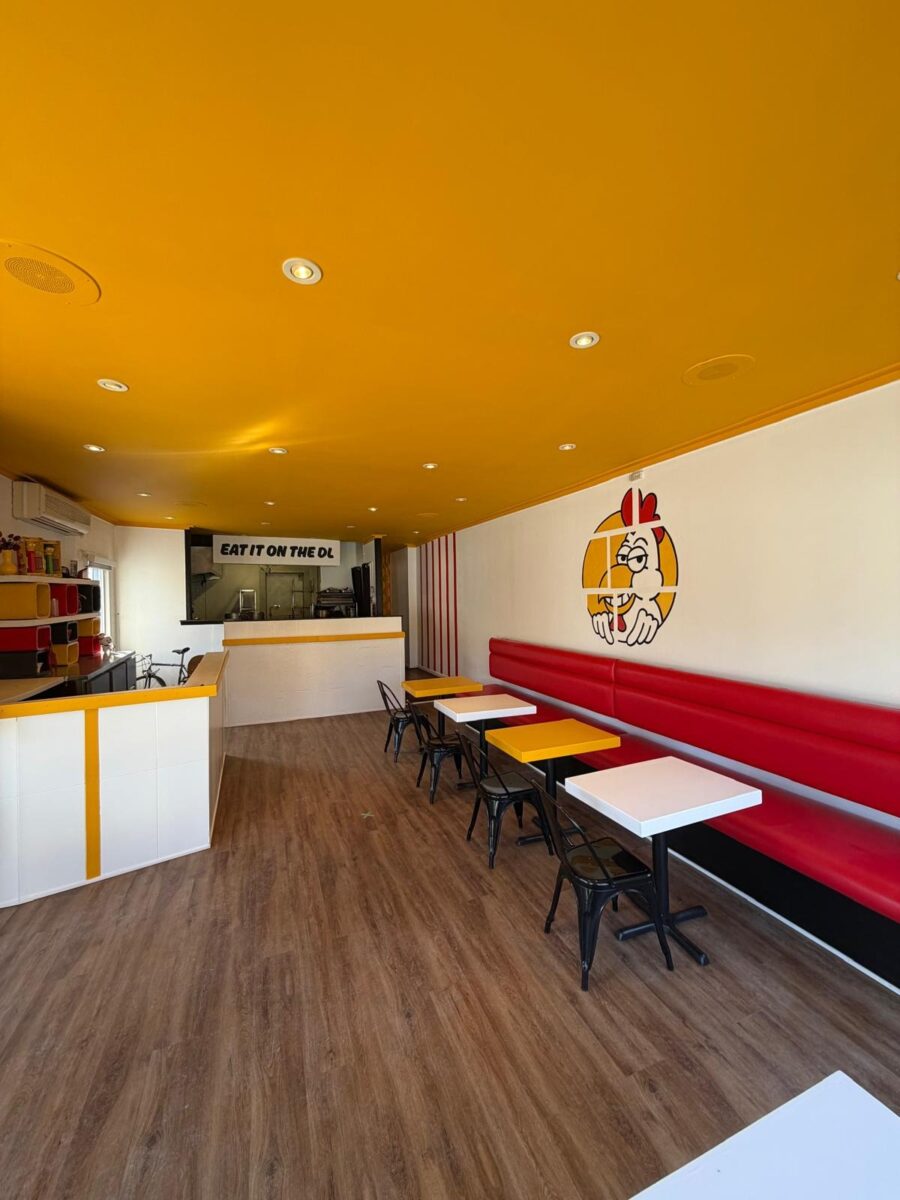
The Toronto location opens with 20 seats, a liquor licence, and a design sensibility Stephen describes as slightly more refined than the Vancouver locations. A patio and private dining room are planned for the coming months. A Toronto-exclusive sandwich is being finalized — a deliberate signal that this location is meant to have its own identity, not simply replicate what exists on Commercial Drive.
Three Vancouver locations over seven years reflects a founder who believes getting it right matters more than getting it fast. He hasn’t franchised. He hasn’t chased scale for its own sake. The infrastructure being built here — a trusted operator on the ground in Biff, a location chosen with surgical precision, a brand arriving with genuine momentum — looks less like a single opening and more like a foundation. “This isn’t a West Coast transplant,” Stephen says. “This is an amalgamation of my time spent on both coasts. A lot of my successes on the West Coast emanate from some of the drive that was instilled in me here in Toronto.”
Ask him why he finally decided to open in Toronto and the answer isn’t what you’d expect from a founder entering one of North America’s most competitive food markets. “My mom still lives here,” he says. “I’ve had a dream of always being able to take a business trip to see my mom. It’s been very high on my list to open something here so that I can see her more frequently.”
But spend thirty minutes with Doug Stephen and you leave with no doubt that the personal and the professional are pulling in exactly the same direction. “I’m so pumped to be in Toronto,” he says. “As a city, it’s so incredible and it’s so vibrant. We’re just really, really excited to get to work and start to nail everything down.”
DL Chicken opens with a soft opening on March 20, followed by a grand opening on March 24 where the first 100 guests receive a complimentary OG Fried Chicken Sando at 11 a.m. The restaurant is located at 538 Manning Avenue at Harbord Street.

Dustin Fuhs is the founder and Editor-in-Chief of 6ix Retail, Toronto’s premier source for retail and hospitality industry news. As the former Editor-in-Chief of Retail Insider, Canada’s most-read retail trade publication, Dustin brings over two decades of expertise spanning retail, marketing, entertainment and hospitality sectors. His experience includes roles with industry giants such as The Walt Disney Company, The Hockey Hall of Fame, The Canadian Opera Company, Starbucks Canada and Blockbuster.
Recognized as a RETHINK Retail Top Retail Expert in 2024, 2025 and 2026, Dustin delivers insider perspectives on Toronto’s evolving retail landscape, from emerging brands to established players reshaping the city’s commercial districts.