Not All Store Closures Are Created Equal: Understanding Retail Shifts in 2026

Retail strategist Tamara Szames explains why conflating natural lease expirations, retirements, consolidations, and brand failures misses what's actually happening in Toronto's market

Tamara Szames has spent nearly 20 years translating consumer behaviour into commercial strategy for Canada’s tier-one retailers and brands. As founder of Arc + Axis and former Executive Director at Circana (formerly NPD Group), she advised leadership teams at moments of inflection—when growth stalls, categories shift, or clarity is needed to move forward.

Tamara Szames

Lately, she’s grown frustrated with how the public interprets what they’re seeing in Toronto’s retail landscape.

“Even though we start to see highlights of these structural shifts, it really doesn’t explain the full picture,” Szames says. “Sometimes we have to go a little bit deeper to understand what’s actually happening so that we can uncover the real narrative and opportunity.”

The headlines keep coming. Cineplex Beaches is closing after 25 years. The Patrician Grill is shuttering after seven decades on King Street East. Steve’s Music is liquidating four of its five locations. Eddie Bauer is closing stores. Toys “R” Us faces an uncertain future. To casual observers scrolling through social media, it all reads the same: retail is dying, storefronts are going dark, retail is in trouble.

These aren’t variations of the same story, Szames explains. They’re fundamentally distinct situations being flattened into a single doom-and-gloom narrative.

The Post-Pandemic Reckoning

Steve’s Music Store on Queen Street West (Image: Dustin Fuhs)

The timing of these closures isn’t coincidental. Many of the leases signed during or immediately after COVID are now coming up for renewal.

“Things have changed dramatically,” Szames says. “Consumer expectations have evolved from 2021 to 2026, and retail is going to shift along with those expectations.”

The pandemic didn’t just accelerate e-commerce adoption. It fundamentally rewired consumer expectations. Shoppers now demand more from brick-and-mortar experiences. Convenience alone won’t justify a trip to a physical location. Brands that haven’t evolved their in-store offerings, their messaging, or their relevance are feeling the pressure now.

stevesmusic.com

Steve’s Music opened on Queen West in 1977, back when musicians needed to visit a physical store to research gear, ask experts questions, and understand what equipment suited their needs. Today, that research happens before anyone walks through a door.

“Before, going in store and asking the expert about their opinion, what’s the best materials, doing the research in store was the best way to understand what is actually needed,” Szames says. “Today, there are so many resources online where you can do that research. An at-home or studio trial is what is needed.”

The purchase still happens. The path to it has fundamentally changed. Steve’s is consolidating to its Montreal flagship not because the category is dead, but because the role of physical retail in that category has shifted—strategic optimization, not market failure.

Natural Lease Expirations vs. Business Failure

The Cineplex on Queen East closes on February 17th. The theatre isn’t failing. The landlord simply chose not to renew the lease, opting instead to bring in a health and wellness business, according to City of Toronto building permits. 

“It’s not necessarily a bad thing when we see stores moving or storefronts being vacant,” Szames says. “Retailers have to look at their best performing stores, optimize those locations, reallocate funds to support growth in their operations. That entails looking at each store and how well it performs.”

This is what the industry calls a natural lease expiration. A retailer signs a 10-year deal with an out-clause at five years, or a two-year agreement that gets renewed if performance warrants it. These aren’t desperate exits. They’re built-in evaluation points where both landlord and tenant reassess whether the relationship still makes sense.

Cineplex has been there since 1999. The business model works. Nearby locations will absorb the audience. The landlord made a strategic decision about tenant mix—not a referendum on movie theatres or entertainment retail, but real estate strategy.

The Patrician Grill closing on May 9th follows a similar pattern, though for different reasons. Terry Papas and his family are retiring after nearly 60 years of running the restaurant. His parents bought it in 1967. He’s been working there since 1987. The neighbourhood loves it. The Papas family has earned the right to retire. That’s not retail failure. That’s a natural lifecycle.

When Brands Lose Their Identity

Former Eddie Bauer at CF Toronto Eaton Centre (Image: Dustin Fuhs)

Eddie Bauer and Toys “R” Us tell a different story entirely. These are brands struggling with something more fundamental than lease negotiations or category shifts.

“Being sold multiple times, there’s no founder vision,” Szames says. “That’s often what gets lost. It’s hard to be relevant when you don’t really have an authentic point-of-view, the reason why you started. So we start to see a lack of connection between the consumer and the brand.”

Eddie Bauer has had three owners since 2008. Each ownership change diluted whatever made the brand distinctive in the first place. Toys “R” Us has cycled through similar ownership and strategy shifts. The struggles there don’t signal that toy retail is dying. Smaller, local toy retailers are thriving by establishing clear points of view and creating experiences that feel personal and joyful.

“When we talk about being relevant, there are two pillars,” Szames says. “The first is remaining authentic to your original POV. And the second is being relevant with todays culture and your consumer. It’s not about your consumer coming to you. It’s about you, the brand, the retailer meeting the consumer and being where they are.”
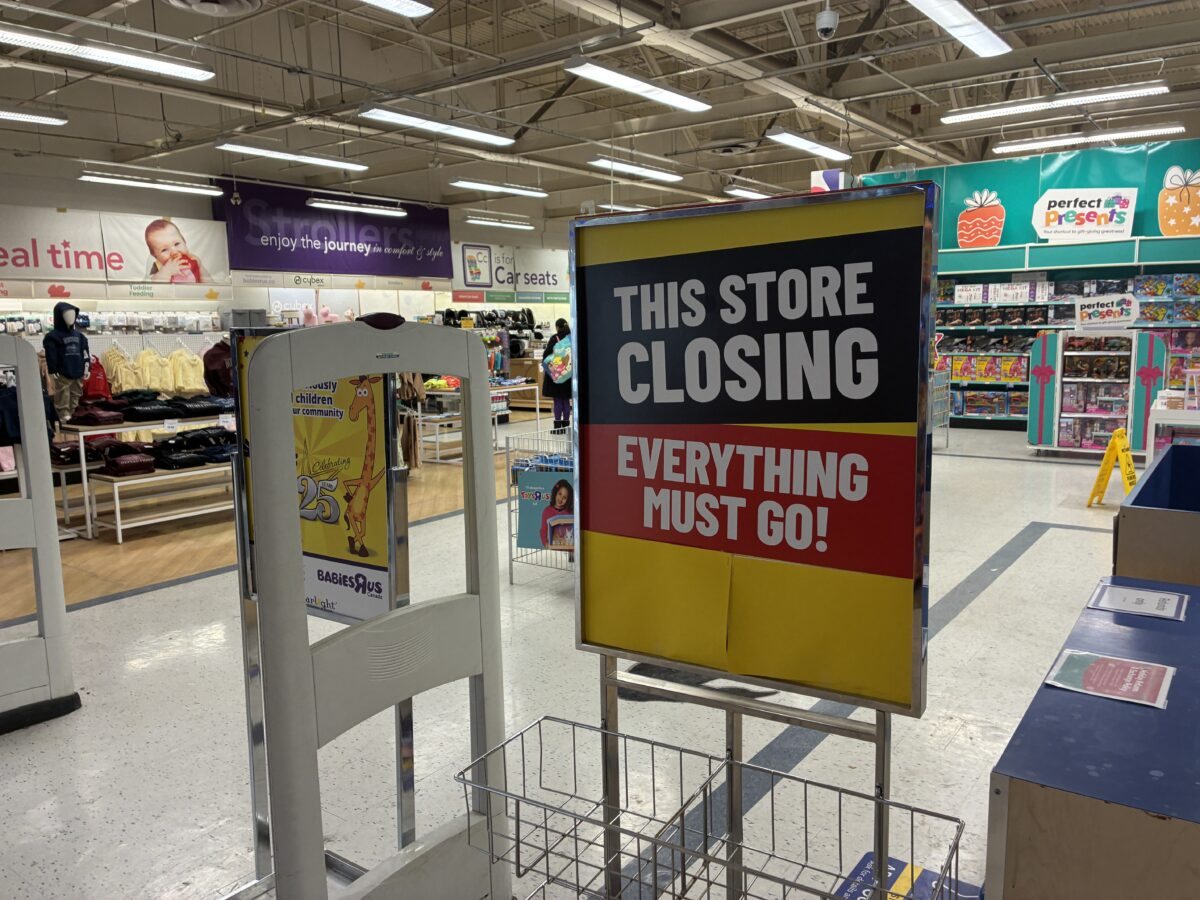
Toys “R” Us at Dufferin Mall (Image: Dustin Fuhs)

The Strategy Inversion

The old retail model assumed consumers would come to you. Build the store, stock the shelves, advertise the sale, and shoppers would show up. That’s over.

“We’re no longer in a market where we can expect consumers to come to us as retailers or brands,” Szames says. “It’s now up to the brand and retailer to go to the consumer. And that’s what changed. There has been a big shift in perspective and narrative, and without understanding that challenges will happen.”

Physical retail’s role has shifted from transaction hub to brand messaging. The store isn’t just where you buy things anymore. It’s where you understand what the brand stands for, what it believes, why it exists. Retailers that treat their locations as afterthoughts or purely transactional spaces are missing the point entirely.

The brands succeeding right now are the ones that understand this. Heritage brands that have reconnected with their founding vision. New entrants that identified underserved needs and built experiences around them. They’re not waiting for consumers to find them. They’re going where the conversation already exists.

Finding Opportunity in the Noise
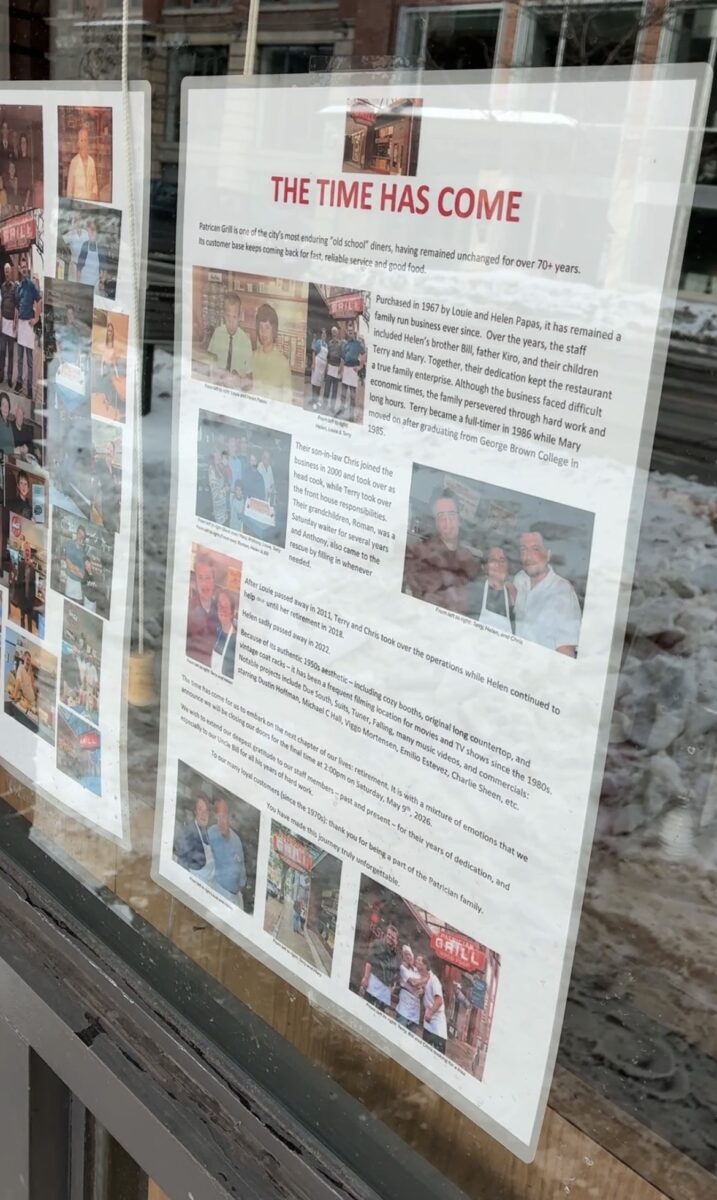
The Patrician Grill on King Street East (Image: Dustin Fuhs)

Every closure announcement triggers the same reflexive takes about dying industries and doomed markets on social media.

“We can get sucked into the negative and the doom and gloom, but with everything, there is opportunity,” Szames says. “Yes, the economy is challenging. Yes, the landscape has changed. It doesn’t mean consumers are not buying. It’s just what is influencing them and how they’re buying has changed. And the retail landscape has to adjust to that.”

The opportunity hasn’t disappeared. It’s relocated. Consumers are still spending. They’re still visiting stores. They’re still building relationships with brands. What’s changed is what earns their attention, what justifies their time, what makes a physical experience worth having instead of clicking “add to cart” from their couch.

Landlords making strategic tenant mix decisions. Families retiring after decades of service. Brands consolidating to stronger markets. Companies struggling with lost identity and relevance. These are four completely different dynamics, each requiring different analysis and different responses.

Lumping them together under a single narrative of retail apocalypse misses what’s actually happening. It obscures where the real problems exist and where genuine opportunities are emerging.

The Patrician Grill closes because the Papas family chose retirement. Cineplex Beaches is closing because a landlord wanted a different tenant. Steve’s Music consolidates because the category’s path to purchase has evolved. Eddie Bauer and Toys “R” Us struggle because they’ve lost connection to what made them matter in the first place.

Different stories. Different implications. One oversimplified narrative that gets it wrong.

More from 6ix Retail

Lightspeed Study Finds AI Favours National Chains Over Independents

AI chose the national chain up to 94% of the time. Dax Dasilva tells 6ixRetail the one-word change that shifts the results, and what retailers should do now.

One Year Later: What Happened to the 13 Toronto Starbucks Locations That Closed in 2025

Eight of nine former Toronto Starbucks spaces are still vacant a year later. See photos of each location, plus the one coffee shop moving in.

Book City Marks 50 Years as One of Toronto’s Longest-Running Independent Bookstores

Toronto independent bookseller Book City celebrated its 50th anniversary this month. Owner Ian Donker spoke with 6ixRetail about staff loyalty, competition, and running a family business across four Toronto neighbourhoods.

Starbucks Closing More Toronto Locations as Second Wave Hits Stores Across Canada

Starbucks is closing Toronto stores on Bay Street, Church Street, Portland Street and Yonge Street this week. Full list of closing locations across Canada, with addresses.

How Toronto’s Stalled Developments Are Creating New Retail Leasing Opportunities

Value Insight Realty CEO Sari Samarah on downtown sites, from a fully demolished block on King East to a still-standing corner on Bloor West, and what they reveal about tenant mix, construction costs, and where the market is headed into ICSC.

Egg Club Brings Second PATH Location to MetroCentre Concourse

With strong numbers at Union Station, Egg Club is betting that an additional PATH location and a widening value menu can carry the brand into its next phase of growth.

The AI Commerce Features Nobody Needs

Lightspeed Commerce CTO Bhawna Singh explains why the strongest AI products won't be defined by how much AI they ship, but by the problems they solve for customers

Rosso Pasta Bar Set to Open First Location Inside The Well

Co-founders Raja Jay and Karthiga Raja are betting their first fully independent concept on a family trip to Italy, a food hall built for foot traffic, and 15 years of retail experience.

McDonald’s Is Expanding Across Toronto

Five new sites, from a former pub in Riverside to a food court corner at Yorkdale, point to two very different strategies playing out at once.

The Back to School Calendar Was Never Built for the Canadian Shopper

Lightspeed CEO Dax Dasilva on why Canadian back to school promotions start in June while families don't shop until August, and what retailers should do about the gap.

Juicy Birds Set to Open First Downtown Toronto Location

The Toronto-based social media sensation will be setting up shop on John Street, with a goal to run the location around the clock.

Toronto’s Waterfront BIA Eyes a Signature International Festival as part of New Events Strategy

A new 85-page report from the Waterfront BIA lays out a plan to unify Toronto's waterfront into one connected destination, with a Vivid Sydney-style signature festival as the long-term goal.

SUSO Skate Co. Confirms Woodbine Mall & Fantasy Fair for Next Pop-Up

Co-founder Henry O'Brien breaks down five years of Toronto mall leasing, SKATEVAN's U.S. franchise plans, and how vacant retail space became a business model.

Gabby’s Harborfront Confirmed to Open September 2026, Replacing NBA Courtside Restaurant

The move keeps the address under the same operator, as Urban Dining Group shifts one of its own downtown properties from a licensed NBA concept to its longtime sports bar brand.

Roots Is Going Private in a Deal Led by Joe Mimran and Marquee Brands

The $4.10-a-share deal ends Searchlight Capital's decade as controlling shareholder and hands day-to-day control to a new Toronto-based operating company.

RUDSAK Confirms New Bloor Street Boutique for Fall 2026

COO Armen Momejian on the AI-designed boutique taking over the former Van Cleef & Arpels space, and why going smaller was the point.

Inside Toronto’s Malibu Barbie Cafe

Now open at 70 The Esplanade, the pop-up making its Canadian debut brings retro beach dining, a roller rink, and exclusive merchandise to Toronto for an eleven-week run. Here's a look inside.

Brasa Peruvian Kitchen to Open First Airport Location at Toronto Pearson

Founder and CEO Michel Falcon on the Banmore Group partnership, adjusting for an airport customer, and what's coming next for the brand.

Little Canada Rebrands as Pocket Planet Canada, With Toronto Named the Brand’s Global Flagship

Founder and CEO Mark Vlassopulos on why Toronto is now the company's flagship, the philosophy behind the design, and what's coming next for the attraction.

The Last Mile Meets the Front Door

Grocery chains, quick service restaurants and mall landlords across Canada are signing third-party delivery deals faster than their stores can handle the traffic.

Most Read on 6ix Retail

Hundreds of Starbucks Workers Face Job Loss as Chain Closes Stores Across Toronto

Chain shutters underperforming stores as part of $1B restructuring, leaving baristas seeking new employment

Starbucks Closing More Toronto Locations as Second Wave Hits Stores Across Canada

Starbucks is closing Toronto stores on Bay Street, Church Street, Portland Street and Yonge Street this week. Full list of closing locations across Canada, with addresses.

Warehouse One and Bootlegger Are Closing Every Store in Canada

Warehouse One Clothing Ltd. has filed for CCAA protection and is closing all 128 Warehouse One and Bootlegger stores across Canada. Liquidation sales begin around May 16.

What We Know: Toys “R” Us Canada Files for Creditor Protection

The iconic toy retailer seeks creditor protection after closing more than 50 stores in two years, owing $120 million to vendors as it evaluates strategic alternatives

Tim Hortons Opens First Standalone TimShop at CF Toronto Eaton Centre

Coffee chain tests experiential retail strategy with plushie activation targeting holiday shoppers

Dunkin’ Is Coming Back to Canada

Peter Mammas on why Foodtastic bought the Canadian rights to one of the world's most recognized coffee brands, where the first locations are headed, and what is coming next.

Healthy Planet to Open 12,000 Square Foot Store at Yonge and Eglinton

Canada's largest family-owned organic grocer is opening a 12,000 sq ft two-level store at 2529 Yonge Street, targeting Q1 2026 opening in midtown Toronto.

Photo Report: Yorkdale Shopping Centre Update (December 2025)

Tom Ford, Gentle Monster, and AMI Paris open as luxury corridor expands while Club Monaco Men closes and pop-up strategy fills transitional spaces

Photo Report: Yorkdale Shopping Centre Transformation (August 2025)

Exclusive photo tour of Yorkdale Shopping Centre's August 2025 transformation, featuring Simons flagship, luxury corridor expansion, and major tenant changes.

SHEIN Pop-Up Returns to CF Toronto Eaton Centre Amid Major Retail Transformation

Ten-day pop-up occupies former Banana Republic space as Hudson's Bay fights for survival and Optimize Wealth moves into historic Bank of Toronto building

MUJI to Open Its Latest Toronto Location at The Well This September

Japanese lifestyle retailer takes over former Design Republic space as downtown mixed-use destination continues tenant expansion

EXCLUSIVE: Crunch Fitness Secures Landmark Financial District Location for Downtown Toronto Debut

Crunch Fitness signs 21,000-square-foot lease at 20 King West, transforming historic RBC gold vaults into premium PATH-connected gym targeting Gen Z demographic with fall 2025 opening.

Shake Shack Reveals Strategic Six-Site GTA Expansion

Premium burger chain announces six new GTA locations through 2026, creating 400+ jobs while expanding from downtown Toronto to suburban markets across the region.

Black Friday’s Latest Date Creates 26-Day Shopping Crunch for Canadian Retailers

Toronto liquidation expert Alex Hennick warns compressed holiday timeline will separate struggling retailers from survivors

Mandy’s Announces Multi-City Expansion, Adding Yonge & Eglinton and Canary District to Toronto Portfolio

Fast-casual chain Mandy's Salads reveals next phase of national expansion, adding new locations in Toronto and Ottawa while growing Montreal presence

NRG Haus to Bring Social Wellness Club to Liberty Village

Fit Factory Fitness founder Ivan Ho bets on sober-curious movement with contrast therapy venue featuring immersive cold plunge and functional mocktails

Decathlon’s GTA Exit Opens Door for Experience-First Retail Revolution

Decathlon Canada closes five GTA stores in Brampton, Burlington, Markham, Scarborough and Vaughan, creating opportunities for experiential sporting goods retailers as Canadian market shifts toward community-focused retail.

IKEA Closing Scarborough Town Centre Store Opens 100K SF Opportunity in Former Sears Space

With both IKEA and Decathlon exiting the redeveloped Sears box by early 2026, Oxford Properties faces a challenge—and a chance to reimagine nearly 100,000 square feet at one of Toronto's biggest malls

Canadian Mall Productivity Rankings: What the 2025 ICSC Numbers Reveal

The ICSC has released its 2025 Canadian mall productivity rankings, covering 111 shopping centres from coast to coast. Here is what the numbers say about where Canadian retail is thriving, growing and struggling.

Discount Grocery Expansion Is Dominating the Toronto Retail Market in 2025

No Frills leads urban push with multiple new locations as Canadian grocers focus on value-oriented growth