The Third Space Is the New Storefront

Gen Z is spending more, staying longer and coming back more often, but only in stores that give them a reason to be there.

Gen Z is not coming back to physical retail out of nostalgia. They are coming back because the store offers something the phone cannot. New research from Lightspeed Commerce puts numbers to that shift, and for anyone making leasing and brand decisions in Toronto right now, the timing is worth paying attention to.

Fifty-four percent of young Torontonians surveyed said they have visited a retail location specifically for a third-space experience. Seventy-three percent say they would spend more in a store that offers non-shopping features. Seventy-seven percent say they would return. And 81% say they feel more emotionally connected to brands that create gathering spaces over those focused purely on transactions. But the number that sits underneath all of those is this: 93% said visiting a store with social or community features helps them feel less isolated.

That is not a retail statistic. That is a social one. And it says something important about the environment these consumers are living in, particularly in a city like Toronto, where people are increasingly living alone in smaller spaces, spending more time online, and looking for reasons to be somewhere rather than just somewhere to buy something. The store that understands that is not competing with e-commerce. It is offering something e-commerce structurally cannot.

Toronto has thousands of new condo units coming to market in 2026 and beyond, most of them with ground-floor retail attached. That space is going to get leased regardless. The question is whether it gets programmed or just filled. The Lightspeed research suggests the answer to that question has a direct line to revenue, retention and foot traffic in ways that are increasingly hard to ignore.

John Shapiro

John Shapiro, Chief Product and Technology Officer at Lightspeed, says Gen Z is approaching physical retail with a different kind of intention than previous generations. “They have grown up in a digital-first world, so physical retail needs to offer something distinct to earn their time,” he says. “What is new is how selective they are. They are not just showing up. They are choosing spaces that reflect their identity, offer a sense of community, and give them a reason to stay.”

That selectivity has real consequences for how ground-floor retail in new developments gets designed and leased. A row of businesses that serve morning coffee crowd and goes quiet by noon is not a third space. It is just retail with a nicer lobby. Shapiro is direct about what separates one from the other. “Developers and leasing teams need to think beyond occupancy,” he says. “The focus should be on tenant mix, complementary concepts, and how the space functions throughout the day. Spaces that can host events or evolve with the community will outperform those that are static. The goal is to create an environment that feels integrated into the neighbourhood, not just a row of storefronts.”
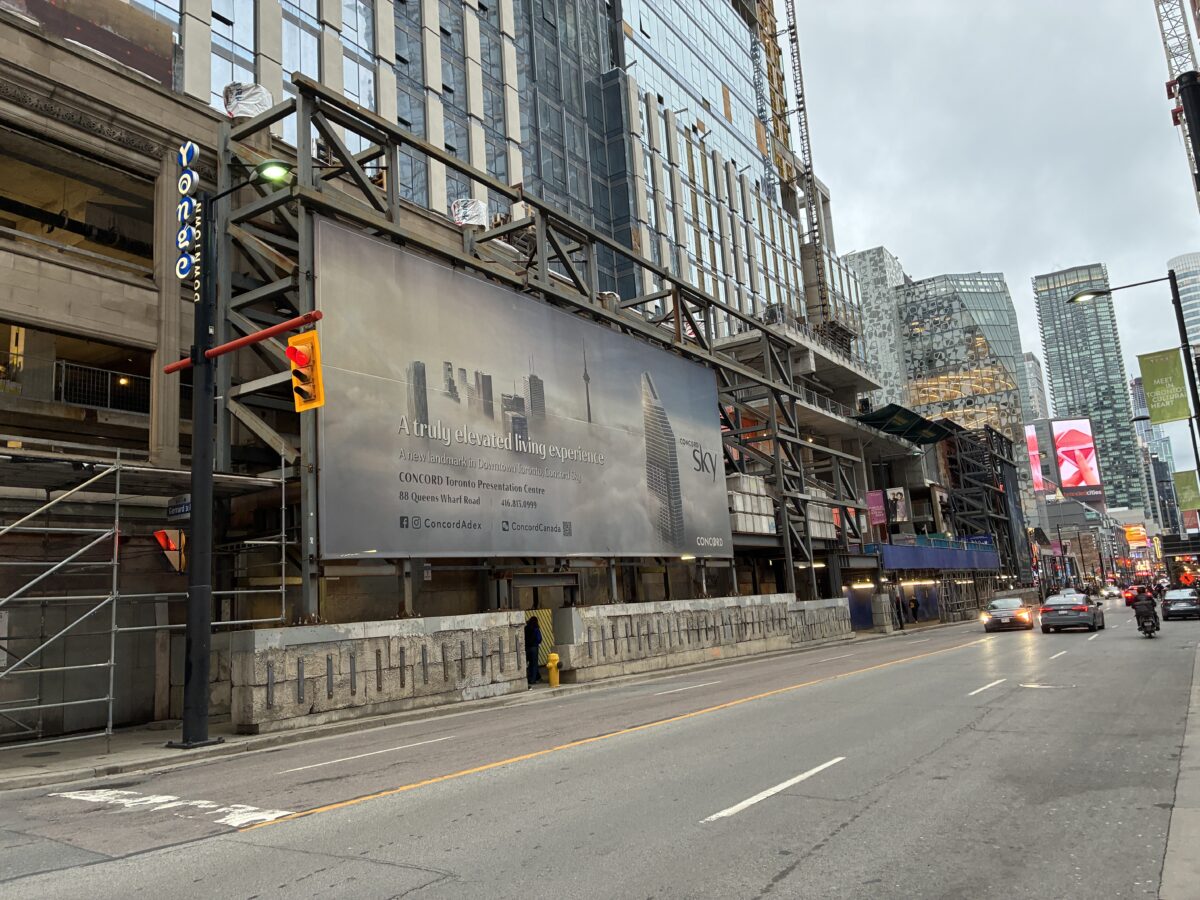
Concord Sky Construction on Yonge Street (Image: Dustin Fuhs)

For leasing teams pitching prospective tenants, that reframe matters. The conversation is no longer just about square footage and traffic counts. It is about what the space can become and what kind of community it is being built to serve. A development that gets that mix right does not just fill its retail units. It creates a reason for people to be there, which is a different and more durable form of value. The third-space tenant is an anchor in the truest sense, not because of their brand recognition but because of what they make possible around them.

The pushback brands always have on experience-led retail is the same: how do you measure it? Emotional connection sounds compelling in a pitch deck and vague in a budget meeting. Shapiro has a direct answer. “Emotional connection may sound intangible, but the impact shows up in very concrete ways,” he says. “Retailers should be looking at dwell time, repeat visits, basket size, and customer lifetime value. Customers who engage with these environments are more likely to spend more and come back. Over time, that improves retention and reduces reliance on constant acquisition.”

That last point is worth sitting with. Customer acquisition costs have been rising steadily as digital advertising gets more competitive and crowded. A brand that builds genuine loyalty through in-store experience is not just generating repeat visits. It is reducing its dependence on paid channels to drive traffic. The math on that compounds over time in a way that a promotional campaign does not. The 81% emotional connection figure starts to look less like a soft metric and more like a leading indicator of long-term brand health.

The Lightspeed numbers support that. Seventy-three percent of respondents said they would spend more in a store offering non-shopping features. Seventy-seven percent said they would return. Put those two together and you have a customer who is spending more per visit and coming back more often. For a brand weighing the cost of programming a space against the cost of acquiring a new customer, that is a meaningful reframe. The experience is not a marketing expense. It is a retention strategy.

There is also a discovery dimension that changes the math on foot traffic entirely. Gen Z is not finding these spaces through traditional advertising. They are finding them through other people on TikTok and Instagram, through short-form video of someone else’s experience in a store they had never heard of. The content driving discovery is not coming from brands, it is coming from other shoppers. “They are seeing spaces through other people’s experiences, not just brand messaging,” Shapiro says. “That means retailers need to think about how their stores show up visually and how easily those moments can be shared. A strong in-store experience does not stop at the door. It extends into digital and brings new customers with it.”

This is where the third-space model starts to function as something more than a retail strategy. A store that consistently generates organic social content is effectively running a marketing channel it does not pay for. Every time someone films a coffee in a well-designed space, shares a moment from an in-store event, or posts about a brand that made them feel like they belonged somewhere, that content is doing acquisition work. For leasing, the implication is significant. A tenant whose space generates that kind of content is not just serving the building. It is pulling foot traffic from across the city and advertising the development to people who have never been near it.

Shapiro is careful not to overstate the case. “Emotional connection on its own is not enough,” he says. “It needs to be paired with strong fundamentals like product, pricing, and convenience.” The experience does not compensate for a weak offer. But in competitive categories where product and price are already comparable across options, and in Toronto that describes most of retail right now, the space becomes the differentiator. Where the fundamentals are matched, experience is what drives the decision. It determines where the customer goes, how long they stay, how much they spend, and whether they come back.

What the Lightspeed research ultimately points to is a realignment of what physical retail is actually for. The transaction was always the outcome. It was never supposed to be the whole point. For a generation that grew up with every product available instantly on a screen, the store has to justify itself on different terms. The brands and developers who understand that are not just adapting to a generational preference. They are building something with longer legs than any single trend. And in Toronto, with thousands of new retail spaces coming online in the next few years, the window to get it right is open right now.

More from 6ix Retail

The Back to School Calendar Was Never Built for the Canadian Shopper

Lightspeed CEO Dax Dasilva on why Canadian back to school promotions start in June while families don't shop until August, and what retailers should do about the gap.

Juicy Birds Set to Open First Downtown Toronto Location

The Toronto-based social media sensation will be setting up shop on John Street, with a goal to run the location around the clock.

Toronto’s Waterfront BIA Eyes a Signature International Festival as part of New Events Strategy

A new 85-page report from the Waterfront BIA lays out a plan to unify Toronto's waterfront into one connected destination, with a Vivid Sydney-style signature festival as the long-term goal.

SUSO Skate Co. Confirms Woodbine Mall & Fantasy Fair for Next Pop-Up

Co-founder Henry O'Brien breaks down five years of Toronto mall leasing, SKATEVAN's U.S. franchise plans, and how vacant retail space became a business model.

Gabby’s Harborfront Confirmed to Open September 2026, Replacing NBA Courtside Restaurant

The move keeps the address under the same operator, as Urban Dining Group shifts one of its own downtown properties from a licensed NBA concept to its longtime sports bar brand.

Roots Is Going Private in a Deal Led by Joe Mimran and Marquee Brands

The $4.10-a-share deal ends Searchlight Capital's decade as controlling shareholder and hands day-to-day control to a new Toronto-based operating company.

RUDSAK Confirms New Bloor Street Boutique for Fall 2026

COO Armen Momejian on the AI-designed boutique taking over the former Van Cleef & Arpels space, and why going smaller was the point.

Inside Toronto’s Malibu Barbie Cafe

Now open at 70 The Esplanade, the pop-up making its Canadian debut brings retro beach dining, a roller rink, and exclusive merchandise to Toronto for an eleven-week run. Here's a look inside.

Brasa Peruvian Kitchen to Open First Airport Location at Toronto Pearson

Founder and CEO Michel Falcon on the Banmore Group partnership, adjusting for an airport customer, and what's coming next for the brand.

Little Canada Rebrands as Pocket Planet Canada, With Toronto Named the Brand’s Global Flagship

Founder and CEO Mark Vlassopulos on why Toronto is now the company's flagship, the philosophy behind the design, and what's coming next for the attraction.

The Last Mile Meets the Front Door

Grocery chains, quick service restaurants and mall landlords across Canada are signing third-party delivery deals faster than their stores can handle the traffic.

MINISO Land Hoarding Goes Up at CF Toronto Eaton Centre

The move is part of a broader toy and entertainment push at CF Toronto Eaton Centre, which is also adding Lego and an expanded Pop Mart in the months ahead.

Just Cuts Confirms Dufferin Mall for Toronto Debut, Canadian Expansion Underway

Guelph's opening drew nearly 200 customers in four days, and three more Ontario locations are lined up in London and Hamilton, with the company targeting 10 to 15 salons before it scales further.

Edo Japan Is Coming to The Tenor at Yonge and Dundas

Janine Maginniss, National Director of Real Estate at Edo Japan, on landing one of Canada's most coveted corners, what Yonge and College taught the brand, and why downtown Toronto isn't done yet.

A New Generation Takes the Corner: Inside Modus Ristorante’s Reinvestment in the Financial District

After 15 years at 145 King Street West, Sam Genkov is passing the next chapter to Victoria Genkov, backing a complete renovation, built to carry 'Strella Strella by Modus' for another generation.

Club Monaco Confirms Return to CF Toronto Eaton Centre

The retailer is rebuilding a full store team for a September opening in the same space it vacated last year.

Inside Sleep Cult: Toronto’s New Mattress Brand Opens Its First Showroom

Sleep Cult, a new Canadian-made hybrid mattress brand, opened its first Toronto showroom this week. Founder Nathan Nielson talks product, pricing and what's next.

Browns Shoes Is Building a New Flagship at CF Toronto Eaton Centre

Inside the years-long search for the right space, the olive tree design nobody expected, and the strategy behind Browns' continued growth.

Wendy’s Debuts Its Blue ‘Future Fresh’ Design in Canada at North York

Wendy's has opened its first Future Fresh restaurant in Canada, part of a redesign rolling out internationally.

Golf’s Biggest Untapped Opportunity Is Already On The Course

Fraser Marriott of Lightspeed Commerce and Lesley Hawkins, Partner at Marsley Canada and member of the Golf Industry Advisory Council for Golf Canada, on why the female golfer is the most valuable customer Canadian golf courses aren't serving.

Most Read on 6ix Retail

Hundreds of Starbucks Workers Face Job Loss as Chain Closes Stores Across Toronto

Chain shutters underperforming stores as part of $1B restructuring, leaving baristas seeking new employment

Warehouse One and Bootlegger Are Closing Every Store in Canada

Warehouse One Clothing Ltd. has filed for CCAA protection and is closing all 128 Warehouse One and Bootlegger stores across Canada. Liquidation sales begin around May 16.

What We Know: Toys “R” Us Canada Files for Creditor Protection

The iconic toy retailer seeks creditor protection after closing more than 50 stores in two years, owing $120 million to vendors as it evaluates strategic alternatives

Tim Hortons Opens First Standalone TimShop at CF Toronto Eaton Centre

Coffee chain tests experiential retail strategy with plushie activation targeting holiday shoppers

Dunkin’ Is Coming Back to Canada

Peter Mammas on why Foodtastic bought the Canadian rights to one of the world's most recognized coffee brands, where the first locations are headed, and what is coming next.

Healthy Planet to Open 12,000 Square Foot Store at Yonge and Eglinton

Canada's largest family-owned organic grocer is opening a 12,000 sq ft two-level store at 2529 Yonge Street, targeting Q1 2026 opening in midtown Toronto.

Photo Report: Yorkdale Shopping Centre Update (December 2025)

Tom Ford, Gentle Monster, and AMI Paris open as luxury corridor expands while Club Monaco Men closes and pop-up strategy fills transitional spaces

Photo Report: Yorkdale Shopping Centre Transformation (August 2025)

Exclusive photo tour of Yorkdale Shopping Centre's August 2025 transformation, featuring Simons flagship, luxury corridor expansion, and major tenant changes.

SHEIN Pop-Up Returns to CF Toronto Eaton Centre Amid Major Retail Transformation

Ten-day pop-up occupies former Banana Republic space as Hudson's Bay fights for survival and Optimize Wealth moves into historic Bank of Toronto building

MUJI to Open Its Latest Toronto Location at The Well This September

Japanese lifestyle retailer takes over former Design Republic space as downtown mixed-use destination continues tenant expansion

EXCLUSIVE: Crunch Fitness Secures Landmark Financial District Location for Downtown Toronto Debut

Crunch Fitness signs 21,000-square-foot lease at 20 King West, transforming historic RBC gold vaults into premium PATH-connected gym targeting Gen Z demographic with fall 2025 opening.

Mandy’s Announces Multi-City Expansion, Adding Yonge & Eglinton and Canary District to Toronto Portfolio

Fast-casual chain Mandy's Salads reveals next phase of national expansion, adding new locations in Toronto and Ottawa while growing Montreal presence

Shake Shack Reveals Strategic Six-Site GTA Expansion

Premium burger chain announces six new GTA locations through 2026, creating 400+ jobs while expanding from downtown Toronto to suburban markets across the region.

Decathlon’s GTA Exit Opens Door for Experience-First Retail Revolution

Decathlon Canada closes five GTA stores in Brampton, Burlington, Markham, Scarborough and Vaughan, creating opportunities for experiential sporting goods retailers as Canadian market shifts toward community-focused retail.

NRG Haus to Bring Social Wellness Club to Liberty Village

Fit Factory Fitness founder Ivan Ho bets on sober-curious movement with contrast therapy venue featuring immersive cold plunge and functional mocktails

Black Friday’s Latest Date Creates 26-Day Shopping Crunch for Canadian Retailers

Toronto liquidation expert Alex Hennick warns compressed holiday timeline will separate struggling retailers from survivors

IKEA Closing Scarborough Town Centre Store Opens 100K SF Opportunity in Former Sears Space

With both IKEA and Decathlon exiting the redeveloped Sears box by early 2026, Oxford Properties faces a challenge—and a chance to reimagine nearly 100,000 square feet at one of Toronto's biggest malls

Discount Grocery Expansion Is Dominating the Toronto Retail Market in 2025

No Frills leads urban push with multiple new locations as Canadian grocers focus on value-oriented growth

Poulet Rouge Expands to Queen West Amid Transit Construction

Quebec chain's ninth Toronto location joins evolving retail mix as transit construction reshapes prime shopping corridor

Beyond Points and Purchases: How Starbucks Masters the Science of Personalized Loyalty

Toronto retail loyalty consultant shares insights on how coffee giant's data-driven approach can be applied across sectors