

A new taco quick service concept is set to shake up Toronto’s financial district lunch scene. Tacos De Princesa, opening February 17th at 150 King Street West in the PATH, brings authentic Mexican street food to downtown’s underground network—with a focus on quality ingredients, chef-driven preparations, and an energetic dining experience that stands out visually in a sea of corporate lunch spots.
The concept comes from three young entrepreneurs under 30: Ali Barakat, Seif Omar, and Umran Hanifi, the team behind Narcos Tacos, the successful Scarborough taco spot that’s been serving the city since July 2022. But this isn’t just a rebrand—it’s a strategic evolution designed specifically for the downtown market, led by restaurateur and entrepreneur Amir Salama, represented by Andrea Buller and built out by Agnelo Pinto’s Made by Miro with interior design layout by Nikolay from EDIT Designs.
“We wanted to establish a proper presence in the downtown core,” says Salama. “The taco niche simply isn’t available in an elevated format—especially in terms of buildout, food quality, and service. The footprint is different, and the clientele demands something more refined.”
The Gap in the Market
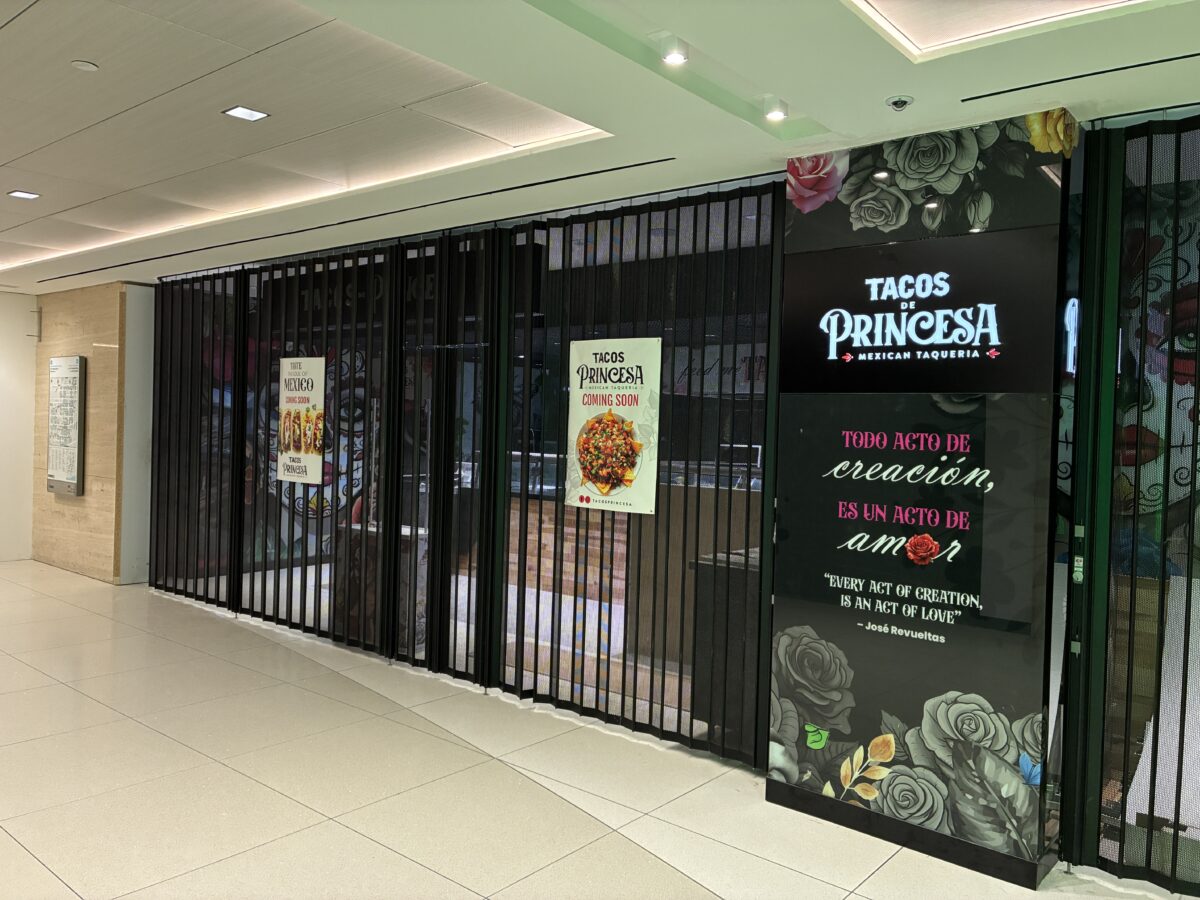
While the PATH has no shortage of lunch options, Barakat and his partners identified a significant void in the market: authentic, taco-focused Mexican food that goes beyond the standard quick-service format.
“Downtown has Mexican options, but they’re predominantly other Mexican concepts that focus heavily on burritos and bowls made with frozen, mass-produced ingredients from food service catalogues,” Barakat explains. “They’re built on the franchise model, which means standardization over authenticity.”
Tacos De Princesa takes a fundamentally different approach. The menu centers on tacos—street tacos, birria tacos—made with fresh ingredients, in-house sauces, and house-made marinades. Everything is prepared from scratch, and the entire menu is made with halal-certified meats to serve Toronto’s diverse downtown workforce.
“We’re bringing the same exceptional flavors we’ve perfected in Scarborough over the past three years,” says Barakat, who serves as both owner and executive chef with over 10 years of restaurant experience. “But we’re also adapting to the PATH customer who wants healthier, low-carb options. Not everyone is looking for heavy burritos and quesadillas during their lunch break.”
The downtown-specific additions include specialty salads with chef-oriented preparations, surf and turf options featuring steak and shrimp, and plant-based chorizo for customers with dietary restrictions. The Scarborough location didn’t offer these items, but the team recognized the PATH demographic would appreciate the variety.
“We’ve been very successful with our core menu and those flavors,” Barakat adds. “We’re not changing what works—we’re expanding it to appeal to everybody in the financial district.”
Breaking the Franchise Model
What sets Tacos De Princesa apart from its competitors isn’t just the menu—it’s the business model itself. The team operates as independent, hands-on owner-operators without franchise fees, royalties, or corporate oversight.
“The franchise system is struggling in this market,” says Salama. “Franchisees are paying 8 to 10 percent royalties, plus additional fees for support systems. Those costs eat into quality and make it difficult to maintain the margins needed to succeed.”
Without a middleman taking a cut, Tacos De Princesa reinvests every dollar saved into ingredients and customer experience. “The mozzarella is 100% fresh,” Salama explains. “They’re paying premium pricing for halal-certified chicken and beef. They offer shrimp, vegan proteins, specialty salads, custom packaging—everything is elevated because they don’t need to cut corners to pay franchise fees.”
The team runs the stores themselves, maintaining direct control over quality and service. “These aren’t absentee owners,” says Salama. “Ali, Seif, and Umran are there, they’re involved, and they care about every detail. That hands-on approach makes all the difference.”
Two Brands, Two Strategies
The decision to launch Tacos De Princesa as a separate brand from Narcos Tacos was strategic. While Narcos Tacos has built a loyal following in Scarborough since opening in July 2022, the team recognized that the PATH required a different positioning.
“Narcos Tacos works beautifully as a street-front concept,” says Barakat. “The format, the footprint, the clientele—it’s designed for neighborhoods like Scarborough. But we have access through Andrea Buller and Regent Street Properties to major financial core landlords, and we saw an opportunity to create something specifically for that environment.”
Tacos De Princesa represents an elevated experience—not just in food quality, but in design, service, and atmosphere. The roughly 1,000-square-foot space at 150 King West is engineered to handle the unique demands of PATH traffic: 60 to 70 customers per half hour during peak lunch periods.
“The engineering and logistics are completely different,” Salama explains. “The equipment, the setup, the product flow—it’s all designed to push out high volume in a specific time frame without sacrificing quality. That’s not the same build you’d do for a street-front location.”
Meanwhile, Narcos Tacos will continue expanding under its original brand in street-front locations across the GTA, with upcoming openings planned in Vaughan and other neighborhoods. The two brands serve different markets with different needs.
Art as Experience
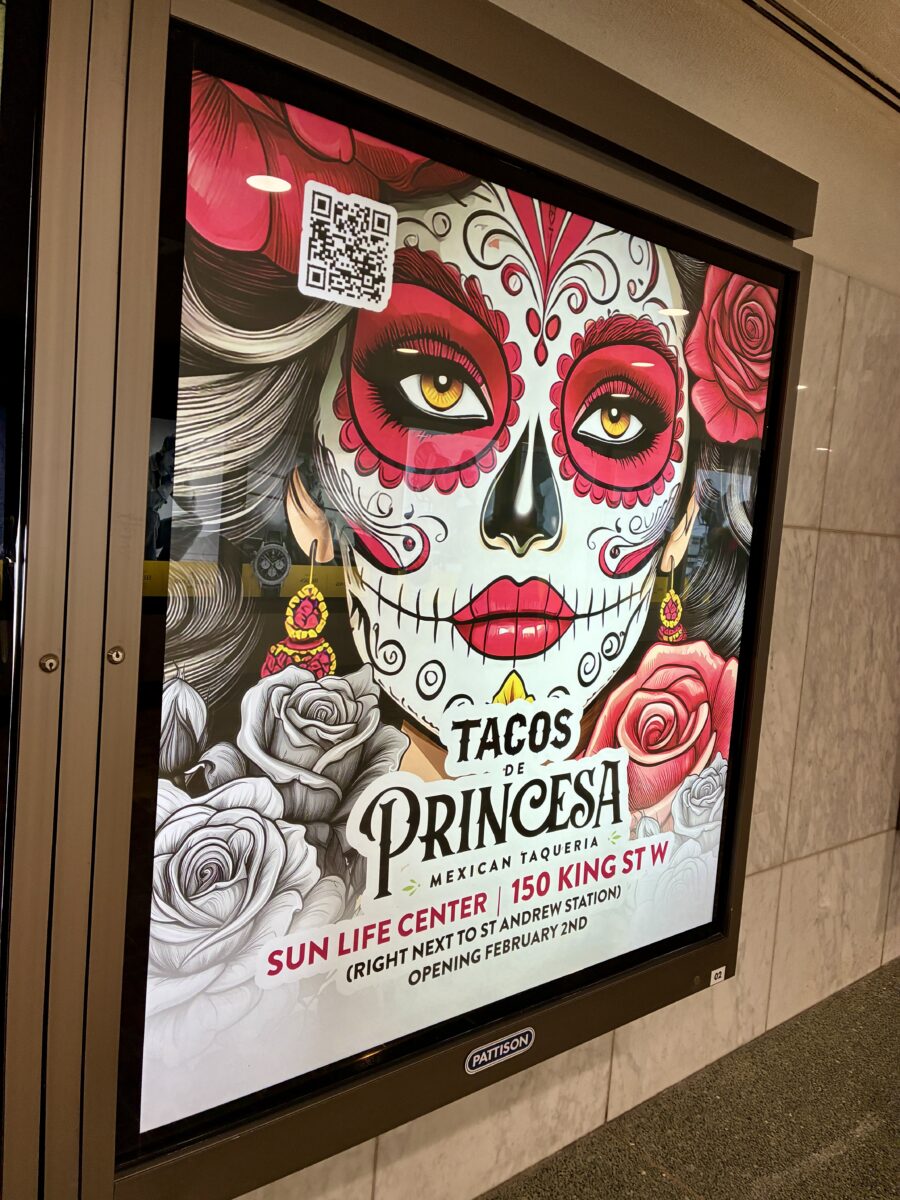
What immediately sets Tacos De Princesa apart visually is the design. Brand designer Hanin Zaki, an OCAD University graduate with a background in drawing, painting, graphic design, and animation, created an entirely original aesthetic that refuses to blend into the PATH’s typical corporate landscape.
“The brief was clear from the beginning: they wanted something unique and artistic that would genuinely stand out,” says Zaki. “Early on, some people suggested using stock photography—typical Day of the Dead imagery, Catrinas, the kind of visuals you’d find on any stock photo site. I pushed back immediately. If we’re going to create something that truly stands out in the PATH, it needs to be original work.”
Zaki drew on digital collage techniques she developed at OCAD, combining hand-drawn illustration with layered visual elements to create mixed-media artwork. “In university, I used to create collages as preparation for paintings—brainstorming tools that sometimes became artworks in themselves,” she explains. “I brought that approach back for this project and expanded on it significantly.”
The result is visually complex: different styles, different roses, different illustrative elements converging into a cohesive whole. “The aesthetic mirrors Toronto itself,” Zaki says. “Different cultures, different styles, all coming together to create something beautiful and unified.”
The design process involved extensive research, countless iterations, and what Zaki describes as “a lot of sleepless nights and arguments”—the necessary friction between designer vision and client expectations. “I always take it as a responsibility when a brand asks me to help bring their vision to life,” she says. “You have to do the research, even if that research doesn’t directly show up in the final design. Having that foundation allows you to create with confidence.”
One deliberate element is a quote featured on the pillar: “Every act of creation is an act of love.” It’s not decorative—it connects the brand’s visual identity to the kitchen’s philosophy.
“When the team prepares their menu, they do it with genuine passion and care,” Zaki explains. “That’s an act of creation in itself. The design needed to reflect that same commitment. Even the act of creating the visual identity was an act of love.”
The Experience Economy
The design isn’t just about aesthetics—it’s about creating a destination in an environment where most food options are purely transactional.
“This isn’t just another lunch spot in the PATH,” says Salama. “We’re bringing youth, vibrant energy, positive energy, and an elevated experience. You’ll hear Latino music playing. The staff will be more energetic, more engaged. The store itself looks completely different from anything else down there.”
The open kitchen design puts customers directly in front of the staff as their food is prepared. “You’re literally face-to-face with them while they’re making your tacos,” Salama explains. “There’s no turning their backs, no hidden prep area. You see the quality and the care going into every order.”
The space is designed with Instagram in mind – vibrant branding, visual moments that encourage customers to take photos and share their experience. “We want people taking selfies with the feature walls and posting on social media,” says Salama. “It’s a destination, not just a place to grab lunch.”
The goal is to create an experience differentiated enough that it becomes part of someone’s routine—not out of convenience, but out of preference. “This is something you look forward to,” Salama adds. “It’s not just a quick transactional stop—it’s an experience.”
Capturing Multiple Dayparts
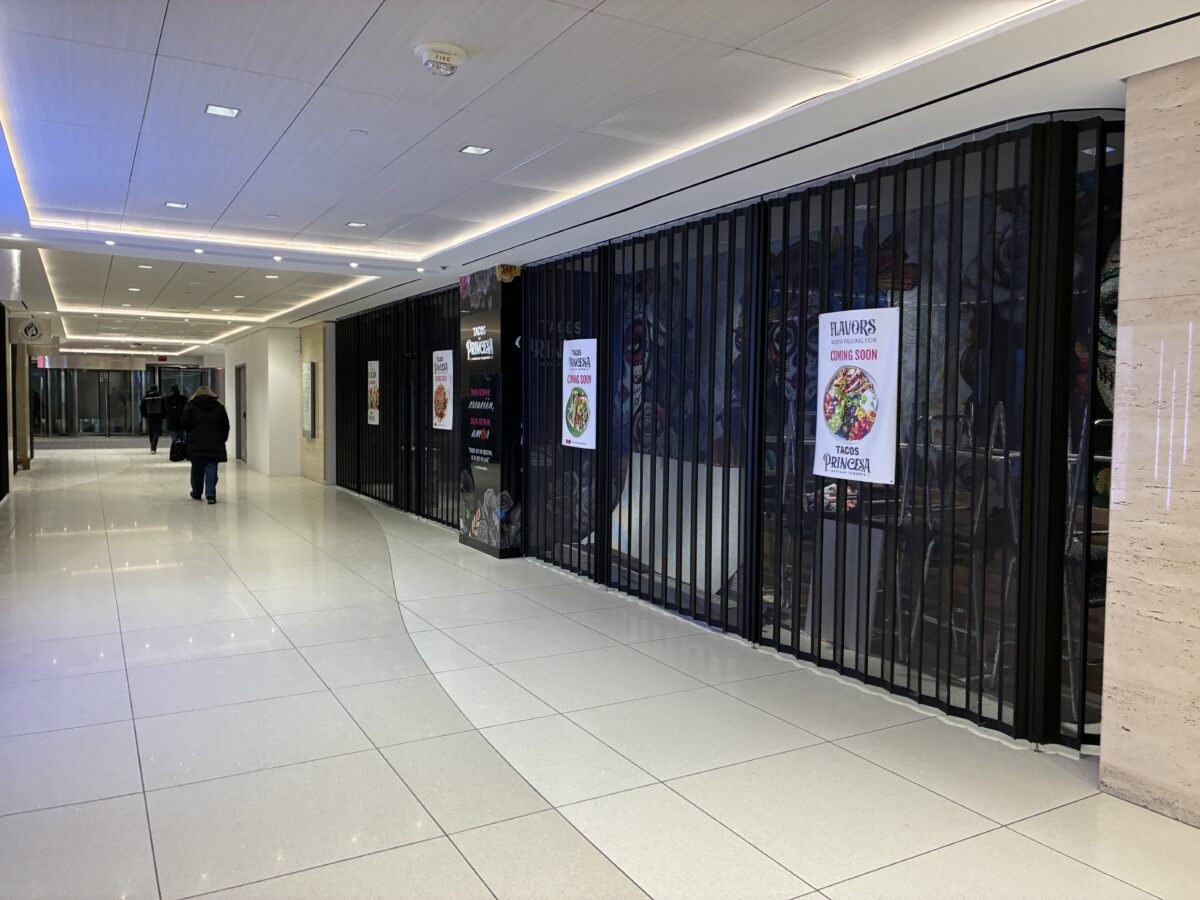
While lunch will drive the bulk of revenue, the team is strategically thinking about other dayparts. The location is steps from St. Andrew Station, which creates natural traffic flows throughout the day.
“We’re planning to stay open until 6 PM to capture people heading home through the subway,” says Salama. “They can grab a bite to eat on their way. It’s not just a conventional food court location where you’re limited to the lunch rush.”
The team is also developing a breakfast menu—a significant gap in Toronto’s quick-service Mexican landscape. “Thousands of people walk past that location first thing in the morning,” Barakat notes. “There’s no one doing breakfast tacos downtown. We’re absolutely working on launching breakfast bowls, breakfast burritos, breakfast tacos—capitalizing on that flow of traffic.”
Weekend hours are also under consideration as brand awareness grows. “With the proper marketing, with people knowing we’re open, we’d like to see ourselves operating on weekends too,” says Salama. “The PATH isn’t just a weekday environment anymore.”
A Portfolio Approach
Tacos De Princesa fits within Salama’s broader strategy of identifying and filling specific voids in Toronto’s food scene. His other concepts—Sultan’s Mediterranean Grill and Wat a Jerk Caribbean Grill—already serve the downtown core, and he approaches each brand with the same analytical mindset.
“We look at the different voids in different sections of the financial district and ask: what’s missing?” says Salama. “Right now, if someone working downtown wants an authentic street taco, they need to travel to Kensington Market or the Keele and Caledonia corridor. We’re bringing that experience directly to them.”
The multi-brand approach allows for strategic market coverage without cannibalization. Each concept serves a different cuisine, a different occasion, and a different customer need—but all share the same commitment to quality and hands-on operation.
“We don’t want to be in every food court,” Salama explains. “We’re targeting 2 to 4 key locations in high-traffic pockets—places where someone will walk an extra five minutes because they know it’s worth it. Scarcity creates destination appeal. If you’re everywhere, you’re nowhere special.”
That selectivity extends to site selection. The team is focused exclusively on premium locations with strong landlord relationships and significant foot traffic. “We’ve struck a great deal with 150 King Street, and we’ve signed another,” says Salama. “Maybe one or two more maximum, and that’s it. We want to stay unique.”
The Owner-Operator Advantage
The team’s youth—all three primary owners are under 30—brings fresh energy to the operation, but it’s paired with operational discipline and deep industry experience, particularly from Barakat’s decade-plus in restaurants.
“These guys are coming in with their youth, their vibrant energy, their positive outlook,” says Salama. “But they’re also serious operators. They opened Narcos Tacos in July 2022, and they’ve built it into a successful business over three years. They know what they’re doing.”
That track record gave the team credibility with landlords and brokers in the financial district—a market that typically demands proven concepts and established operators. “Access to these big financial core landlords isn’t easy,” Salama notes. “But we could show them a working model, strong performance, and a clear vision for how we’d adapt to the PATH.”
The owner-operator model also ensures accountability. “When it’s your own business, you don’t cut corners,” says Salama. “Everything—the fresh mozzarella, the premium halal proteins, the custom packaging that unfortunately isn’t here yet but is coming—it all reflects their personal commitment to quality. There’s no corporate office dictating cost-cutting measures.”
What’s Next
The team has already secured a second Tacos De Princesa location in the South Core, with construction expected to begin in spring or early summer and an opening targeted for fall 2026.
“We’re working on the drawings now,” says Salama. “There’s legal work, landlord coordination—the typical process. But we should take possession this spring and start construction shortly after.”
The second location represents the same strategic thinking as 150 King West: a premium PATH hub with massive foot traffic and strong landlord partnerships. “It’s another key pocket,” Salama explains. “We’re not just opening randomly—every location has to be strategic.”
Beyond that, the expansion plan remains deliberately limited. “Maybe one or two more locations maximum,” says Salama. “We want this to always feel like a destination—somewhere people seek out because they know it’s special. If we’re in every food court, we lose that.”
For now, all focus is on the February 17th opening at 150 King West. The team is finalizing equipment installation, staff training, and operational systems to ensure they can handle the PATH’s demanding lunch rush from day one.
“We’ve been working toward this for months,” says Barakat. “Everything is coming together—slowly, maturely, with attention to detail. The packaging is coming, the menu is finalized, the design is complete. We’re ready.”
The opening represents more than just a new lunch option for the financial district. It’s a statement that independent operators can compete—and win—against franchise giants by focusing on quality, authenticity, and experience.
“The franchise model is broken,” says Salama. “The market doesn’t support those margins anymore. But if you’re willing to do the work yourself, to care about every detail, to reinvest in quality—there’s absolutely room for independent brands to thrive.”

Dustin Fuhs is the founder and Editor-in-Chief of 6ix Retail, Toronto’s premier source for retail and hospitality industry news. As the former Editor-in-Chief of Retail Insider, Canada’s most-read retail trade publication, Dustin brings over two decades of expertise spanning retail, marketing, entertainment and hospitality sectors. His experience includes roles with industry giants such as The Walt Disney Company, The Hockey Hall of Fame, The Canadian Opera Company, Starbucks Canada and Blockbuster.
Recognized as a RETHINK Retail Top Retail Expert in 2024, 2025 and 2026, Dustin delivers insider perspectives on Toronto’s evolving retail landscape, from emerging brands to established players reshaping the city’s commercial districts.