
The Board said yes. A long-term commercial opportunity is taking shape on Toronto’s western waterfront. And the operators paying attention now will be better positioned than those who wait.
Exhibition Place has been studied, planned, consulted on, and reimagined for the better part of two decades. Reports have been written. Concepts have been rendered. And for most of that time, the grounds have looked more or less the same. Roadways. Parking lots. A collection of individually successful venues surrounded by exterior grounds that remain largely untapped, coming alive for 18 days every late summer and going quiet again by September.
On April 16, that started to change.
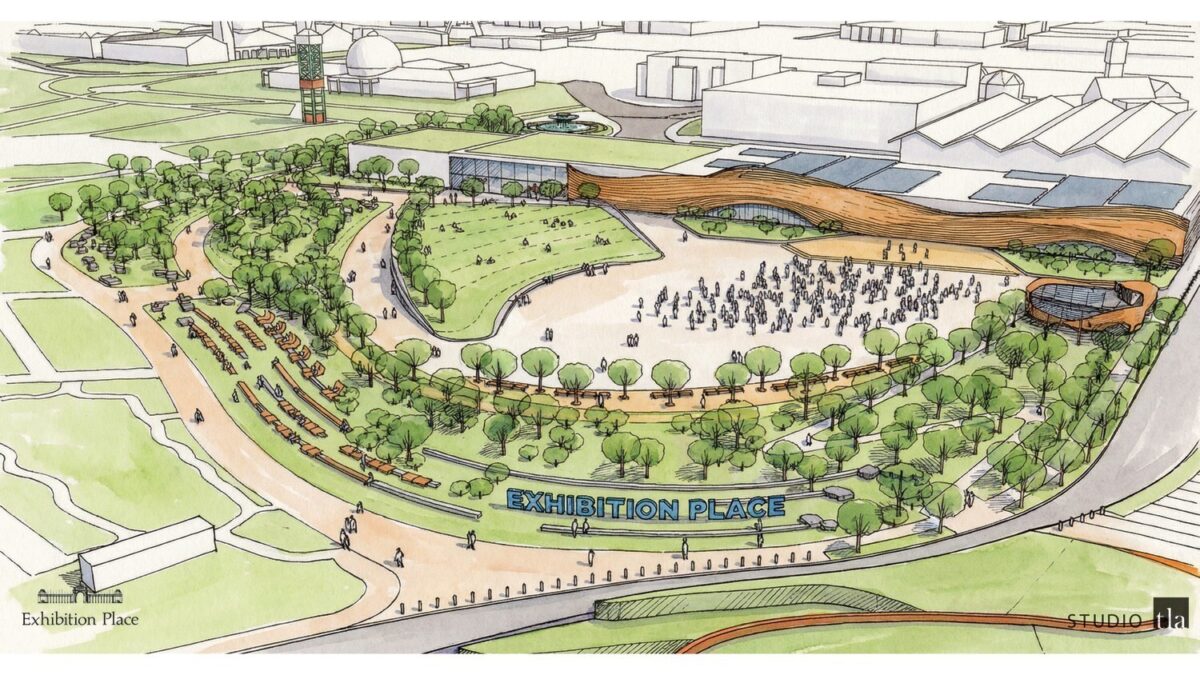
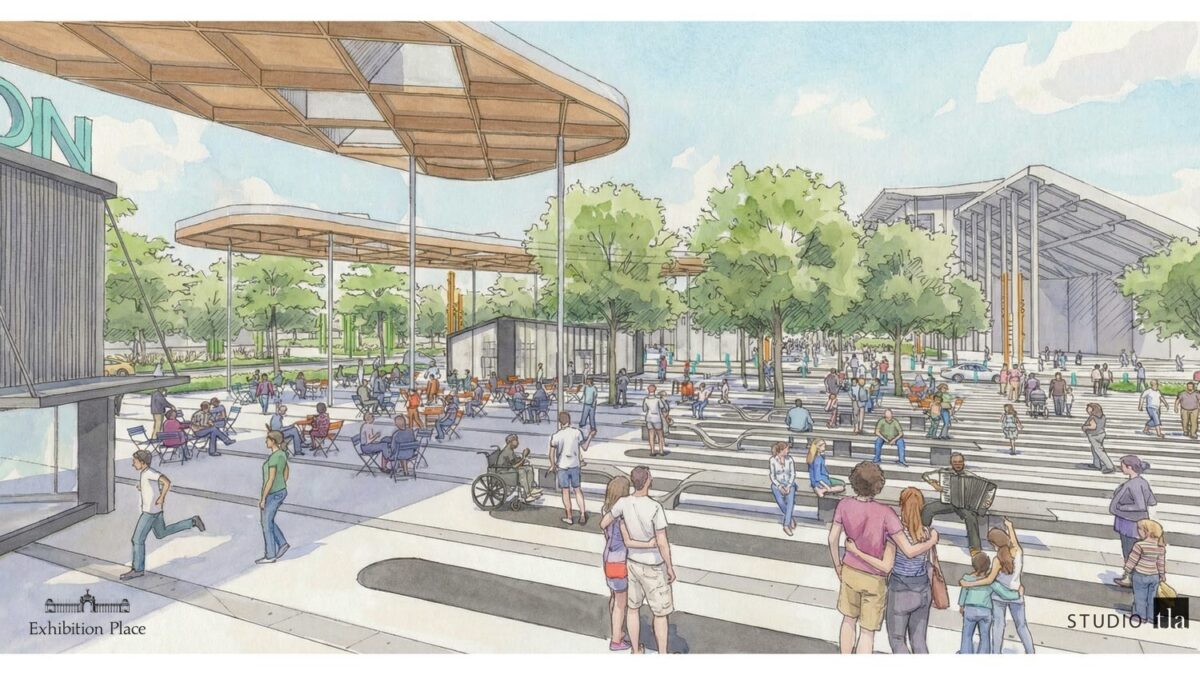
The Exhibition Place Board of Governors unanimously endorsed the Vision Plan, a framework that would transform 192 acres of Toronto’s western waterfront into a connected, year-round destination. A reimagined Food Building. A pedestrian spine from the Ontario Line to the water. A 69,300-square-foot Festival Plaza. Nexus Park. A Food Village. A Hub.
Don Boyle presented the plan to the Board himself. In the days following the endorsement, he sat down with 6ix Retail to talk through what the Vision Plan actually means, how it gets built, and what the site can become.
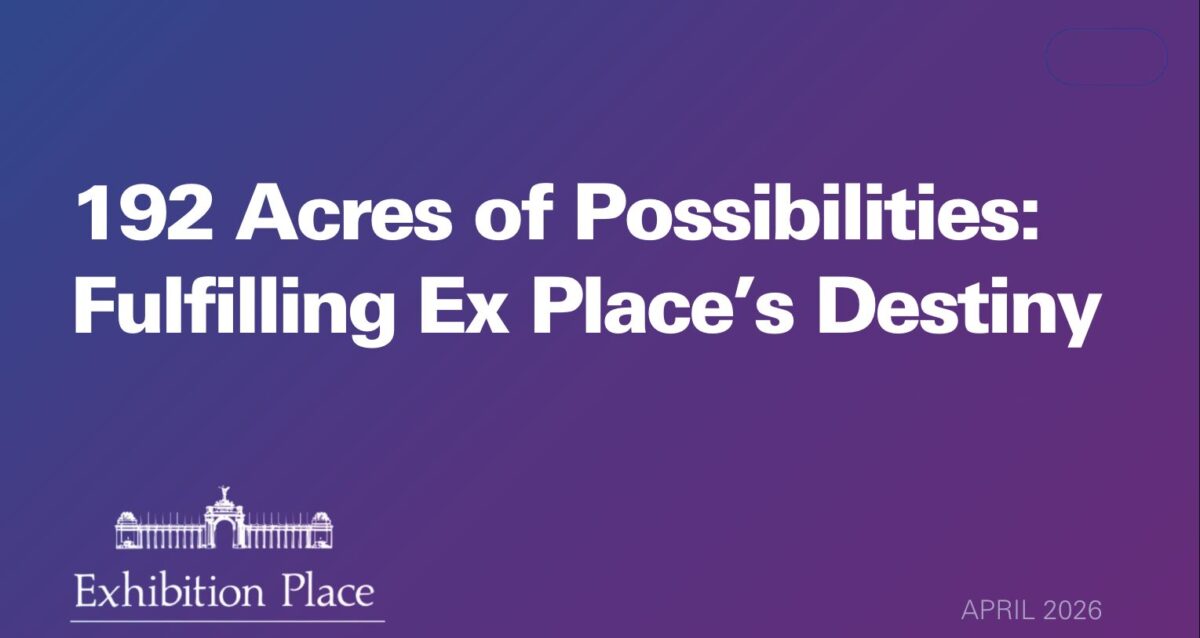
Boyle has been CEO of Exhibition Place since August 2019. Before that, he spent nearly twelve years as Chief Administrative Officer of Haldimand County, where the municipality achieved four consecutive credit rating upgrades under his watch. Before that, he served nine years as Director of Parks and Recreation for the City of Toronto, starting at the moment of amalgamation in 1998. And before that, he spent the better part of a decade in Brampton and East York, working his way up from sports and fitness supervisor to director of public works and parks operations.
It is, on reflection, precisely the career you would design if you knew this job was coming.
“My career actually does fit this place,” Boyle said. “It is as much government relations as it is convention and meeting industry experience. It is relationships. When I look back at all of it, it all served together over time.”
The Vision Plan is the product of that accumulated experience being pointed at a single problem. Exhibition Place is one of the most visited destinations in Canada, attracting over 5.5 million visitors a year and generating more than $595 million in economic impact in 2025 alone. And yet for most of the year, for most Torontonians, it is a place you drive past on the Gardiner rather than a place you go.
“As much as people think there is nothing going on, there is so much happening on a daily basis. The challenge has always been trying to work with all the key stakeholders and ensure that at the end of the day it is a great experience for the public. It is very unique.”
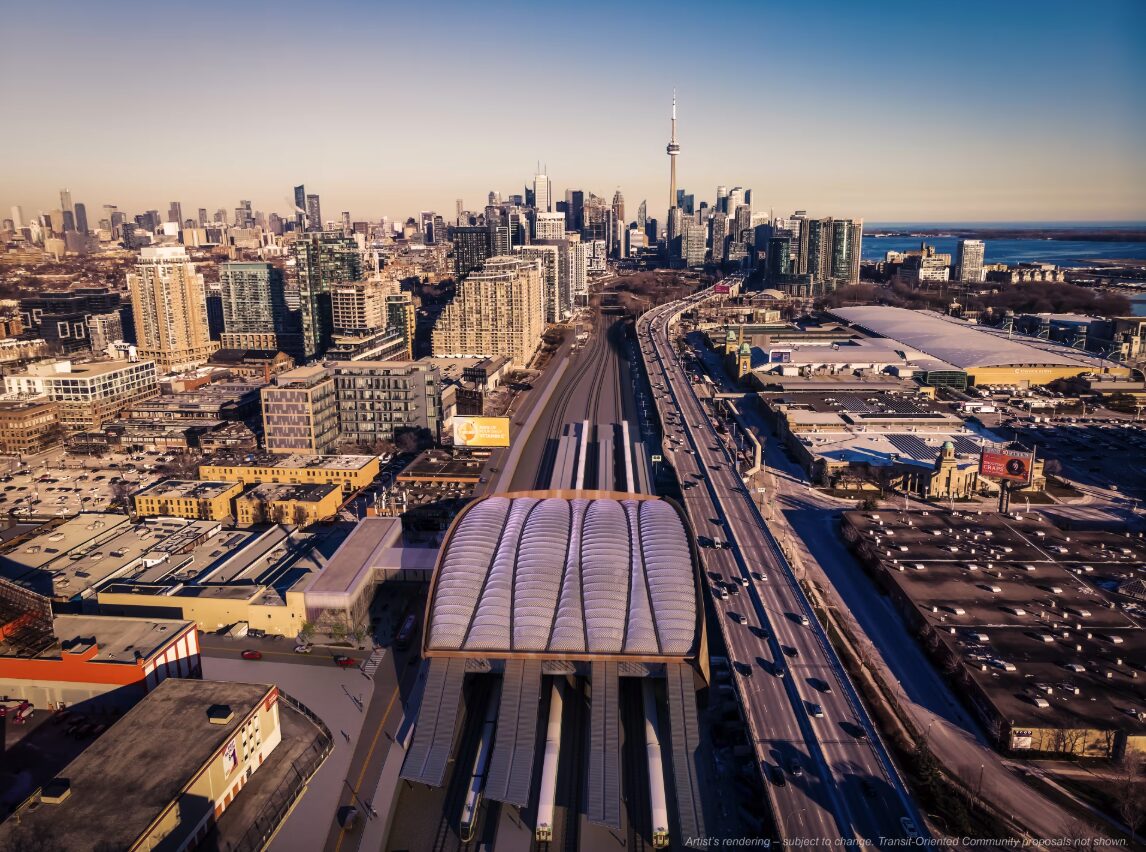
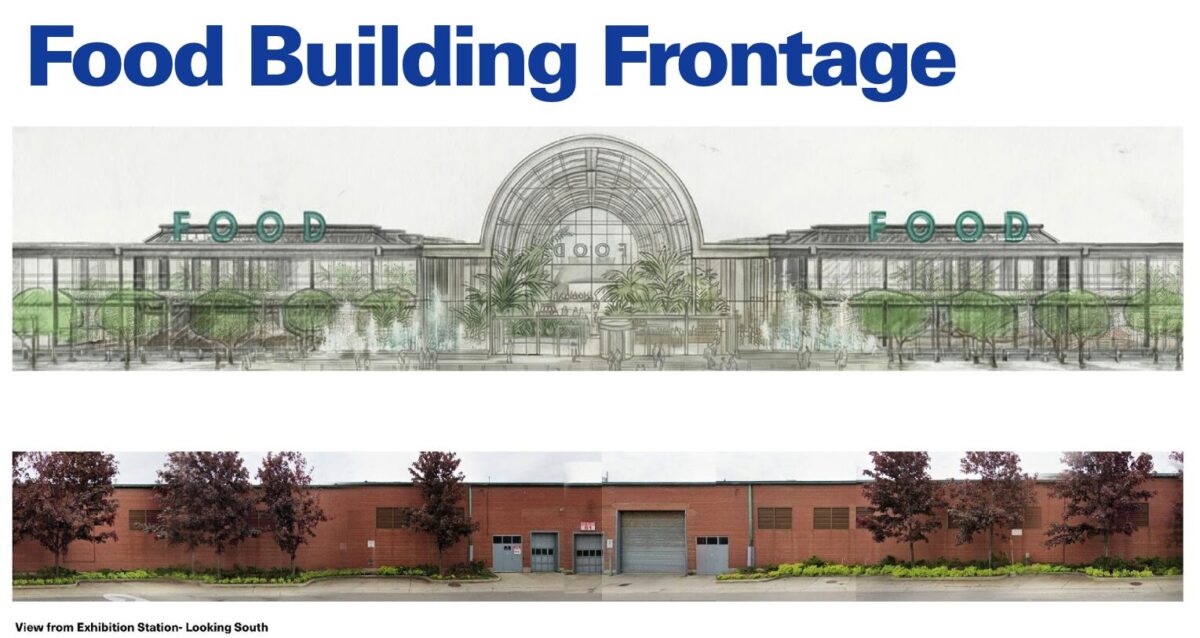
The Ontario Line is what changes the equation. Exhibition Station is projected to be the second busiest stop on the entire line, with 42,000 weekday passengers by 2041. Those riders will step off the train and arrive at the rear of the Food Building, a structure that has operated for 18 days a year during the CNE and spent the rest of its time as storage. CNE CEO Mark Holland is already working on plans to reimagine it, and Boyle sees it as the commercial and cultural gateway to everything south of it.
“What we are really looking at is a 365-day-a-year activation. Given that the new Exhibition Station entrance sits right at the rear of that building, the reimagination of the Food Building is absolutely key to the whole vision.”
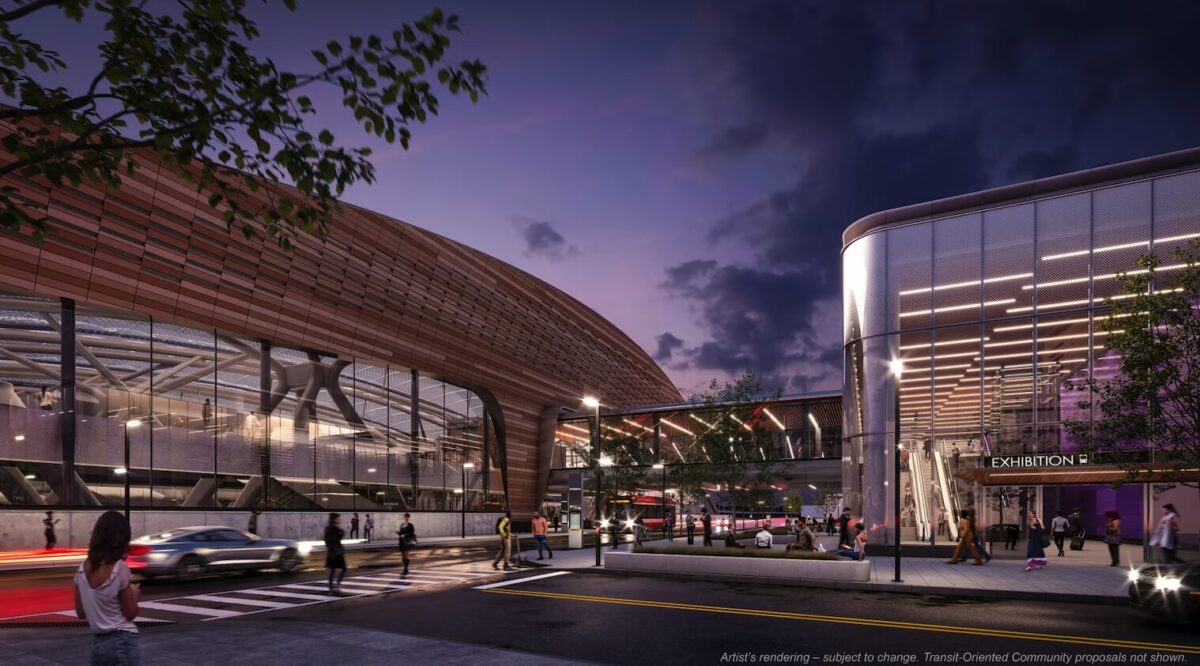
According to Boyle, the RBC Amphitheatre already sends 1.2 million people past the front door every concert season. Ontario Place is being redeveloped directly to the west. A second hotel and a 5,000-seat entertainment complex are in the pipeline. The ingredients have been assembling for years. What the Vision Plan provides is the connective tissue.
For the spine, the hub and the plaza concession areas, Boyle sees a competitive process on the horizon, though he is clear that the consultation and planning work comes first. “We will likely send that out to a competitive process, looking for ideas that can transform that area from a food, retail and entertainment perspective. We want the best thinking out there.”
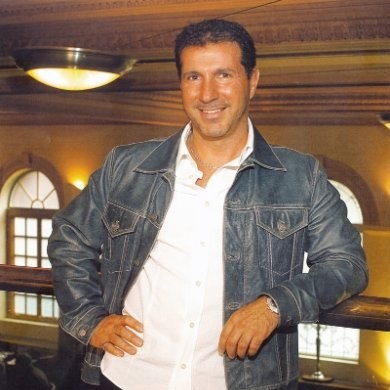
Nick Di Donato, President and CEO of Liberty Entertainment Group, whose Liberty Grand anchors the site’s events business, has watched the grounds evolve across multiple chapters. “Exhibition Place is not only one of Toronto’s most iconic destinations, but also a critical economic and cultural hub supporting major events, tourism and community engagement. Its emphasis on modernization, enhanced connectivity, improved public realm and expanded year-round programming aligns with the needs of today’s event organizers, guests and partners.”
The complexity Boyle is navigating is real, and he does not minimize it. The site hosts over 2,100 events annually. Many of those festivals arrive with their own food and beverage contracts baked in, and that is part of how they fund their operations. Building a year-round commercial layer alongside visiting festivals that expect to control their own concessions requires a framework that does not yet exist.
“When you bring in outdoor festivals, they want to run their own food and beverage. That is part of how they pay for their events. So we need to find ways for outside festivals to participate on the grounds while allowing our year-round operators to build a sustainable business at the same time. If something like a winter market takes place along the hub for November and December, how does that fit in with an event like One of a Kind? How does it not detract from it? How does it augment and complement it? These are the situations I have to weigh with stakeholders, and that is the challenge and the opportunity of Exhibition Place.”

Public consultation over the next six to twelve months will work through that framework. The Bentway, which operates the linear park running beneath the Gardiner to the north, is already engaged. “The Exhibition Place Vision Plan reflects a thoughtful, future-oriented approach that prioritizes integration, accessibility and partnership,” said Ilana Altman, CEO of The Bentway. “The Bentway is proud to be a collaborator in this evolving landscape and looks forward to continuing our work with Exhibition Place to realize shared goals for high-quality public space, cultural expression and connected communities.”
Ric Amis, Chair of the West Side Community Council, offered a read that reflects the broader community mood. “Overall, the Vision Plan sets out an ambitious and promising framework. With careful attention to everyday use, equitable access and genuine community partnership, Exhibition Place can evolve not only as a major destination, but as a lived, shared civic space.”

Deputy Mayor Ausma Malik, who chairs the Board of Governors, was direct. “This Vision Plan is about revealing the full potential of Exhibition Place, transforming this vital city asset into an even more welcoming, accessible and vibrant year-round destination.”
Boyle reaches for the closest local comparison without hesitation. “Union Station was a place people just passed through. A beautiful building with lots of heritage, but Toronto had really forgotten about it. Now 90 million people move through it annually and it is one of the most successful retail destinations in the city. That is the same line of thinking I am bringing to Exhibition Place.”
He has spent his career getting things done inside municipal structures that move slowly and involve competing interests. His approach has not changed. “What can you live with is one of my favorite sayings. It is not going to be perfect, so what can we live with and how do we move forward? I may not always get exactly what I am looking for, but I am always trying to move the yardsticks so that we are constantly improving.”
The Vision Plan was endorsed in principle. Financing across city, provincial and private sources still needs to be worked out. The Board has directed Boyle to report back on planning and financing options by Q1 2027. A Consultation and Engagement Plan is due by Q4 2026. The goal is to have the project complete in time for the Ontario Line opening in 2031.
“At the end of the day, it is going to take public opinion. If the public wants it and they are loud about it, it will get done. Our strategy is going to be to mobilize these groups, get them behind the project, and let that energy inform what we build.”
Inside his organization, the work is already underway. “I am readjusting our organizational structure and realigning resources to make sure this is a living project every single day, not just a one-time announcement that ends up in the corner of someone’s desk. We are putting the resources behind it to bring it forward.”
The vision Boyle is working toward is one he comes back to throughout the conversation. Not a convention centre with a park attached. Not a seasonal fairground with ambitions. Something more like what you find when a great city finally decides to take one of its most important pieces of land seriously.
“When someone steps off the Ontario Line and walks onto our grounds, the key is that it feels seamless. That they have arrived. Exhibition Place, 192 acres, the entire western waterfront, it all becomes one. They do not care who owns it or who operates it. They just want a great experience. Let’s just make a great experience that others will talk about and that other cities will be envious of.”
For 192 acres on Toronto’s western waterfront, that experience is being designed right now.

Dustin Fuhs is the founder and Editor-in-Chief of 6ix Retail, Toronto’s premier source for retail and hospitality industry news. As the former Editor-in-Chief of Retail Insider, Canada’s most-read retail trade publication, Dustin brings over two decades of expertise spanning retail, marketing, entertainment and hospitality sectors. His experience includes roles with industry giants such as The Walt Disney Company, The Hockey Hall of Fame, The Canadian Opera Company, Starbucks Canada and Blockbuster.
Recognized as a RETHINK Retail Top Retail Expert in 2024, 2025 and 2026, Dustin delivers insider perspectives on Toronto’s evolving retail landscape, from emerging brands to established players reshaping the city’s commercial districts.