
Canadian retail has seen its share of seismic shifts over the last quarter century. The Source closed. Hudson’s Bay shuttered. Toys R Us Canada, once an 81-location chain, filed for creditor protection in February 2026 and is currently working through court proceedings to find a buyer. E-commerce reshaped how and where Canadians spend, and a wave of retailers that did not adapt quickly enough did not make it through. Through all of it, Best Buy Canada has not only survived but continued to grow, marking 25 years since its entry into the Canadian market at a moment when the industry is once again being forced to ask hard questions about the purpose of the physical store.
Best Buy entered Canada in November 2001 when its American parent acquired Future Shop for $580 million, opening its first Best Buy-branded location in Mississauga the following year. Today the company operates more than 308 stores across the country under the Best Buy, Best Buy Mobile, Best Buy Express, and Geek Squad banners, with roughly 80 per cent of Canadians living within 15 minutes of one of them.

Chris Sallans has been inside the organization for nearly all of those 25 years. He started in the Future Shop era selling car stereos, spent two decades building Geek Squad Canada into the service operation it is today, and is now Vice President of Retail and Geek Squad Operations, a role that spans both the store floor and the service business that has become increasingly central to how the company thinks about its future. That career arc, from the selling floor to the service bench and out to the broader retail operation, shapes how he sees the industry in ways that a more conventional path would not.
That kind of institutional continuity is rare in an industry that cycles through leadership quickly and loses accumulated knowledge faster. Best Buy Canada has a habit of promoting from within. Mat Povse, who became president in March 2025, spent 11 years inside the organization before taking the role. His predecessor Ron Wilson was with the company for 34 years. For Best Buy Canada, long tenure has been less a quirk than a deliberate competitive asset.
When asked about the single biggest shift he has witnessed across his career, Sallans does not reach for a product category or a market event. He goes straight to behaviour.
“The biggest realization was that our separate channels of doing business simply did not speak to each other. Customers do not shop that way. They do not see it that way.”
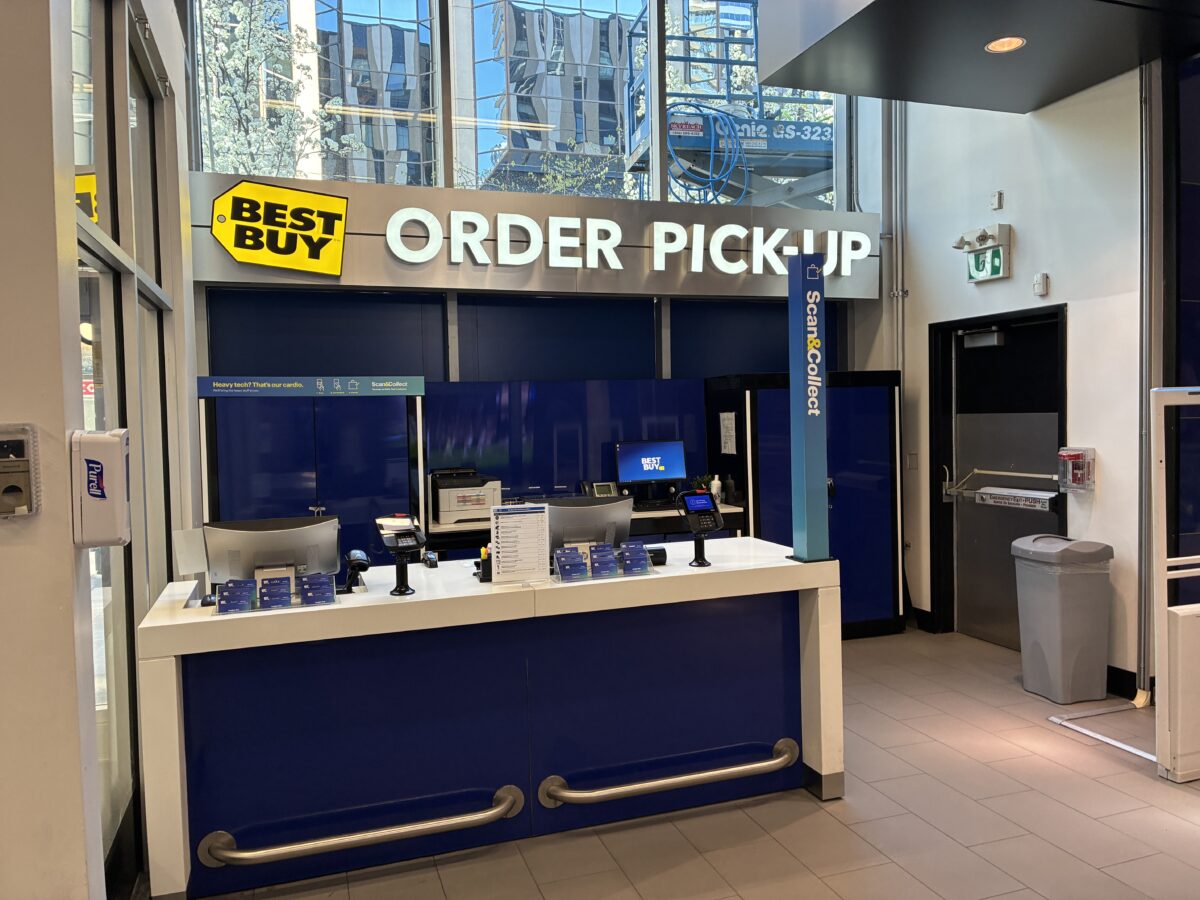
The early days of e-commerce exposed a structural problem that most retailers were slow to confront. Separate channels meant separate systems, separate teams, and customer experiences that rarely connected cleanly. A purchase started online could not easily be continued in store. A return made in person had no relationship to the digital transaction that preceded it. Customers, who had never organized their lives around a retailer’s internal architecture, noticed.
Best Buy Canada recognized that gap early and has been working toward closing it ever since. The destination Sallans describes is demanding in its simplicity.
“Our ultimate goal is that a customer should never have to start a single journey more than once. We have to humbly recognize that we are not always delivering that today. There is a lot of upside and work still ahead of us.”
For a conversation framed around a milestone anniversary, it is a candid place to begin.
The rise of AI-assisted shopping has changed the information landscape considerably, but Sallans frames it as an acceleration of something already underway rather than something entirely new. Customers have been arriving at Best Buy stores better informed for years. Today, many have already run their intended purchase through a model that knows their buying history, their lifestyle, and their budget before they ever set foot in the store. What has not changed, he argues, is the fundamental reason they still show up in person.
“Customers often come in thinking they know what they want. What they really know is what they need to accomplish. Our job is to bridge those two things. Today our customers arrive exceptionally well informed. The AI models they use know their previous purchases and their lifestyle, and do a pretty good job recommending. What has not changed is that they are still looking for someone with credibility to make that final recommendation and reaffirm the decision they have already moved toward.”
This is where Sallans’s Geek Squad background becomes relevant to the broader retail argument he is making. The service philosophy that built Geek Squad was never about fixing things after the fact. It was about building enough trust that a customer felt confident in the purchase before they made it. That same principle now runs through every format Best Buy operates, from the Express location at Union Station to the full experience store at Bay and Dundas. The expertise is the differentiator. The sale follows from it, not the other way around.
The purchases Best Buy handles are rarely small decisions. A laptop, a home theatre system, a wearable device. These are considered, often emotional, and in the current economic climate, increasingly weighed against competing financial pressures. Two in three Canadians say they plan to cut spending this year. Discretionary electronics are among the first things people reconsider when budgets tighten.
“There is a real emotional connection to these purchases because they are tied to something in the customer’s lifestyle. They are serious purchases. And in the current climate, disposable and discretionary income is something we need to be very cautious about. When a customer walks in today, they already have a strong idea of what they want and where they want to buy it. It is really like this is your shot.”
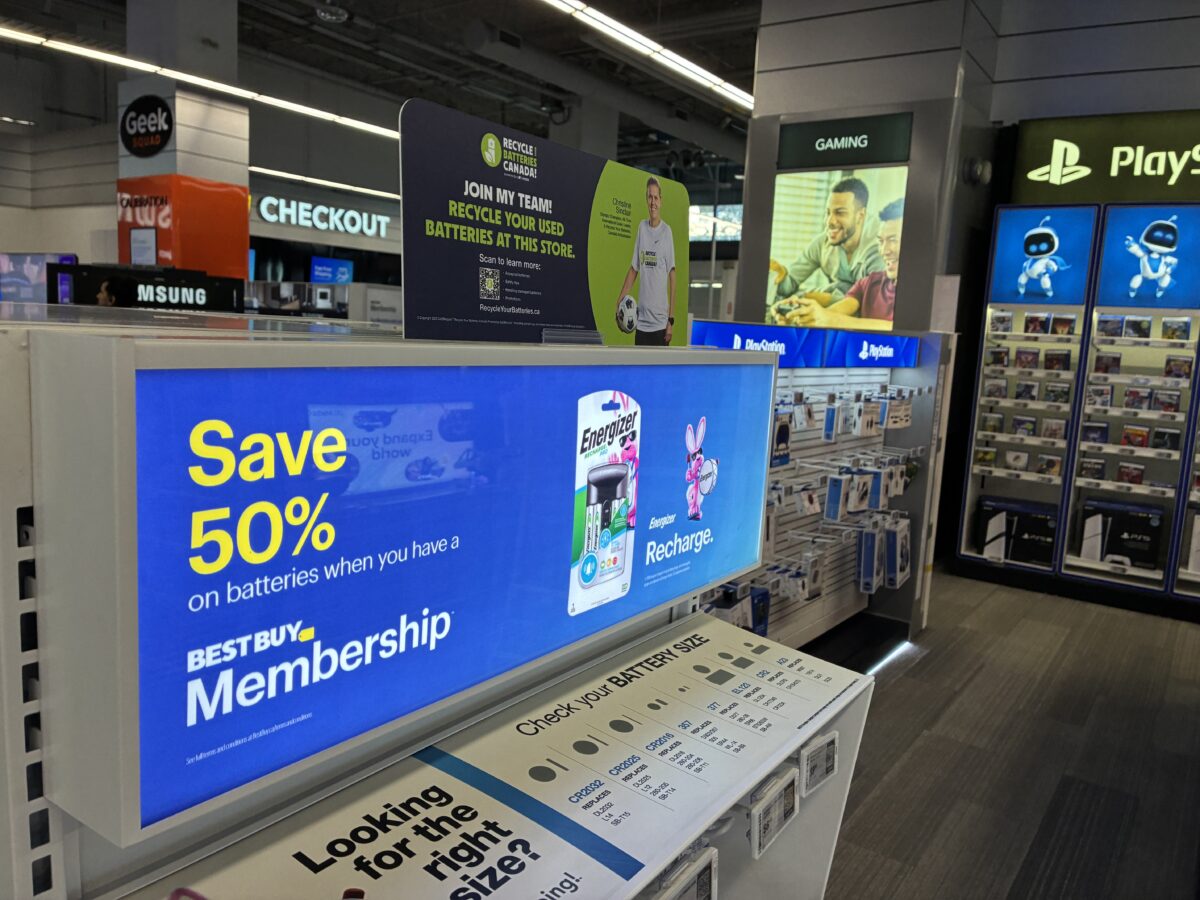
That reality has fundamentally changed what Best Buy looks for when it hires, and how it thinks about the people already on the floor. Non-commissioned since its earliest days in Canada, a deliberate point of difference from Future Shop when both banners operated side by side, the brand has always operated from a different premise than much of the industry it competed against. That decision, which might have looked unconventional when the commissioned model dominated electronics retail, now looks prescient. Removing the pressure of a commission is precisely what creates the conditions for the reaffirmation moment Sallans describes. A customer who senses they are being guided rather than sold is a customer who leaves with confidence. That confidence is what brings them back.
“Thirty years ago you were looking for someone hungry and driven who was going to close that sale, and then teach them about technology that may or may not have excited them. Customers could see through it, but that was the industry at the time. Today, technology is interwoven into every single minute of our lives. We are hiring people for whom it is already a part of who they are. Then it is about teaching them the systems and how to help the customer get where they want to go.”
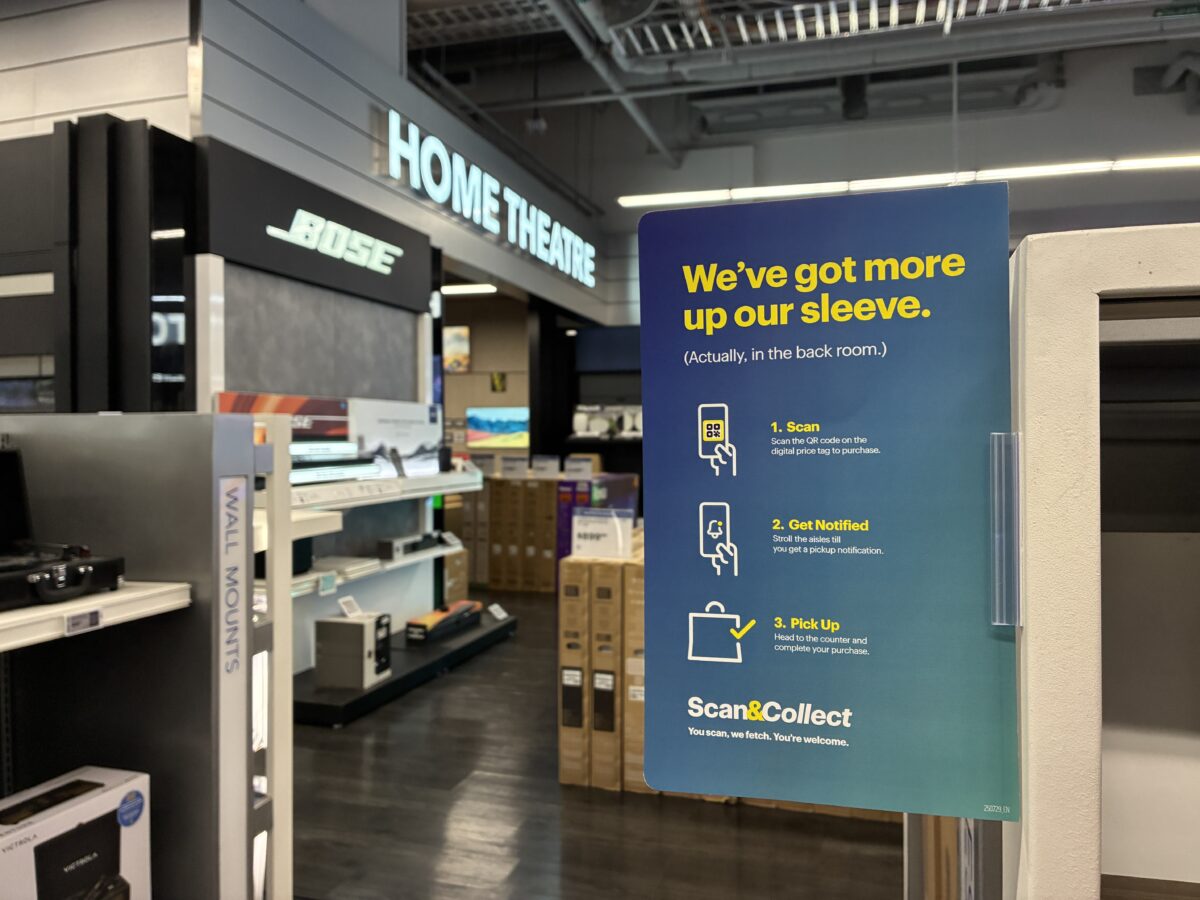
A customer who arrives having already done substantial research does not need to be educated about the product. They need a partner who can meet them where they are, validate what they know, and fill in the gaps with credibility. Keeping that credibility current across a product category that changes as fast as consumer electronics is its own ongoing challenge. Best Buy runs weekly boost sessions in stores focused on new products and emerging categories. Vendor summits bring deeper product knowledge to leadership teams throughout the year. Digital price tags now carry QR codes that give both customers and staff immediate access to full product information.
“It is going to be exceptionally difficult for all of the blue shirts on our floor to have knowledge of everything that seems to be changing on a monthly basis. We are going through one of those cycles right now with the rise of wearable technology and all of the new entrants in that field. What we spend more of our time on is taking away as many friction points as we can in the customer’s purchase path and focusing fully on the product knowledge.”
One of the less visible but consequential shifts inside Best Buy Canada over the last several years has happened in supply chain. The traditional distribution centre model has been largely replaced by something more distributed, more local, and more responsive to where demand is actually coming from. Rather than holding product in regional warehouses, Best Buy has repositioned its store network as a micro-distribution infrastructure. When a customer purchases online, the order is typically fulfilled from the nearest store. When a product is not available in store, it goes directly on the customer’s receipt and ships separately through what the company calls multi-channel fulfilment, so the visit is never wasted and the transaction is never lost.
“Time is the most important asset we all have. A customer has made a decision and taken the time to come in. They want the product and we need to have it. And if we do not, we need a clear plan for what happens next.”
In downtown Toronto, next-day delivery is standard. Same-day is achievable depending on timing. The company is in conversations with partners it cannot yet name about bringing that window down to within the hour in select markets before the end of the year.
“We want to have inventory closest to where the customer is. We are exploring with a couple of partners, that I cannot disclose, being able to get shipping within the hour this year. Whoever has the product for the customer is going to win.”
A single product launch can arrive in multiple storage configurations, colours, and price points, each carrying different demand profiles across different markets. Best Buy is this year deploying a significant update to its inventory forecasting system built around artificial intelligence. Sallans is measured about the framing.
“I do not like leaning on the buzzword, but we also cannot have our heads in the sand. We know the product trends that hit each store, what needs to be in stock and at what volume. We do not always get it right. But if a customer comes in and we do not have what they need, we have to know the fastest way to get it to them.”
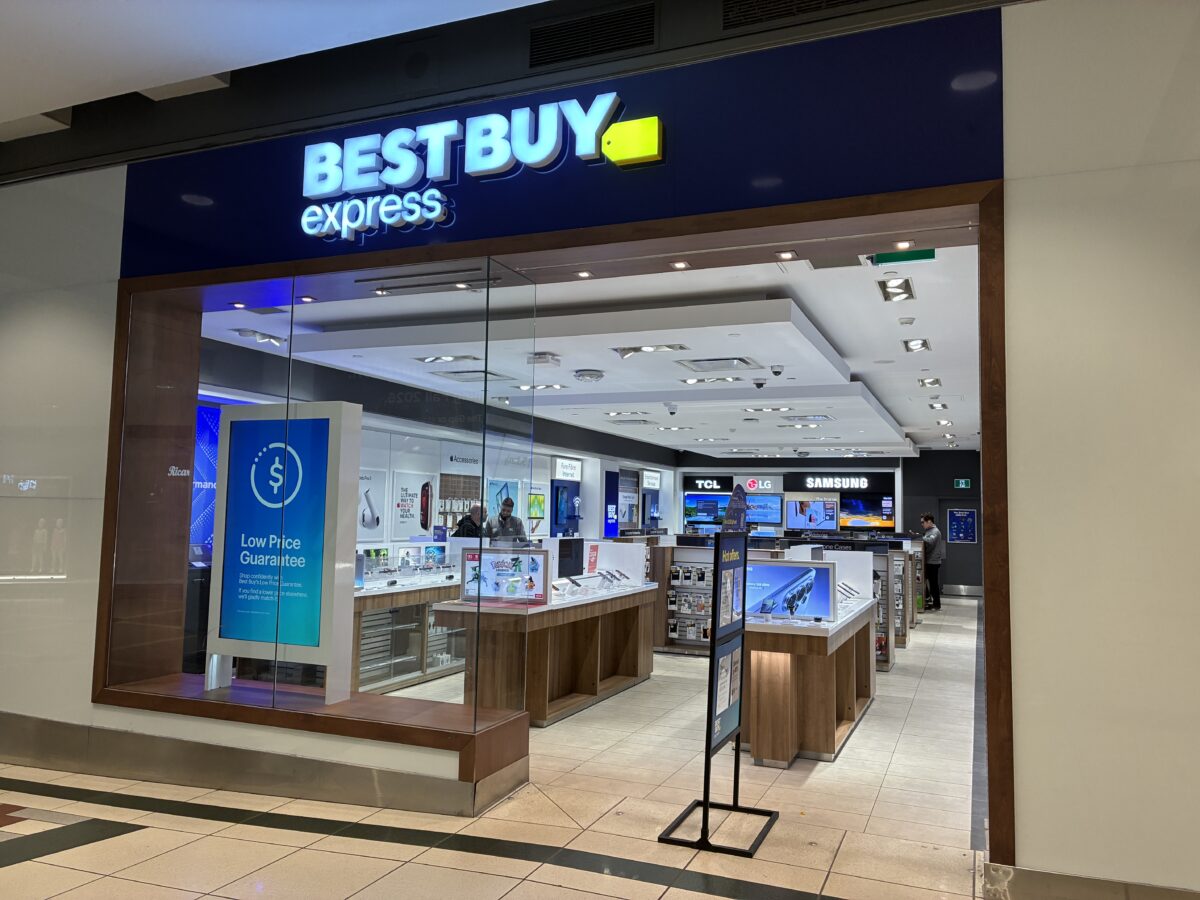
The partnership with Bell that converted 167 Source locations into Best Buy Express stores across Canada in 2024, a process completed in just five months, was one of the most significant retail footprint expansions in the country that year. At a time when big-box operators were scaling back store counts and renegotiating leases, Best Buy moved in the opposite direction.
“One of our single biggest challenges was 167 net new locations, smaller locations, all while customer expectations stay the same as at our big box stores,” shared Sallans.
The strategic logic behind Express runs deeper than simple reach. Best Buy’s ambition, as Sallans describes it, is to have a touchpoint within 15 minutes of any customer anywhere in Canada. The country’s geography makes that genuinely difficult, and no combination of full-size stores will ever fully close that gap. Express locations, now embedded in communities and commuter corridors that a 20,000-square-foot store could never reach, move the brand into daily routines rather than waiting for customers to seek it out.
“Just being able to get that much closer matters enormously. If you think about the Union Station Express location versus our Bay and Dundas store, those are geographically very close, but from a time and convenience perspective, not at all conducive to the average person going through Union Station that day.”
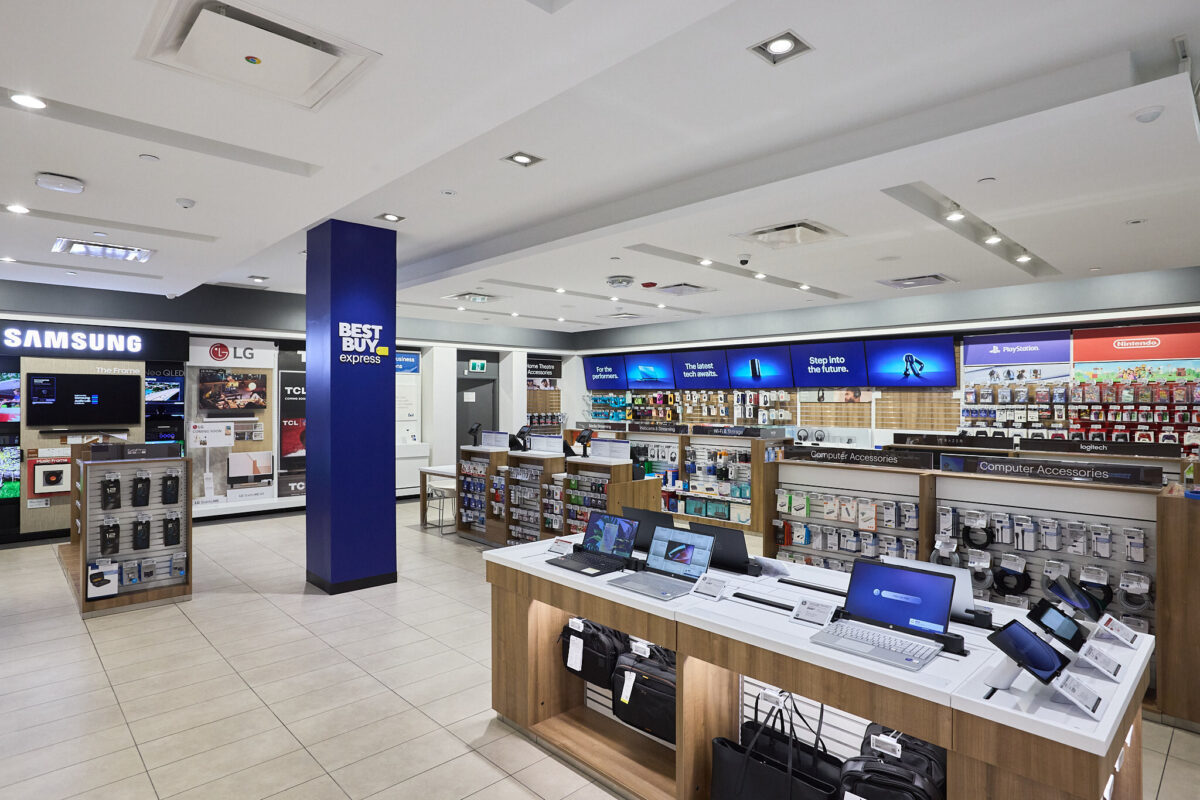
Two stores separated by a few city blocks can serve entirely different customer needs depending on where those customers are in their day. Express does not try to replicate the flagship experience. It tries to show up in the moments where the flagship cannot. And the data behind the expansion has reinforced something Best Buy had long believed about the relationship between physical and digital retail. Opening a store in a market, even a small one, measurably increases online purchases from customers in that same area.
“We can track the adoption of online purchases in markets where we have a physical store versus markets where we do not. It ties directly to customer comfort. Pure-play online retailers continue building partnerships with brick-and-mortar locations for exactly that reason. We have been fortunate enough to offer that end-to-end solution, and we are growing it.”
For retailers still working through what role brick-and-mortar plays in their model, that is worth sitting with. Physical presence does not compete with digital. It enables it.
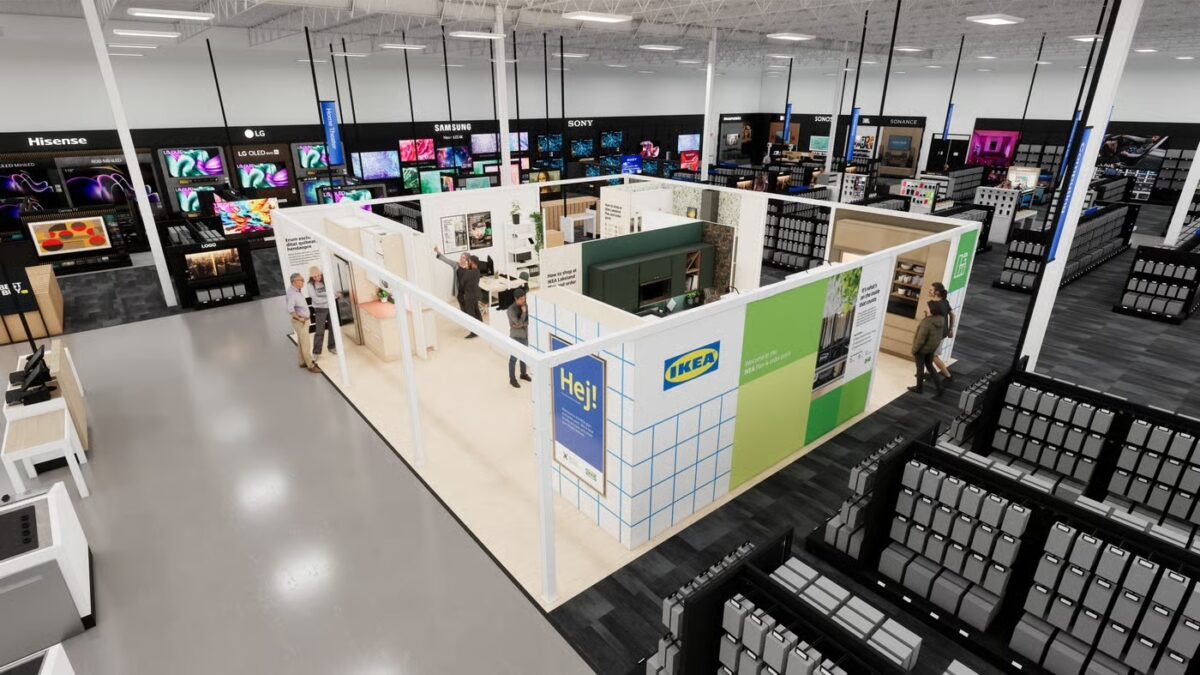
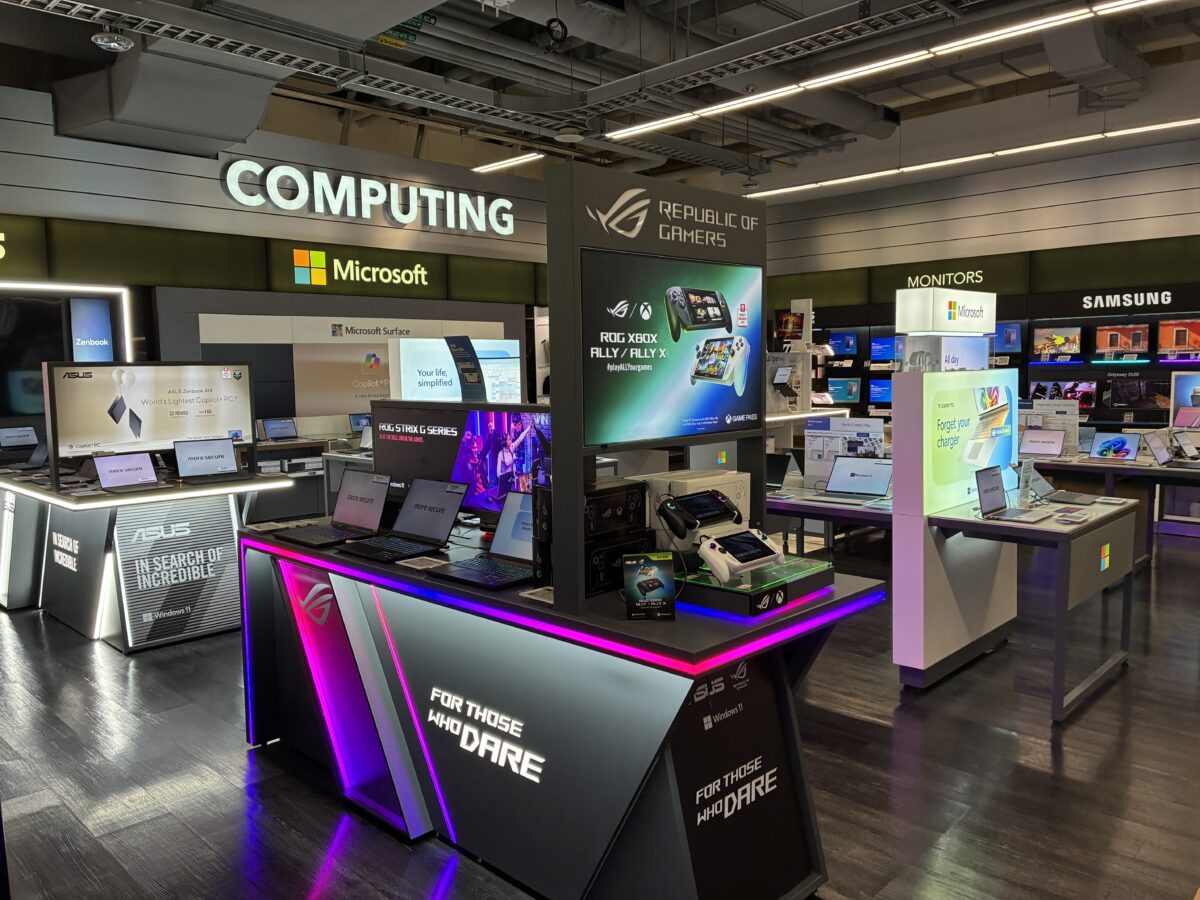
Best Buy Canada now operates across a deliberate spectrum of formats, each designed for a specific kind of community and a specific kind of customer moment. Express locations anchor one end. Experience stores anchor the other, offering the full depth of product, service, and in-store expertise the brand is built around. Between them sit small-format stores ranging from four to seven thousand square feet, and a large network of classic stores, 85 per cent of which have been remodelled within the last three years.
“We have remodelled 85 per cent of our chain within the last three years. A lot of those stores were built for CRT monitors and projection televisions. We do not need that square footage anymore. We can reappropriate it for retail partners, brand partnerships, and other things we have in the hopper. It used to be one format fits all. That is not the case anymore.”
The remodelling program has reached well beyond the major urban centres. Sault Ste. Marie, Thunder Bay, Prince Albert. Stores built for a product mix that no longer exists are being recalibrated for what the category actually requires today. Seven more stores are being converted to the experience format this year. Six classic stores are being refreshed. The company is also working through what a medium-format store looks like, designed to fill the gap between the compact Express and the full-scale experience location.
On shop-in-shop arrangements, the conversation has moved well beyond concept. Best Buy recently held its annual vendor connect event, bringing together its full partner network, and Sallans says the appetite for deeper integration was evident on both sides. A partnership currently being piloted with IKEA in the United States points toward where that conversation is headed. The two brands compete for retail dollars broadly but not for the same products, making the combination complementary rather than complicated. A customer who needs both a television and a bookshelf currently makes two trips. Best Buy is working on making that unnecessary.
“What better way to respect the customer’s time than to bring together multiple things they might be looking for all under one roof. There are a lot of great partners out there we are looking forward to working with. We are not done expanding our store count, which is a very interesting thing to say in 2026.”
Best Buy Canada enters its next chapter with a strategy it calls Best Buy 2030, built around what Sallans describes as the next evolution of the customer journey. Central to that thinking is a concept the company refers to as total techonomy, a shift away from thinking about the business as a new-product transaction engine toward something that supports the full lifecycle of the technology a customer owns. Circular economy principles are embedded in that vision. Trade-in programs, refurbishment, and the ability to bring a product back into the value chain rather than replacing it outright are all part of how Best Buy is thinking about long-term customer relationships. In an environment where consumers are extending the life of devices rather than replacing them on a manufacturer’s schedule, the retailer that supports that decision earns a different kind of loyalty than the one that simply sells them the next thing.
Best Buy Ads, the company’s growing retail media network, and the My Best Buy membership program sit alongside that thinking, building revenue streams and customer contact that extend well beyond the individual transaction. Together they point toward a business model that looks considerably different from the electronics retailer that entered Canada 25 years ago, while remaining grounded in the same fundamental proposition that Sallans has carried through every role he has held: help the customer get where they want to go, and earn the relationship that follows.
When asked what staying relevant for 25 years actually requires, the part that does not make it into any press release, Sallans does not hesitate.
“You have to love challenge. I get invigorated by solving problems that do not have an obvious answer. You have to have the right gear ratio for it. The dynamics of this industry, electronics retail with the dogfight it has been for a lot of those 30 years, that is what has kept me energized. I feel a great responsibility to all of the people who work in this company and to all of the customers who shop with us. You have to show up in this industry with everything you have got. Otherwise you will see it in everything downstream.”
Twenty-five years in, Best Buy Canada is still showing up.

Dustin Fuhs is the founder and Editor-in-Chief of 6ix Retail, Toronto’s premier source for retail and hospitality industry news. As the former Editor-in-Chief of Retail Insider, Canada’s most-read retail trade publication, Dustin brings over two decades of expertise spanning retail, marketing, entertainment and hospitality sectors. His experience includes roles with industry giants such as The Walt Disney Company, The Hockey Hall of Fame, The Canadian Opera Company, Starbucks Canada and Blockbuster.
Recognized as a RETHINK Retail Top Retail Expert in 2024, 2025 and 2026, Dustin delivers insider perspectives on Toronto’s evolving retail landscape, from emerging brands to established players reshaping the city’s commercial districts.