

When Chelsee Pettit walks through downtown Toronto, she conducts an informal survey that most retailers overlook. The founder of aaniin, Canada’s first 100% Indigenous-owned department store, watches what people carry in their hands.

“I conduct what amounts to a simple retail analysis,” she explains. “I observe what people are actually carrying—shopping bags and purchases. When you see thousands of people walking Queen Street West but none carrying shopping bags, it tells you something fundamental about their intent. They’re not there to shop.”
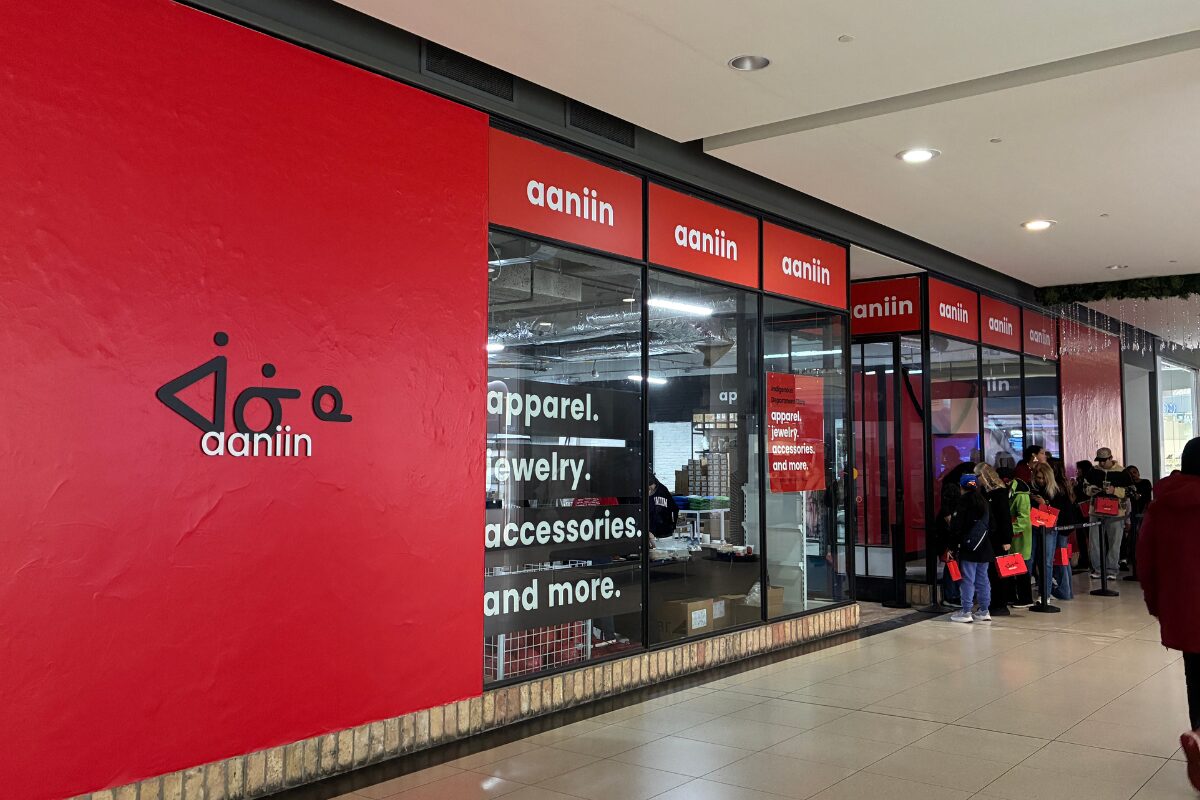
This “shopping bag test” shaped the decision to return aaniin to CF Toronto Eaton Centre for its second holiday pop-up, which opened November 1st in an expanded 6,500-square-foot space that will run through December 31st, rather than pursuing the trendy streetfront locations many emerging brands covet.
The decision reflects a broader philosophy about sustainable retail growth that has guided Pettit’s approach since launching aaniin in 2021. Last year’s pop-up at the mall achieved its one-month sales target in just 10 days, validating her belief that established foot traffic trumps fashionable addresses.
The Economics of Attention
For Pettit, an Anishinaabe entrepreneur who has worked in mall retail since age 18, the choice between Eaton Centre and Queen Street represents more than location preference—it’s about resource allocation in an expensive market.
“Opening a retail space anywhere in downtown Toronto carries enormous risk, particularly when you’re responsible for generating your own foot traffic,” she says. “I’d rather establish operations where the infrastructure already supports retail success than invest heavily in marketing to create demand from scratch.”
The approach challenges the startup culture emphasis on building brand awareness through high-visibility locations. Instead, Pettit focuses on converting existing shoppers rather than creating new ones—a strategy informed by hard experience at Toronto’s Stackt Market, where foot traffic didn’t consistently translate to sales.
This year’s move to the former Free People space addresses operational challenges from the 2024 pop-up. The previous location in the former Le Chateau space was divided by a wall separating men’s and women’s sections, creating logistical complications that affected customer flow and operations.

Building Indigenous Business Excellence
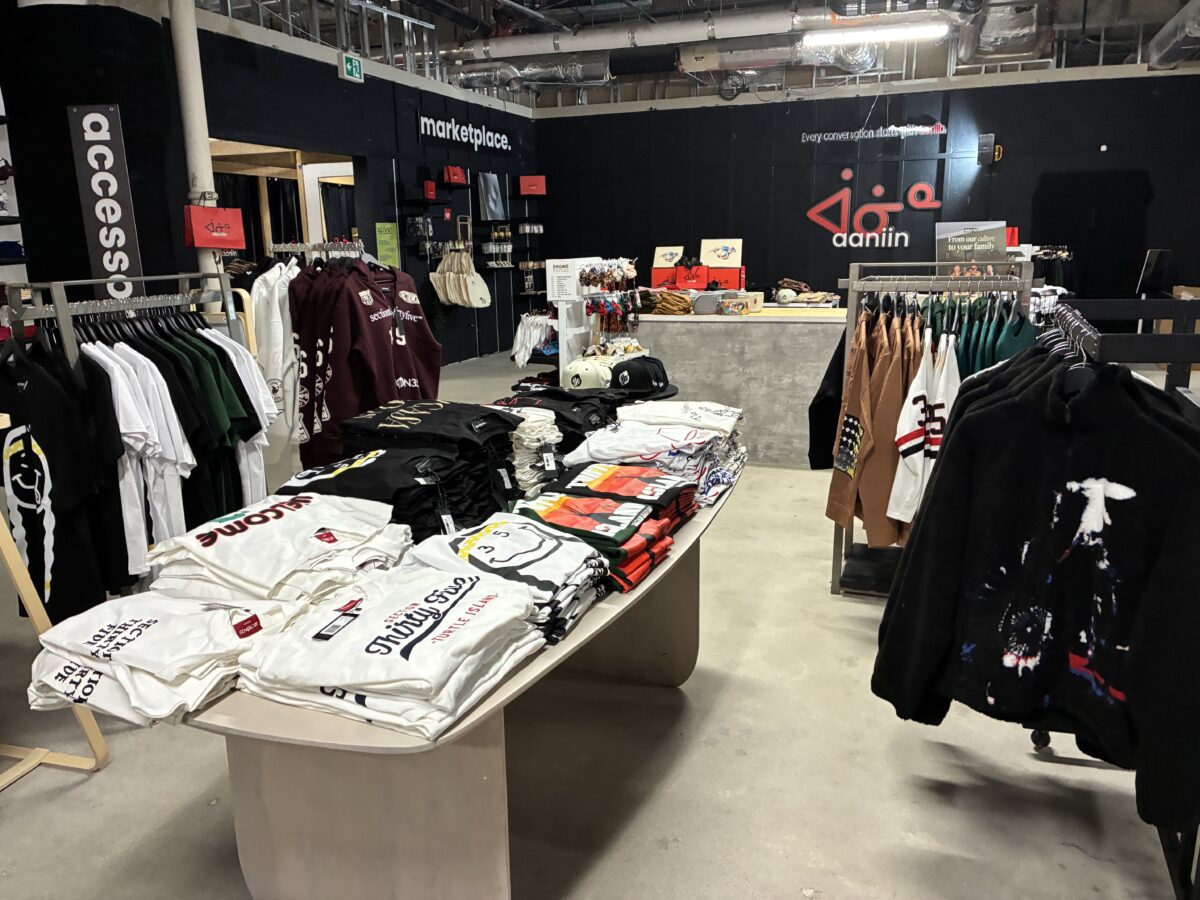
The expanded space houses established Indigenous brands including Bastien, Cheekbone Beauty, Kokom Scrunchies, Urban Native Era, and Outlier Leather, alongside aaniin’s new Endaayaan Gallery Boutique featuring luxury home décor. This curated approach reflects Pettit’s commitment to sustainable business development.
But the numbers tell a strategic story. Last year, aaniin worked with over 65 Indigenous brands and businesses. This year, that’s been deliberately reduced to 40-45. “We’re not focusing on getting everybody in the door,” Pettit explains. “We’re focusing on the people who are being supportive and being reciprocal and having very community-focused processes with the way that we are working.”
This shift reflects Pettit’s evolution as an employer and leader. “I do have a second in command now,” she notes. “When I am taking on too much, then that puts it onto that person, and that’s not okay in my opinion. I used to wear myself to the ground, but I’m not going to do that to my staff who deserve to get paid, who deserve to keep a long-term job and be happy day to day while they’re working.”
Today, aaniin employs seven full-time staff—a significant achievement in creating stable Indigenous employment in retail.
The Four-Month Business Development Program

Pettit’s vendor selection process demonstrates her expertise in identifying and developing retail-ready businesses. Rather than simply saying no to unprepared vendors, she’s created a solution: a four-month business growth cohort where vendors pay to receive intensive operational training. “We walk them through four months of operations,” Pettit explains. “The end goal is that they build their own self-sufficient, thriving ecosystem on their own. And then once I see that they have completed that process, then they might be able to come into the store.”
The program addresses fundamental retail gaps that many Indigenous entrepreneurs face. “Some of them don’t even have Shopify accounts,” she notes. “They’ll come up to me and say, ‘put my products in your store,’ and I ask, ‘do you have a website?’ And they say no. Well, then you have no operational organization in terms of spreadsheets or anything.”
Her approach is hands-on and immediate. “This year, our approach was: you don’t have barcodes? Well, sit down and my staff is going to show you once and you’re going to sit here until it’s done. People would literally sit in the store creating their own products on Shopify and then printing their own barcodes.”
What might seem harsh is actually essential preparation. “That is the expectation,” she says. The intensity is driven partly by compressed timelines—this year’s pop-up lease was secured on September 5th, giving the team just six weeks to prepare.
From Retail Foundation to Indigenous Leadership
Pettit’s approach is grounded in over a decade of retail experience that began at age 18. Her background spans everything from Sears menswear to LensCrafters, Sunglass Hut, BonLook, and LASIK MD, where she rose to management positions including Dual Store Manager and Interim Centre Director—each role contributing to her current expertise.
“Every time I learned how to use an Excel spreadsheet, every time I learned how to do inventory at Sears when I worked in the menswear department when I was 18 years old, I took it so seriously,” she reflects. “Everything that I learned, I took so seriously. And it’s all led up to this point where I can now use all of my skills all at the same time. And I’m able to teach all of my skills to seven full-time staff right now.”
This comprehensive retail background—spanning optical retail, fashion, and medical services—sets Pettit apart in an era when many entrepreneurs skip traditional retail experience. The philosophy extends beyond efficiency to equality. “I don’t look at people like hierarchy and stuff like that. I don’t look at people as they’re further ahead or behind me. We’re all at the same—everything’s always happening at the same time.”
Rather than viewing retail readiness gaps as insurmountable, Pettit has built systems to address them proactively. “I’ve witnessed concerning patterns where major retailers approach Indigenous businesses with ambitious promises, only to see those partnerships struggle,” she observes. “Rather than treating Indigenous partnerships as diversity initiatives, we focus on genuine business development that ensures companies possess the operational capacity for sustained success.”
Innovation in Operations
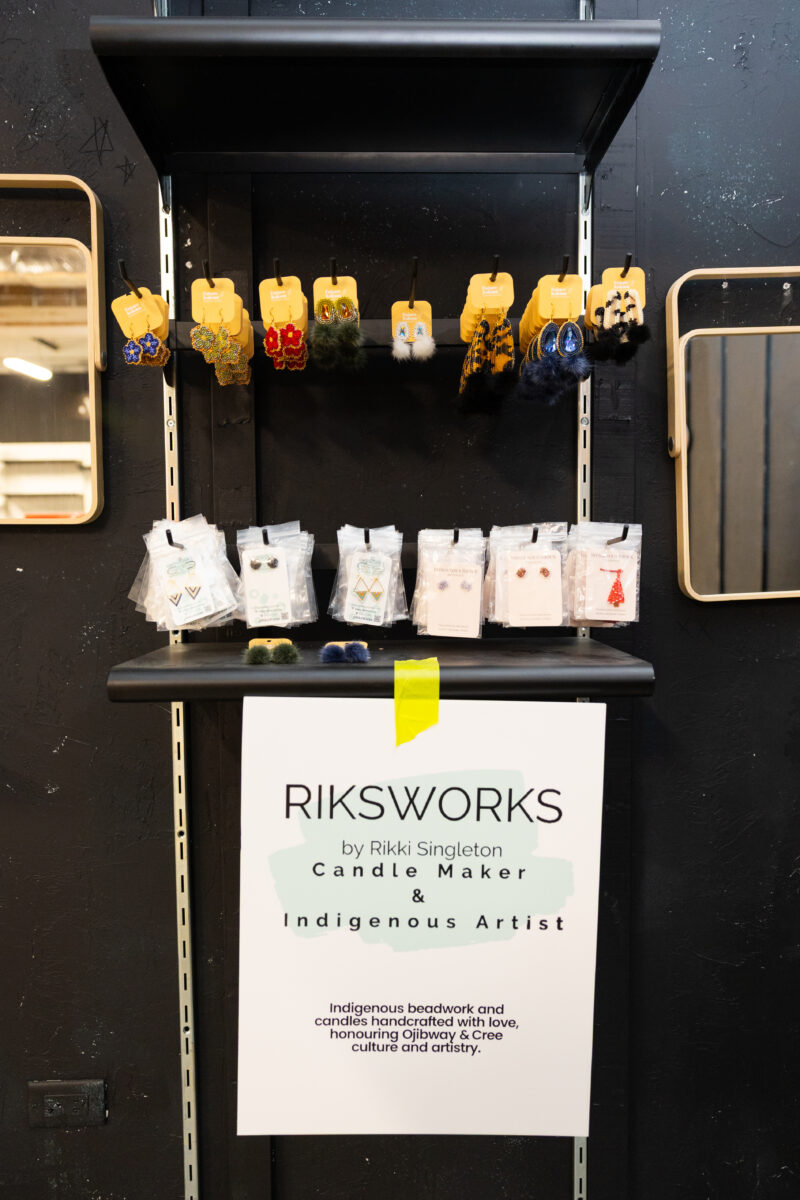
Rather than viewing these challenges as barriers, Pettit has built innovative systems to elevate Indigenous businesses. The 2025 pop-up features the Bimaadiziwin Marketplace, showcasing businesses from aaniin’s Business Growth Cohort—a consulting program she developed to build retail capacity among Indigenous enterprises.
Breakthrough Achievement in Retail Management

The marketplace represents a significant operational breakthrough: for the first time, aaniin is successfully maintaining both physical and online sales channels simultaneously during peak season. This achievement required Pettit to develop sophisticated inventory management systems that had previously been beyond the company’s capacity.
“In previous years, we’ve had to suspend online sales during Black Friday because our physical retail operations required complete inventory focus,” Pettit explains. “Store sales move significantly faster than online transactions, and maintaining dual channels without proper systems creates customer service problems when in-store shoppers can’t purchase items that remain in online shopping carts.”
The solution she developed represents the kind of behind-the-scenes innovation that enables sustainable growth. It exemplifies Pettit’s sophisticated approach to business development over rapid scaling.
Despite generating approximately $250,000 in online sales last year without paid marketing, Pettit has developed a sophisticated approach that prioritizes sustainable development over rapid expansion. “I’m focused on achieving scalable revenues with the operational infrastructure to sustain and exceed that level of business,” she says. “Many entrepreneurs focus exclusively on immediate revenue generation, but I prioritize building systems that ensure long-term viability and employment opportunities.”
Her approach represents strategic leadership that creates lasting economic impact. The solid foundations she built enabled the business to adapt and thrive even during personal challenges earlier this year.
Building an Economic Ecosystem
Pettit’s vision extends far beyond a single retail operation. Through her holding company Mikinak Holdings, she’s building what she describes as “a strategic incubator and holding company that invests in Indigenous-led ventures, creating pathways for sustainable growth, wealth generation, and economic sovereignty.”
“What’s next is focusing on building other businesses that work as a cohesive ecosystem with this business,” she explains. “Right now, what we’re doing with the cohort that I’ve built is a consulting business. We’re trying to grow this consulting business that adds to having more vendors that are able to get streamlined and grow their own businesses aside from being in my space.”

In addition to aaniin, Pettit founded Waabi (formerly Intuition Business Solutions) in 2020, offering services including startup assistance, brand strategy, business planning, recruiting, and social media management. Most recently, she launched ECHO Speakers Agency in February 2025, expanding her impact across North America.
The approach addresses a critical issue she identified: dependency. “I learned this year that if I just do things for other people, then they’re not creating that independence and they’re relying on my success as their success. I’d rather have them rely on their own success and just all have success aligned together.”
This philosophy protects both aaniin and its partners. “If anything goes wrong with my business, then all of a sudden a lot of other people are feeling that effect as well,” she notes. By building independent, successful businesses rather than dependent relationships, Pettit creates a more resilient Indigenous business community.
The scale of economic impact is significant. According to aaniin’s website, the company “has created meaningful opportunities for dozens of Indigenous staff members and has funneled hundreds of thousands of dollars into the Indigenous economy through wholesale, consignment, contractors, and partnerships, along with collaborations with Indigenous brands from across Turtle Island.”
This year’s Eaton Centre pop-up alone features 50 Indigenous brands and businesses, representing what the company calls “Canada’s first Indigenous-owned Department Store Concept” and proving “that Indigenous entrepreneurship is bold, innovative, and thriving.”
From Personal Vision to National Movement

aaniin’s journey from a moment of cultural misrecognition to economic infrastructure represents what Pettit calls “economic reclamation.” Her LinkedIn profile states her mission clearly: “ensuring that Indigenous businesses and entrepreneurs have the resources, ownership, and capital needed to thrive.”
The vision is ambitious and specific. As stated on aaniin’s website: “In 2025, we’re working to make this vision a permanent reality across Canada.” The goal moves beyond pop-ups toward permanent Indigenous retail presence in major shopping centres nationwide.
The long-term goal reflects both ambition and practical observation about barriers facing Indigenous entrepreneurs. Without access to traditional family financing networks that many business owners rely on, Indigenous enterprises often struggle to access capital for retail expansion.
Pettit’s vision positions retail representation as economic development strategy, creating visible success stories that inspire the next generation of Indigenous entrepreneurs while “ensuring that future Indigenous entrepreneurs have the support, capital, and infrastructure needed to not just survive, but succeed at scale.”
Testing Demand
@aaniin.hello No bestie, I just love this store so much I accidentally clock in.
♬ original sound – Golden Hill Restaurant
The November 1 opening featured live performances, local food partnerships, and promotional activities including free totes and discount wheels. But for Pettit, the pop-up represents more than seasonal sales opportunity.
The activation serves as proof of concept for a retail model that could reshape how Indigenous entrepreneurs access mainstream markets. Success at Eaton Centre demonstrates demand for Indigenous products within established retail environments, potentially influencing how other property managers and retailers approach similar partnerships.
The approach also offers lessons for retail strategy beyond Indigenous businesses. In an era when many brands pursue viral marketing and rapid expansion, Pettit’s methodical focus on operational fundamentals and location analytics provides a counterexample to growth-focused startup culture.
Whether this innovative philosophy scales nationally seems increasingly likely given aaniin’s proven success. For now, Pettit continues building sustainable Indigenous economic development, one strategic decision at a time, in locations where real commerce happens and real jobs are created.

Dustin Fuhs is the founder and Editor-in-Chief of 6ix Retail, Toronto’s premier source for retail and hospitality industry news. As the former Editor-in-Chief of Retail Insider, Canada’s most-read retail trade publication, Dustin brings over two decades of expertise spanning retail, marketing, entertainment and hospitality sectors. His experience includes roles with industry giants such as The Walt Disney Company, The Hockey Hall of Fame, The Canadian Opera Company, Starbucks Canada and Blockbuster.
Recognized as a RETHINK Retail Top Retail Expert in 2024, 2025 and 2026, Dustin delivers insider perspectives on Toronto’s evolving retail landscape, from emerging brands to established players reshaping the city’s commercial districts.