

More than two dozen high-rise projects—representing 7,700 residential units—are reshaping a nine-block radius around Jarvis and Queen Street East, marking one of the most concentrated development surges in downtown Toronto’s recent history.
The transformation spans from Queen Street East north to Gerrard Street, and from Church Street east to Parliament Street, where eight mixed-use developments containing 2,583 units are currently under construction, while an additional 15 projects awaiting city approval will add another 5,117 units to the area.
Walk the corridor today and the scale becomes visible. St. Thomas Developments is building a 52-storey, 587-unit tower at 88 Queen East, designed by Hariri Pontarini Architects. Just west at 98 Queen East, Parallax Investment Corp and Harlo Capital are constructing a 34-storey, 369-unit mixed-use condominium designed by IBI Group.
At 20 Mutual Street, Fitzrovia Real Estate developed the Elm-Ledbury project, dual 27- and 28-storey mixed-use rental towers totalling 542 units. The slender 89 Church Street tower—known as The Saint—adds 418 residential units whilst preserving historic buildings at its base. Garden District Condos at 81 Shuter brings 234 units in a 32-storey tower, rising behind heritage buildings.
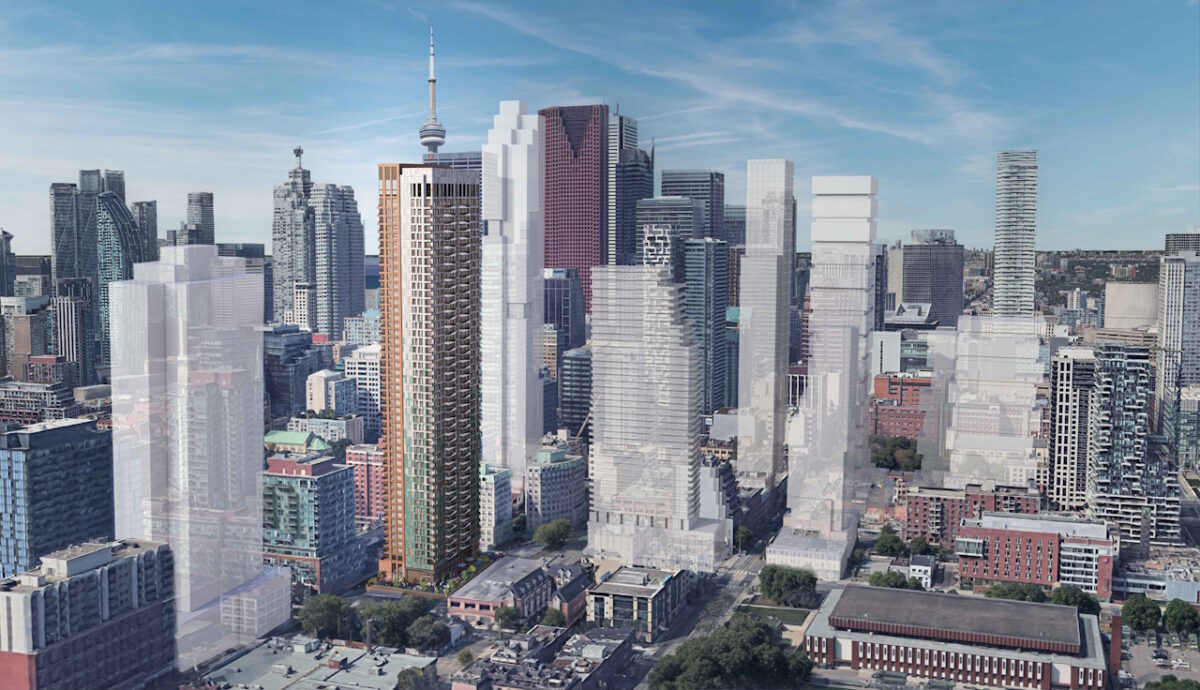
These projects under construction represent just the beginning. The pending approval pipeline reveals the true scope of developer interest: proposals for 133 Queen East (40 storeys, 440 units), 225 Queen East (45 storeys, 516 units), 115 Jarvis Street (50 storeys), and CentreCourt’s 295 Jarvis Street (60 storeys, 618 units) among many others.
A decade ago, this same stretch was characterised in development forums as a “dead zone”—an area that had “halted northward development” along Queen Street. What changed?
The $27 Billion Catalyst
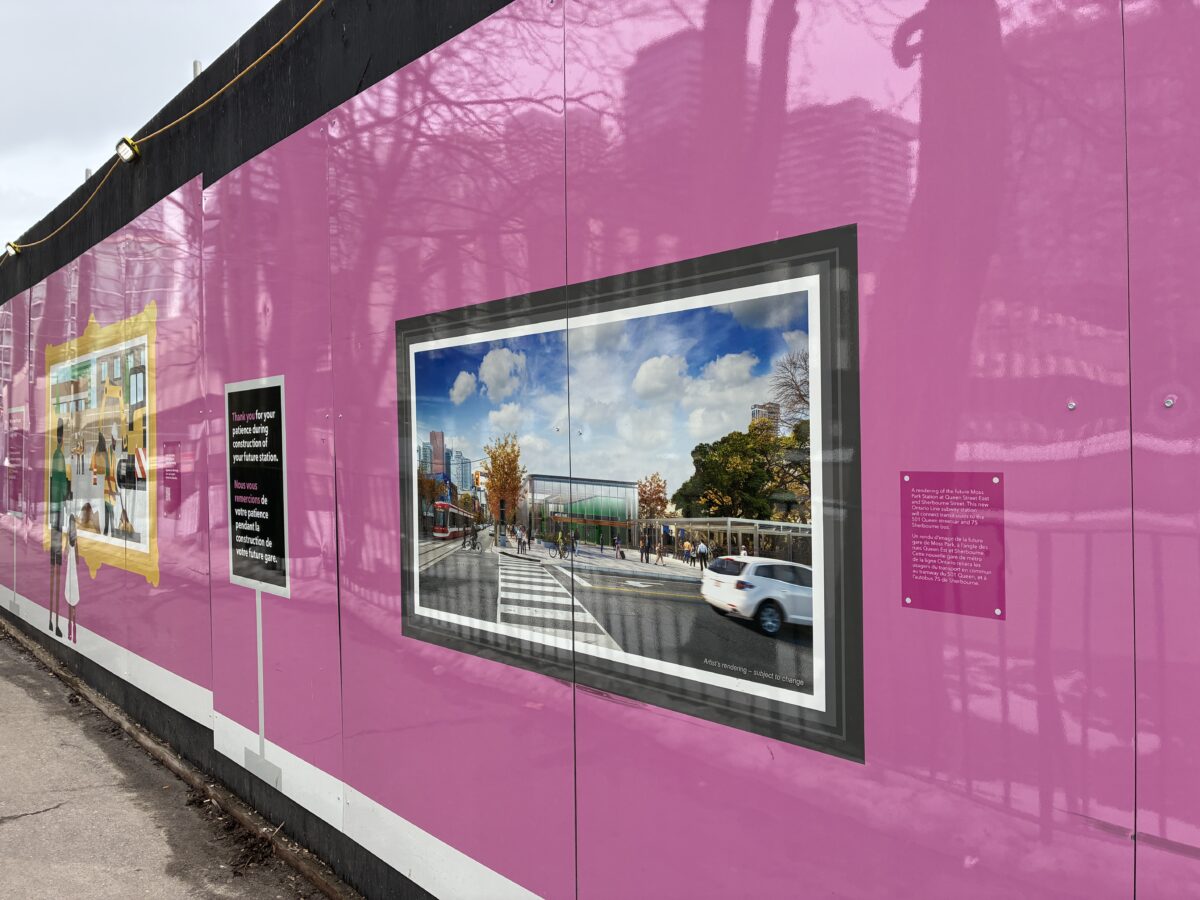
The transformation is being driven by the Ontario Line, with the Moss Park station currently under construction at Queen Street East and Sherbourne. Expected to open in 2031, the station will serve an estimated 7,300 riders during peak hours and provide rapid transit access to 23,600 residents within a 10-minute walk.
The excavation for Moss Park station currently represents one of downtown Toronto’s most visible construction sites, with a massive pit being dug where the underground station will eventually connect to surface-level entrances. Once complete, the station will ease congestion on the 75 Sherbourne bus and 501 Queen streetcar, with an estimated 1,500 surface transfers during peak hours.
But the transit investment does more than move people—it unlocks development potential through Toronto’s planning policies. Properties within 200 metres of subway stations can reach 30 storeys in mixed-use zones, explicitly designed to drive density around major transit infrastructure.
Eddie Chan, a commercial realtor with Area Realty Inc. Brokerage who specializes in the downtown core, sees the policy impact clearly. “Within a 200-metre distance to a TTC station, developments on designated mixed-use or apartment areas may see heights up to 30 storeys, and between 200 metres to 500 metres, up to 20 storeys. This building will one day be a high-rise building. It is not a matter of ‘if’, it is a matter of ‘when.'”

The policy framework explains the wave of proposals extending well beyond the immediate station area. At 115 Jarvis Street, Suncor recently proposed a 50-storey tower. It’s part of a pattern: small infill sites being transformed to maximize transit-oriented development potential.
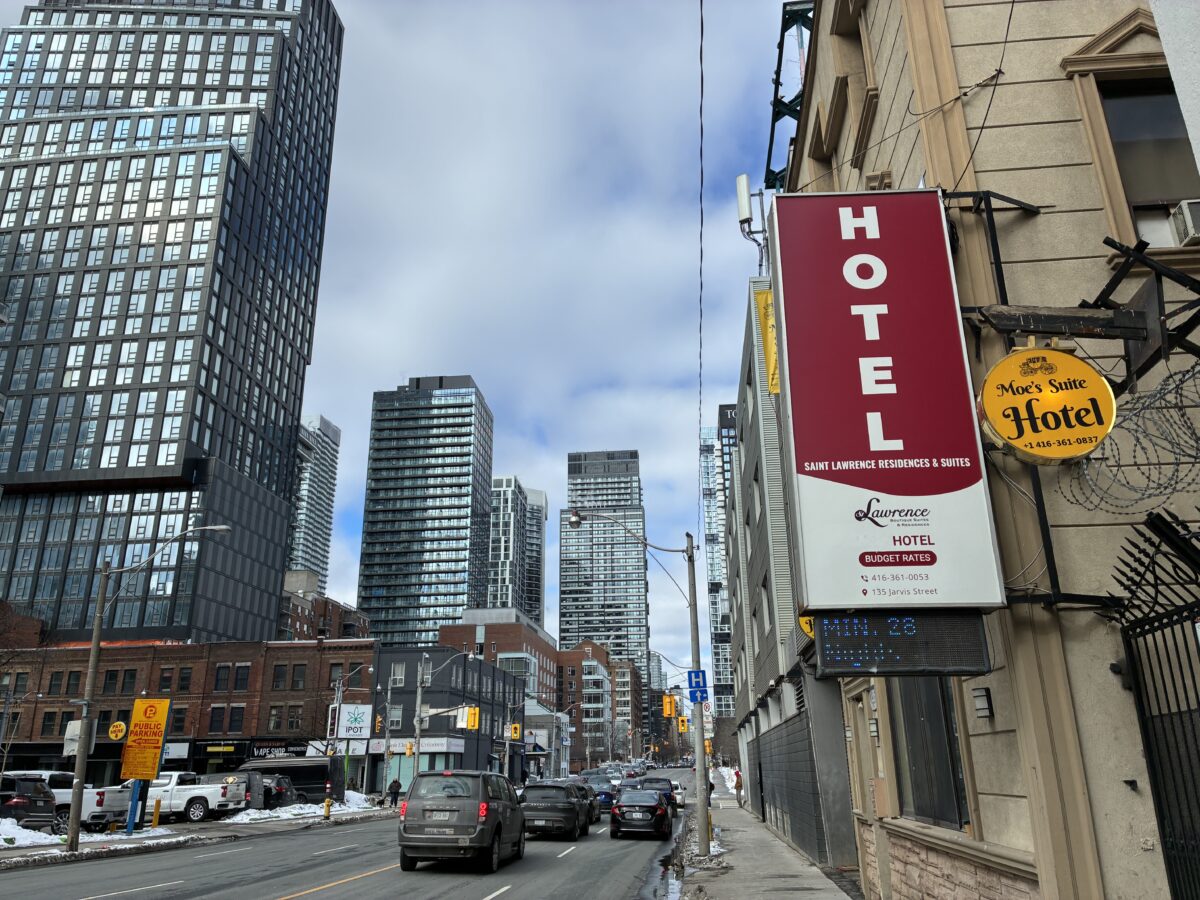
“It is just a matter of time before 135 Jarvis becomes a condo and/or hotel, and just 2 buildings away from 115 Jarvis—which was the latest major condo proposal at the Petro Gas Station,” Chan said. “Just like the new Toor Hotel a block away at Shuter and Queen which is both a residential and hotel dwelling, this building has flexible zoning and in the heart of the downtown core. This corridor is a hot area for new construction condominium or apartment buildings.”
The Decades-in-the-Making Opportunity
Against this backdrop of transformation spanning the next decade, a rare opportunity has emerged that exemplifies the corridor’s strategic moment: 135 Jarvis Street, a freestanding commercial building listed for $6,990,000.
The property sits just two blocks from the Moss Park station construction site—well within the critical 200-metre radius where planning policies permit buildings up to 30 storeys. But unlike the development sites being assembled around it, this is a turnkey opportunity available now.
FEATURED LISTING: 135 Jarvis Street | $6,990,000
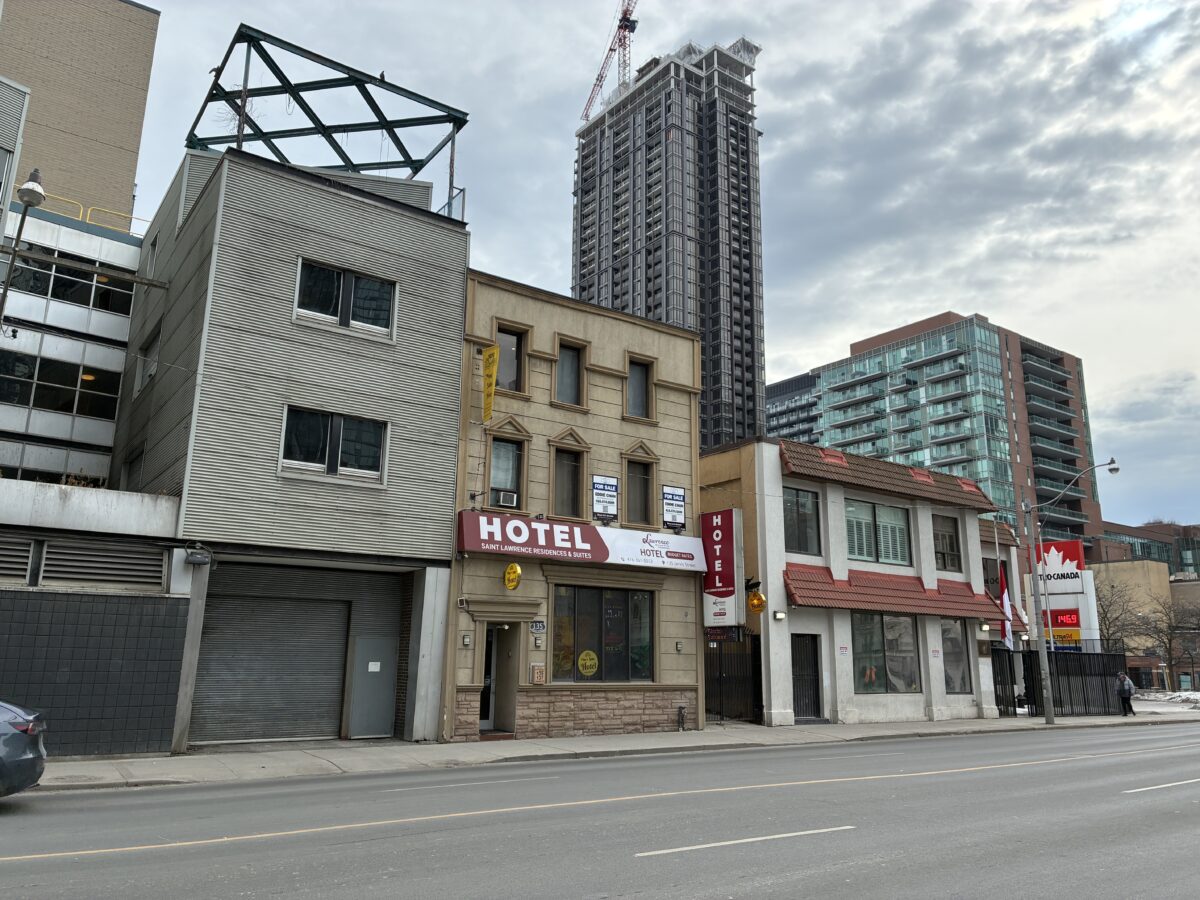
Property Summary:
- Building Size: Approximately 8,800 sq ft
- Lot Size: 33 ft × 131 ft
- Configuration: 33-room hotel with full basement
- Parking: 3 on-site spaces
- Zoning: Flexible
- Current Use: Operating hotel with vacant possession available
The property offers multiple strategic advantages for different buyer profiles. For hospitality operators, it’s a functioning 33-room hotel in an area with established demand—the Holiday Inn sits directly across the street, whilst the Toor Hotel a block away successfully operates as a mixed-use residential and hospitality property.
“Canadians are tired of travelling south and 2025 was one of the best years for the hotel and short-term rental industry,” Chan said. “Canadians want to stay in Canada and what better place than the biggest city in the country—Toronto! With the Holiday Inn just across the street and other major brand name hotels in the vicinity, this area is prime for the next big high-rise project.”
For student housing operators, the location offers proximity to George Brown College and Toronto Metropolitan University, with thousands of students seeking accommodation within walking or cycling distance of campus.
“This building also previously had a rooming hotel licence and is perfect for student housing given that George Brown College and Toronto Metropolitan University are nearby,” Chan noted. “It is also perfect for purpose-built apartment rentals—which is a hot trend in the market today!”
For investors and developers, the property offers something increasingly rare in downtown Toronto: a freestanding building with flexible zoning that generates revenue whilst you plan your next move.
“We are providing vacant possession of this commercial property currently running as a hotel but also previously a rooming house and student housing dwelling,” Chan explained. “It is like buying a building with a business for free that is going to pay the mortgage! We are also going to provide a large mortgage to a potential qualified buyer with a reasonable deposit required. If you are a business owner in this space, developer or investor looking to secure prime real estate in the heart of Downtown Toronto—this fits all your criteria!”
The freestanding nature of the property—rare in the downtown core—provides maximum flexibility for repositioning. The full basement offers additional functional space, whilst the three on-site parking spaces add value in an area where parking is increasingly scarce.
Full property details: (647) 281-6109 | [email protected] | https://sites.odyssey3d.ca/135jarvisstreet
Three Traffic Sources Converging
For retail and hospitality operators evaluating the corridor, understanding the customer base requires looking at three distinct—and growing—traffic sources.
The Local Residents
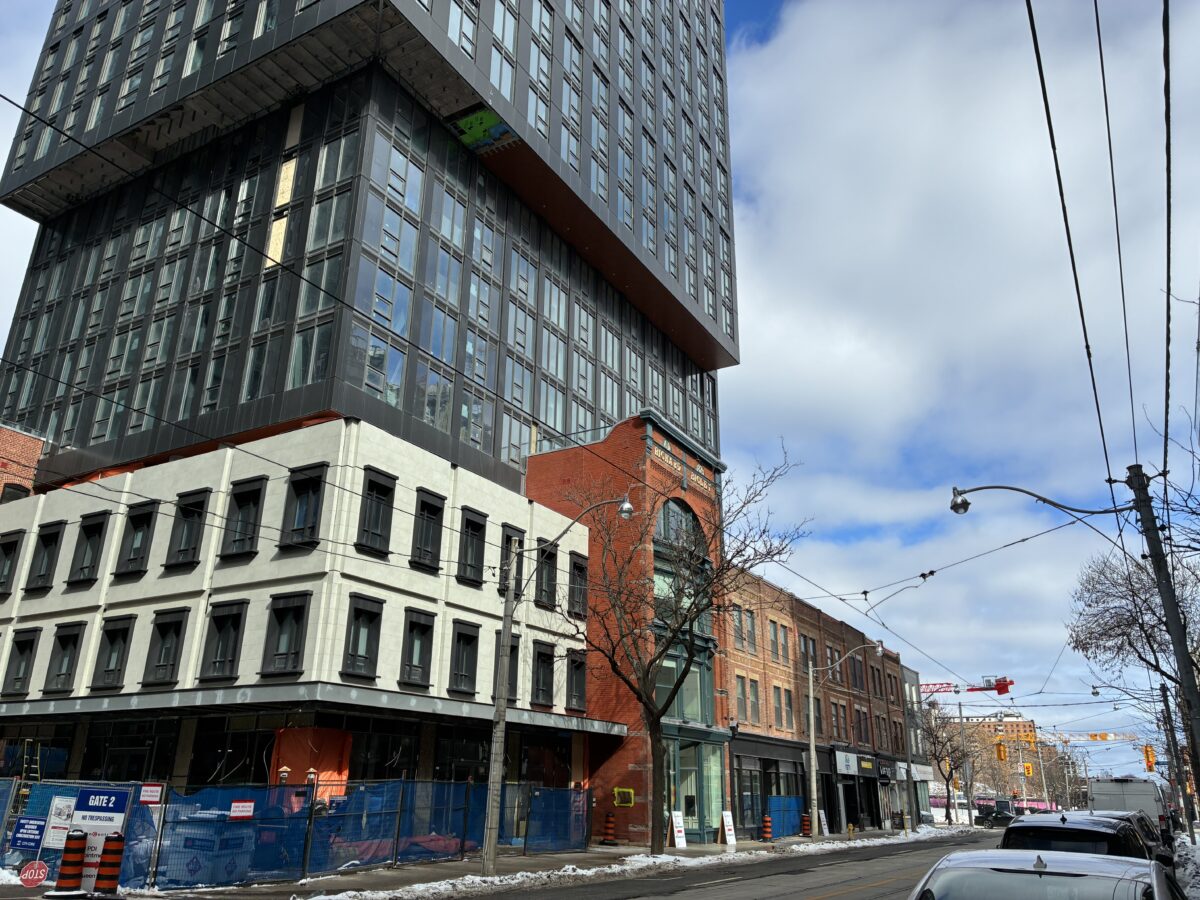
The existing residential population provides the foundation. Current residents in the surrounding blocks already support established businesses, from the Holiday Inn to neighbourhood restaurants and services. But this base is about to expand dramatically.
Those 7,700 dwelling units under construction or proposed translate to roughly 10,000 to 15,000 new residents arriving over the next five to ten years. These aren’t tourists or occasional visitors—they’re people who will need daily coffee, regular lunch spots, weekly grocery runs, fitness memberships, dry cleaning, and neighbourhood gathering places.
The first wave begins occupancy in 2026-2027 as buildings like 88 Queen East and 98 Queen East complete construction. By 2029-2030, thousands of new residents will be establishing routines, building loyalty to early-mover businesses, and creating the customer density that supports diverse retail.
The Workforce
The corridor’s location between two of Toronto’s most significant commercial destinations creates a substantial daytime traffic source that will only intensify as the area develops.
To the west, CF Toronto Eaton Centre—one of Canada’s busiest shopping destinations with over 50 million annual visitors—sits less than a 10-minute walk away. The centre employs thousands across its retail operations, food court, and office components, whilst drawing shoppers, tourists, and business visitors daily. As the Jarvis corridor improves, it becomes an increasingly viable option for Eaton Centre employees seeking lunch alternatives, after-work destinations, or their daily coffee run away from mall crowds and prices.
The 501 Queen streetcar—currently diverted to Richmond and Adelaide during Ontario Line construction—will eventually return to Queen Street, restoring one of North America’s longest streetcar routes directly through the corridor. The route connects the Beach in the east to Humber Loop in the west, moving tens of thousands of riders daily through the heart of the city.
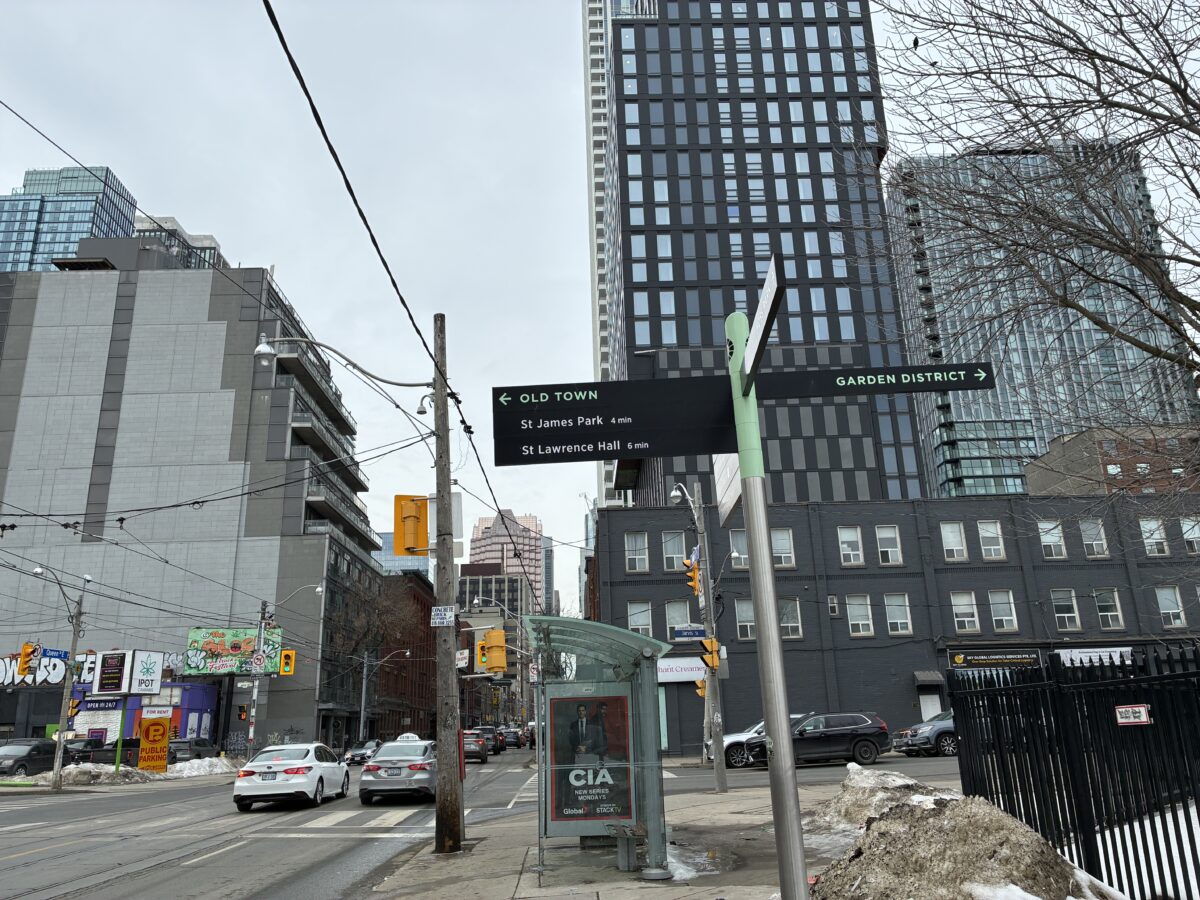
When the streetcar returns to Queen Street, likely as the Ontario Line nears completion, it will restore the natural east-west flow that made Queen Street a retail corridor in the first place. The combination of restored streetcar service and the new north-south Ontario Line connection will position the Jarvis-Queen intersection as a genuine transit hub—the kind of location where pedestrian traffic compounds rather than simply passes through.
Current residents already benefit from proximity to major employment centres. The Financial District, Hospital Row, Queen’s Park, Toronto City Hall, University of Toronto, Toronto Metropolitan University, and George Brown College are all within walking or cycling distance, employing tens of thousands who already pass through or near the corridor during their commute.
As the residential population grows and street-level retail improves, the corridor becomes an increasingly attractive destination for lunch meetings, after-work drinks, and the convenience stops that office workers make during their day. The workforce traffic isn’t seasonal—it’s consistent, predictable, and happens Monday through Friday during prime business hours.
The Transit Users (Coming 2031)
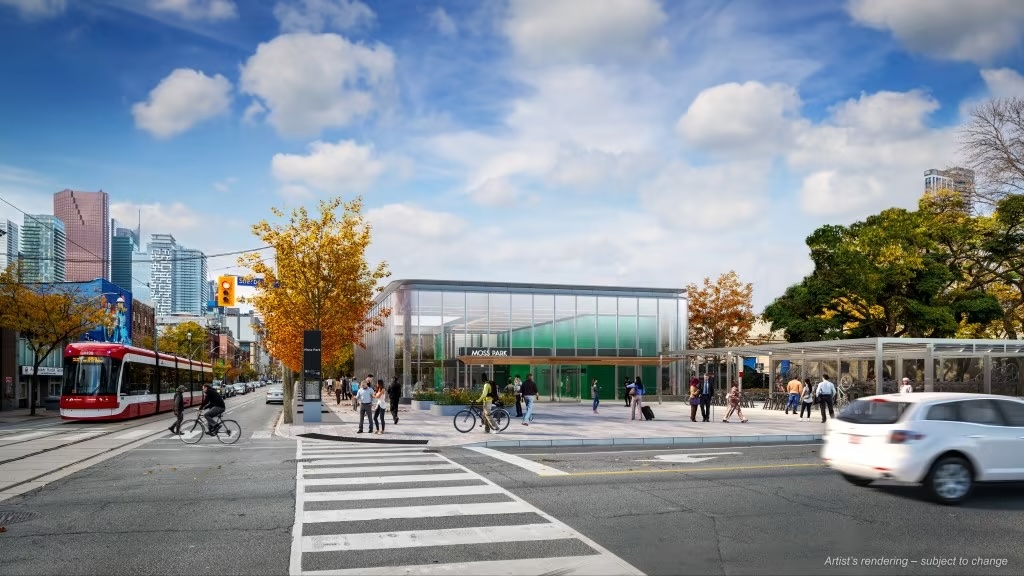
The third traffic source arrives with the Moss Park Ontario Line station in 2031, but smart operators are positioning for it now.
With 7,300 riders expected during peak hours and 1,500 surface transfers from buses and streetcars, the station will function as a major pedestrian generator. Transit users heading to and from the station will pass street-level retail twice daily, creating the kind of consistent foot traffic that supports quick-service restaurants, coffee shops, convenience retail, and grab-and-go food options.
The station’s 23,600 residents within a 10-minute walk extends the potential customer base well beyond the immediate nine-block development zone. These residents will use the station for commutes, creating morning and evening rush patterns that savvy operators can build their business models around.
“The Ontario line is coming and will help move people around Toronto more efficiently,” Chan said. “With the new Moss Park station being built just steps away, this will see tremendous growth and a population boom to this area. With numerous condominiums already nearby, this pocket of the city will definitely become more popular due to its close proximity to the downtown core and ensuing new businesses that will inevitably start opening in the area.”
The Strategic Window
Understanding these three traffic sources reveals why the current moment represents a unique opportunity for retail and hospitality operators—and why that window is closing.
Right now, the corridor is deep in construction disruption. Moss Park station excavation, crane activity, and construction fencing create noise, dust, and inconvenience. For many operators, this feels like the wrong time to enter a market.
But that construction disruption is precisely what creates the opportunity. Ground-floor retail spaces and commercial properties are currently trading at rates that reflect today’s construction chaos, not tomorrow’s 15,000 new residents and 7,300 daily transit users.
Operators who can weather two to three years of disruption can lock in positions—and lease rates—that will look remarkably advantageous by 2028 when the first wave of towers begins occupancy. By the time the Moss Park station opens in 2031, the best locations will already be taken, at rates that reflect the fully-realised customer base.
The first residential towers begin occupancy in 2026-2027, bringing the local customer base online. The workforce traffic is already there, growing as the neighbourhood becomes more attractive for lunch and after-work options. The transit traffic arrives in 2031, completing the picture.
“We are in year two of an eight-year build, which means buyers have time to acquire, plan, and position before the market fully prices in the Ontario Line’s impact,” Chan explained. “By 2029-2030, when those tunnel boring machines are finishing up and the station is taking shape, this corridor will look very different—and be priced accordingly.”
The coordinated public investment reinforces this trajectory. Beyond the Ontario Line station itself, the city is rebuilding the John Innes Community Recreation Centre (construction 2026-2028) and implementing comprehensive Moss Park improvements, with Metrolinx funding tree replacement and public realm enhancements.
For retail and hospitality operators watching Toronto’s evolution, the Jarvis-Queen East corridor offers a case study in how major transit infrastructure catalyses urban transformation—and how the window for strategic positioning closes faster than the construction timeline might suggest.
The operators who recognize that 10,000 new local residents, established workforce traffic, and 7,300 daily transit users represent three converging customer sources will be the ones positioned to capture value as Toronto’s latest transit-driven neighbourhood comes to life over the next decade.
This is a sponsored post in partnership with Area Realty Inc. Brokerage and Eddie Chan.

Dustin Fuhs is the founder and Editor-in-Chief of 6ix Retail, Toronto’s premier source for retail and hospitality industry news. As the former Editor-in-Chief of Retail Insider, Canada’s most-read retail trade publication, Dustin brings over two decades of expertise spanning retail, marketing, entertainment and hospitality sectors. His experience includes roles with industry giants such as The Walt Disney Company, The Hockey Hall of Fame, The Canadian Opera Company, Starbucks Canada and Blockbuster.
Recognized as a RETHINK Retail Top Retail Expert in 2024, 2025 and 2026, Dustin delivers insider perspectives on Toronto’s evolving retail landscape, from emerging brands to established players reshaping the city’s commercial districts.